Welcome to your complete guide for building the perfect entertainment space. Imagine bringing the magic of cinema right into your living area. This guide helps you create an amazing movie-watching environment.
We’ll walk you through every step of creating your dream setup. You’ll learn about acoustic needs and choosing the right components. Whether you’re converting a spare area or upgrading your current space, we’ve got you covered.
Great audio quality makes movies come alive. Smart seating arrangements ensure everyone enjoys the show. Thoughtful style choices create an immersive experience that feels like a real cinema.
By the end, you’ll have the confidence to build a space that balances technical performance with beautiful aesthetics. Get ready for professional tips and real-world examples that help you avoid common mistakes.
Key Takeaways
- Transform any room into a cinematic entertainment space
- Balance audio quality with comfortable seating arrangements
- Choose components that match your space and budget
- Create an immersive experience that rivals commercial cinemas
- Personalize your setup with smart controls and finishing touches
- Avoid common mistakes with expert guidance
- Maximize your investment for long-term enjoyment
Introduction to Your Cinematic Haven
Before selecting equipment or furniture, the most crucial step is defining your entertainment objectives. This planning phase sets the foundation for your entire project.
Setting the Stage for a Perfect Media Room
Think about how you’ll use this space. Will it be for movie nights, gaming sessions, or sports events? Your goals determine everything from seating to sound systems.
Consider who will enjoy this area regularly. Young children, elderly relatives, or frequent guests influence your choices. Accessibility and comfort become top priorities when planning for diverse users.
Understanding Your Space and Goals
Measure your room carefully. Note dimensions, windows, and architectural features. These elements affect screen placement and acoustic treatments.
Many homeowners now prefer multifunctional living spaces that serve multiple purposes. Your media area can blend entertainment with daily life seamlessly.
Establish a realistic budget early. You can always upgrade components later while getting foundational elements right from the start. This approach ensures long-term satisfaction with your cinematic project.
Mastering Room Dimensions and Acoustic Considerations
Many enthusiasts overlook a critical factor that determines audio quality: the actual dimensions of their space. The physical characteristics of your room create the acoustic environment where your sound system must perform.
Recording engineers consistently emphasize that room size and proportions are fundamental to great sound reproduction. Understanding these principles early helps you choose the right space or make architectural modifications.
Ideal Room Ratios and Setup Examples
Audio Advice recommends specific ratios for optimal acoustic performance. Aim for proportions between 1:1.6-1.7:2.3-2.4 (height:width:length).
For example, a room with a 10-foot ceiling would ideally measure 16 feet wide and 24 feet long. This creates balanced acoustics throughout the space. Avoid cube-shaped rooms where dimensions are identical.
Acoustic Tips for Enhanced Audio Quality
The way your room is shaped directly affects bass distribution and overall sound quality. Staying within recommended ratios ensures consistent acoustic performance across the main seating area.
If planning multiple rows with risers, ensure your ceiling height is at least 9 feet. This provides adequate headroom and maintains comfortable sightlines. Remember that even expensive speakers cannot overcome poor room acoustics.
Fundamentals of Home Theater Design
Planning your media room layout has never been easier thanks to advanced digital design platforms. These tools transform abstract ideas into tangible visualizations before any physical work begins.
Visualizing Your Layout Using 3D Tools
Modern technology revolutionizes how we approach entertainment space planning. Tools like Audio Advice’s Home Theater Designer provide interactive building capabilities.
You can configure exact room dimensions and position seating arrangements precisely. The platform shows optimal speaker placement for different theater layout options.
Dreamedia offers a comprehensive 5-step process for complete visualization. Their 3D theater builder handles everything from screen selection to advanced audio configurations.
| Feature | Audio Advice Home Theater Designer | Dreamedia 3D Theater Builder |
|---|---|---|
| Room Configuration | Custom room size input | Pre-set room templates + custom |
| Speaker Systems | Basic to advanced placements | Up to Dolby 9.4.6 configurations |
| Visualization Quality | 2D and basic 3D views | Full 3D immersive preview |
| Expert Support | Design review and optimization | Complete project finalization |
| Additional Features | Custom measurements | Acoustic treatments and ceiling options |
These platforms help avoid costly mistakes like incorrect screen sizing. You can compare multiple layout ideas side-by-side before committing.
The digital approach ensures every element works together harmoniously. Professional guidance then helps finalize your perfect entertainment project.
Selecting Components for an Immersive Experience
The right combination of screen, projector, and speakers creates the difference between ordinary viewing and extraordinary immersion. This stage transforms your entertainment vision into reality.
Screen Size, Projectors, and Speaker Options
Choosing your visual components starts with proper screen size calculation. Use interactive tools like Audio Advice’s calculator to determine optimal dimensions based on viewing distance. This prevents eye strain while maximizing impact.
Projector selection involves key factors like throw distance and resolution. Modern 4K projectors deliver stunning clarity. Consider brightness levels for your room’s lighting conditions.
Your audio setup forms the foundation of the experience. Start with basic 5.1 surround sound or explore advanced configurations. Quality speakers make dialogue clear and action sequences powerful.
Understanding Dolby Atmos and Surround Sound Systems
Dolby Atmos technology revolutionizes audio immersion. It adds overhead speakers for three-dimensional sound that surrounds you completely. You feel like you’re inside the movie action.
When building your audio system, match components carefully. Your AV receiver must power all speakers effectively. Look for models with excellent performance and durability.
Proper component matching ensures everything works together seamlessly. Your projector’s throw distance must suit your room size. Speakers should match your acoustic environment for optimal results.
Optimizing Speaker Placement and Acoustic Treatments
Great audio quality starts with proper speaker positioning and room treatments. Your speaker setup deserves careful planning before other elements are finalized.
Audio Advice recommends mapping speaker locations first. This prevents conflicts with furniture or decorative features later.
Strategic Speaker Layout Options
Different speakers serve specific roles in your audio system. Front left/right speakers handle primary sound while center channels focus on dialogue.
Surround speakers create ambient effects. Dolby Atmos configurations add overhead speakers for three-dimensional immersion.
Position each speaker where it has clear paths to listeners. This ensures optimal sound distribution throughout your space.
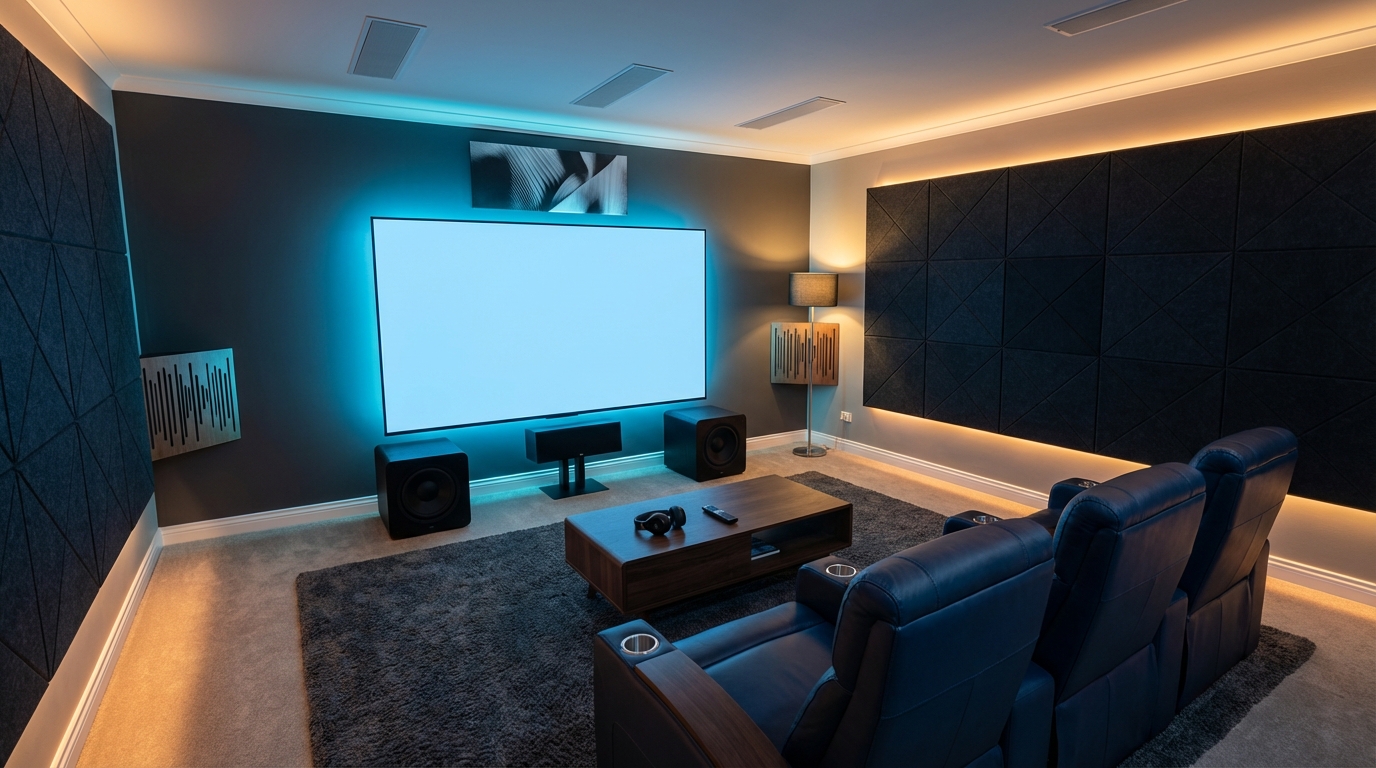
Integrating Acoustic Panels and Treatments
Acoustic panels control sound reflections that muddy audio clarity. They absorb or diffuse waves bouncing off walls.
Even simple treatments dramatically improve sound quality. Fabric wall panels at reflection points and bass traps in corners make a noticeable difference.
Professional packages like Dreamedia’s CineLuxe offer integrated solutions. These systems combine acoustic performance with stunning visual appeal.
| Package | Core Features | Acoustic Elements | Visual Enhancements | Installation Time |
|---|---|---|---|---|
| Luxe | Fabric absorption panels | Basic sound control | LED perimeter, mini cans | 3 days |
| Spectrum | Luxe features plus | Geometric paneling | Vertical columns | 3-4 days |
| Nova | Spectrum features plus | Optional wood diffuser walls | Star ceiling | 4-5 days |
| Prestige | Nova features plus | 3-panel depth stack | LED layer wraps | 5-7 days |
Tips from Installation Experts
Work with your room’s architecture rather than against it. Use existing wall spaces for treatments and speaker placement.
Professional systems can install quickly while providing both function and style. The right approach balances technical needs with aesthetic appeal.
Even basic acoustic improvements transform your listening experience. Start with key reflection points and expand as needed.
Lighting, Seating, and Riser Solutions for Comfort and Style
Beyond speakers and screens, the way you illuminate and arrange seating in your media space determines whether guests feel truly immersed. These elements work together to create an environment where every movie feels like an event.
Choosing Ambient and Task Lighting
Proper lighting serves multiple purposes in your entertainment area. Task lighting helps you find snacks or read during intermissions. Ambient lighting sets the mood before the show begins.
Safety lighting prevents accidents when moving around during films. Consider dimmable options with remote control for easy adjustments. This creates that “wow factor” when lights dim for the main feature.
Install step lights on riser sides rather than fronts. This prevents light from shining on your screen during viewing.
Designing Custom Risers and Multi-Row Seating Setups
For multi-row arrangements, risers are essential for clear sightlines. Someone tall sitting in front shouldn’t block the view. Modern commercial venues use stadium-style seating for this reason.
Riser height matters significantly. Six-inch platforms are inadequate, while twelve to sixteen inches work best. Ensure your ceiling height can accommodate this elevation.
| Riser Height | Effectiveness | Ceiling Requirement | Recommended Use |
|---|---|---|---|
| 6 inches | Inadequate | Standard | Single row only |
| 8 inches | Barely sufficient | 9 feet | Limited two-row |
| 12-16 inches | Excellent | 9+ feet | Ideal multi-row |
Make risers at least six feet deep. This allows people to walk past reclined seats comfortably. For creative home theater seating ideas, consider barstools for third rows when space is limited.
Quality theater seating makes extended viewing sessions enjoyable. Look for features like lumbar support and wall-hugging recline systems. These ensure maximum comfort during your entertainment experience.
Personalizing Your Home Theater Setup
The final stage of creating your cinematic space involves adding personality and smart functionality. This is where a great technical setup becomes your unique entertainment haven.
Smart control systems unify your entire media experience. They integrate lighting, audio, video, and climate into one simple interface. Control everything from a smartphone or dedicated panel for ultimate convenience.
Creative Finishes for a Custom Look
Aesthetic touches transform a equipment room into a designed escape. Consider themed decor, custom bookshelf displays, or changeable movie poster art.
The type of style you choose should match your home’s overall feel. Some prefer modern minimalism with hidden gear. Others love vintage theater vibes with classic memorabilia.
Small details create a polished look. Think about LED accent lighting, custom speaker grilles, and clever cable management. These elements make a big impact.
Expert guidance can spark brilliant ideas. Companies like Audio Advice offer inspiration galleries and free consultations. Dreamedia receives glowing customer testimonials for their personalized service and professional installations.
Your media space should reflect how your household enjoys entertainment. Whether it’s gaming, streaming, or family movie nights, incorporate what matters to you. Browse examples, then adapt them for your room and lifestyle.
Conclusion
Building your personal cinema is an exciting journey that transforms how you experience entertainment. This process brings together everything from room acoustics to component selection, creating a space where movie magic comes alive.
Remember that your ideal setup doesn’t need to happen overnight. Many people start with essential components like a quality projector and basic audio system. You can gradually add features as your budget allows.
Consulting with professionals can save you from costly mistakes while optimizing your specific layout. Their expertise often provides better equipment pricing through industry relationships.
Your finished media room becomes more than just electronics—it’s an investment in family time and shared experiences. This personal cinema brings the joy of movies directly to your living space for years of enjoyment.
FAQ
What is the ideal size for a media room?
There’s no single perfect size! A great media room can be created in many spaces. The key is working with your room’s dimensions. Consider your screen size, speaker layout, and seating arrangement to make the most of your available square footage for a fantastic experience.
How do I choose the right screen for my setup?
Your choice depends on your room’s layout and your projector. A general rule is that your seating distance should be about 1.5 to 2.5 times the screen’s diagonal width. This ensures a comfortable and immersive viewing angle without straining your eyes.
What’s the difference between a 5.1 and a 7.1 surround sound system?
The numbers refer to speaker channels. A 5.1 system has five main speakers and one subwoofer. A 7.1 setup adds two rear surround speakers behind the seating for even more precise, enveloping audio. For the ultimate experience, consider a Dolby Atmos system that includes height channels for sound from above.
Where should I place my speakers for the best audio?
A> Speaker placement is critical. Front speakers should be at ear level, angled toward the main seating area. Surround speakers belong to the sides or slightly behind the listener. For Dolby Atmos, ceiling or upward-firing speakers create the overhead effect. Proper placement makes your audio system truly shine.
Do I need acoustic panels in my cinema space?
Acoustic treatments can dramatically improve sound quality. They reduce unwanted echoes and sound reflections, making dialogue clearer and effects more distinct. Even adding a thick area rug and some heavy curtains can make a big difference in a media room.
What type of seating is best for a home theater?
Comfort is king! Theater-style recliners are a popular choice for their comfort and style. Consider the number of seats, row arrangement, and if you want features like cup holders or power reclining. The goal is to create a cozy spot where family and friends can relax for hours.
How should I handle lighting in the room?
A> Layered lighting works best. You’ll need dimmable overhead lights for general illumination and subtle sconces or LED strip lighting for ambiance. Task lighting, like small lights in step risers, provides safety without disrupting the movie-watching experience when the main lights are off.