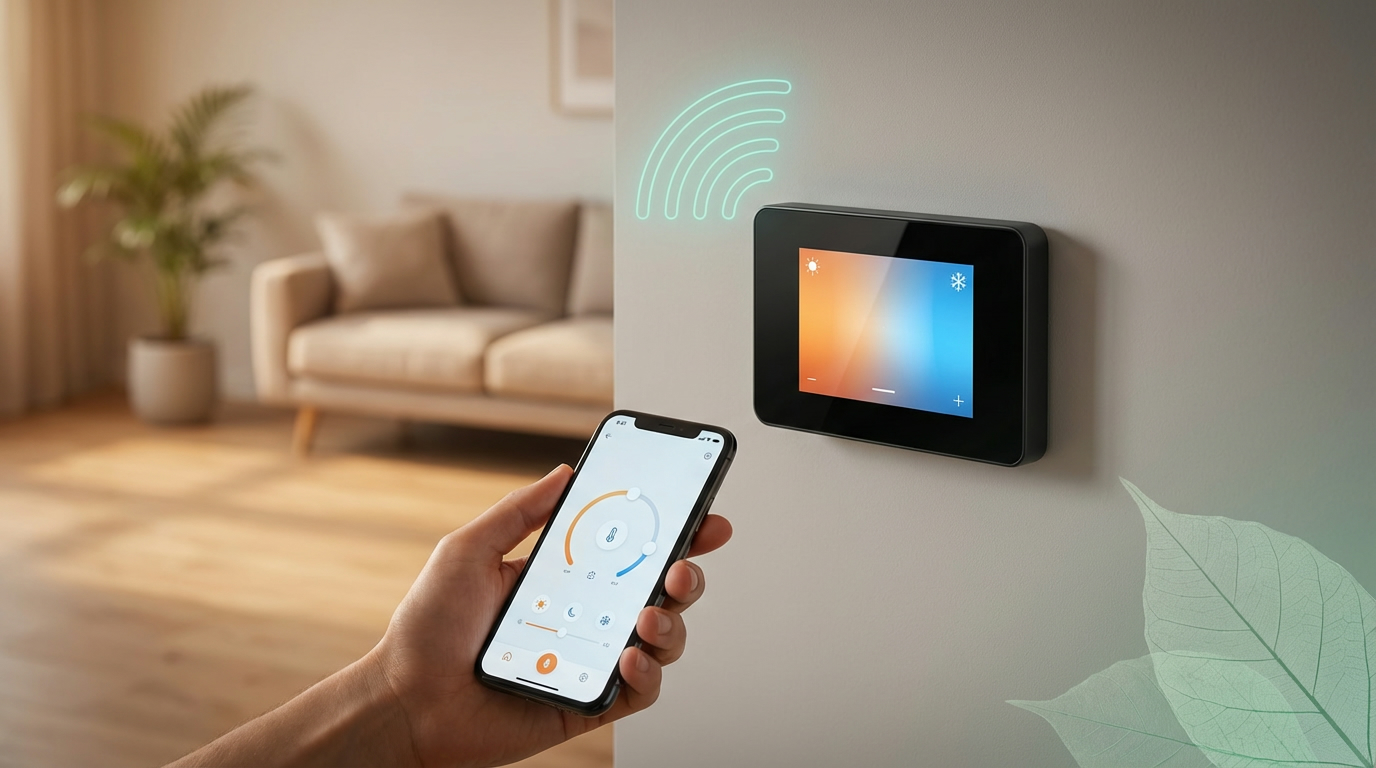
Welcome to the world of modern home climate control! If you’re still using a basic temperature dial, you’re missing out on incredible convenience and efficiency. WiFi-enabled devices are transforming how we manage our living spaces.
These advanced units represent one of the most valuable investments in home technology today. Sales are projected to reach nearly 16.2 million units in 2024-2025, showing how many households are embracing this innovation.
The real magic happens when these devices learn your habits. They automatically adjust your heating and cooling based on occupancy sensors and daily routines. This creates both comfort and significant energy savings without constant manual changes.
In this guide, you’ll discover how these systems work and why they’re worth the investment. We’ll cover top models on the market and provide practical installation tips to make your upgrade smooth.
Key Takeaways
- Modern climate controllers offer remote access via smartphone apps
- Automatic scheduling adapts to your daily routine for optimal efficiency
- Integration with voice assistants like Alexa and Google Assistant provides hands-free control
- Real-time energy reports help identify savings opportunities
- Professional installation ensures proper setup with your existing HVAC equipment
- Geofencing technology adjusts temperature based on your location
Understanding Smart Thermostats and Their Role in Modern Homes
Today’s advanced temperature regulators represent a significant leap forward from traditional HVAC controls. These intelligent devices connect to your home Wi-Fi network, enabling remote access from anywhere.
How Smart Thermostats Work
Unlike basic models that simply turn systems on or off, modern climate controllers use sophisticated sensors. They detect occupancy, monitor ambient conditions, and learn your daily patterns.
The technology behind these devices involves continuous two-way communication with your HVAC equipment. This allows for real-time adjustments based on current weather, room occupancy, and your preferences.
Many units feature learning capabilities that analyze factors like family schedules and temperature habits. They automatically create optimized schedules without manual programming.
Integration with Home Automation Systems
These advanced controllers seamlessly connect with popular voice assistants like Amazon Alexa and Google Assistant. This enables hands-free temperature adjustments through simple voice commands.
The integration extends to comprehensive home automation ecosystems. You can create scenes where lighting, security, and climate work together harmoniously.
| Feature | Traditional Controller | Advanced Climate System | Key Advantage |
|---|---|---|---|
| Connectivity | Local control only | Wi-Fi remote access | Adjust from anywhere |
| Learning Ability | Manual programming | Automatic adaptation | Saves time and effort |
| Sensor Technology | Basic temperature only | Occupancy and proximity | More precise control |
| Voice Control | Not available | Full compatibility | Hands-free operation |
| Energy Reporting | None | Detailed usage data | Identifies savings |
Remote management through dedicated smartphone applications provides ultimate flexibility. Whether you’re commuting or relaxing at home, temperature adjustments are always accessible.
smart thermostat benefits for Homeowners
Homeowners discover tangible value through reduced monthly expenses and enhanced convenience. These devices deliver measurable improvements that impact both your wallet and daily routine.
Savings on Utility Bills and Energy Consumption
Major manufacturers provide compelling data about cost reduction. Google Nest users typically save 15% on cooling and 10-12% on heating costs.
Ecobee reports even greater results, with some customers saving 26% on combined HVAC expenses. This translates to approximately $284 annually for many households.
Considering that heating and cooling account for about half of the average American electricity bill—over $900 yearly—these savings become significant. ENERGY STAR certified models consistently save users around $50 each year.
Remote Control and Mobile Temperature Adjustments
Modern systems offer complete control through smartphone applications. You can adjust your home’s temperature from anywhere—whether you’re commuting or relaxing on your couch.
Geo-fencing technology automatically changes settings based on your location. Your system might raise the temperature from 73°F to 77°F when you leave during summer, then cool your house before you return.
Learning and Adaptive Scheduling Features
Advanced units analyze your temperature preferences and daily patterns. They automatically create optimized schedules that maximize comfort while reducing energy usage.
Real-time energy reports help identify additional savings opportunities. You can track consumption patterns and receive alerts if temperatures exceed set limits, perfect for monitoring vacation properties.
| Feature | Traditional System | Advanced Controller | User Impact |
|---|---|---|---|
| Cost Savings | Manual adjustments only | 10-26% automatically | Substantial bill reduction |
| Remote Access | Physical presence required | Smartphone app control | Adjust from anywhere |
| Location Awareness | None | Geo-fencing automation | Comfort upon arrival |
| Energy Reporting | Basic usage data | Detailed consumption analysis | Identify waste patterns |
| Adaptive Learning | Fixed programming | Automatic schedule optimization | Reduces manual adjustments |
Exploring the Best Smart Thermostat Options
With dozens of models available, selecting the ideal home climate device can feel overwhelming at first. Not all units offer the same capabilities.
Understanding key differences helps you choose a system matching your specific needs. Prices range from around $100 to over $500 depending on features.
Top Brands and Models to Consider
Industry leaders include Google Nest, known for significant energy savings. Ecobee models can save up to 26% on combined heating and cooling costs.
Daikin offers advanced units like the One Touch and One+ with unique capabilities. These systems provide superior comfort through precise temperature management.
Unique Features and Cutting-edge Technology
Wi-Fi connectivity allows adjustments from anywhere using smartphone apps. Voice control works with Amazon Alexa and Google Assistant for hands-free operation.
Geo-fencing automatically changes settings based on your location. This provides an additional layer of automation and energy savings.
| Feature | Standard Models | Advanced Systems | User Advantage |
|---|---|---|---|
| Mobile Control | Basic app functionality | Full remote access | Adjust from anywhere |
| Air Quality Monitoring | Not available | Humidity and VOC detection | Healthier indoor environment |
| Communicating Technology | One-way signals | Two-way equipment dialogue | Precise temperature control |
| Remote Servicing | On-site visits required | Contractor remote access | Faster issue resolution |
Advanced units like those featured in best smart thermostats guides offer indoor air quality monitoring. They detect particulates and volatile organic compounds, alerting you when levels become concerning.
Communicating technology allows variable-speed systems to make small, frequent adjustments. This optimizes comfort while minimizing energy consumption throughout your home.
Tips for Installing and Optimizing Your Smart Thermostat
Getting your new climate controller up and running is easier than you might think. The right approach depends on your comfort level with wiring and your specific home setup.
Installation Guidelines and Professional Help
Prices for these devices range from around $100 to over $500. The model, brand, and features greatly influence the cost. You might also need tools and materials for the job.
Many units come with clear instructions and necessary equipment. A tech-savvy friend can often help with DIY installation. This approach saves you money on professional services.
Consider hiring a pro if you’re unsure about safely connecting to your heating and cooling systems. Professional installation averages around $182 but can reach $500 for complex setups.
Don’t forget to search for rebates from state and local governments. Your energy provider might offer exclusive discounts too. These incentives can significantly reduce your upfront investment.
Set aside adequate time for the process. Tech installations sometimes take longer than expected. Rushing can lead to mistakes that affect your system’s performance.
After installation, focus on optimization. Program schedules that match your household routines. Configure temperature preferences for different times of day.
Homes without programmable units will see the biggest utility bill reductions. Those in temperate climates may experience more modest savings. The high initial investment means ROI might take a year or more.
Your new device offers ongoing advantages like air filter change reminders. It can help diagnose problems with your HVAC equipment early. The system encourages energy-efficient choices through usage insights.
Take full advantage of all features in the app. Adjust settings as seasons change. Monitor energy usage patterns to continuously improve efficiency in your house.
Conclusion
Embracing modern climate technology transforms how we interact with our living spaces on a daily basis. The investment in a smart thermostat delivers remarkable returns through both financial savings and enhanced living comfort.
These intelligent devices learn your patterns and automatically optimize your heating and cooling. This saves significant money on utility bills while maintaining perfect home temperature. The convenience of remote control via smartphone makes manual adjustments feel outdated.
Modern smart thermostats work seamlessly with other smart home devices that actually improve daily. They provide valuable energy insights that help you make informed decisions about consumption.
While the initial cost may seem substantial, the long-term savings and improved comfort make this upgrade worthwhile. Now is the perfect time to experience the advantages of automated climate control in your own home.
FAQ
How much money can I really save with one of these devices?
Many homeowners see a noticeable drop in their heating and cooling bills. By automatically creating an efficient schedule and adjusting temperature levels when you’re away, these devices help reduce energy usage. The exact savings depend on your local climate and HVAC system, but it’s a great way to cut costs.
Can I control the temperature in my house from my phone?
A> Absolutely! A major perk is remote control via a smartphone app. Whether you’re coming home early or forgot to adjust the settings before a trip, you can easily change the temperature from anywhere. This gives you total control over your home’s comfort.
Do I need professional help to install it?
A> While many models are designed for DIY installation, it’s often a good idea to get professional help, especially if you have a complex HVAC system. Proper installation ensures everything works correctly and helps you avoid any potential problems with your heating and cooling systems.
What are some standout features in modern models?
A> Today’s top options, like those from Nest and ecobee, come packed with advanced technology. Look for features like room sensors that manage hot or cold spots, learning capabilities that adapt to your needs, and seamless integration with other home automation systems for a truly connected home.
Will it work with my current heating and air conditioning system?
A> Most standard forced-air systems are compatible. It’s crucial to check the specific requirements of the model you’re considering before you buy. The product specifications will clearly list which systems it works with to ensure a smooth setup.