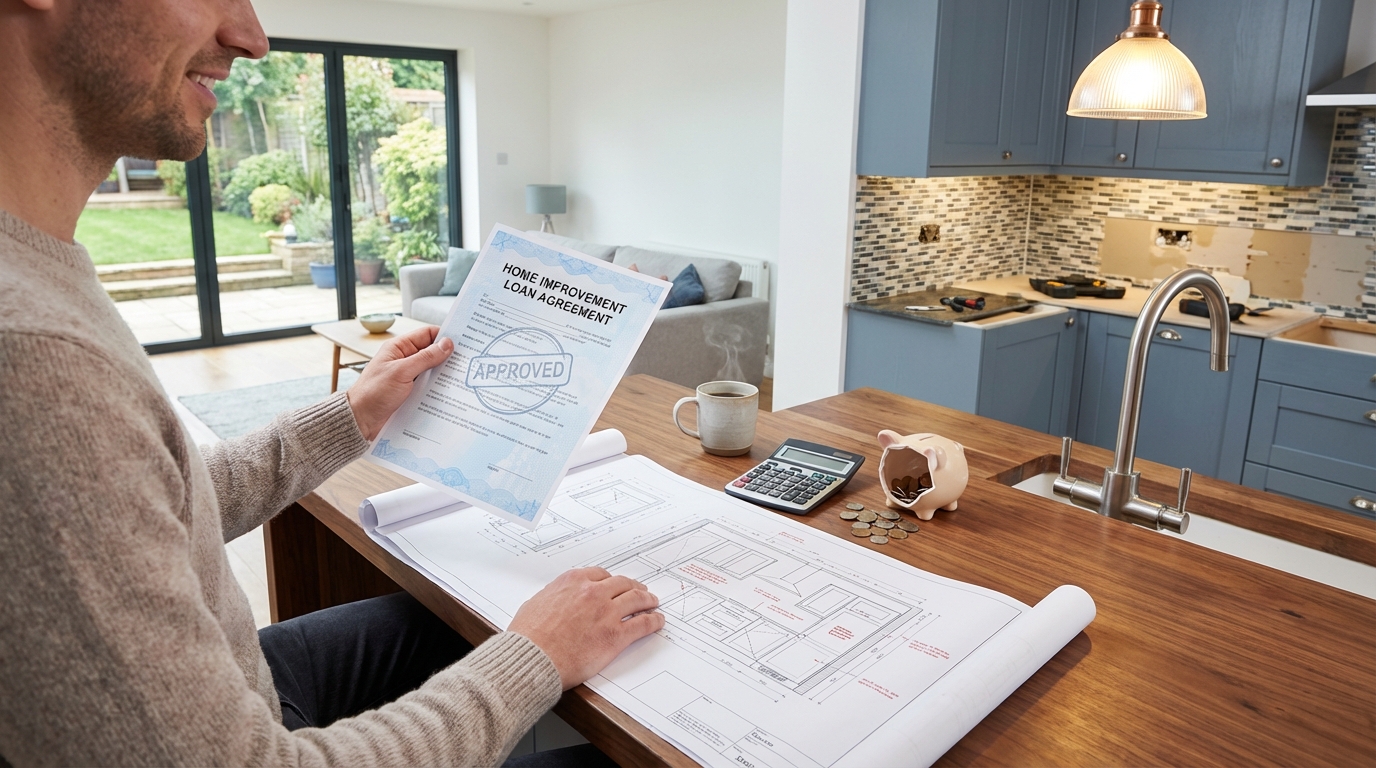
Dreaming of a beautiful kitchen upgrade or a complete bathroom makeover? You’re not alone. Many homeowners want to enhance their living spaces but feel unsure about the financial side. This guide is here to help.
We’ll walk you through the world of home improvement funding in a clear, friendly way. Understanding your choices upfront can save you money and stress. It helps you pick the right path for your specific project and budget.
Whether you’re planning small updates or major changes, we break down complex ideas into simple steps. You’ll learn what makes different financing types unique. This knowledge empowers you to make smart decisions that benefit both your wallet and your home’s value.
By the end, you’ll feel confident about moving forward with your plans. You’ll know exactly what to look for and how to find the best rates and terms for your situation.
Key Takeaways
- Understanding financing choices helps you avoid costly mistakes
- Different projects may benefit from specific types of funding
- Your credit profile and home equity influence what’s available to you
- Comparing rates and terms can lead to significant savings
- Planning ahead ensures your project stays within budget
- The right financial product matches both your immediate needs and long-term goals
- Being informed puts you in control of your home improvement journey
Understanding Renovation Loan Options
Before picking up a hammer, it’s smart to explore the various ways to pay for your home transformation. These financial products are designed specifically for property upgrades and repairs.
What Are Renovation Loan Options?
A home improvement loan is a specialized type of financing for property upgrades. It helps cover costs for repairs, additions, or complete makeovers.
Funding choices fall into two main categories. Secured options use your home as collateral. Unsecured types rely on your credit history instead.
Each financing method serves different needs. Some provide one-time lump sums for single projects. Others offer flexible credit lines for ongoing work.
Key Benefits for Home Improvement Projects
These financial solutions offer significant advantages for property upgrades. You can access funds without draining your savings account.
Better interest rates compared to credit cards make this approach cost-effective. Strategic improvements can also boost your home’s market value.
Flexible repayment terms help with budgeting. Some plans allow interest-only payments during construction phases. Fixed monthly payments provide predictable costs.
The right financing lets you start projects sooner rather than waiting years to save. You can enjoy your upgraded living space much faster.
Exploring Home Improvement Loan Alternatives
If you’re looking to enhance your living space without tapping into home equity, there are excellent alternatives available. These financial products offer different approaches to funding your property upgrades.
Many homeowners find these solutions particularly appealing for their simplicity and speed. They provide access to necessary funds without the complexities of traditional mortgage processes.
When to Consider a Home Improvement Loan
A home improvement loan works well for smaller to medium-sized projects. Think kitchen updates, bathroom refreshes, or essential roof repairs. These typically range from $1,000 to $75,000.
The application process focuses on your credit profile rather than property value. Lenders examine your credit score, history, and debt-to-income ratio. This makes these loans accessible to newer homeowners.
Quick funding is a major advantage. You can often receive funds within one to seven days. There’s no lengthy appraisal or closing process to navigate.
Fixed interest rates provide predictable monthly payments throughout the term. This helps with budget planning and eliminates surprises from rate changes.
Consider this type of financing when you want to preserve your home equity for future needs. It’s also ideal when you prefer not to use your property as collateral.
Insights into Home Equity Loans and Lines
Leveraging the value you’ve accumulated in your property opens doors to financing solutions with attractive rates and terms. These products use your home’s worth as security, often resulting in better conditions than unsecured alternatives.
Understanding the differences helps you choose wisely. Both approaches tap into your property’s increased value but work quite differently.
Home Equity Loan: Pros and Cons
A home equity loan provides a single lump sum based on your available equity. You receive all funds upfront with fixed interest rates around 7.15% APR.
Key advantages include predictable payments and potential tax benefits. The interest may be deductible when used for home improvements.
However, using your property as collateral carries risk. Default could lead to foreclosure, and you’ll need sufficient equity—typically 15-20%.
How a Home Equity Line of Credit Works
A HELOC offers revolving access to funds rather than a one-time amount. It functions like a credit card secured by your home’s value.
Variable rates currently range from 7.20% to 10.85% APR. You only pay interest on amounts actually used during the draw period.
The structure includes a 10-year draw phase followed by repayment. This flexibility suits ongoing projects with changing costs.
| Feature | Home Equity Loan | HELOC |
|---|---|---|
| Funding Type | Single lump sum payment | Revolving credit line |
| Interest Rate | Fixed (around 7.15% APR) | Variable (7.20%-10.85% APR) |
| Payment Structure | Fixed monthly payments | Interest-only during draw period |
| Best For | One-time projects with set budgets | Ongoing work with flexible needs |
Choosing between these financing approaches depends on your project scope and financial preferences. Consider your comfort with variable rates versus payment predictability.
Secured vs. Unsecured Loan Options for Renovations
Two distinct paths emerge when seeking funds for property enhancements: secured and unsecured approaches. The key difference lies in whether you provide collateral to guarantee repayment.
Understanding Collateral-Based Financing
Secured financing requires using assets like your home as security. This includes home equity loans and HELOCs where your property backs the funds.
Lenders offer better rates because their risk is lower. They can recover unpaid balances by selling your property if needed. This approach typically provides larger amounts, often $50,000 to $250,000+.
However, you accept the risk of potential foreclosure if financial circumstances prevent payments. The trade-off is clear: better terms in exchange for putting your home on the line.
Advantages of Unsecured Loans
Unsecured financing relies on your credit history rather than collateral. Personal loans and credit cards fall into this category.
The approval process is often faster, taking just 1-7 days versus weeks for equity products. There’s no appraisal required and no risk of losing your home.
This works well for smaller projects under $50,000. The speed and safety often outweigh the higher interest rates that typically range from 8.74% to 24.99% APR.
Your choice between these paths should balance available equity, risk tolerance, project size, and funding urgency. Consider whether the interest rate difference justifies using your home as security.
Navigating Cash-Out Refinancing for Home Renovations
A cash-out refinance offers homeowners a strategic way to fund major upgrades while potentially improving their mortgage terms. This approach lets you access your property’s accumulated worth without taking out separate financing.
The Cash-Out Refinance Process
The process begins with determining your available equity. Lenders typically allow borrowing up to 80% of your home’s appraised value minus your current mortgage balance.
You’ll complete a full mortgage application similar to your original home purchase. This includes credit checks, income verification, and a professional appraisal. The timeline usually spans 4-6 weeks from start to closing.
Current interest rates play a crucial role in this decision. When market rates are lower than your existing mortgage, you can potentially reduce your monthly payment while accessing cash.
This method consolidates your mortgage and improvement funds into one payment. You receive the cash difference at closing to begin your projects immediately.
Consider closing costs, which typically range from 2-5% of the loan amount. Also remember you’re restarting your mortgage term, which extends your payoff timeline.
Overview of FHA 203(k) and Construction-to-Permanent Loans
For buyers eyeing properties that need some TLC, specialized financing solutions exist. These unique mortgage products combine home purchase and improvement funding into one package.
This approach simplifies the process significantly. You avoid the hassle of securing separate construction financing.
FHA 203(k) Loan Benefits and Eligibility
The FHA 203(k) program is government-backed and particularly helpful for first-time buyers. It requires only a 3.5% down payment for credit scores of 580 or higher.
You can borrow up to 110% of the home’s projected value after improvements. This covers both the purchase price and repair costs in a single mortgage.
The program offers two versions for different project scopes. The Standard 203(k) handles major structural work requiring consultant oversight.
The Limited 203(k) version suits smaller, non-structural projects under $35,000. Both require the property to be your primary residence.
Streamlining Renovations with Construction-to-Permanent Loans
Construction-to-permanent financing provides another streamlined option. This single loan covers both the building phase and becomes your permanent mortgage.
The conversion happens automatically once work is complete. This eliminates the need to apply for separate financing at different stages.
These products help buyers purchase homes below market value due to needed repairs. You can customize the property from day one while building instant equity.
The main considerations include slightly higher rates than conventional mortgages. However, the convenience of single-loan financing often outweighs this factor.
Alternative Financing: Personal Loans and Credit Cards
For homeowners seeking immediate funding without property collateral, unsecured financial products provide practical solutions for improvement projects. These approaches bypass the lengthy processes associated with equity-based financing.
Comparing Unsecured Personal Loans
Personal loans deliver funds ranging from $1,000 to $50,000+ with approval in just 1-7 days. This speed makes them ideal for urgent repairs or contractor deadlines. You avoid using your home as security.
Interest rates vary significantly based on your credit score, currently ranging from 8.74% to 24.99% APR. Borrowers with excellent credit profiles secure the best terms. Fixed rates ensure predictable monthly payments over 2-7 year terms.
Credit cards offer another flexible path, especially store cards from home improvement retailers. Many provide 0% introductory APR periods lasting 12-24 months. Some even offer rewards like 4% cash back on specific purchases.
However, standard APRs can climb to 18-29% after promotional periods end. Balance transfer fees of 3-5% also apply. Smart borrowers use personal loans for medium-sized projects and credit cards for smaller purchases under $5,000.
Comparing Interest Rates, Terms, and Overall Loan Costs
The numbers you see advertised for financing don’t always reveal the complete picture of what you’ll actually pay. Understanding the full financial impact requires looking beyond surface-level percentages.
Evaluating Rates and Repayment Terms
Your credit score plays a crucial role in determining your actual interest rate. Borrowers with excellent scores often qualify for rates at the lower end of the range.
Fixed-rate products provide payment predictability throughout your term. Variable-rate options can change with market conditions, potentially increasing your costs over time.
Shorter repayment periods mean higher monthly payments but less total interest. Longer terms reduce your monthly amount but increase the overall financing expense.
Understanding Hidden Costs and Fees
Many financing choices include fees that aren’t reflected in the advertised rate. Closing costs, annual fees, and early closure penalties can add significantly to your total.
Smart borrowers compare the annual percentage rate (APR) rather than just the interest percentage. The APR includes most fees and gives a more accurate picture of true borrowing costs.
Always ask about appraisal fees, insurance requirements, and potential prepayment penalties. These hidden expenses can impact your budget more than you might expect.
Renovation Loan Options: Matching Loans to Your Project
Finding the perfect financial match for your property upgrade involves careful consideration of several key factors. The right choice depends on your specific situation and goals.
Selecting the Ideal Loan for Your Home Improvement
Your project scope is the starting point for choosing financing. Smaller enhancements under $10,000 often work well with personal credit solutions. Medium-sized work from $10,000 to $50,000 may benefit from flexible credit lines.
Major transformations exceeding $50,000 typically require equity-based approaches. Your available home value plays a crucial role in determining what’s accessible.
Timing also influences your decision. Emergency repairs need quick funding, while planned work can accommodate longer approval processes for better rates.
| Project Size | Typical Amount | Recommended Approach |
|---|---|---|
| Minor Updates | Under $10,000 | Personal credit solutions |
| Medium Enhancements | $10,000-$50,000 | Flexible credit lines |
| Major Transformations | Over $50,000 | Equity-based financing |
According to the National Association of Realtors’ 2025 Remodeling Impact Report, 54% of homeowners used equity-based solutions for their latest property upgrades. This reflects the popularity of these approaches for substantial home improvements.
Your credit profile significantly impacts available choices. Higher scores unlock better terms across all products. Consider mixing financing types for complex projects with different phases and needs.
Conclusion
Making informed financial decisions for your property upgrades puts you in control of your home transformation. Understanding the full spectrum of available choices helps match the right approach to your specific needs and circumstances.
Each financing method serves distinct purposes in the home improvement landscape. Whether you prefer fixed rates, flexible access, or speedy approval, there’s a solution that fits your project scope and budget.
The key to success lies in evaluating total costs beyond just interest rates. Consider fees, repayment terms, and your ability to manage payments comfortably. Strategic home improvements can boost your property’s value, making the investment worthwhile.
With this knowledge, you’re ready to confidently select financing that turns your vision into reality while protecting your financial well-being.
FAQ
What are the main types of financing for home improvements?
You have several choices! Popular options include a home equity loan, which gives you a lump sum, or a HELOC, which works like a credit card with a revolving credit line. A cash-out refinance replaces your current mortgage with a larger one, and you get the difference in cash. For smaller projects, an unsecured personal loan or even a credit card might be suitable.
How does my credit score affect my loan options?
Your credit score is a big factor. A higher score typically gets you better interest rates and more favorable terms. For secured loans like a home equity line of credit, lenders may be a bit more flexible. But for unsecured financing, like a personal loan, a strong credit score is often essential for approval and a good rate.
What is the difference between a home equity loan and a HELOC?
A> A home equity loan provides a one-time, lump-sum payment with a fixed interest rate, ideal for a single project with known costs. A HELOC, or Home Equity Line of Credit, gives you a revolving credit line to draw from as needed, similar to a credit card, usually with a variable rate. This is great for ongoing or multi-phase projects.
When is a cash-out refinance a good idea?
This can be a smart move if current mortgage rates are lower than your existing rate. You refinance your home for more than you owe and receive the difference in cash. It’s best for major renovations that significantly increase your property’s value, as you are essentially restarting your mortgage clock.
Are there government-backed loans for renovations?
Yes! The FHA 203(k) loan is a popular option, especially for buying and repairing a fixer-upper or funding major upgrades. It wraps the purchase price and repair costs into a single mortgage. There are also construction-to-permanent loans that streamline financing for building a new home or a large-scale remodel.
What should I consider when comparing loan costs?
A> Look beyond just the interest rate. Pay close attention to the annual percentage rate (APR), which includes fees. Also, watch for origination fees, appraisal costs, and potential early repayment penalties. Understanding the total cost over the life of the loan will help you make the best financial decision for your project.