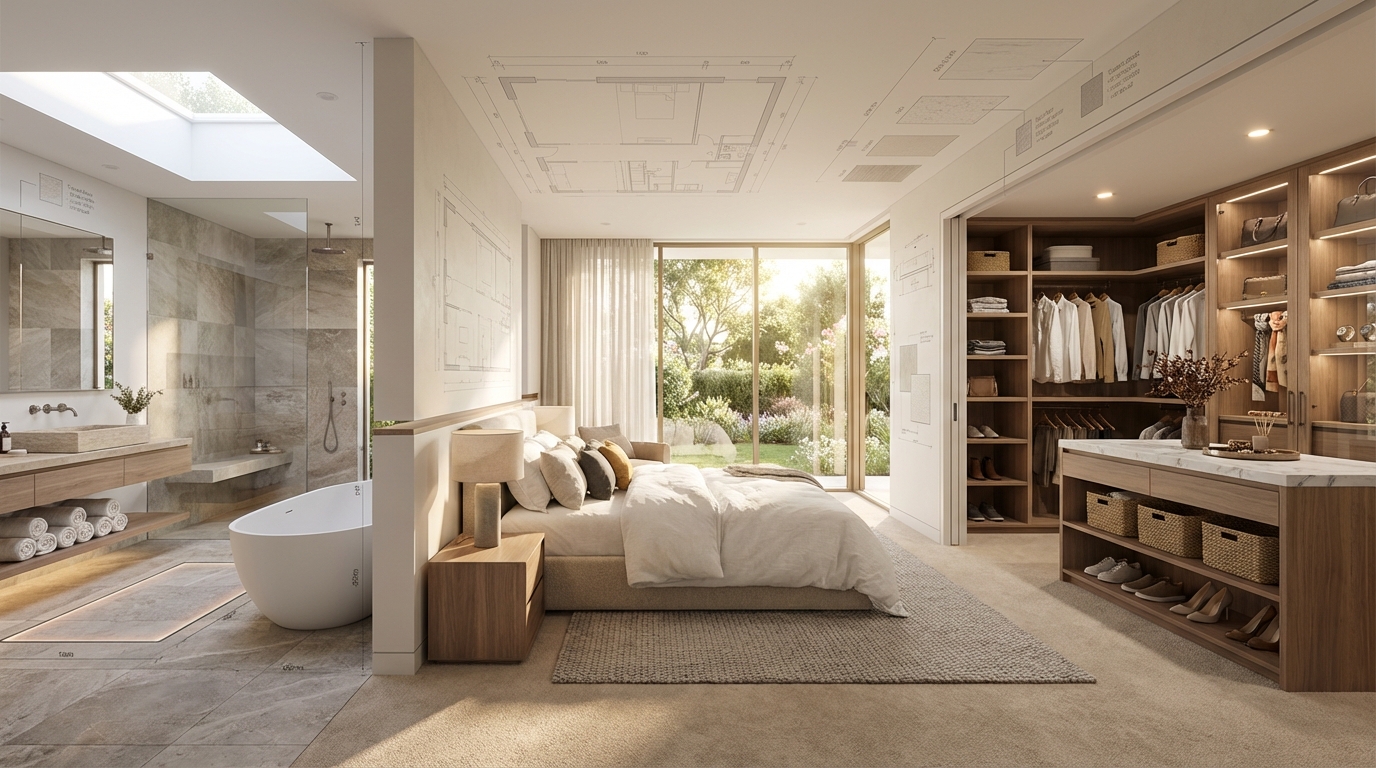
Imagine creating a private sanctuary within your own house. A master suite addition transforms your living space into a personal retreat. This special area combines a spacious bedroom, luxurious bathroom, and generous walk-in closet.
Careful planning ensures your new space flows beautifully with your existing home. You’ll need to consider your budget, architectural style, and daily needs. Good design makes the entire process smoother and more enjoyable.
This guide walks you through every step of creating your dream retreat. We cover layout planning, material selection, and smart budgeting. You’ll learn how to maximize both comfort and property value.
Whether you’re a homeowner or a design professional, you’ll find practical advice here. We share field-tested strategies for project success. Our tips help you avoid common mistakes and make confident decisions.
Key Takeaways
- A well-planned master suite creates a private retreat that enhances daily living
- Proper integration with your home’s existing architecture is crucial for seamless flow
- Budget considerations should include both construction costs and long-term value
- Space planning fundamentals help maximize functionality and comfort
- Understanding permit requirements early prevents project delays
- Visualization tools streamline decision-making during the design phase
- Balancing personal preferences with resale value ensures long-term satisfaction
Project Overview and Benefits
Creating a private oasis in your dwelling provides everyday enjoyment and significant investment returns. This type of home improvement transforms how you experience your property while adding substantial market value.
Enhancing Home Comfort and Value
A well-designed personal retreat addresses multiple lifestyle needs. It offers dedicated space for relaxation and daily routines. Families appreciate the privacy and organization it brings.
Remote professionals find it creates an ideal workspace. Aging residents benefit from accessible, comfortable living arrangements. The enhanced comfort extends to luxurious amenities like a spa-like bathroom and generous storage areas.
Understanding the Impact on Resale
This investment typically recovers 50-60% of its cost in added property value. Quality construction and energy-efficient features maximize returns. Location plays a crucial role in determining final ROI.
High-demand markets see better financial outcomes. The project makes your property more attractive to potential buyers. It often results in faster sales at premium prices.
| Project Cost | Value Increase | Net Investment | Typical ROI |
|---|---|---|---|
| $80,000 | $40,000-$48,000 | $32,000-$40,000 | 50-60% |
| $120,000 | $60,000-$72,000 | $48,000-$60,000 | 50-60% |
| $200,000 | $100,000-$120,000 | $80,000-$100,000 | 50-60% |
Defining Your Design Vision
A well-conceived layout forms the foundation of a functional and inviting personal sanctuary. Your vision should balance aesthetic preferences with practical daily needs. This careful planning stage determines how comfortably you’ll move through your new space.
Space Planning and Layout Essentials
Most comfortable personal retreats range from 300-500 square feet. Smaller footprints work for essential setups, while larger areas allow for luxury upgrades. Proper circulation ensures smooth movement throughout the space.
Maintain 36-inch clear paths for easy walking. Allow 24-30 inches beside beds for nightstand placement. Closet aisles need 36-42 inches for comfortable access. These 6 considerations before a master suite help avoid common planning mistakes.
Setting Square Footage and Adjacencies
Bedrooms should measure at least 12×14 feet for queen beds or 14×16 feet for king sizes. Closets require 24-inch hanging depth with proper aisle space. Bathrooms range from 80-120 square feet for basic layouts to 150-200 square feet for luxury designs.
The sequence bed → bath → closet creates an ideal morning routine. Alternatively, bed → closet → bath keeps humidity away from clothing. Dual circulation allows access from multiple points.
| Room Area | Recommended Size | Key Features |
|---|---|---|
| Bedroom (Queen) | 12’×14′ minimum | Nightstand space, clear pathways |
| Bedroom (King) | 14’×16′ minimum | Additional furniture space |
| Basic Bathroom | 80-120 sq. ft. | Shower, vanity, toilet |
| Luxury Bathroom | 150-200 sq. ft. | Soaking tub, double vanity |
| Walk-in Closet | Varies by needs | 36-42″ aisles, 24″ depth |
Choosing the Right Style, Finishes, and Materials
Your material selections create the character and longevity of your new personal space. The design process involves balancing aesthetic preferences with practical maintenance needs. Thoughtful choices ensure your investment remains beautiful for years.
Custom Versus Prefab Options
Prefabricated options like standard vanity cabinets offer significant savings. These solutions deliver high-quality appearance without custom pricing. They work well for homeowners seeking luxury on a budget.
Custom features provide unique tailoring to your specific space. The selection process should consider both initial cost and long-term value. Each approach has distinct advantages for different project plans.
Selecting Durable Finishes for Long-Term Value
Porcelain tile stands out for its durability and low maintenance. It resists stains and moisture beautifully. Natural stone makes excellent accent pieces but requires regular sealing.
Consider luxury vinyl tile (LVT) for bedroom floors at $3-$7 per square foot. It mimics hardwood’s look without the $8-$15 price tag. Large-format tiles with minimal grout lines simplify cleaning.
Heated flooring adds comfort and practical benefits. It helps moisture evaporate faster in bathrooms. This reduces mold risk and extends your finishes‘ lifespan.
Work with material samples during your design phase. This ensures all interior elements create a cohesive look. Your master suite addition will reflect your personal style while standing the test of time.
Master Suite Addition: Planning Key Considerations
Smart financial planning separates successful home expansion projects from budget nightmares. Understanding costs upfront helps set realistic expectations for your residential improvement.
Budgeting and Cost Drivers
Typical construction expenses range from $175-$400 per square foot. A standard 400-square-foot space averages around $90,000. High-end builds with complex structures can reach $175,000-$200,000.
Key factors influence your final price tag. Bathroom complexity significantly impacts plumbing costs. Systems upgrades like electrical panels add expense. Structural requirements for second-floor work increase budgets substantially.
Regional variations affect pricing. Urban areas may cost $200-$500 per square foot. Suburban locations typically range $150-$350. Rural projects generally run $100-$250.
Navigating Permits, Regulations, and Site Challenges
Building permits range from $500-$2,500 depending on location. Architectural design fees typically account for 5-20% of total project cost. Zoning considerations include setback requirements and height restrictions.
Practical strategies help control expenses. Stack new plumbing near existing lines to minimize rerouting. Keep roof forms simple to reduce construction complexity. Maintain a 10-15% contingency fund for unexpected issues.
Ground-level work requires foundation construction. Second-story additions demand structural reinforcement. Each location presents unique challenges that affect timelines and budgets.
Practical Tips from Industry Experts
Industry professionals rely on advanced visualization tools to ensure project success. These technologies help homeowners make confident choices before construction begins.
Utilizing 2D/3D Renderings for Better Decision-Making
Modern software creates instant 3D views from simple floor plans. You can adjust walls and layouts during design meetings. This process eliminates costly surprises later.
Photorealistic renderings show materials and lighting accurately. Homeowners approve choices once instead of revisiting decisions. The visual design process builds confidence in your plans.
Streamlining the Construction Process
Experienced professionals assess your home’s condition early. They identify practical options for your addition. This approach prevents expensive jobsite problems.
Clear presentations help everyone understand the design intent. Contractors and subcontractors work more efficiently. The entire construction process flows smoothly.
| Visualization Tool | Key Feature | Benefit | Time Savings |
|---|---|---|---|
| 2D Floor Plans | Quick layout tracing | Accurate spatial planning | 2-3 days |
| 3D Views | Live adjustments | Instant option comparison | 1-2 weeks |
| Photorealistic Renderings | Material visualization | Reduced change orders | 3-4 weeks |
| Client Presentations | Branded exports | Better stakeholder alignment | Ongoing |
These tools help spot potential conflicts before construction. You can evaluate different flow patterns and cost scenarios. The right planning approach makes your project enjoyable and efficient.
Innovative Ideas for Modern Master Suites
Today’s homeowners seek more than just extra square footage when expanding their living areas. They want spaces that enhance daily life through smart design and modern comforts.
Thoughtful features transform basic rooms into luxurious retreats. Many people now incorporate wellness elements and flexible zones into their designs.
Smart Storage Solutions and Multifunction Zones
Walk-in closet designs have evolved significantly. Optimal 36-42 inch aisles provide comfortable movement through clothing areas.
Vertical storage solutions maximize every inch of space. Pull-down rods and seasonal shelves keep items organized yet accessible.
Integrated lighting illuminates shoe racks and accessory cubbies. Convenient outlets support garment steamers and other closet tools.
Multifunction zones add versatility to bedroom areas. Soundproofed alcoves create perfect home office spaces. Reading nooks near windows utilize natural light beautifully.
Integrating Smart Home and Wellness Features
Modern technology enhances comfort throughout the space. Zoned HVAC systems maintain perfect sleeping temperatures.
Programmable lighting adjusts to mimic natural daylight cycles. This supports healthy sleep patterns and daily rhythms.
“The integration of wellness technology transforms a bedroom into a true sanctuary for restoration.”
Safety features like leak detectors provide peace of mind. These connect directly to mobile devices for instant alerts.
| Smart Feature | Primary Benefit | Approximate Cost | Installation Complexity |
|---|---|---|---|
| Programmable Lighting | Energy savings + mood setting | $200-$500 | Low |
| Zoned HVAC | Personalized temperature control | $1,500-$3,000 | Medium |
| Motorized Shades | Privacy + light control | $300-$800 per window | Medium |
| Leak Detection | Early water damage prevention | $100-$250 | Low |
Wellness-focused design includes natural materials and biophilic elements. Stone accents and indoor plants create calming environments.
Strategic window placement maximizes views while maintaining privacy. These features work together to create a truly restorative personal retreat.
Conclusion
Building your perfect personal retreat requires balancing vision with practical realities. A successful master suite addition brings together smart design, careful planning, and quality construction.
Smart early decisions prevent costly issues later. Understanding your budget and space needs helps create a project that flows beautifully with your existing home.
The best additions blend modern comforts with timeless appeal. Thoughtful lighting, proper storage, and quality finishes ensure your new bedroom and bathroom serve you well for years.
Working with experienced professionals makes the entire process smoother. They help translate your dreams into workable plans that respect both your lifestyle and cost considerations.
Your investment creates daily comfort while adding lasting value. Begin your journey today by consulting with design-build experts who can guide you from concept to completion.
FAQ
What are the primary benefits of adding a master suite to my home?
A master suite addition significantly boosts your daily comfort by providing a private retreat. It also increases your property’s square footage and appeal, which can enhance its overall market value.
How much square footage should I plan for a comfortable bedroom and bathroom layout?
A comfortable design typically starts at around 300 to 400 square feet. This allows for a spacious bedroom, a well-appointed bathroom with a separate shower and tub, and essential features like a walk-in closet.
What are the main cost drivers for this type of home addition project?
The biggest factors affecting cost are the project’s size, complexity of the plumbing work, quality of finishes like tile and cabinetry, and site-specific challenges. Getting detailed plans and quotes is crucial for accurate budgeting.
How long does the construction process usually take?
The timeline can vary, but most projects take several months from start to finish. This includes planning, securing permits, the actual construction phase, and final inspections. Good project management helps keep things on schedule.
Can I add a master suite on a second floor?
Yes, a second-floor addition is a popular option, especially for maximizing space on a smaller lot. It’s important to consult with a structural engineer to ensure your home’s foundation and frame can support the new weight.
What are some smart storage ideas for a master suite closet?
Consider built-in shelving, pull-out drawers, and specialized organizers for shoes and accessories. Utilizing vertical space with double-hung rods and incorporating a central island can maximize functionality in a walk-in closet.