Welcome to your complete guide on selecting the perfect food storage area for your home. Choosing between a butler’s pantry and a walk-in option can feel overwhelming, but we’re here to simplify the decision.
The right storage solution transforms your cooking area from chaotic to calm. Imagine having everything organized and within reach. Meal preparation becomes efficient and enjoyable with proper planning.
Both pantry styles offer unique advantages depending on your available room, budget, and daily routines. This comparison helps you understand which option fits your lifestyle best.
We’ll explore practical design concepts and organization strategies that work for any size kitchen. You’ll discover real examples and professional elements that adapt to your specific situation.
Whether you’re converting a small closet or planning a major update, this guide provides actionable inspiration. Let’s find the ideal storage solution that makes your kitchen the functional heart of your home.
Key Takeaways
- Butler’s pantries serve as transitional spaces between kitchen and dining areas
- Walk-in pantries offer extensive storage capacity for bulk items
- Your choice depends on available space and household needs
- Proper organization systems maximize efficiency in either option
- Consider traffic flow and accessibility when planning your design
- Both styles can significantly improve your cooking experience
- Budget considerations play a key role in your final decision
Understanding Different Pantry Types
The world of kitchen storage offers several distinct pantry types, each with unique advantages for different household needs. A well-organized food storage area is the key to keeping your cooking space clutter-free. Various configurations exist to suit any kitchen layout and personal preferences.
Features of Built-In, Butler’s, and Walk-In Pantries
Built-in units integrate seamlessly with existing cabinetry. They provide vertical storage without requiring extra floor space. This makes them ideal for smaller kitchens or galley layouts.
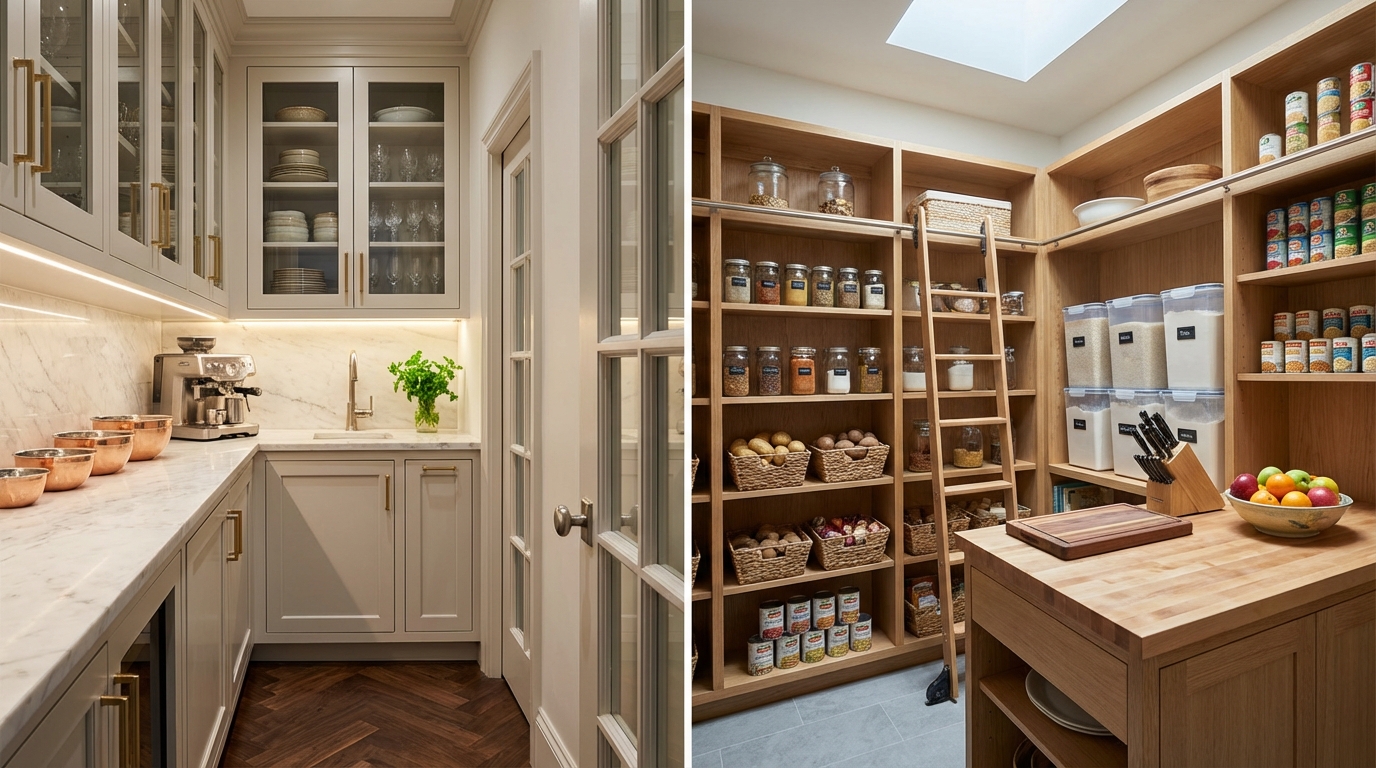
Butler’s pantries serve as transitional prep spaces between the kitchen and dining area. They typically feature countertops for food preparation and storage for entertaining essentials. This design supports efficient meal serving and cleanup.
Walk-in options function as separate storage rooms with floor-to-ceiling shelving. They offer maximum capacity and easy visibility of all stored goods. Freestanding pieces provide flexibility for renters or those wanting portable solutions.
Benefits of a Well-Designed Pantry
Effective pantry design consolidates food and kitchen essentials in one accessible location. This reduces counter clutter and improves meal planning efficiency. Proper organization also extends the shelf life of your groceries.
The best storage solution optimizes your specific kitchen layout. Consider traffic flow and proximity to cooking zones. Designated zones for different categories create a functional space that saves time and reduces waste.
Exploring the Allure of Butler’s Pantries
Originally serving grand estates, butler’s pantries have evolved into sophisticated kitchen extensions. These elegant spaces once housed fine china and beverage preparation away from main cooking areas. Today, they offer both practical storage and entertaining functionality.
Signature Design Elements and Functionality
Modern butler’s pantries feature shallow countertops perfect for food staging. Upper cabinetry displays dishware while lower drawers store table linens. The design often includes glass-front cabinets and decorative tile backsplashes.
Many contemporary versions incorporate sinks for easy cleanup. Dedicated zones accommodate small appliances like coffee makers. Some even include wine storage or beverage refrigerators for entertaining convenience.
The functional advantages are significant. These spaces keep countertop appliances hidden yet accessible. They provide staging areas for party platters during large gatherings. This maintains a clutter-free main cooking zone.
| Design Feature | Primary Function | Style Impact |
|---|---|---|
| Shallow Countertops | Food prep and staging | Clean, streamlined look |
| Glass-Front Cabinets | Display serving pieces | Elegant, open feel |
| Beverage Refrigerator | Entertainment storage | Luxury convenience |
| Decorative Backsplash | Easy cleanup surface | Coordinated design style |
Pros and Cons to Consider
Butler’s pantries increase home value and provide dedicated entertaining space. They conceal bulky items and allow quick cleanup before guests arrive. The ability to close off mess is a significant advantage.
However, these spaces require substantial square footage—typically 20-50 square feet minimum. They represent a considerable investment and may not suit smaller homes. Households that don’t entertain frequently might find them underutilized.
This storage solution works best for regular hosts with adequate adjacent space. Homeowners wanting a minimalist kitchen aesthetic will appreciate the concealed organization. Proper budgeting for custom cabinetry ensures a successful installation.
Evaluating Walk-In Pantries in Modern Kitchens
Modern homeowners increasingly recognize walk-in pantries as essential components of functional kitchen design. These dedicated storage rooms provide unparalleled capacity for organizing everything from daily groceries to bulk purchases.
The true advantage lies in their room-sized layout. You can store dry goods, canned items, and small appliances all in one accessible location.
Maximizing Space in a Walk-In Setup
Shelving depth makes a significant difference in walk-in pantry efficiency. Deep shelves often lead to forgotten items getting lost in the back. Narrow shelves between 8-12 inches prevent this problem.
Shallow floating shelves keep everything visible and within easy reach. They also create more walking room in compact spaces. Lower shelves can be deeper to accommodate bulk containers.
Smart layouts maximize your available square footage. U-shaped configurations use three walls for maximum storage capacity. L-shaped designs work well in corner installations.
Galley-style layouts with shelves on both sides need a center aisle of at least 36 inches. This allows comfortable movement and access to all areas. Even small 4×4 foot spaces can function exceptionally well.
Zone organization creates an efficient system. Group breakfast items together near the entrance. Keep baking supplies in their own section for easy access during cooking projects.
Adjustable shelving systems offer flexibility as your needs change. You can customize heights for different container sizes. The back of the door provides bonus storage for spices or cleaning supplies.
For creative inspiration on cabinet arrangements, explore these walk-in pantry cabinet ideas. Proper planning ensures your walk-in pantry becomes the most organized room in your home.
Top Pantry Renovation Ideas for a Functional Kitchen
Transform your kitchen’s storage with smart organizational solutions that combine beauty and function. These simple upgrades can dramatically improve your daily routine.
Focus on elements that enhance accessibility and visibility. A well-planned space saves time and reduces frustration.
Incorporating Slide-Out Drawers and Labelled Containers
Slide-out drawers are a game-changer for deep cabinet spaces. They bring every item to the front, eliminating forgotten goods in the back. These systems work perfectly in base cabinets.
Choose drawers with smooth gliding tracks and concealed handles. This creates a sleek, modern look for your kitchen.
Labelled containers bring order to dry goods. Decant flour, pasta, and cereals into uniform glass jars. Dark paper labels make contents easy to identify at a glance.
This system turns chaos into a coordinated display. It also simplifies grocery inventory checks.
Using Glass Cabinets to Enhance Visibility
Glass-front cabinets offer both style and practicality. You can see your organized items without opening doors. This helps you quickly assess what needs restocking.
Install these cabinets in upper sections to showcase attractive pieces. Keep less appealing items behind solid doors below.
The combination of these three elements creates a highly efficient space. Your kitchen will feel more spacious and intentional.
| Feature | Primary Benefit | Ideal Application |
|---|---|---|
| Slide-Out Drawers | Full visibility and access | Base cabinets for heavy items |
| Labelled Containers | Categorized organization | Dry goods and baking supplies |
| Glass Cabinets | Quick inventory assessment | Upper sections for display |
Design Inspirations from Real-Life Pantry Makeovers
Your storage area deserves the same design attention as your main kitchen. Real transformations show how color and finish choices create stunning focal points.
These projects prove that thoughtful planning turns utilitarian spaces into beautiful features. The right approach enhances your entire kitchen design.
Trendy Color Palettes and Finishes
Moody blues and greens create serene, sophisticated pantry spaces. Soft neutrals like warm whites brighten smaller areas beautifully.
Bold choices make dramatic statements. Deep navy or charcoal gray shelves add personality. Contrasting combinations like green and yellow create visual interest.
Two-tone designs are growing in popularity. Lighter upper walls enhance brightness while darker lower sections hide wear. This practical approach maintains a cohesive look.
Finish options impact the overall style. Matte paint offers contemporary subtlety. High-gloss surfaces reflect light dramatically.
Satin finishes balance durability with elegance. Exposed walk-in pantries become design features with decorative tiles. Patterned wallpaper adds character to any storage space.
Consider your kitchen’s overall style when selecting colors. Rustic spaces pair well with warm wood tones. Modern kitchens suit bold monochromes perfectly.
Your pantry offers creative freedom. Experiment with bolder choices than you might use elsewhere. The door can conceal more adventurous style decisions when needed.
Maximizing Kitchen Storage with Custom Shelving
Custom shelving transforms basic storage areas into highly functional spaces. This approach addresses specific organizational challenges that standard configurations cannot solve.
Innovative Shelving and Cabinetry Solutions
Extra shelving units dramatically increase capacity in underutilized areas. They convert empty vertical gaps into practical storage zones. This solution works particularly well in rooms with high ceilings.
Freestanding bookshelf units offer flexible alternatives to permanent installations. Renters appreciate their non-permanent nature. Homeowners enjoy the quick color accents they bring to darker spaces.
Innovative designs include corner shelving for awkward areas. Pull-down systems make high storage accessible. Tiered shelving creates stadium-style visibility for jars and cans.
Adjustable systems provide long-term flexibility. Movable brackets accommodate changing storage needs. You can reconfigure heights for different container sizes as your family grows.
Custom shelf depths optimize space throughout your kitchen. Shallow 8-10 inch shelves work well for frequently used items. Deeper 16-20 inch shelves handle bulk purchases and appliances.
Combining closed cabinetry with open shelving creates balanced storage. Lower cabinets hide less attractive items while providing counter space. Open shelves above keep everyday essentials visible and accessible.
Professional custom systems offer specialized features that generic options lack. Integrated wine racks and basket drawers maximize every inch. These solutions provide optimal organization for your specific needs.
Innovative Cabinetry and Drawer Solutions
Today’s storage solutions combine sleek aesthetics with intelligent organization systems. Modern cabinet designs offer both visual appeal and practical benefits that transform your kitchen experience.
No-handle cabinets create a seamless, modern look by eliminating protruding hardware. These sophisticated systems typically feature recessed finger pulls or push-to-open mechanisms. The clean lines prevent snagged clothing and maintain uninterrupted visual flow.
No-Handle Cabinets for a Sleek Look
Handleless designs work exceptionally well in contemporary kitchens. They create a sense of spaciousness through smooth, uninterrupted surfaces. This approach keeps your storage area looking organized and intentional.
The mechanism is surprisingly simple yet effective. A gentle press on the door activates the opening system. Some designs feature subtle grooves along the bottom edge for easy access.
Pull-Out Drawers to Optimize Accessibility
Pull-out drawers revolutionize how you access stored items. They bring everything to the front, eliminating forgotten goods in the back. Complete visibility when extended makes inventory management effortless.
Deep rolling drawers support heavy items like small appliances and bulk goods. Heavy-duty glides ensure smooth operation even with substantial weight. This system reduces bending and reaching compared to traditional shelving.
Specialized solutions include narrow spice pull-outs and double-tier systems. These maximize vertical space while keeping contents organized. For households needing flexible organization, explore innovative storage solutions for growing families.
Retrofitting existing cabinets with pull-out systems offers a cost-effective upgrade. Many installations require no permanent modifications. This approach modernizes functionality without complete cabinet replacement.
Combining handleless cabinets with pull-out technology creates the ultimate storage solution. You get sleek exterior aesthetics paired with supremely functional interior organization. Every item becomes easily accessible in this smart setup.
Creative Open Shelving and Glass Cabinet Designs
Combining open and glass elements creates dynamic storage solutions for your kitchen pantry. This approach blends accessibility with visual appeal in your food storage area.
Open shelving offers immediate access to frequently used items. You avoid constantly opening doors during meal preparation. Everything stays visible and within easy reach.
Reserve lower shelves for oversized platters and appliances. These bulky items fit perfectly on deep, open surfaces. A recessed nook provides the same functionality without doors.
Thoughtfully arranged containers become decorative displays. Uniform jars of dry goods create an artistic arrangement. Your organized items contribute to the overall kitchen design.
Glass cabinet doors add elegance while maintaining visibility. Choose from clear, frosted, or painted options based on your needs. Each style offers different levels of transparency.
| Glass Type | Visibility Level | Best For |
|---|---|---|
| Clear Glass | Full display | Well-organized contents |
| Frosted Glass | Partial obscuring | Hiding minor clutter |
| Painted Glass | Colorful diffusion | Adding decorative touch |
Glass fronts create organizational accountability. Since contents remain visible, you’re motivated to maintain neat arrangements. This ensures your storage always looks intentional.
Balance open shelving with glass cabinets for optimal function. Use open areas for everyday items and attractive displays. Reserve glass cabinets for items needing dust protection but deserving visibility.
DIY Tips for Transforming Small Pantry Spaces
Many homes have overlooked spaces that can be converted into highly functional storage zones with simple DIY approaches. You don’t need a large area to create organized food storage that works for your household.
Repurposing Closets and Nooks
Unused closets near your cooking area offer prime opportunities for conversion. Pocket door closets are particularly suitable for this transformation. The sliding mechanism provides easy access without requiring extra floor space.
Start by removing existing rods and basic shelving. Install adjustable systems at varying heights to accommodate different items. Add lighting to ensure good visibility in your new storage area.
Organize strategically with everyday staples on middle shelves. Reserve higher areas for occasional-use items like special serving pieces. This approach makes the most of your vertical real estate.
Creative door solutions add personality to your project. Paint existing doors in contrasting colors for visual interest. Consider glass panels to showcase your organized interior.
| Conversion Type | Space Required | Best For | DIY Difficulty |
|---|---|---|---|
| Closet Conversion | Standard closet size | Comprehensive storage | Moderate |
| Under-stair Nook | Triangular space | Dry goods only | Advanced |
| Hallway Alcove | 2-3 feet wide | Essential items | Easy |
| Between-room Corner | Small corner area | Beverage station | Moderate |
Even awkward spaces like narrow alcoves can become effective storage. Custom-cut shelving fits unique dimensions perfectly. Door-mounted organizers create bonus storage for spices and oils.
Think beyond traditional definitions of pantry space. A 2-foot-wide area with proper shelving can store substantial amounts. The right system keeps your main kitchen clutter-free while providing easy access to essentials.
Enhancing Ambiance with Lighting, Wallpaper, and Color
The right combination of illumination and color details elevates your food storage from purely functional to genuinely enjoyable. These elements transform dark corners into bright, welcoming areas where organization becomes effortless.
Under Cabinet and Motion-Sensor Lighting Ideas
Proper lighting transforms any storage area. LED strips mounted beneath shelves create bright, shadow-free visibility. This simple upgrade makes finding items quick and easy.
Motion-sensor options offer hands-free convenience. They activate automatically when you open the door. This feature is perfect for late-night snack runs with full hands.
Battery-operated lights provide flexible installation. Renters can achieve professional results without electrical work. Plug-in versions offer permanent solutions for homeowners.
Wallpaper and Color Accents for Personality
Wallpaper adds instant character to utilitarian spaces. Peel-and-stick varieties allow easy experimentation. They remove cleanly if you change your mind later.
Apply patterns to the back of open shelving for visual interest. This creates focal points without overwhelming small areas. The decorative element makes organization feel less like a chore.
Color choices impact the entire room’s feel. Bright tones create airy, spacious impressions. Moody shades add sophistication to your kitchen designs.
| Lighting Type | Key Features | Best Applications | Installation Ease |
|---|---|---|---|
| Under-Cabinet LED Strips | Energy-efficient, shadow elimination | Shelf illumination, deep storage | Easy DIY |
| Motion-Sensor Lights | Automatic activation, hands-free | Doored pantries, high-traffic areas | Moderate |
| Battery-Operated Pucks | Wireless, portable | Rental spaces, temporary solutions | Very Easy |
| Plug-In Track Lighting | Adjustable direction, bright output | Large spaces, accent lighting | Professional recommended |
Incorporating Rustic and Vintage Elements in Pantry Design
Rustic charm is making a major comeback in kitchen storage areas, bringing warmth and character to functional spaces. Homeowners are moving away from sterile, modern aesthetics toward designs that feel lived-in and intentional.
This approach creates pantry areas that become charming extensions of your kitchen’s personality. The vintage-inspired look works beautifully in farmhouse, cottage, and eclectic style kitchens.
Rustic Shelving and Antique Door Swaps
Start with your shelving for maximum impact. Use reclaimed wood or simple plywood stained in rich tones like dark walnut or warm cherry. These materials create instant country-style character.
Antique door swaps can completely transform your storage area’s feel. Salvaged doors from architectural warehouses add instant history and texture. Many only need light sanding and hinge repairs to function perfectly.
Textural treatments enhance the rustic aesthetic dramatically. Beadboard paneling adds vertical lines and cottage charm. Tongue-and-groove wood creates warmth and dimension throughout the space.
Mix these vintage elements with modern conveniences for the best results. Pair reclaimed wood shelves with contemporary lighting systems. Combine antique doors with sleek, functional hardware.
Source materials affordably through salvage yards and online marketplaces. This makes vintage-inspired design accessible for any budget. Your storage area will become a character-rich highlight rather than just utilitarian space.
Organizing Small Appliances and Accessories Efficiently
Imagine starting your morning without the visual chaos of coffee makers and toasters dominating your counter space. Many households struggle with cluttered surfaces that make food preparation challenging.
Creating dedicated zones for your most-used gadgets can revolutionize how you experience your kitchen workspace. Smart organization keeps everything accessible while maintaining a clean, functional environment.
Dedicated Coffee Stations and Storage Bins
A dedicated coffee station within your pantry creates a mini café experience separate from main cooking areas. This approach contains coffee-related mess and keeps countertops clear for food prep.
Install narrow open shelves specifically for your coffee setup. Upper shelves work perfectly for mugs, while middle shelves accommodate the coffee maker near an outlet. Lower shelves store beans, filters, and syrups within easy reach.
For other small appliances, designate specific shelves or pull-out platforms. Your blender, air fryer, and stand mixer deserve organized homes without claiming permanent counter real estate.
Stacked bins are game-changing tools for maximizing vertical storage. Group breakfast items in one bin, baking supplies in another, and snacks in a third. This system creates visual cohesion while keeping similar items together.
Clear containers with coordinating lids allow quick inventory checks. Uniform sizes ensure stackability and efficient use of space. Your kitchen gains valuable counter space while appliances remain conveniently accessible.
Comparing Butler’s Pantry and Walk-In Pantry: A Practical Guide
When deciding on the ideal food storage configuration, homeowners face a fundamental choice between functionality and capacity. This comparison helps you understand which solution aligns with your lifestyle and space constraints.
Layout, Storage, and Aesthetic Considerations
Space requirements differ significantly between these two options. A butler’s setup typically needs 20-50 square feet adjacent to the cooking area with counter space and cabinetry. A walk-in pantry requires 16-50+ square feet of closet-style room with wall shelving and center clearance.
Primary functions also vary considerably. Butler’s configurations serve dual purposes as prep spaces and storage for entertaining essentials. Walk-in options focus exclusively on maximizing food and supply capacity.
Storage capacity shows clear differences. Walk-in designs generally offer greater overall volume with floor-to-ceiling shelving. Butler’s versions provide specialized storage with countertops that sacrifice some capacity for functionality.
| Feature | Butler’s Pantry | Walk-In Pantry |
|---|---|---|
| Space Required | 20-50 sq ft with countertops | 16-50+ sq ft closet space |
| Primary Function | Prep space & entertainment storage | Maximum food storage capacity |
| Aesthetic Style | Decorative, finished elements | Utilitarian or showcase design |
| Budget Range | $5,000-$25,000+ | $500-$10,000+ |
| Ideal For | Frequent entertainers | Large families, bulk shoppers |
Budget implications are substantial. Butler’s pantries generally cost more due to cabinetry, countertops, and potential plumbing. Walk-in options can be created affordably with shelving systems.
Lifestyle fit is crucial. Butler’s pantries suit frequent entertainers needing staging areas. Walk-in pantries better serve those prioritizing maximum food storage. Assess your space constraints and needs honestly before committing.
Conclusion
The journey to finding your ideal storage solution should focus on solving your specific kitchen challenges. Whether you choose a butler’s pantry or walk-in option, both offer distinct advantages based on your household needs and available space.
Successful organization prioritizes functionality through smart shelving, good lighting, and accessible systems. Many impactful improvements like adding slide-out drawers or better lighting can be DIY projects without massive budgets. View your storage area as an opportunity for creative expression with colors and patterns.
Start by assessing your current storage frustrations and address specific pain points first. Even small spaces can become highly functional with vertical storage and uniform containers. For more inspiration, explore these creative pantry design ideas that balance beauty with daily practicality.
Investing thought into your storage design creates a kitchen foundation that makes cooking and daily life more enjoyable. The right solution reduces clutter and streamlines meal preparation for your family.
FAQ
What is the main difference between a butler’s pantry and a walk-in pantry?
A butler’s pantry is a smaller, transitional space between the kitchen and dining area, often used for staging meals and storing serving items. A walk-in pantry is a larger, dedicated storage room, typically for bulk food and small appliances.
How can I make the most of a small storage space?
Use every inch wisely! Install custom shelving that goes all the way to the ceiling. Pull-out drawers and labeled bins are fantastic for keeping things tidy and easy to find. Even a shallow closet can become super functional with the right organization.
Are glass-front cabinets a good idea for a pantry?
Glass doors are great for adding a touch of elegance and making it easy to see what’s inside. They work well for displaying pretty dishes or keeping often-used items visible. Just keep in mind that the contents need to be kept neat!
What are some easy ways to add personality to my pantry design?
A fresh coat of paint in a bold color or a fun wallpaper pattern can instantly transform the area. You can also swap out standard shelving for rustic wood planks or add unique hardware to the cabinet doors for a custom look.
What lighting works best in these spaces?
A> Good lighting is key! Under-cabinet LED strips illuminate countertops perfectly for a coffee station. Motion-sensor lights are a brilliant hands-free solution for walk-in closets, turning on automatically when you enter.
How do I create a dedicated spot for my coffee maker and other appliances?
Designate a specific shelf or counter area as a “station.” Include an outlet for plugging in your machine. Use storage bins for coffee pods, filters, and mugs to keep everything together and clutter-free.