Every creative person deserves a special place to explore their talents. Having your own dedicated area makes a huge difference in your creative journey. It doesn’t matter if you’re a professional or just starting out. A well-designed workspace can boost your productivity and help your skills grow.
Many people face challenges when setting up their creative space. Limited room size and budget concerns are common obstacles. But with smart planning, you can overcome these hurdles. This guide will show you how to create a functional and inspiring environment.
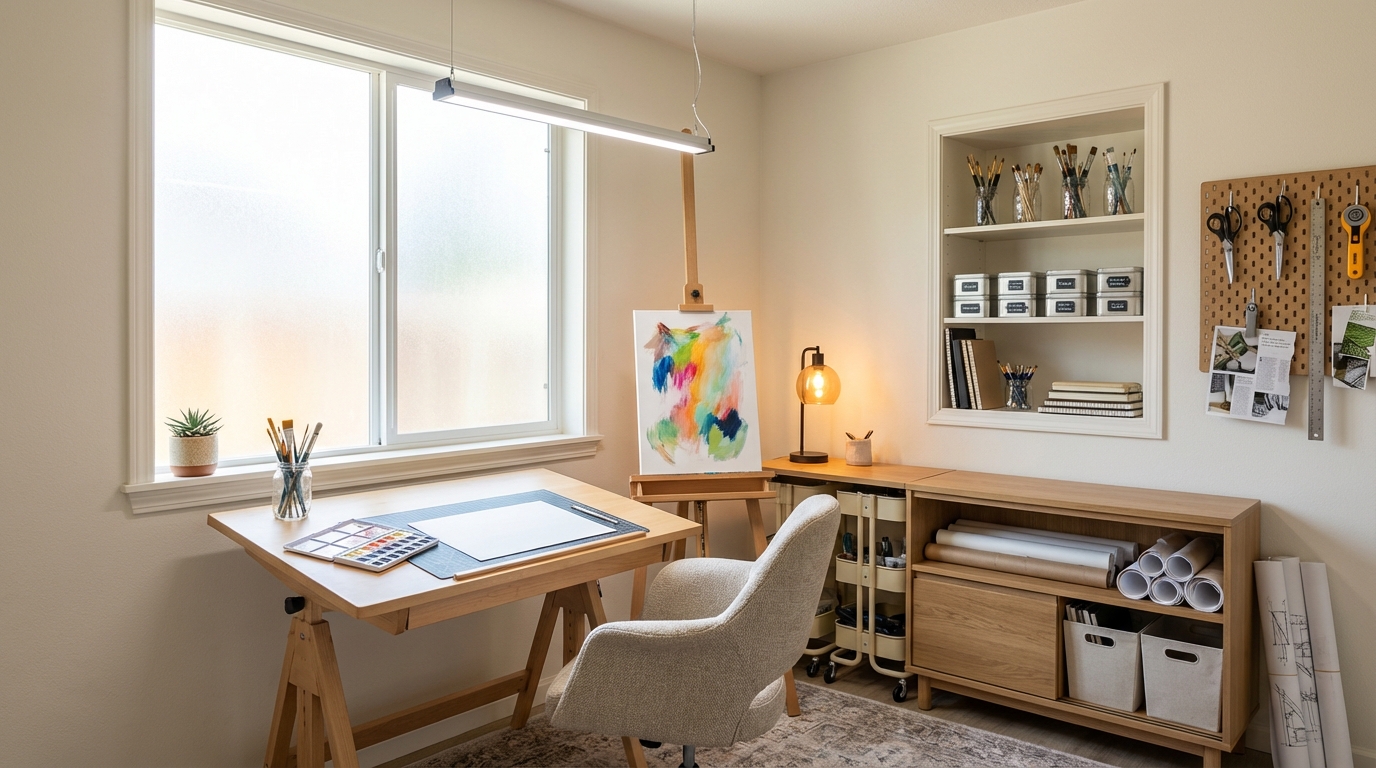
We’ll focus on three essential elements: proper lighting to see colors accurately, clever storage to keep supplies organized, and thoughtful arrangement for comfortable workflow. Whether you have a spare room, a bedroom corner, or even a closet, you can build a space that fits your unique needs.
Our comprehensive resource covers everything from choosing the perfect spot to organizing your materials. You’ll find practical tips and creative ideas to transform any area into your dream workspace. Let’s begin this exciting journey together!
Key Takeaways
- A dedicated creative space significantly boosts productivity and skill development
- Proper lighting is essential for accurate color perception in your work
- Smart storage solutions help maintain organization and efficiency
- Thoughtful layout design creates a comfortable and functional workflow
- Any area can be transformed into an effective workspace with proper planning
- Budget constraints and limited square footage are common but solvable challenges
- This guide provides comprehensive strategies for artists at all experience levels
Choosing the Perfect Space for Your Art Studio Home
Before diving into equipment and supplies, the most critical decision involves choosing where to position your creative haven. This choice impacts everything from your workflow to your inspiration levels.
Identifying Room Features and Natural Light
Natural illumination plays a vital role in accurate color perception. Consistent daylight reduces eye strain during extended creative sessions.
North-facing windows offer the most reliable, indirect light. This orientation provides steady illumination without harsh shadows.
Considering Isolation and Ventilation
Selecting an isolated area minimizes household distractions. This separation helps maintain focus and protects unfinished projects.
Proper airflow is essential when working with materials that produce fumes. Windows and exhaust systems create a healthier environment.
| Room Type | Natural Light Potential | Isolation Level | Ventilation Options | Space Considerations |
|---|---|---|---|---|
| Spare Bedroom | Excellent (multiple windows) | High (door closure) | Good (window access) | Ample floor area |
| Basement Corner | Limited (small windows) | Moderate | Fair (may need fan) | Variable ceiling height |
| Converted Closet | Poor (often windowless) | High (enclosed) | Needs improvement | Compact but dedicated |
| Living Area Nook | Good (shared light) | Low (high traffic) | Excellent (open space) | Integrated workflow |
Establish clear boundaries with household members about your creative zone. This ensures your dedicated area remains respected and functional.
Optimizing Natural and Artificial Lighting
The right lighting setup can make or break your artistic workflow and color accuracy. Proper illumination ensures your colors stay true and your eyes stay fresh during long creative sessions.
Benefits of Natural Daylight
Natural daylight provides the most accurate color rendering available. It creates an energizing atmosphere that boosts creativity throughout the day.
Position your work surface near north-facing windows for consistent, indirect light. This orientation minimizes harsh shadows while providing steady illumination.
Many creative professionals are now designing multifunctional living spaces that maximize natural light. This approach works beautifully for creative areas too.
Incorporating LED and Task Lighting
Since natural light isn’t consistent, supplement with artificial sources. Choose LED lights with a CRI rating of 90+ for true color representation.
LED shop lights offer excellent value—they’re flexible, energy-efficient, and produce minimal heat. Position them strategically to eliminate shadows on your canvas.
Add adjustable task lighting for detailed work. Use blackout curtains to control natural light intensity when needed. This combination gives you complete lighting control.
Maximizing Storage Solutions for Creative Spaces
Clutter can stifle inspiration, making smart storage solutions essential for any productive creative environment. When your materials are organized and accessible, you can focus entirely on your work instead of searching for supplies.
DIY Storage Ideas for Art Supplies
Creative storage doesn’t have to be expensive. Repurpose vintage crates by turning them on their sides for open shelving. Add a personalized paint finish to match your aesthetic.
Clear glass jars work wonderfully for small items like brushes and beads. You can see everything at a glance. Fabric-covered tin cans create charming holders for pens and tools.
Customizable Shelving and Cabinets
Modular cube shelves offer incredible flexibility for organizing supplies. Use pretty baskets or boxes to group similar materials together. This system grows with your changing needs.
Wall-mounted options maximize vertical space efficiently. Floating shelves display works in progress beautifully. A rolling cart keeps frequently used items within easy reach.
Planning an Ergonomic and Inspiring Layout
An ergonomic setup ensures you can work for hours without physical strain. Thoughtful arrangement prevents fatigue and supports creative flow. Your layout should feel intuitive from the moment you enter.
Designing Flexible Work Areas
Create zones that adapt to different projects. Movable furniture lets you reconfigure your space easily. Consider folding tables that form L-shapes or combine into large surfaces.
Modular storage keeps supplies accessible but organized. Wall-mounted options maximize your square footage. Floating desks provide workspace without consuming floor area.
Furniture and Equipment Positioning
Position your main desk near natural light sources. Ensure your chair offers proper lumbar support. Adjustable-height tables accommodate both sitting and standing work.
Place your easel where you have ample movement space. Keep frequently used tools within arm’s reach. Consider utility locations like electrical outlets and water access.
| Layout Configuration | Space Efficiency | Flexibility | Ideal For |
|---|---|---|---|
| L-Shape Desk Setup | High (corner use) | Medium | Multiple project types |
| Central Workstation | Medium | High (movable) | Large canvases |
| Wall-Linear Arrangement | Maximum | Low | Small spaces |
Choose flooring that suits your medium—hardwood for clean work, tile for messy materials. The right foundation completes your functional creative environment.
Investing in Quality Tools and Materials
Investing in superior tools and materials represents one of the most impactful decisions for any serious creator. While budget considerations are important, high-quality implements can transform your entire creative experience.
The right equipment makes your work more enjoyable and productive. It also ensures your finished pieces stand the test of time.
Selecting High-Quality Art Supplies
Artist-grade paints offer superior color vibrancy and mixing properties. They contain higher pigment concentrations than student-grade alternatives.
Choose brushes and tools appropriate for your specific medium. Quality implements provide better control and precision during creation.
Acid-free paper and canvas prevent yellowing and deterioration over time. This ensures your work remains vibrant for years or decades.
| Material Type | Student Grade | Professional Grade | Key Difference |
|---|---|---|---|
| Paints | Lower pigment load | High pigment concentration | Color intensity |
| Brushes | Synthetic fibers | Natural hair/Superior synthetic | Control & durability |
| Paper/Canvas | Acidic content | Acid-free/Archival | Longevity |
| Drawing Tools | Standard quality | Precision engineered | Line consistency |
Long-Term Benefits of Proper Equipment
Sturdy easels and adjustable tables support various working positions. Ergonomic chairs with proper back support prevent fatigue during long sessions.
Different media require specific display considerations. Watercolors need UV-protective glass, while oils can be framed without glass.
Quality investment pays off through better results and longer-lasting work. It’s worth prioritizing key items that impact your creative practice most.
Personalizing and Organizing Your Studio
Your creative environment should be as unique as your artistic vision. This personal space becomes more than just a functional area—it transforms into your personal sanctuary for inspiration and growth.
Color choices create powerful psychological effects. Bold hues stimulate energy and creativity, while soft tones promote calm focus. Choose a palette that resonates with your creative sensibilities.
Incorporating Personal Touches
Display meaningful items that spark your imagination. Create an inspiration board for reference images and motivational quotes. These personal elements make the area truly yours.
Plants bring life and improve air quality. Natural elements create a peaceful atmosphere. Consider a small gallery wall for displaying finished pieces and works in progress.
Keep reference materials organized and accessible. Art books and magazines support ongoing learning. This creates a library that fuels your creative journey.
Set up visible spaces for goal tracking. Display work from other local artists you admire. For more detailed guidance, explore these practical organization ideas.
Your personalized studio should reflect what motivates you. Surround yourself with inspiration that supports your artistic path forward.
Streamlining Workflow and Adapting to Small Spaces
Efficient workflow design transforms cramped quarters into highly productive creative environments. Thoughtful organization makes the most of every available inch.
Creating an Efficient Creative Process
Arrange your materials according to your natural workflow patterns. Keep frequently used items within easy reach to minimize interruptions.
This strategic placement saves valuable time during creative sessions. Your process becomes smoother and more intuitive.
Innovative Solutions for Limited Space
Vertical storage options maximize your square footage effectively. Wall-mounted systems keep floors clear while providing ample organization.
Multi-functional furniture serves multiple purposes in compact areas. Fold-away desks and collapsible easels offer flexibility when space is tight.
| Space-Saving Solution | Key Features | Best For | Installation Ease |
|---|---|---|---|
| Wall-Mounted Pegboard | Customizable hooks, bins, tool holders | Small tool organization | Easy (basic tools) |
| Floating Desk Shelf | 24″ depth, wall brackets, wood surface | Compact work surface | Moderate (drilling) |
| Collapsible Easel | Foldable frame, adjustable height | Painting projects | No installation |
| Closet Conversion | Floating desk, shelves, hidden storage | Ultra-compact spaces | Advanced (carpentry) |
Even the smallest area can support a thriving creative practice. Smart solutions overcome size limitations effectively.
Conclusion
Transforming any area into a productive creative environment requires thoughtful consideration of three key elements. Proper lighting ensures accurate color work and comfortable sessions. Smart storage keeps materials organized and accessible. An ergonomic layout supports your natural workflow.
Your personal workspace should reflect your unique style and medium preferences. Start with basic improvements and build gradually over time. Even small changes can significantly impact your creative process.
Every artist begins somewhere, and your ideal space can become reality. Whether you have a dedicated room or a compact corner, what matters most is having an area that inspires you. This journey of creating your perfect creative environment continues as your skills evolve.
FAQ
What’s the most important factor when choosing a room for my creative space?
Access to natural daylight is a top priority. A room with large windows provides excellent, free lighting that shows colors accurately. Good ventilation is also crucial for your health and safety when using materials like paints and solvents.
How can I keep all my materials organized without a lot of space?
Get creative with vertical storage! Installing wall-mounted shelves or using a rolling cart are fantastic ways to maximize a small area. Clear jars and labeled bins help you see your supplies at a glance, keeping your workflow smooth.
What type of lighting should I add for working in the evening?
Combine general ambient light with a focused task lamp. An adjustable LED lamp at your desk or easel is a great investment. It offers bright, clean light without generating heat, which can be distracting or even damage certain pieces.
How do I set up an efficient layout for my creative process?
Think about your workflow. Place your most-used tools within easy reach. Position your easel or desk to take advantage of the best light. Keeping your main work area clear and having dedicated spots for different tasks makes spending time there more productive.
Any tips for making a small area feel inspiring and functional?
Absolutely! Use multi-functional furniture, like a table that can serve as both a desk and a storage unit. A pegboard on the wall is a brilliant solution for hanging tools. Adding a few personal items, like a favorite poster or a plant, can make the space uniquely yours.