Welcome! Do you ever feel the need for a quiet moment to yourself? Many of us do, especially after spending so much time at home. You don’t need a huge budget or an entire spare room to create your own peaceful retreat.
This guide will show you how to transform any area into a personal sanctuary. The goal is to build a special spot that supports your wellness journey. Even a small corner can become a powerful anchor for calm and focus.
Remember the trend of “emotional escape rooms”? Pinterest forecasters highlighted this need for dedicated spaces to decompress. By setting aside a specific area, your mind learns to associate it with peace. This makes it easier to slip into a mindful state.
We will walk you through every step. You’ll learn how to choose the perfect location and add personal touches. Our guide is full of practical ideas and creative inspiration for your meditation room design.
Whether you have a cozy nook or just a spot by a window, you can create a beautiful and functional area. Let’s begin the journey to your tranquil home oasis.
Key Takeaways
- You can create a dedicated wellness area without a large room or budget.
- Choosing a specific spot helps your brain link that area with calmness.
- Even a small corner, closet, or window area can work perfectly.
- Personalizing your space makes it more inviting and effective.
- This guide offers practical, budget-friendly solutions for everyone.
Establishing Your Meditation Space Intentions
Intentional planning transforms a simple corner into a powerful personal retreat. Before choosing colors or furniture, ask yourself: How do I want to feel in this space? Your answer becomes the guiding light for every decision that follows.
Defining Your Goals and Desired Mood
Take time to define your specific goals. Will this area support daily meditation practice, yoga sessions, or quiet reading? Your intentions shape the space’s function.
Consider the emotional atmosphere you want to create. Do you seek calm, energizing, or grounding vibes? This desired mood should influence your color choices and overall aesthetic. A peaceful mood might call for soft blues, while an energizing space could use warm yellows.
Visualizing a Personal Sanctuary for Mindfulness
Imagine your ideal experience in this special area. Picture yourself breathing deeply as daily stress melts away. This visualization helps create a space that truly serves your wellness needs.
Think about who will use the area. One person created a multi-purpose haven with cushions for family reading time and mats for exercise. Your space can serve multiple functions while maintaining its peaceful core.
By starting with clear intentions, you’ll build a meaningful sanctuary that supports your mind and enhances your quality of life.
Selecting the Perfect Location for Your Meditation or Yoga Space
The foundation of a successful personal retreat begins with choosing an optimal location that supports your practice. You don’t need an entire dedicated room to create an effective wellness area.
Even a small corner can become your perfect sanctuary. The right spot makes all the difference in establishing a consistent routine.
Assessing Quietness, Natural Light, and Privacy
Start by evaluating potential areas in your home for three key factors. Quietness should be your top priority when selecting a space.
Avoid high-traffic zones near kitchens or living rooms. Street-facing windows often bring external noise that can disrupt your focus.
Natural light dramatically enhances the atmosphere of your practice area. East-facing spaces capture beautiful morning light ideal for sunrise sessions.
North-facing areas provide consistent, gentle illumination throughout the day. Consider when you’ll typically use your wellness corner.
Space requirements are surprisingly minimal. You only need about 4×4 feet to sit comfortably or roll out a mat.
| Location Option | Quietness Level | Natural Light | Privacy Score | Space Available |
|---|---|---|---|---|
| Bedroom Corner | High | Medium | High | 4×4 ft |
| Closet Space | Very High | Low | Very High | 3×3 ft |
| Window Alcove | Medium | Very High | Medium | 4×5 ft |
| Loft Area | High | Medium | High | 5×5 ft |
Creative solutions work wonderfully for small homes. Many people transform unused closet space by removing doors.
Bedroom nooks and balcony areas also make excellent choices. One practitioner created a beautiful retreat in a tiny studio apartment.
For shared living situations, consider using folding screens for privacy. Establishing quiet hours with household members ensures uninterrupted practice time.
Try the “sit test” before finalizing your decision. Spend 10-15 minutes in potential spots to assess noise levels and lighting changes.
Meditation Room Design: Creating Your Tranquil Oasis
Building your peaceful sanctuary starts with embracing simplicity in every choice. The most effective wellness areas follow a minimalist philosophy that clears both physical and mental space.
Planning the Layout with Minimalism in Mind
Begin with a neutral color foundation. Soft whites, warm beiges, and earthy tones create a soothing backdrop. These colors won’t overstimulate your senses.
Empty floor area serves as a valuable design feature. It provides room for movement and gives your eyes visual breathing space. This openness enhances your practice experience.
Choosing Functional Furniture and Decor Elements
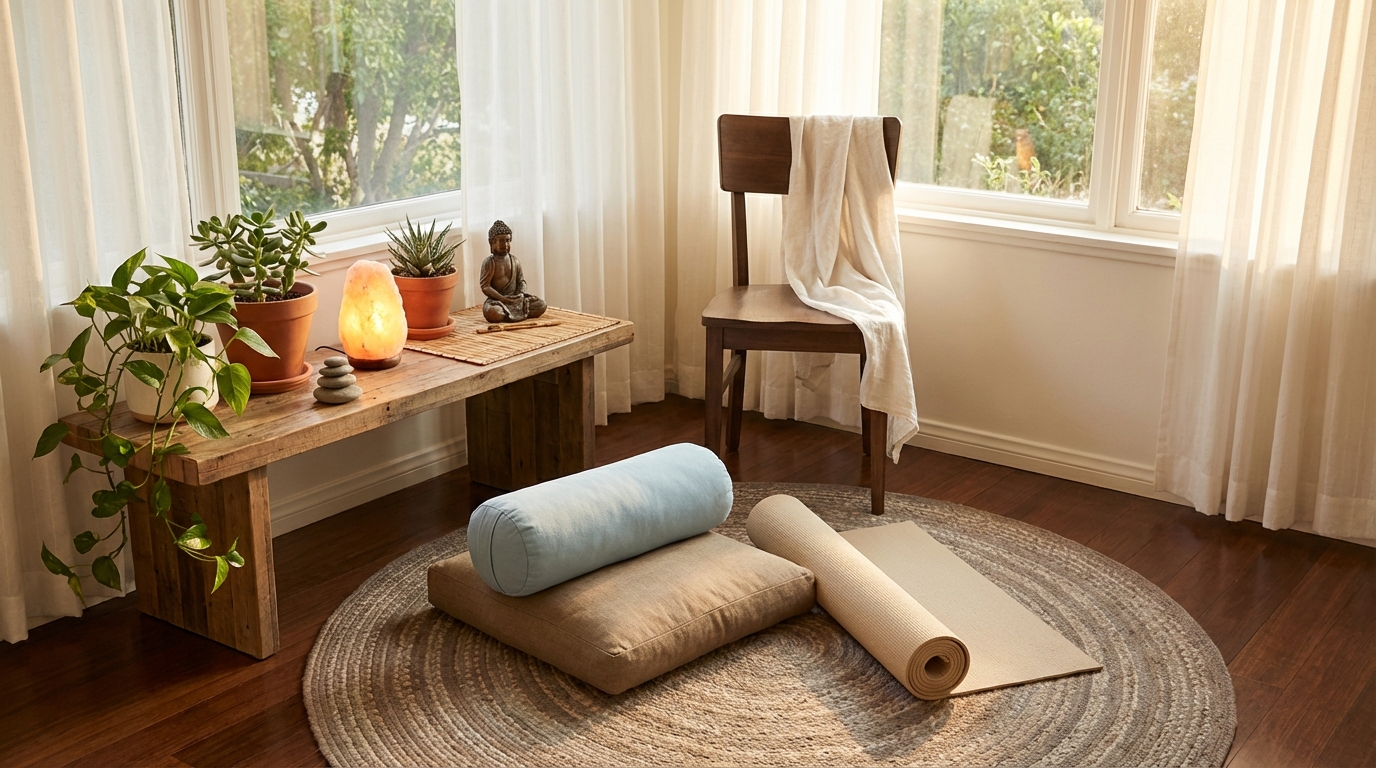
Select furniture pieces sparingly. A low wooden table can hold journals or tea. Traditional seating should be minimal since most activities happen at ground level.
Focus on textural elements rather than decorative objects. Soft velvet cushions and natural fiber rugs create comfort. These touches build a cocoon-like atmosphere.
| Design Element | Primary Benefit | Best Placement | Material Suggestions |
|---|---|---|---|
| Area Rug | Defines space warmly | Center of area | Flatweave, natural fibers |
| Floor Cushions | Comfortable seating | Against wall | Velvet, cotton |
| Low Table | Functional surface | Near seating | Round wood |
| Wall Art | Focal point | Eye level | Simple, meaningful |
Remember that every item should serve a purpose or hold deep meaning. This approach ensures your sanctuary remains clutter-free and truly supportive of your wellness journey.
Incorporating Comfort and Sensory Elements
Engaging all your senses is key to building a truly immersive personal retreat. This approach transforms a simple area into a complete sanctuary for wellness. Think about sight, sound, touch, and smell working together.
Each element contributes to a deeper, more focused experience. Let’s explore how to optimize these features for your practice.
Optimizing Seating, Lighting, and Aroma
Comfortable seating is the most crucial foundation. The right support prevents physical discomfort from disrupting your focus.
Choose from traditional zafu cushions for spine alignment or a meditation bench for knee relief. Soft floor cushions and yoga mats offer versatile options for different positions.
Lighting sets the entire mood. Position your space near natural light and use sheer curtains to soften it.
Warm-toned bulbs (2,700-3,000K) create a calming effect. Dimmer switches and salt lamps allow for adjustable, gentle illumination.
Aromatherapy powerfully enhances the atmosphere. Essential oils like lavender for relaxation or sandalwood for focus can be used in diffusers.
You can also light candles during journaling or use incense for special occasions. This multilayered approach to scent makes the experience personal.
Don’t forget sound and air quality. A portable speaker can play calming music or nature sounds.
Opening a window refreshes the air. Embracing quiet or adding gentle sound helps maintain a peaceful environment. These sensory elements work together to support your journey.
Personalizing Your Meditation and Yoga Decor
Adding personal elements transforms a functional area into a deeply meaningful retreat for your practice. The key is balancing self-expression with the peaceful atmosphere your wellness space deserves.
Follow mindful principles when selecting decor. Choose items with intention—each piece should serve a purpose or hold personal meaning. Avoid clutter, as simplicity supports mental clarity.
Mindful Decoration Principles and Natural Touches
Incorporate natural elements to connect with the outdoors. Small plants like peace lilies or jasmine bring life and fresh air to your space. A simple vase of flowers or found stones adds organic beauty.
Consider creating a focal point on a small table or shelf. Arrange meaningful items like inspirational quotes or crystals with visual balance. This creates harmony without distraction.
Seasonal Updates and Personalized Accents
Refresh your decor with the changing seasons. Light fabrics in spring, cooling tones in summer, and cozy textures in winter keep the area feeling current. This aligns your practice with nature’s rhythms.
Display favorite books on your yoga practice or personal journals nearby. According to Feng Shui, remove wilted flowers and broken objects to maintain positive energy flow. For more meditation room design ideas, explore our comprehensive guide.
Overcoming Common Challenges and Budget-Friendly Tips
Many people hesitate to start their wellness space due to practical concerns. Budget limitations and small living areas can feel like major obstacles. But these challenges have creative solutions that work for any home.
Strategies for Limited Space and Noise Reduction
Urban living often means dealing with unwanted sounds. Traffic, neighbors, and household activity can disrupt your peaceful corner. Simple adjustments make a big difference.
Consider these effective noise control methods:
| Solution | Cost Level | Effectiveness | Best For |
|---|---|---|---|
| Thick area rugs | Low | High | Hard floor spaces |
| Noise-canceling headphones | Medium | Very High | Shared living situations |
| Textile wall hangings | Low | Medium | Echo-prone rooms |
| Strategic room selection | Free | High | All home types |
Even the smallest area can become your sanctuary. A closet conversion or window nook works perfectly. The key is intention, not square footage.
Smart Budgeting and Multi-Use Solutions
Creating your peaceful area doesn’t require significant financial investment. Shop your own house first for blankets, cushions, and textiles. This approach keeps costs minimal.
“The most effective wellness spaces often cost nothing to create. They’re about rediscovering what you already own.”
Multi-use areas serve multiple purposes beautifully. Your peaceful corner can transition from morning practice to reading nook. This flexibility makes the space more valuable.
For those considering larger projects, explore spa-like retreat ideas that can inspire smaller scale adaptations. The same principles apply whether you’re transforming one corner or an entire room.
Incorporating Nature and Soothing Sounds in Your Space
Connecting with nature and sound transforms your personal wellness area into a multi-sensory retreat. These elements work together to create an environment that supports deep relaxation and focus during your practice.
Enhancing the Environment with Aromatherapy and Plants
Bringing natural elements indoors creates an immediate sense of calm. Plants like peace lilies or snake plants purify the air while adding gentle energy to your space.
Consider a small tabletop fountain for soothing water sounds. Even a simple bowl with floating flowers can serve as a beautiful focal point.
For sound strategies, choose what supports rather than distracts. Nature recordings of ocean waves or forest sounds work beautifully. Bluetooth speakers can play these on repeat for longer sessions.
Air quality is crucial for a healthy environment. Open windows regularly for fresh circulation. Plants provide continuous natural purification.
One creative example: using a bathroom where the water element is naturally present. Meditative showers or baths can become powerful mindfulness practices.
Remember that personal preference matters most. Experiment to find what sounds and natural touches work best for your unique meditation space.
Conclusion
Remember, the most effective wellness area is one that invites you to return daily. You now have all the steps and ideas to create a peaceful sanctuary in your home.
Start with a simple cushion in a quiet corner. Let your space grow with your practice. The goal is regular use, not perfection.
This special area supports your mental well-being. It’s a tangible way to prioritize peace in your busy life.
Your inner calm is the true sanctuary. Your thoughtfully created environment simply helps you find it every day.
FAQ
How do I start setting up a peaceful area in my house?
Begin by thinking about your goals. Decide what mood you want to create. Imagine a personal sanctuary that supports your mindfulness practice. This first step helps guide all your other choices.
What should I look for when picking a spot for my quiet zone?
Focus on finding a place that is quiet and private. Good natural light is a bonus. A corner of a bedroom or a spare area can work perfectly. The key is to choose a location that feels separate from daily noise.
What are some basic principles for arranging the space?
Keep the layout simple and uncluttered. Think about minimalism. Choose a comfortable cushion or mat for seating. A small table for a candle or incense can be a nice touch. The goal is functionality without crowding.
How can I make the area more comfortable for my practice?
Comfort is crucial. Invest in supportive seating like a zabuton or a firm cushion. Soft, warm lighting from a lamp or dimmer switch helps. Consider adding a gentle aroma with essential oils to engage your senses.
What are some ways to personalize the decor without spending much?
Use items you already love. A favorite blanket, a meaningful photo, or a simple houseplant can add a personal touch. You can also change small accents with the seasons to keep the area feeling fresh.
I have a small home and a tight budget. Any tips?
Absolutely! Use a screen or curtain to section off a corner. Look for multi-use furniture, like a storage ottoman. For sound, a small water fountain or a fan can mask outside noise affordably.
How can I bring nature into my mindfulness area?
Plants are wonderful for adding life and improving air quality. Even one or two small succulents or a peace lily make a difference. Soothing sounds from a nature sounds app or a wind chime can also enhance the environment.