Are you dreaming of a special area in your house that sparks imagination and keeps toys off the living room floor? Creating a dedicated spot for your little ones is an exciting project. It combines fun with smart organization for your entire household.
This guide walks you through the entire process. We focus on building a room that is both safe and practical. You will learn how to make a space that encourages growth and discovery. It’s all about balancing enjoyment with easy upkeep.
We cover everything from initial ideas to budget-friendly tips. You’ll get advice from experts who specialize in these projects. Whether you’re updating a basement or a corner of a larger room, we have strategies to maximize your area.
Discover how to include learning zones, active play areas, and clever storage. We will highlight materials that stand up to daily messes. This article gives you real-world examples and inspiration to create a room your family will adore for years.
Key Takeaways
- A well-planned renovation creates a dedicated, organized area for your household.
- The best spaces successfully balance fun, safety, and practicality.
- Effective planning includes zoning for different activities like learning and active play.
- Choosing durable, easy-to-clean materials is crucial for long-term enjoyment.
- Expert tips and budget-friendly ideas can help maximize any room size.
- The final result should be a flexible area that can grow with your family.
Understanding the Basics of Playroom Renovations
When planning a renovation focused on young family members, understanding core concepts lays the foundation for a successful project. This space should serve multiple purposes while growing with your child.
Importance of Safety and Hygiene in Play Areas
Safety must come first in any space for children. Start with rounded furniture edges and non-toxic materials. Secure installations prevent accidents with climbing equipment.
Hygiene is equally vital. Choose surfaces that wipe clean easily. Washable fabrics and mold-resistant materials handle inevitable spills. This is especially important for toddler areas where messes happen daily.
Creating a Fun Environment for Children
A great space sparks joy and curiosity while supporting development. Think about what excites your child specifically. Age-appropriate features challenge without overwhelming young minds.
Soft zones work well for toddlers. Active children enjoy climbing structures. Creative corners allow for artistic expression. As Smart Playrooms emphasizes, dedicated areas support healthy mental and physical growth in our screen-dominated world.
The entire family benefits when children have their own engaging space. It encourages healthy alternatives to digital devices. Former teachers often incorporate educational principles into their designs, balancing learning with pure entertainment.
A well-planned environment promotes independence and problem-solving skills. It also supports social interaction when friends visit. This makes the renovation an investment in your child’s overall development.
How to Get Started with Your Playroom Makeover
Before picking up a paintbrush or purchasing furniture, successful space planning requires methodical organization. The initial phase sets the tone for your entire project and ensures you create a functional environment that grows with your family.
Step-by-Step Planning and Design
Begin by thoroughly measuring your available area and capturing photos from every angle. This documentation helps you visualize potential layouts and identify the best use of natural light sources. Consider how different activity zones will interact within the space.
Many families find value in professional consultations like Smart Playrooms’ Playroom Edit sessions. Their educational expertise helps create layouts that support development through proven principles. The full-service process typically spans 6-8 months, though DIY approaches may progress faster.
Clearly define your goals for the area. Do you want a place focused on active movement, creative learning, quiet reading, or a combination? Creating a realistic timeline and prioritizing must-haves over nice-to-haves streamlines decision-making.
This thoughtful planning way makes parenting smoother by preventing costly mistakes. Choose flexible solutions that adapt as children mature rather than requiring complete redesigns later. The investment in proper preparation ensures the final result truly serves your family’s needs for years to come.
Incorporating “playroom design kids” Ideas into Your Renovation
Transforming your child’s activity area into an inspiring environment requires thoughtful consideration of both aesthetics and functionality. The right approach creates a space that grows with your family while encouraging development.
Leveraging Color and Layout for Creativity
Strategic color choices can dramatically impact the atmosphere. Designer Tina Ramchandani demonstrated this by using rainbow mural wallpaper to transform irregular ceilings into cheerful design features.
Color psychology plays a crucial role in setting the right mood for different activities. Consider this guide when planning your palette:
| Color Choice | Psychological Impact | Recommended Area |
|---|---|---|
| Blues & Greens | Promotes calm and concentration | Reading nooks, learning zones |
| Reds & Yellows | Energizes and stimulates activity | Active play areas |
| Neutral tones | Provides visual balance | Main spaces, background walls |
Balancing Learning and Play Spaces
Creating distinct zones helps organize activities and reduce chaos. Designate specific areas for different purposes within your available space.
A small craft table near natural light becomes the perfect place for creative projects. Similarly, a play kitchen setup teaches life skills through imaginative role-play.
Balance educational elements with pure fun by dedicating equal space to structured learning and free play. This approach ensures children don’t feel like they’re always in “school mode” while still supporting development.
Innovative Storage Solutions for an Organized Playroom
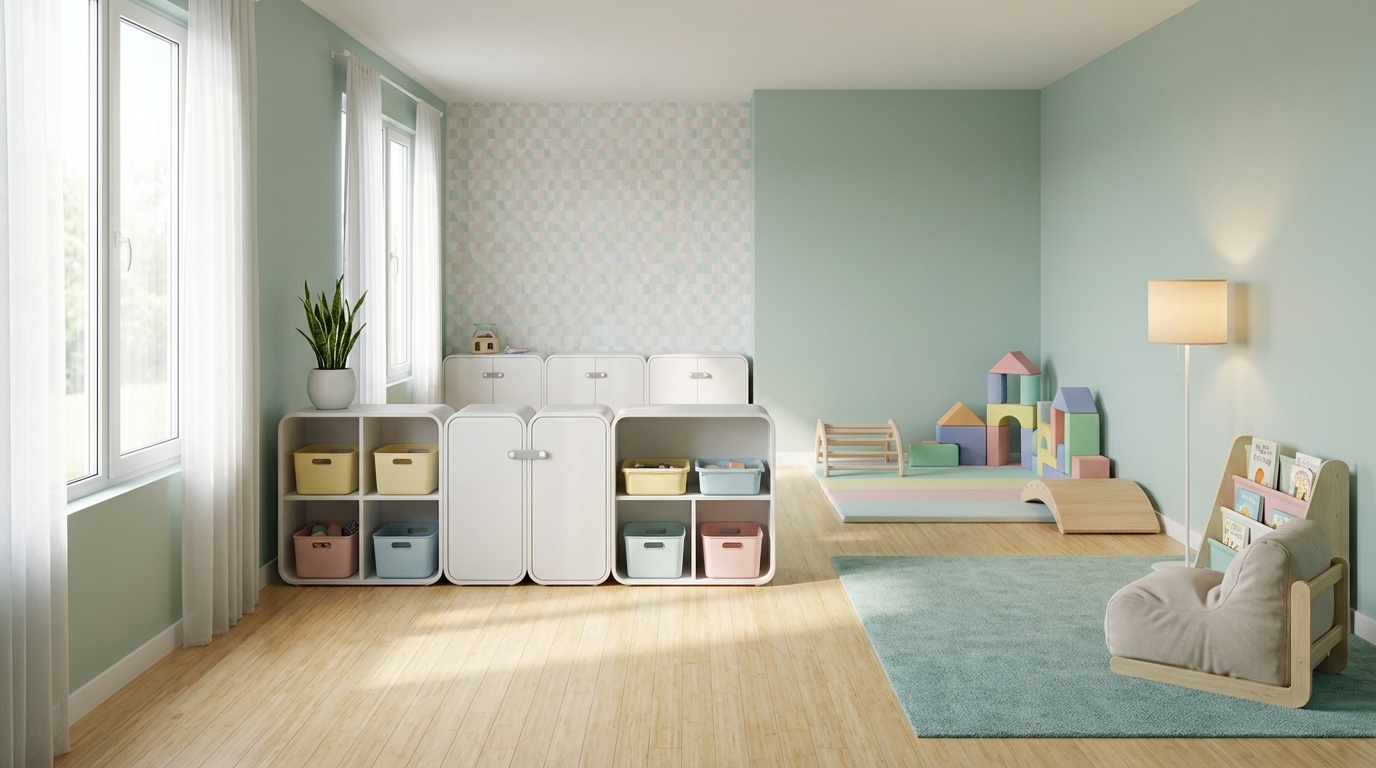
The secret to maintaining an organized space lies in smart storage solutions that work for everyone. When everything has its proper place, cleanup becomes quick and manageable. This approach transforms chaotic areas into functional environments.
Built-In Shelves and Accessible Bins
Built-in shelves maximize vertical space efficiently. Designer Andrew Howard demonstrates this by installing storage underneath bunk beds. This smart solution makes cleanup quick while utilizing otherwise wasted space.
Floating shelves placed less than a foot above the floor give toddlers easy access. They can independently reach books and return them afterward. This fosters responsibility from an early age.
Labeled bins create a system everyone understands. Use picture labels for pre-readers and word labels for older children. Babysitters and siblings quickly learn where everything belongs.
For rooms with awkward layouts, built-ins offer custom storage opportunities. Designer R. Higgins and others rely on this approach to maximize every inch. The right storage solution can transform challenging spaces.
Mix open shelving for display with closed storage for visual calm. Showcase favorite toys while hiding less attractive items. Adjustable systems grow with your family’s changing needs.
Designing Fun and Functional Play Zones
The most successful children’s spaces cleverly balance energetic play areas with quiet retreats. This thoughtful approach creates an environment that supports different moods and activities throughout the day.
Multipurpose Furniture and Cozy Nooks
Smart furniture choices maximize your available space while serving multiple purposes. Laura Jenkins demonstrates this with an L-shaped sectional that provides seating for games while transforming the area for family movie nights.
Create dedicated cozy corners using dramatic elements like Brittany Bromley’s bright yellow patterned wallpaper. These special spots make reading time feel magical for little ones.
The right furnishings support development while encouraging imagination. Consider these versatile options:
| Furniture Type | Primary Function | Secondary Benefits | Ideal Age Range |
|---|---|---|---|
| Nugget Couch System | Flexible seating | Forts, obstacle courses, loungers | Toddler to elementary |
| Pottery Barn “Anywhere Chair” | Personal seating | Storytime, relaxation, ownership | 2-6 years |
| Game Table with Chairs | Structured activities | Puzzles, crafts, family bonding | 3+ years |
| Bean Bag Chairs | Movable seating | Reading circles, floor clearance | All ages |
Position a small table near your play kitchen setup. This allows “restaurant customers” to sit, encouraging social interaction between siblings. These thoughtful arrangements create spaces that support lasting family traditions.
Cozy nooks give children permission to slow down and recharge. They balance high-energy zones with calm spaces that support different activities. This approach fosters a lifelong love of reading and creative thinking.
Creating Safe Zones for Active Play
Modern active play areas blend functionality with aesthetic appeal, turning practical equipment into beautiful room features. These zones encourage physical development while ensuring safety remains the top priority.
Modern Climbing Walls and Monkey Bars
Custom climbing installations bring outdoor adventure indoors. Designer Lina Galvão demonstrated this beautifully with a hand-painted floral mural on her climbing wall.
Smart Playrooms offers monkey bars in three sizes to fit different spaces. The Shorty version works well for standard ceilings, while Flat bars suit higher ceilings. Professional installation is crucial for safety.
Contractors select appropriate anchors based on your specific wall construction. Rock climbing holds can be arranged in various difficulty patterns. This allows you to adjust challenges as your child grows.
Choosing Toddler-Friendly Equipment
Pikler triangles and indoor play gyms support gross motor development. They’re appropriately scaled for smaller bodies and developing coordination.
Indoor slides provide active play opportunities regardless of weather. They keep energetic toddlers entertained on rainy days. Always use proper flooring underneath equipment.
Foam mats or thick rugs cushion falls during climbing activities. Start with age-appropriate equipment and gradually add more challenging elements. This approach ensures each piece matches your child’s current stage.
Creative Wall Decor and Theme Ideas
Your walls hold incredible potential to transform an ordinary room into a magical world of imagination. Thoughtful wall treatments create an environment that sparks wonder while serving practical needs.
Cloud Ceilings, Framed Wallpaper, and Art Displays
Look upward for inspiration. Designer James Thomas created a dreamy atmosphere using cloud-covered ceilings. This approach taps directly into childhood wonder.
Framed wallpaper offers a brilliant alternative to full installation. Mount one stunning panel as oversized art. Designer R. Higgins used animal sketches this way for maximum impact.
Functional art displays put creativity within reach. Regan Baker transformed space using IKEA’s SKÅDIS pegboard system. Materials stay organized at child-height.
Educational elements can be beautiful. ABC and 123 posters promote early learning while maintaining whimsical vibes. They create an environment that feels playful, not classroom-stuffy.
Bulletin boards give children ownership of their space. They can display daily creations and found treasures. This celebrates their developing sense of self.
Theme ideas range from subtle nature motifs to bold outer space concepts. Choose based on your child’s current interests. Creative wall ideas can evolve as tastes change.
Rotating displays keep the environment fresh. Dedicate one wall to current masterpieces. Archive older works to prevent visual clutter.
Remember that childhood is fleeting. Embrace playful decor choices that reflect this magical stage. You can always update the space as your family grows.
Selecting Durable and Easy-to-Clean Materials
Smart material selection transforms a high-traffic area from a constant cleaning challenge into a worry-free zone for creativity and fun. The right choices ensure your space withstands daily adventures while maintaining its appeal.
Practical Flooring and Wall Treatments
Start with your floor foundation. For young children, wipe-clean playmats protect hardwood surfaces during messy phases. As they grow, transition to cheerful patterned area rug that disguise minor stains while cushioning falls.
Consider these durable floor options:
- Luxury vinyl planks resist scratches and spills
- Cork provides natural cushioning and warmth
- Stained concrete offers ultimate durability
Wall treatments need both style and practicality. Washable paint in satin or semi-gloss finish easily wipes clean when sticky fingers leave marks. For active features, rock wall panels from companies like Smart Playrooms require professional installation but withstand years of use.
Color psychology matters in material choices too. Warm neutrals create calm environments, while bold accents energize specific zones. Avoid light-colored carpeting that shows every spill.
At the end of each day, easy-to-clean materials mean less stress and more family time. Performance fabrics and indoor-outdoor materials handle heavy use beautifully, letting you focus on enjoyment rather than cleanup.
Budget-Friendly Tips for Effective Renovations
Creating an inspiring space for your little ones doesn’t have to drain your savings account. Smart planning and creative thinking can yield remarkable results while keeping costs manageable. Many families achieve beautiful, functional areas through strategic choices rather than unlimited funds.
Cost-Effective Material and DIY Options
Start by looking around your home for items you already own. Designer Starrett Zenko Ringbom demonstrated this approach beautifully. She used antique trunks and vintage rugs as the foundation, adding just a fresh coat of paint for vibrancy.
IKEA offers affordable organization solutions that rival custom built-ins. The SKÅDIS pegboard system provides customizable storage at a fraction of the cost. This practical solution keeps materials organized and accessible.
DIY projects let families personalize spaces without professional fees. Hand-paint a mural or build simple shelving from lumber. Shop secondhand for big-ticket items and refresh them with paint.
The most cost-effective way involves phasing your project. Complete essential safety changes first. Add decorative elements as budget allows over time. At the end, creativity matters more than unlimited funds.
Maximizing Small Spaces into Playful Havens
Limited square footage presents an exciting opportunity to create a highly imaginative and organized area. With smart planning, even the coziest corner can become a magical world for your little ones. The key lies in thinking vertically and using every inch creatively.
Using Every Inch: From Doors to Corners
Look beyond traditional wall space for storage solutions. Joanna Gaines demonstrated this brilliantly by adding slim shelving to the back of a door. This approach keeps books accessible while saving precious wall real estate.
Convert unused closets into functional niches. Rita Donahoe transformed one into a craft station with custom blue paint and hand-painted tiles. This creates a dedicated activity zone without sacrificing an entire room.
Vertical space becomes your best friend in compact areas. Janelle Patton created a lofted “cool kids club” with a ladder and slide. This clever use of height gives children elevated play zones while freeing floor space below.
Innovative Storage and Display Techniques
Multipurpose furniture works wonders in small toddler areas. Choose storage ottomans that provide seating and hide toys. Tables with built-in bins keep craft supplies organized yet accessible.
Define your compact play area with one bold, busy rug. This creates visual boundaries without permanent walls. The right rug can make a small space feel intentional and cozy.
Floating shelves at varying heights offer both display and storage. Corner spaces often go unused but can become cozy reading nooks. These techniques prove that square footage matters less than thoughtful planning in creating joyful spaces for your toddler’s life.
DIY Projects to Personalize Your Playroom
Putting your personal touch on a family activity space makes it truly special and uniquely yours. Do-it-yourself projects let you create features that reflect your child’s personality without professional costs.
These hands-on approaches build memories while building the room. You can involve your little one in age-appropriate tasks.
Creative Crafts and Custom Features
Hand-painted murals create stunning focal points. James Thomas painted cloud motifs directly on his ceiling. Lina Galvão created a floral climbing wall.
Rainbow organization is both pretty and practical. Arrange books and toys by color. This helps your toddler learn sorting skills while creating Instagram-worthy displays.
Simple carpentry projects yield big results. Build a reading nook bench or custom craft table over a weekend. Basic tools and lumber from home improvement stores are all you need.
IKEA hacks offer endless possibilities. Paint pieces in custom colors or add decorative hardware. The SKÅDIS pegboard system creates customizable art displays.
Fabric projects require minimal sewing skills. Make cushion covers or play tents from sheets. These add personality without breaking your budget.
| Project Type | Skill Level | Time Investment | Child Involvement |
|---|---|---|---|
| Wall Murals | Intermediate | 1-2 days | Color choosing |
| Rainbow Organization | Beginner | 1-2 hours | Full participation |
| Basic Carpentry | Intermediate | Weekend | Sandpapering |
| IKEA Hacks | Beginner | Half-day | Decorating |
Choose an indoor-outdoor rug for messy art projects. This gives your child creative freedom without stress. The best part is creating something together that you’ll all cherish.
Integrating Technology and Modern Design Elements
Thoughtful technology integration can transform a space into a hub for interactive learning while preserving the magic of physical play. The key is finding the right balance between digital tools and hands-on activities.
Safe Use of Tech and Interactive Features
Technology should enhance rather than dominate your child’s environment. Smart Playrooms emphasizes creating spaces that provide healthy alternatives to screens for mental and physical development.
Consider these technology options for different purposes:
| Technology Type | Primary Benefit | Age Appropriateness | Engagement Level |
|---|---|---|---|
| Educational Tablets | Interactive learning apps | 3+ years | High engagement |
| Programmable Robots | Problem-solving skills | 4+ years | Active participation |
| Audio Book Players | Language development | 2+ years | Moderate engagement |
| Digital Drawing Tablets | Creative expression | 5+ years | High creativity |
For younger children, the SNOObear white noise machine helps with sleep while serving as a comforting companion. This addresses developmental needs through gentle technology.
Position screens at safe viewing distances with comfortable seating. Set clear time limits to prevent passive consumption. Modern elements like smart lighting can adjust throughout the day to support different activities.
Monitor your toddler’s interaction with any technology. Ensure features support active engagement rather than replacing hands-on exploration. The room should primarily encourage physical activity and social interaction.
Expert Advice and Inspirations from Top Designers
Bringing in professional expertise can elevate your project from a simple room update to a developmental haven. These specialists understand how to create spaces that truly support your family’s needs.
Insights from Award-Winning Educational Playroom Studios
Studios like Smart Playrooms employ former teachers as designers. They bring research-based approaches to children’s spaces.
Their background in education ensures every element supports learning and growth. The process typically spans six to eight months for full-service projects.
They also offer shorter Playroom Edit sessions for layout guidance. This helps families who want professional input but plan to handle implementation themselves.
Collaborating with Interior Designers for Custom Solutions
Many designers now specialize in creating fantastic areas for young families. They understand how needs change from toddler years through childhood.
Trade programs allow designers to incorporate specialized products into their projects. This bridges general home design with child-specific expertise.
The best spaces balance educational value with pure fun. Children shouldn’t feel like they’re in a classroom extension.
Defined activity zones prevent chaotic “toy explosion” feelings. This approach helps children understand different spaces serve different purposes.
Professional insight ensures your investment creates a space that grows with your child. The result should support development while fitting your home’s aesthetic.
Conclusion
Building a dedicated area for your family’s youngest members is an investment that pays off in countless ways. The perfect balance of safety, functionality, and creativity creates a space where your kids can thrive throughout their childhood.
Remember that this special place should evolve as your children grow. What works for a toddler will need adjustments for older kids. This flexibility makes your playroom a long-term asset for family life.
At the end of the day, parenting involves enough challenges without stressing over perfect spaces. Embrace the joyful chaos that comes with active play. Your playroom should be forgiving and functional above all else.
Use the tips from this guide as your foundation, then customize them for your unique household. The result will be a cherished space where wonderful childhood memories are made every day.
FAQ
What is the most important factor to consider when renovating a space for my child?
Safety and hygiene are the top priorities. Choose non-toxic materials, secure furniture to walls, and select easy-to-clean surfaces like vinyl flooring or washable paint to create a healthy environment for your family.
How can I make a small area feel larger and more functional for play?
Use vertical space! Install wall-mounted shelves for storage and consider a fold-down table for art projects. Light colors, a large mirror, and a multi-purpose rug can also help the room feel more open and organized.
What are some budget-friendly ways to add a fun theme to the room?
You don’t need a major overhaul. Try removable wall decals, a colorful accent wall, or framing patterned wallpaper as art. Swapping out pillow covers and a rug can dramatically change the look without a big expense.
How do I balance areas for active play and quiet time in one room?
Create distinct zones. Use a bookshelf or a low cabinet to separate a cozy reading nook with a soft chair from an open floor area for active games. This helps children understand the purpose of each space.
What type of storage works best for keeping toys organized and accessible?
Open bins and low shelves are ideal. They allow toddlers to see and choose their toys independently, which encourages clean-up. Labeling bins with pictures or words can also support early learning and organization skills.
Are climbing walls safe for a toddler’s area?
Yes, when designed properly. Look for toddler-friendly climbing sets with low heights and soft landing surfaces, like thick mats or carpet. Always supervise active play and ensure the equipment is securely installed.
Can I incorporate technology into the space without it taking over?
A> Absolutely. Designate a specific spot, like a small table with a timer for limited screen use. Choose interactive features that promote movement or creativity, and always prioritize hands-on activities for healthy childhood development.