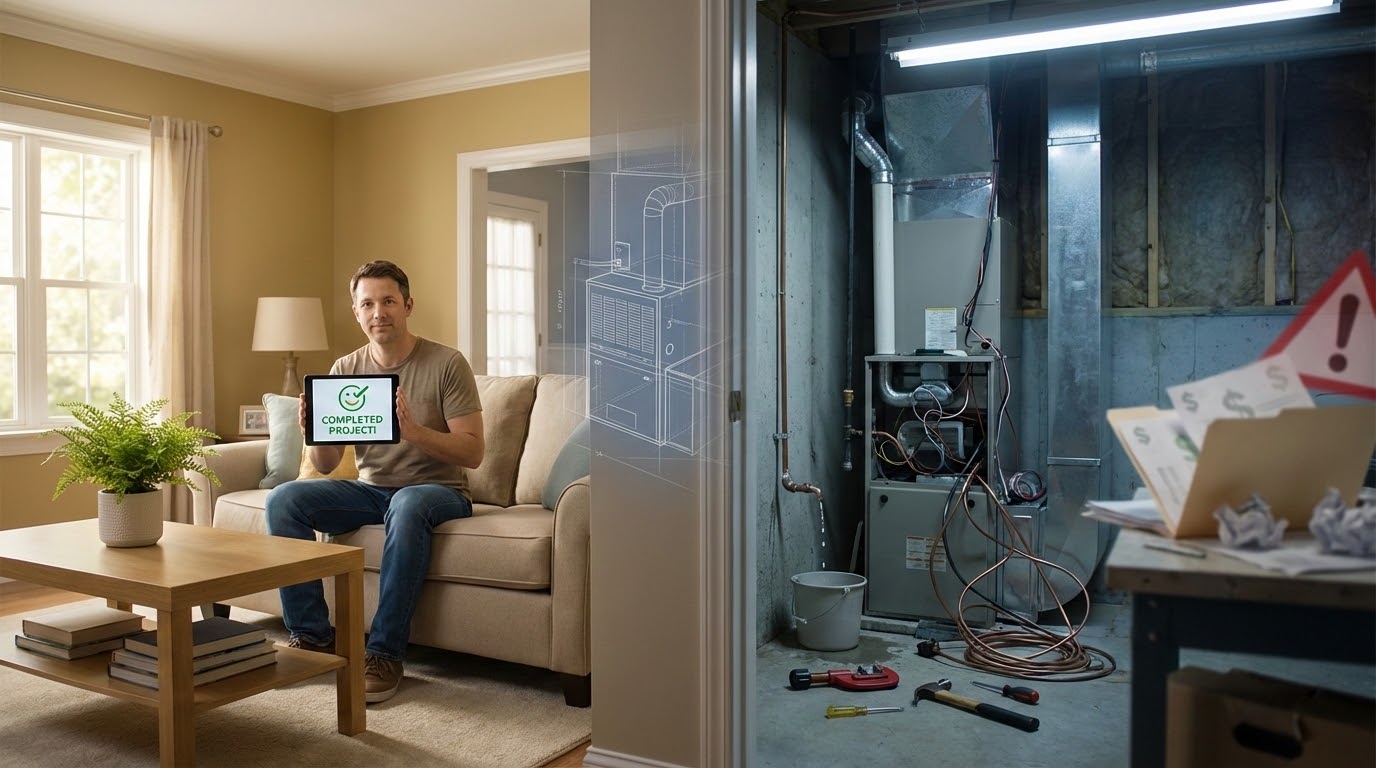
Thinking about tackling your home’s climate control project yourself? Many homeowners are drawn to the idea of saving money by handling their own heating and cooling work. It’s tempting to imagine the satisfaction of a job well done and the cash staying in your pocket.
However, what often starts as a budget-friendly idea can quickly reveal unexpected challenges. The true expenses of a do-it-yourself approach to your home’s comfort system aren’t always obvious at first glance. These hidden costs can impact your wallet, your safety, and your home’s long-term value.
This guide will walk you through what you really need to know. We’ll cover the basics of how these complex systems work. You’ll learn about the planning required and when calling a professional becomes essential.
Installing central air conditioning is one of the most significant improvements you can make to your property. Your decision will affect your daily comfort, monthly energy bills, and overall home value for years to come. We’ll provide honest information to help you choose the right path for your skills and budget.
Key Takeaways
- DIY projects often have expenses that aren’t visible during initial planning
- Proper system setup requires specific technical knowledge and tools
- Safety considerations are crucial when working with electrical components and refrigerants
- Local building codes and permits may be required for this type of work
- Mistakes during setup can lead to higher energy costs and reduced equipment lifespan
- Warranty coverage may be affected by who performs the installation work
- Understanding when to hire professionals can save time, money, and frustration
Understanding HVAC Systems & Installation Fundamentals
Understanding the fundamental workings of your home’s temperature regulation equipment is the first step toward making informed decisions. These complex systems involve multiple components working together seamlessly.
For a deeper dive into how these systems operate, check out this comprehensive guide on heating and cooling basics.
Key Components: Split Systems vs. Packaged Units
Central air conditioning comes in two main configurations. Split systems have separate indoor and outdoor units.
The indoor unit contains the evaporator coil and air handler. The outdoor unit houses the compressor and condenser coil. This setup offers excellent efficiency and customization options.
Packaged units combine all components in a single outdoor cabinet. This compact design works well for homes with limited indoor space.
Sizing, Performance, and Efficiency Considerations
Proper sizing is critical for optimal performance. Professionals use Manual J calculations to determine the right capacity.
Units are rated by tonnage and BTUs. One ton equals 12,000 BTUs of cooling power. Both undersized and oversized equipment can cause problems.
Energy efficiency matters for long-term savings. Look for SEER ratings when selecting your system. Higher SEER numbers mean better energy performance.
HVAC installation DIY: Risks, Rewards, and Hidden Costs
Many homeowners underestimate the dangers involved in handling their own climate control projects. While the potential savings seem attractive, the reality involves significant risks that can turn budget-friendly plans into costly disasters.
Common Pitfalls and Safety Concerns
Safety should be your first priority when working on any temperature regulation equipment. If you smell gas during your project, stop working immediately and call emergency services. Gas leaks pose serious health risks and potential catastrophe.
Electrical work presents another major hazard. High-voltage connections require expertise that most homeowners lack. Mistakes here can lead to dangerous malfunctions.
Physical safety matters too. Wear protective glasses and gloves when handling sharp metal components. Use proper lifting techniques for heavy equipment that can weigh over 100 pounds.
Incorrect sizing represents one of the most common mistakes. A unit that’s too small will overwork itself, leading to breakdowns and high energy bills. An oversized system creates uneven cooling and short-cycling issues.
| Consideration | Professional Installation | DIY Approach |
|---|---|---|
| Safety Compliance | Certified technicians follow all codes | Homeowner assumes all risk |
| Equipment Sizing | Precise calculations using Manual J | Often guesswork-based |
| Warranty Protection | Full manufacturer coverage | Often voided by self-installation |
| Hidden Costs | Included in initial quote | Tools, permits, corrections add up |
| Refrigerant Handling | EPA-certified professionals only | Illegal without certification |
Hidden expenses often surprise DIY enthusiasts. Specialized tools like vacuum pumps and manifold gauges add significant costs. Permit fees and potential code violations create additional financial burdens.
Refrigerant handling requires EPA certification by law. Improper charging damages compressors and reduces system performance. These repairs can cost thousands of dollars.
Consider your home’s electrical capacity and installation location carefully. Poor unit placement can create noise issues and airflow problems that disrupt household peace.
Planning Your DIY HVAC Installation Project
Before touching any tools, comprehensive preparation determines your project’s outcome. The planning phase requires careful attention to multiple factors that impact your system’s long-term performance.
Preparing Your Home: Ductwork, Permits, & System Layout
Start with a heating load calculation that considers your home’s size, age, and construction materials. This calculation also accounts for sun exposure and nearby trees that provide shade.
Evaluate your existing ductwork if you have a forced-air furnace. Look for leaks, blockages, and poor insulation that could reduce efficiency. Homes without ducts need careful planning for new duct installation or alternative systems.
Most areas require permits for this type of work. Skipping permits can lead to fines and problems when selling your home. Choose your outdoor unit location wisely—it needs good airflow away from windows and doors.
Step-by-Step Installation Process Overview
Professional technicians follow a detailed process. They begin with site preparation and safety measures. Then they position both indoor and outdoor units in their designated locations.
The connection phase involves refrigerant lines and ductwork. Electrical connections come next, followed by thorough testing of all functions. The final inspection ensures everything works correctly before cleanup.
Homes with existing ductwork have an advantage for central air projects. Those without ducts might consider ductless mini-split systems that use refrigerant lines instead of traditional ducts.
Managing Costs, Energy Efficiency, and Future Maintenance
Smart budgeting requires looking beyond the initial price tag of your new cooling equipment. The complete financial picture includes both immediate expenses and long-term operating costs that affect your household budget for years.
Understanding where your money goes helps make informed decisions. Let’s break down the true investment required for proper climate control.
Budget Breakdown: Equipment, Labor, & Upgrades
The central air conditioning unit itself typically costs $2,500 to $4,500. Professional setup adds another $3,500 to $7,000 to your total project cost.
Hidden expenses often surprise homeowners attempting their own work. Ductwork modifications can range from $250 to $12,000 depending on your home’s existing infrastructure.
Electrical upgrades and permit fees add significant costs many people overlook. These legal requirements protect your safety and home value.
Energy efficiency directly impacts your monthly bills. Federal law requires a minimum SEER rating of 13, but higher-rated units save substantially over their 15-20 year lifespan.
Modern features enhance both performance and convenience. Noise reduction technology keeps your home quieter while smart thermostats optimize energy usage automatically.
Regular maintenance protects your investment. Annual professional inspections catch potential issues early, while filter changes every three months ensure optimal performance.
Choosing the right size unit through proper calculations prevents wasted energy and discomfort. An incorrectly sized system turns initial savings into ongoing financial drain.
Conclusion
Making the right choice about your climate control equipment involves weighing both immediate costs and long-term consequences. This complex project integrates multiple systems—electrical, refrigerant, ductwork, and structural—each demanding specific expertise for your home. Whether working with a furnace or new units, proper execution ensures safe, efficient operation.
Safety remains paramount when dealing with high-voltage connections and specialized processes. While saving money seems appealing, the risks often outweigh benefits for those without hvac experience. This isn’t a job for learning as you go. Professional installation brings peace of mind and code compliance.
Consider a balanced approach if budget concerns you. Handle preparatory work like clearing the location while leaving technical aspects to experts. Your central air conditioning system will impact comfort and energy bills for 15-20 years. Choose wisely to avoid future issues with your air conditioning unit.
FAQ
Can I really install a central air conditioning system myself?
While it’s technically possible for a very skilled person, it’s generally not recommended. A central air or split system involves complex work with refrigerant, electrical wiring, and sometimes gas lines. Mistakes can lead to poor performance, safety hazards, and voided warranties. Professional installation ensures the job is done correctly and safely.
What’s the biggest risk of a DIY central air installation?
The most significant risk is improper handling of refrigerant. This substance requires special certification (like EPA 608) to handle legally and safely. Incorrect charging can damage the compressor and evaporator coil, leading to a complete system failure and costly repairs.
How do I know what size air conditioner my house needs?
Getting the right size is critical for efficiency and comfort. It’s not just about square footage. A professional performs a Manual J calculation, which considers your home’s layout, insulation, window placement, and local climate. An incorrectly sized unit will struggle to cool your home and waste energy.
What parts of the process can I safely do myself?
You can handle some preparatory work, like clearing the area for the outdoor condenser unit or ensuring your existing ductwork is clean and sealed. However, tasks involving the refrigerant lines, electrical connections, and thermostat wiring are best left to a licensed technician.
Are permits required for a new air conditioning installation?
In most areas, yes. Installing a new central unit typically requires a permit from your local building department. This ensures the work meets safety codes. A professional HVAC contractor will usually handle this process for you, which is a major benefit of hiring one.
How much can I save by doing the installation myself?
You might save on upfront labor costs, but this can be misleading. If errors occur, the cost of repairs can far exceed those initial savings. Additionally, an improperly installed system will have higher energy bills and may require more frequent maintenance, increasing long-term costs.