Fixing things around the house can be incredibly rewarding. There’s a real sense of pride that comes from solving a problem with your own two hands. When it comes to your home’s water systems, knowing what you can tackle is the first step to success.
Some jobs are perfect for a weekend warrior. These simple fixes can save you money and give you a great feeling of accomplishment. However, other tasks are far more complex. Attempting them without the right experience can lead to expensive mistakes and serious water damage.
This guide is here to help you navigate these waters. We will clearly outline the repairs that are often safe for beginners. We will also point out the situations where calling a professional is the smartest choice for your home.
Before you start any work, a basic understanding of your system is essential. Having the correct tools on hand is just as important. With the right preparation, you can approach many common issues with confidence.
Key Takeaways
- Many basic home water system repairs are manageable for beginners.
- Knowing your personal skill level is crucial to avoid costly errors.
- Some complex tasks absolutely require a professional’s expertise.
- Simple fixes can provide great satisfaction and save money.
- Proper preparation and tools are the foundation for any successful job.
- Understanding when to call for help protects your home from potential damage.
Understanding Your DIY Plumbing Boundaries
Every homeowner should understand their capabilities before tackling water system repairs. Setting realistic expectations helps prevent frustration and protects your home from potential damage.
Assessing Your Plumbing Experience and Tools
Begin by honestly evaluating your past experience with home repairs. If you’re comfortable with basic fixes, you might handle simple water system tasks. More complex jobs require specialized knowledge of pipes and water supply systems.
Having the right equipment makes all the difference. Essential tools include pipe wrenches for gripping, a basin wrench for tight spaces, and a tubing cutter for clean pipe cuts. A plunger handles common clogs, while specialized tools like a propane torch are for advanced work.
Essential Safety Measures and Shut-Off Valve Tips
Safety should always come first. Before any work begins, locate your main shut-off valve and individual fixture valves. Knowing how to turn water off quickly can prevent major flooding.
When starting a repair, always shut off the water supply to the specific fixture. Open faucets to release pressure, then proceed with your work. Taking time to learn these steps ensures you’re prepared for both planned repairs and emergencies.
Understanding these boundaries sets you up for success. It’s not about limiting what you can do—it’s about knowing when a job matches your skill level.
plumbing projects DIY: Tasks You Can Handle on Your Own
You might be surprised by how many water-related repairs are within your reach as a homeowner. With basic tools and some patience, several common issues can be resolved without calling for professional help.
These manageable tasks can save you money and give you confidence in maintaining your home. Knowing which jobs are suitable for your skill level is the key to success.
Fixing Leaky Faucets and Unclogging Drains
A dripping faucet wastes water and can be annoying. Most leaks come from worn washers or seals that are easy to replace.
First, turn off the water supply under the sink. Use a wrench to disassemble the fixture and inspect the parts.
For clogged drains, a plunger often does the trick. Create a tight seal and push firmly to dislodge the blockage.
Replacing Showerheads and Toilet Seats
Upgrading your showerhead is one of the simplest upgrades. Unscrew the old unit by hand or with a wrench.
Apply plumber’s tape to the threads before installing the new showerhead. This ensures a watertight seal.
Toilet seat replacement is equally straightforward. Remove the old bolts and position the new seat carefully.
Installing Kitchen and Bathroom Faucets
Swapping out a faucet can refresh your sink‘s look. Always shut off the water supply first.
Use a basin wrench for tight spaces under the sink. Apply tape to threaded connections to prevent leaks.
For more guidance on these manageable tasks, check out our detailed guide on what you can handle yourself.
Recognizing When to Call a Professional
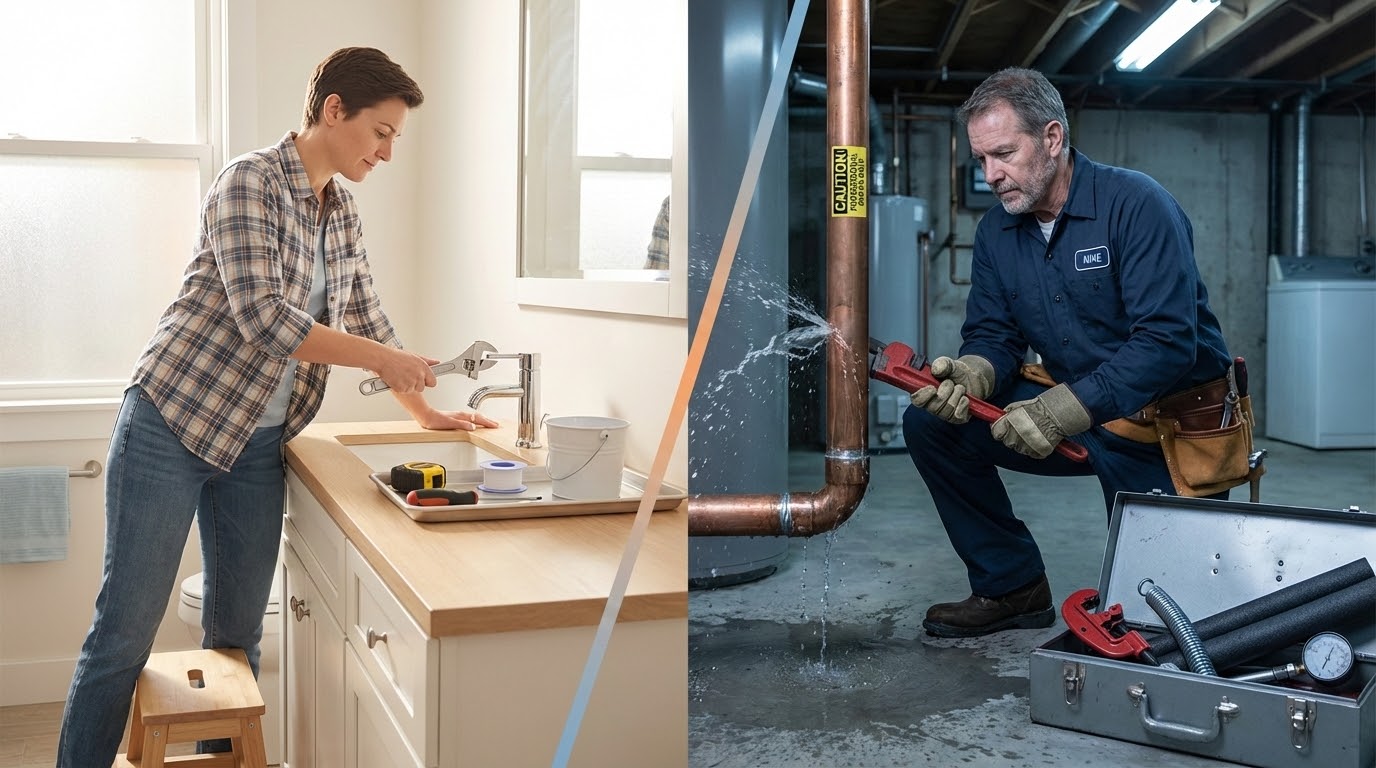
There comes a point in every homeowner’s journey when professional expertise becomes essential. While many fixes are manageable, some situations demand specialized knowledge that goes beyond basic skills.
Knowing when to seek help protects your home from costly damage. It also ensures your family’s safety during complex repairs.
Major Pipe Repairs and Water Heater Installations
Large pipe systems require professional attention. Main water lines and sewer pipes need specialized equipment for proper repair.
Water heater work involves serious risks. Gas models can leak dangerous fumes, while electric units pose shock hazards. Always hire a licensed plumber for these jobs.
Attempting these projects yourself could lead to flooding or worse. The initial cost of hiring an expert often saves money long-term.
Sewer Line, Gas Line, and Complex Remodels
Sewer line issues create unpleasant problems that require professional tools. Incorrect handling can damage your property and create health risks.
Gas line work demands certified plumbers exclusively. Even small mistakes can lead to explosions or carbon monoxide poisoning.
Bathroom renovations often involve moving pipes and drainage systems. Without proper knowledge, you might create leaks or mold issues.
When you encounter complex plumbing situations, calling a professional is the smartest way forward. This approach prioritizes safety and prevents expensive mistakes.
Conclusion
Knowing when to tackle repairs yourself versus calling for expert assistance is key to successful home maintenance. This blog has shown that many basic water system fixes are manageable with the right approach. However, complex situations demand professional help to protect your home and ensure safety.
Having quality tools and proper preparation makes all the difference. Simple tasks like fixing leaks or replacing fixtures become achievable with basic knowledge. For more involved projects, always prioritize safety over savings.
Remember: The information in this blog is for educational purposes only. Attempt any work at your own risk. For complex plumbing, electrical, or HVAC projects, consult licensed professionals. Your home‘s water supply and system pressure require careful handling.
Trust your instincts. When a job feels beyond your comfort zone, seeking expert help is the smart choice. With the right tools and realistic expectations, you can maintain your property confidently.