Imagine having your own personal sanctuary filled with books and comfort. A dedicated area where you can escape into stories and find peace. This guide helps you build that perfect literary retreat.
We’ll explore smart storage solutions that maximize your available space. From floor-to-ceiling built-ins to creative shelving hacks, there are options for every budget. You’ll discover how to make the most of any room size.
Creating an inviting atmosphere involves more than just shelves. We’ll cover comfortable seating, strategic lighting, and color schemes that promote relaxation. These elements transform a simple book collection into a true haven.
Whether you have an entire room or just a corner, this guide provides practical inspiration. Learn to blend functionality with personal style using vintage finds and modern touches. The result will be a space that reflects your unique taste.
Key Takeaways
- Maximize any area with smart storage solutions and creative shelving ideas
- Choose comfortable seating and strategic lighting for an inviting atmosphere
- Select color palettes that promote relaxation and focus while reading
- Blend functionality with personal style using both vintage and modern elements
- Create dual-purpose areas that serve as both reading spaces and productive zones
- Work with any budget using DIY solutions and clever space-maximizing tricks
- Incorporate natural light and window seating for an enhanced reading experience
Introduction to Home Library Inspirations
Contemporary book lovers are redefining what it means to have a dedicated area for their literary treasures. Personal collections now reflect individual style rather than formal traditions. This shift allows for more creative and comfortable spaces.
Today’s reading areas can take many forms. Some people create entire rooms with built-in shelving. Others design cozy corners that serve as peaceful retreats.
The beauty lies in customization. Your space can combine reading, working, and relaxing functions. This multi-purpose approach makes the area more practical and enjoyable.
| Library Style | Key Features | Ideal For |
|---|---|---|
| Rustic Farmhouse | Reclaimed wood, comfortable seating | Relaxed reading sessions |
| Sleek Contemporary | Minimalist lines, bold colors | Modern aesthetics |
| Multi-Functional | Flexible furniture, smart storage | Smaller areas |
| Display-Focused | Showcase shelving, accent lighting | Book collections |
Understanding your needs helps create the perfect environment. Consider how you’ll use the space daily. Drawing inspiration from various sources can guide your design choices.
Professional examples and real transformations offer valuable insights. They help identify which elements work best for different situations. This foundation prepares you for specific design decisions ahead.
Maximizing Storage with Built-In Bookcases
Custom built-ins offer the perfect marriage of form and function, turning unused wall areas into sophisticated display spaces. These built-in bookcases create a seamless look that appears as if they were always part of your room’s architecture.
Professional designers like Nate Berkus demonstrate how symmetrical alcoves and color-coordinated arrangements elevate simple storage to art. The right bookcases transform any area into a personalized retreat.
Selecting the Right Materials and Finishes
Your material choice balances durability with aesthetic appeal. Solid wood provides timeless strength, while engineered options offer budget-friendly versatility.
Consider this comparison when planning your bookshelves:
| Material Type | Best For | Finish Options |
|---|---|---|
| Solid Wood | Long-term durability | Stains, natural finishes |
| Engineered Wood | Budget-conscious projects | Paint, laminate finishes |
| MDF | Smooth painted surfaces | Any color, high-gloss options |
Finish selection dramatically impacts your space’s feel. Natural tones bring warmth, while bold colors make a design statement.
Installation Tips for Seamless Integration
Proper installation ensures your built-in bookcases look original to the room. Attention to details like crown molding and secure anchoring creates professional results.
Even basic bookshelves can achieve custom appeal with strategic upgrades. As seen in innovative storage solutions, starting with ready-made units and adding trim work delivers high-end looks affordably.
Leave some shelves empty for future growth. Mix books with decorative objects to create visual interest throughout your home library space.
Crafting Cozy Reading Nooks that Invite Relaxation
The perfect reading escape combines comfort and style in a dedicated area designed for uninterrupted enjoyment. This personal retreat should feel like a warm invitation to disconnect from daily distractions.
Choosing Comfy Seating and Soft Textiles
Your seating choice forms the foundation of any successful reading nook. Designer Shavonda Gardner demonstrates how a vintage chair can anchor a space, creating character and charm.
Soft textiles transform a simple area into an inviting haven. Layer throw pillows in various textures and keep cozy blankets nearby for cooler evenings. A soft area rug defines the nook while adding warmth.
Practical elements enhance your reading experience. A small side table provides a place for your current book and reading glasses. Consider adding a pouf or ottoman for foot support.
Designer Anne McDonald creates enveloping spaces with moody lighting and calming colors. She notes that a good book’s greatest companions are a comfortable chair and a relaxing atmosphere.
| Seating Type | Comfort Features | Best For | Space Requirements |
|---|---|---|---|
| Plush Armchair | High back support, deep seat | Long reading sessions | Medium corner space |
| Chaise Lounge | Full body support, reclining | Complete relaxation | Larger areas |
| Window Seat | Built-in cushions, natural light | Daytime reading | Underutilized spaces |
| Vintage Chair | Character, unique style | Small nooks | Compact corners |
Personal touches make your reading nook truly special. Incorporate items that reflect your personality while maintaining the space’s relaxing atmosphere.
Setting Up a Library Home Office for Productivity and Comfort
A dual-purpose area that serves as both a focused work zone and a relaxing reading retreat offers the best of both worlds. This clever approach maximizes your available square footage while creating an environment that inspires both productivity and calm.
Creating a Dual-Purpose Workspace
Designer Drew McGuckin demonstrates how to create the ideal work zone by integrating a desk directly within bookshelves. This seamless arrangement makes efficient use of smaller nooks while maintaining aesthetic cohesion.
Thoughtful furniture placement becomes crucial in these multi-functional spaces. Built-in solutions work particularly well, allowing you to combine desk surfaces, filing cabinets, and shelving into one custom unit.
Storage needs double in importance when accommodating both books and work materials. You’ll need organized solutions for office supplies, technology, and professional documents alongside your literary collection.
Designer CeCe Barfield Thompson offers innovative inspiration for rooms with limited natural light. She transformed a Manhattan apartment by merging dining and library functions, noting “It’s more of a nighttime room. This room had the least sun exposure in the apartment, and by painting it a dark color, that contrast actually helps to make the space feel lighter.”
For larger areas, consider establishing distinct zones within the room. Create separate areas for focused work, comfortable reading, and perhaps even a small meeting table. This zoning approach helps maintain organization while serving multiple purposes.
The aesthetic should balance professional functionality with personal warmth. Choose elements that inspire productivity while remaining comfortable enough for extended sessions. Your finished space will reflect both your work needs and personal style.
Window Seating Ideas to Brighten Your Library
Transform any window area into a cherished reading retreat with clever seating solutions. Designer Stephanie Sabbe demonstrates this beautifully with a sitting room designed for monthly book clubs.
She created built-in bookcases around the window frame with a cozy pink seat accommodating multiple people. This approach maximizes both storage and comfort in one elegant solution.
Designing the Perfect Spot for Natural Light
Natural illumination makes daytime reading sessions more enjoyable and reduces eye strain. A sunny window provides the ideal backdrop for extended literary adventures.
Consider your window’s orientation when planning your seating arrangement. Different directions offer unique lighting advantages throughout the day.
| Window Direction | Lighting Characteristics | Best Reading Times | Considerations |
|---|---|---|---|
| South-Facing | Consistent, bright light all day | Morning and afternoon | May need shades for glare control |
| North-Facing | Soft, indirect illumination | All daylight hours | Minimal glare, consistent quality |
| East-Facing | Bright morning light | Early day sessions | Gentle afternoon light |
| West-Facing | Warm afternoon glow | Late day reading | Strong evening light |
The window seat itself should measure 18-24 inches deep for comfortable positioning. Plush cushions and layered throws create year-round coziness.
Hidden storage beneath the bench offers practical functionality. Use this space for extra blankets or seasonal items.
Even without a built-in option, you can create a similar effect. Position a comfortable chair near a window and surround it with shelves.
DIY Bookshelf Hacks for Every Home
Transforming ordinary household items into functional book displays is easier than you might imagine. Creative solutions can turn any area into a personalized reading retreat without professional help.
Repurposing and Upcycling Strategies
Thrift stores and online marketplaces offer affordable bookshelves waiting for transformation. A fresh coat of paint or new hardware can completely revive these finds.
IKEA shelves become custom pieces with simple modifications. Stack different sizes together or add decorative trim for a built-in look.
Floating bookshelves create modern displays that save floor space. They work perfectly above desks or in tight corners.
Wall-mounted baskets provide flexible storage for frequently used items. This approach makes book rotation simple and accessible.
Always ensure proper wall anchoring when installing any DIY shelving solution. Books are heavy and require secure support for safety.
These clever hacks help you maximize your available space while creating storage that reflects your personal style.
Incorporating Vintage Treasures and Family Heirlooms
Infusing your book collection with meaningful artifacts transforms a simple storage area into a living narrative of your family’s story. This approach creates depth and character that new furniture alone cannot achieve.
Mixing Old with New for a Personal Touch
Designers like Hilary Colia and Jennifer Kostohryz intentionally leave empty shelves for growth, surrounding books with vintage finds and sentimental photos. This strategy makes spaces feel curated rather than generic.
Thiara Borges demonstrates how to make new shelves feel meaningful by integrating family heirlooms throughout the area. Even when investing in custom built-ins, surrounding them with older pieces creates established charm.
Repurposed furniture adds instant character and practical storage. Old dressers, sideboards, or weathered cabinets hold books while offering space for reading lamps and accessories.
Strategic placement of vintage items among your books creates visual interest. These pieces become natural focal points that invite closer inspection and conversation.
You don’t need expensive antiques to achieve this look. Flea market discoveries or inherited items contribute authentic character. This blending of eras demonstrates personal style and appreciation for craftsmanship.
For more inspiration on creating spaces that honor both literature and legacy, explore these designer libraries that masterfully blend old and new elements.
Creating a Polished Look with Custom Shelving
Custom shelving elevates a space from simple storage to a sophisticated design statement. It represents the gold standard, offering perfectly proportioned storage that maximizes every inch of available wall space. The result is a seamless, architect-designed appearance that feels intentional.
The polished look comes from precise measurements and seamless integration. Attention to details like consistent spacing and aligned edges creates visual harmony. This approach makes even large walls of shelving feel orderly rather than overwhelming.
Working with a skilled carpenter allows for unique configurations. You can tailor the design to accommodate oversized art books or create special display alcoves. This customization ensures the shelves meet your specific needs perfectly.
Architectural details truly elevate the final product. Consider adding crown moulding, integrated lighting, or glass-fronted cabinets. These elements transform functional shelving into a beautiful focal point.
Even small details make a big impact. The hardware you select, from modern pulls to vintage finds, adds character. A mix of open shelves for display and closed cabinets for clutter creates a balanced, practical look.
While an investment, custom work creates furniture-quality storage. It becomes a permanent feature that adds significant appeal to your home. This approach turns any room into a refined retreat for your collection.
Merging Spaces: Combining Your Library and Study Areas
Blending your book collection with a functional work zone creates a smart, multi-purpose environment. This approach makes perfect sense in today’s residences where every square foot counts. Both activities require quiet concentration and easy access to reading materials.
The secret lies in creating clear zones within one room. Use furniture arrangement and lighting to define each area’s purpose. This maintains separate identities while keeping a cohesive design.
Combining Work and Leisure Zones
Designer CeCe Barfield Thompson offers brilliant inspiration for merged spaces. She combined a dining area with a literary collection in a Manhattan apartment, noting “It’s more of a nighttime room. This room had the least sun exposure in the apartment, and by painting it a dark color, that contrast actually helps to make the space feel lighter.”
Bookshelves make excellent room dividers in open-concept layouts. They break up large areas while adding storage that serves multiple functions. You can easily refresh the look by changing book arrangements and decorative items.
Space Optimization Ideas for Small Interiors
When working with limited square footage, think vertically rather than horizontally. Tall shelving units maximize wall space without consuming precious floor area. Corners and alcoves become valuable real estate for reading nooks.
Multi-functional furniture solves multiple needs simultaneously. A desk can double as a console table, while storage ottomans provide seating and book hiding spots. Every piece should serve at least two purposes.
| Space Challenge | Smart Solution | Key Benefit | Implementation Tip |
|---|---|---|---|
| Limited Floor Area | Wall-mounted shelving | Frees up walking space | Install above desk or seating |
| Open Layout | Bookshelf room divider | Creates visual separation | Use double-sided units |
| Tiny Corner | Compact reading nook | Dedicated retreat spot | Armchair + basket storage |
| Multi-Purpose Room | Zone-based lighting | Defines activity areas | Task lighting for desk, ambient for reading |
Color consistency ties merged spaces together beautifully. Using the same palette throughout makes the combination feel intentional. Your blended area will function seamlessly while reflecting your personal style.
Embracing Bold Colors and Calming Palettes
Color selection goes beyond mere decoration, becoming the psychological foundation that shapes your literary retreat’s atmosphere. The right hues can transform how you experience your collection, influencing both mood and functionality.
Understanding Color Psychology in Home Libraries
Designers demonstrate how strategic color choices create distinct personalities. French & French Interiors used deep red against white walls with a blue ceiling to make their home library pop dramatically.
Katie Ridder embraced vibrant green from the start, while Gina Sims chose muted green walls with a pale blue couch for relaxation. These cooler shades naturally promote calm and focus.
Bold, saturated colors make memorable statements. Rich emeralds or deep reds give your space sophisticated character. They create rooms that feel intentional and distinctive.
Neutral palettes offer serene alternatives. Whites, grays, and warm beiges with wood tones keep focus on your books. This minimalist approach provides versatile backdrops for changing décor.
Green has emerged as a popular choice for libraries. It brings nature’s calming qualities indoors while preventing blandness. From deep emerald to soft sage, green pairs beautifully with natural textures.
Your color selection should reflect personal preferences and planned usage. Warm tones energize social areas, while cool colors suit study zones. The final design should feel authentically yours.
Integrating Ambient Lighting for a Warm Atmosphere
Lighting design serves as the invisible architect of mood, shaping how we experience and interact with our personal book collections. The right illumination reduces eye strain while creating an inviting environment that encourages extended reading sessions.
Designer Anne McDonald demonstrates this power with her English snug featuring moody lighting and cozy colors. These elements work together to envelop you in calming energy perfect for literary escapes.
Choosing Appropriate Fixtures and Accents
A successful lighting plan combines three layers: ambient, task, and accent lighting. Each serves a distinct purpose while working together harmoniously.
Ambient lighting provides the foundation through ceiling fixtures or recessed lights. This general illumination ensures your entire room feels welcoming and functional.
Task lighting focuses on specific areas where you read or work. Floor lamps beside chairs and adjustable desk lamps deliver directed light exactly where needed.
Architect Eric Smith creates writing rooms surrounded by nature with strategic placement. His designs position desks to maximize both natural and artificial light sources.
| Lighting Type | Primary Function | Ideal Placement | Bulb Temperature |
|---|---|---|---|
| Ambient | General room illumination | Ceiling fixtures | 2700-3000K (warm) |
| Task | Focused reading light | Chairside, desk areas | 3500-4100K (cool) |
| Accent | Highlight features | Shelves, artwork | 2700-3000K (warm) |
Natural light deserves special consideration. Designer Rasheeda Gray uses glossy ceilings to reflect window light, creating elegant reading corners. Strategic furniture placement maximizes daylight while controlling glare.
Dimmer switches offer flexibility for different moods and times of day. They allow you to transition from bright task lighting to soft ambient glow as evening approaches.
Your lighting choices should complement your home library’s style while prioritizing reading comfort. The result is a space that feels both functional and magical.
Modern vs. Rustic: Finding Your Library Style
Your book collection’s personality shines through when you choose between modern and rustic aesthetics. This decision shapes the entire atmosphere of your reading space. Both styles offer unique advantages for different preferences.
Contemporary design embraces clean lines and minimalist principles. Floating shelves create airy displays without bulky furniture. This modern approach feels fresh and uncluttered.
Blending Contemporary Elements with Timeless Classics
You don’t need to choose just one direction. The most interesting spaces blend both approaches creatively. Mix sleek shelving with warm wood textures for balanced appeal.
Traditional dark wood libraries feel sophisticated and cozy. But today’s designers challenge conventions with lighter tones. Muted whites and grays create calm, minimalist backgrounds.
Green tones from deep emerald to soft sage bring natural warmth. These colors pair beautifully with brass accents and woven textures. Your home library should reflect what makes you feel comfortable.
Consider your existing architecture when planning the look. Modern homes suit contemporary elements naturally. Older properties might benefit from rustic touches that honor their character.
Ultimately, your personal taste should guide every decision. Create a space that feels authentically yours for years of enjoyable reading.
Innovative Ideas for Small Home Library Spaces
Your residence’s overlooked nooks hold surprising potential for reading sanctuaries. Compact areas challenge you to think creatively about storage solutions that maximize every inch.
Utilizing Nooks and Hidden Corners Effectively
Look beyond obvious locations throughout your dwelling. Awkward corners, hallway ends, and under-stair spaces often serve no purpose but could become charming reading spots.
Vertical thinking becomes crucial in tight quarters. Tall, narrow bookcases or floor-to-ceiling shelving maximize capacity without consuming excessive floor area. This approach keeps rooms feeling open.
Lofted zones and attic spaces offer excellent library potential. These areas provide privacy while making smart use of vertical square footage.
Multi-functional furniture becomes essential. Consider storage ottomans that hide books inside or console tables serving as both display surfaces and concealed storage.
The key to successful small-space libraries is editing your collection. Keep only books you truly love while utilizing digital options for casual reading material.
Floor-to-Ceiling Shelves for Maximum Impact
Empty walls become your greatest asset when you embrace floor-to-ceiling book storage. This approach transforms ordinary vertical surfaces into stunning displays that make a powerful statement about your love of reading.
Exploring Vertical Storage Benefits
Designer Nate Berkus created a custom double-height bookcase in a West Village townhome that demonstrates the dramatic potential of vertical storage. His symmetrical square alcoves filled with color-coordinated books show how floor-to-ceiling installations can become architectural features.
The vertical emphasis of these towering shelves draws the eye upward, making rooms feel taller and more spacious. This visual trick works especially well in residences with standard ceiling heights.
You gain significantly more storage capacity than standard bookcases provide. Sherrell Neal’s work-from-home solutions demonstrate how personalized floor-to-ceiling designs can convert untouched areas into functional family spaces.
Practical considerations ensure your installation works beautifully:
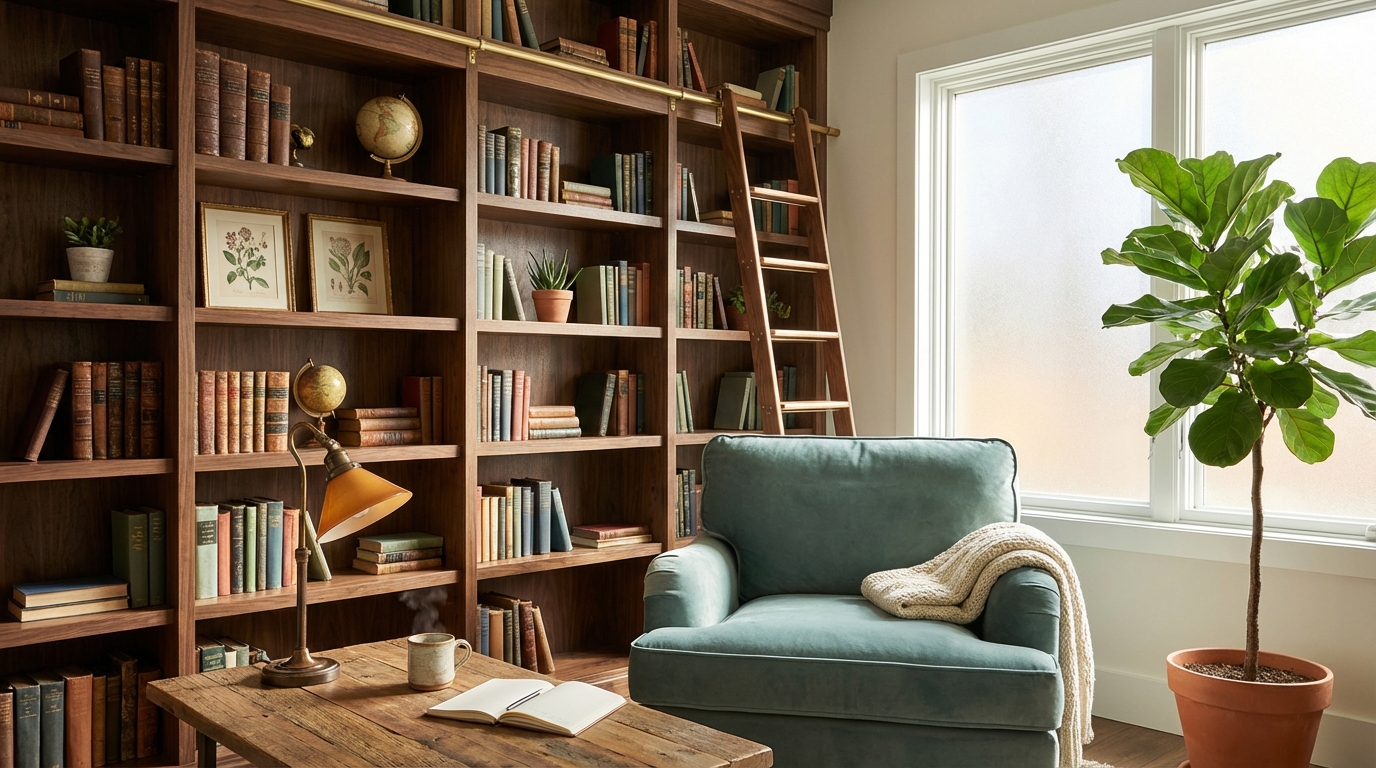
- Incorporate a rolling ladder for accessing upper shelves safely
- Reserve higher areas for display items or rarely used books
- Use varying depths and alcoves to prevent overwhelming visual effects
- Ensure proper anchoring to support the substantial weight
These dramatic walls of books work across design styles. From traditional rich wood tones to modern painted shelves, floor-to-ceiling storage creates a curated display that tells your unique story from the ground up.
Blending Media and Books for a Dynamic Space
The modern approach to personal spaces acknowledges that technology and traditional books can coexist beautifully. Designer Elaine Santos demonstrates this perfectly with a communal family area that serves both avid readers and media enthusiasts.
Tech Integration Meets Classic Design
Framing your television with surrounding bookshelves transforms what might be an eyesore into an intentional focal point. The books soften the technology’s presence while adding texture and personality.
This design works wonderfully in living areas where relaxation and entertainment naturally overlap. It acknowledges that many people enjoy background entertainment while reading or need screens for research.
Building shelving around media components makes practical sense in smaller residences. This approach maximizes functionality without sacrificing aesthetic appeal. Your book collection can be displayed strategically to minimize the television’s visual dominance.
Consider incorporating charging stations and cable management within your shelving design. This ensures technology integrates seamlessly without creating visual clutter. The result is a space that feels both modern and literary.
Conclusion
Your journey toward creating the perfect literary retreat culminates in a space that truly reflects your passion for reading. This personal sanctuary becomes more than just storage for books—it’s a dedicated place for learning, reflection, and escaping daily demands.
Whether you’ve built grand floor-to-ceiling shelves or carved out a simple nook, your library should make you excited to spend time with a good book. The most successful designs balance practical storage and comfortable seating with aesthetic choices that feel uniquely yours.
Remember that your library will evolve as your collection grows and family needs change. Build flexibility into your plans rather than chasing immediate perfection. The investment pays dividends in increased reading time and improved focus.
By following this guide’s inspiration and practical advice, you’re equipped to create one of your house’s most treasured spaces. Start with what matters most to you and build from there, creating a sanctuary where family memories flourish and the simple pleasure of reading remains celebrated.
FAQ
What are some simple ways to start creating a personal library space?
Begin by designating a specific area, even a small corner. Start with a sturdy bookshelf and a comfortable chair. Add personal touches like a soft rug and a good reading lamp to make it inviting.
How can I make a built-in bookcase look seamless in my room?
Choose materials and a finish that match your existing trim and woodwork. A professional installation ensures a flush fit against the wall and ceiling for a custom, built-in look.
What’s the best seating for a cozy reading nook?
Look for a deep, plush armchair or a window seat with lots of cushions. Prioritize comfort with soft textiles like wool throws and velvet pillows for ultimate relaxation.
Can I combine my library with a home office effectively?
Absolutely! Use shelving to separate the zones visually. A large desk can serve as both a work surface and a spot to spread out books, creating a dual-purpose space.
Any tips for adding a window seat to my book collection area?
Maximize natural light by keeping the window treatments simple. Build a bench with hidden storage underneath for blankets or books, making it a functional and bright spot.
Are there easy DIY bookshelf ideas for beginners?
Yes! Repurpose old wooden crates or ladders as unique shelving. Upcycling existing cabinets by adding a fresh coat of paint is another great, budget-friendly strategy.
How do I blend vintage items with modern shelving?
Display family heirlooms or vintage treasures on sleek, contemporary shelves. This mix creates a personal touch and adds character, making the space uniquely yours.
What colors work well for a calming library atmosphere?
Soothing shades like sage green, navy blue, or warm greige promote focus. You can always add pops of bold color with art or accessories for energy.
What type of lighting is best for a reading room?
Layer your lighting! Combine ambient overhead lights with a focused floor lamp next to your chair. Warm-toned bulbs create a cozy and warm atmosphere.
How can I fit a library into a very small space?
Think vertically! Use tall, narrow bookcases. Transform an unused nook or corner with floating shelves. Even a few shelves above a doorway can hold a surprising collection.