Welcome to your complete guide on tackling common wall projects yourself. We will explore if handling these tasks is a realistic goal for a homeowner and what you need to know before you begin.
Wall damage happens in every home. From small holes to larger damaged areas, these common accidents don’t always mean you need to call for expensive professional help.
This guide walks you through the process from start to finish. You will learn which fixes you can confidently handle and which might require an expert’s touch.
With the right tools and clear instructions, many of these projects are surprisingly manageable for beginners. Some aspects, like taping and finishing, do require patience and practice to master perfectly.
Your first project is always the most challenging. However, each one after that gets easier as you build your skills and understand the techniques.
Whether you want to save money or simply add a valuable skill to your home improvement knowledge, this article will give you the confidence to assess your needs. You will know when to pick up the tools and when to pick up the phone.
Key Takeaways
- Many common wall issues can be fixed by homeowners with the right guidance.
- Proper preparation and having the correct materials are crucial for a successful outcome.
- Some techniques, like achieving a smooth finish, require practice to master.
- Starting with a small project can build your confidence for larger tasks.
- It’s important to know your limits and recognize when a job is best left to a professional.
- This guide provides a realistic overview of the entire process from preparation to the final touches.
Introduction to DIY Drywall Repair
Taking control of wall maintenance is an empowering step for any homeowner. According to professional contractors, fixing wall damage is fairly straightforward for most situations. The work typically falls into the beginner complexity category.
Most projects take just 1 to 3 hours to complete. Material costs often stay under $20, making this a budget-friendly weekend task. Understanding your specific damage is the crucial first step.
Small imperfections from nails or screws need different approaches than larger openings. While cutting and installing patches is simple, the taping and finishing process requires more practice. This is where many beginners face challenges.
The good news is that wall compound is very forgiving. If your first attempt isn’t perfect, you can always add another coat and sand again. This flexibility makes learning much less stressful.
Being able to handle these fixes yourself saves significant money on service fees. It also gives you confidence to address damage immediately. You won’t need to live with unsightly openings while waiting for help.
For guidance on more extensive projects, check out this resource on patching larger wall openings. Even complex repairs become manageable with proper instructions.
This essential home maintenance skill is surprisingly accessible. With patience and the right guidance, you can achieve professional-looking results that last for years.
Essential Tools, Materials, and Safety for DIY Repairs
Successful wall restoration begins with having the right implements at your fingertips. Proper preparation prevents frustration and ensures your project flows smoothly from start to finish.
Must-Have Tools and Equipment
Start with basic cutting tools like a sharp utility knife and drywall saw. You’ll need a screw gun for fastening and a tape measure for accuracy.
Your most important tools are the taping knives. A flexible putty knife in 6-inch and 12-inch sizes works best. Wider blades create smoother surfaces on larger areas.
Don’t forget protective gear like a dust mask. A plastic drop cloth protects floors from the messy sanding process.
Material Checklist and Safety Precautions
For materials, choose joint compound that matches your project size. Quick-set mud works well for most situations. You’ll need either fiber mesh tape or paper tape for seams.
Mesh tape offers strong reinforcement and is easier for beginners. Traditional paper tape requires more skill but provides excellent results.
Finish with a sanding sponge in multiple grits. Start with 100 grit for shaping, then use 220 grit for final smoothing. Always work in well-ventilated areas and wear protection.
Primer is essential before painting any restored surface. It seals the porous new material and prevents visible patches.
Preparing Your Damaged Drywall for Repair
Getting your wall ready for a patch starts with careful preparation of the damaged area. This crucial step ensures your fix will be strong and virtually invisible when completed.
Measuring and Marking the Patch Area
Begin by assessing the hole size and damage extent. Use your tape measure to determine how large your patch needs to be.
Mark a square pattern around the hole at convenient measurements. A chalk box helps snap straight lines between your marks, creating a clear cutting guide.
Clean edges make fitting the replacement piece much easier. Taking time here saves frustration during finishing stages.
Cutting Techniques for Clean, Square Edges
When cutting along your chalk lines with a keyhole saw, work carefully. Aim for edges that are as close to perfectly square as possible.
Here’s a crucial technique many beginners miss: score completely around the entire perimeter before removing the damaged section. This prevents the outer paper from tearing beyond your cut lines.
Remove any loose pieces and scrape away raised edges with your putty knife. Ensure nothing protrudes outward from the wall surface around the hole.
For small openings, drive popped fasteners below the surface. Dimple the hole slightly concave to create space for compound without crushing the core.
Installing the Drywall Patch: Step-by-Step Process
Moving from preparation to installation requires meticulous attention to fit and securement details. This phase transforms your prepared opening into a seamlessly integrated wall surface.
Fitting the New Drywall Piece
Begin by measuring your opening from top to bottom on both sides. Also measure from left to right across the top and bottom. Write down all four numbers.
If your cut is perfectly square, you might have matching measurements like 24 inches tall by 14 inches wide. Irregular openings require accounting for four different numbers.
Transfer these measurements to your replacement material using a chalk box. Snap clear cutting lines before using your keyhole saw and utility knife. Test-fit the cut piece and trim as needed for a snug fit.
| Measurement Scenario | Height (inches) | Width (inches) | Cutting Approach |
|---|---|---|---|
| Perfectly Square Opening | 24 | 14 | Two measurements needed |
| Slightly Irregular | 24 / 23.5 | 14 / 14.25 | Four measurements required |
| Significantly Irregular | Varies greatly | Varies greatly | Custom cutting pattern |
Securing the Patch with Wood Backing
Before fastening your patch, install wood backing behind the opening. Use furring strips like 2x4s or 2x2s for support.
The professional rule of thumb calls for solid wood surface every 6 inches around the perimeter. This minimizes movement and extends the repair’s longevity.
Position your new piece into the opening and secure it with screws. Space fasteners approximately 6 inches apart around the entire perimeter. Include any center studs if your patch spans that distance.
Proper backing creates a stable, movement-free installation. This sets the stage for successful taping and finishing in subsequent steps.
Mastering “drywall repair DIY” Techniques
Perfecting the final stages of wall work demands more than just following instructions. While cutting and installing patches feels straightforward, the artistry comes in the finishing touches that make fixes disappear.
Understanding the Core Steps and Expectations
The taping and mud application process presents the real challenge. Professionals agree this skill develops through hands-on practice rather than reading alone.
Your first attempt will likely be the most difficult. Each subsequent project builds muscle memory and material understanding. Improvement comes with experience.
The essential method involves working in thin layers. Apply compound, allow proper drying time, then evaluate your progress. Building up gradually creates smooth, invisible results.
Time management matters, but rushing leads to problems. Quick-setting compounds allow multiple coats in shorter periods. Using fans can accelerate drying further.
Sometimes the best approach is stepping away. If you’re overworking the material, let it dry completely. Return later with fresh perspective for the next coat.
The ultimate goal is creating a seamless blend where the patch disappears. With patience and proper technique, even beginners achieve satisfying outcomes that look professional.
Applying Tape, Mud, and Sanding for a Flawless Finish
Transforming a visible patch into a seamless wall surface requires patience and precision during the finishing phase. This is where your project transitions from obvious fix to invisible restoration.
Before applying any tape, check for gaps between your new piece and the existing wall. If gaps exist, back-fill them with joint compound and let dry completely.
First Coat Application and Tape Placement
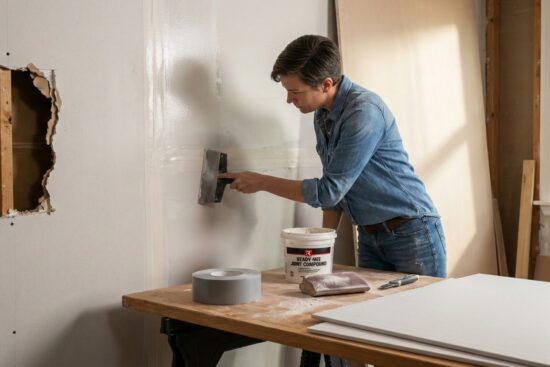
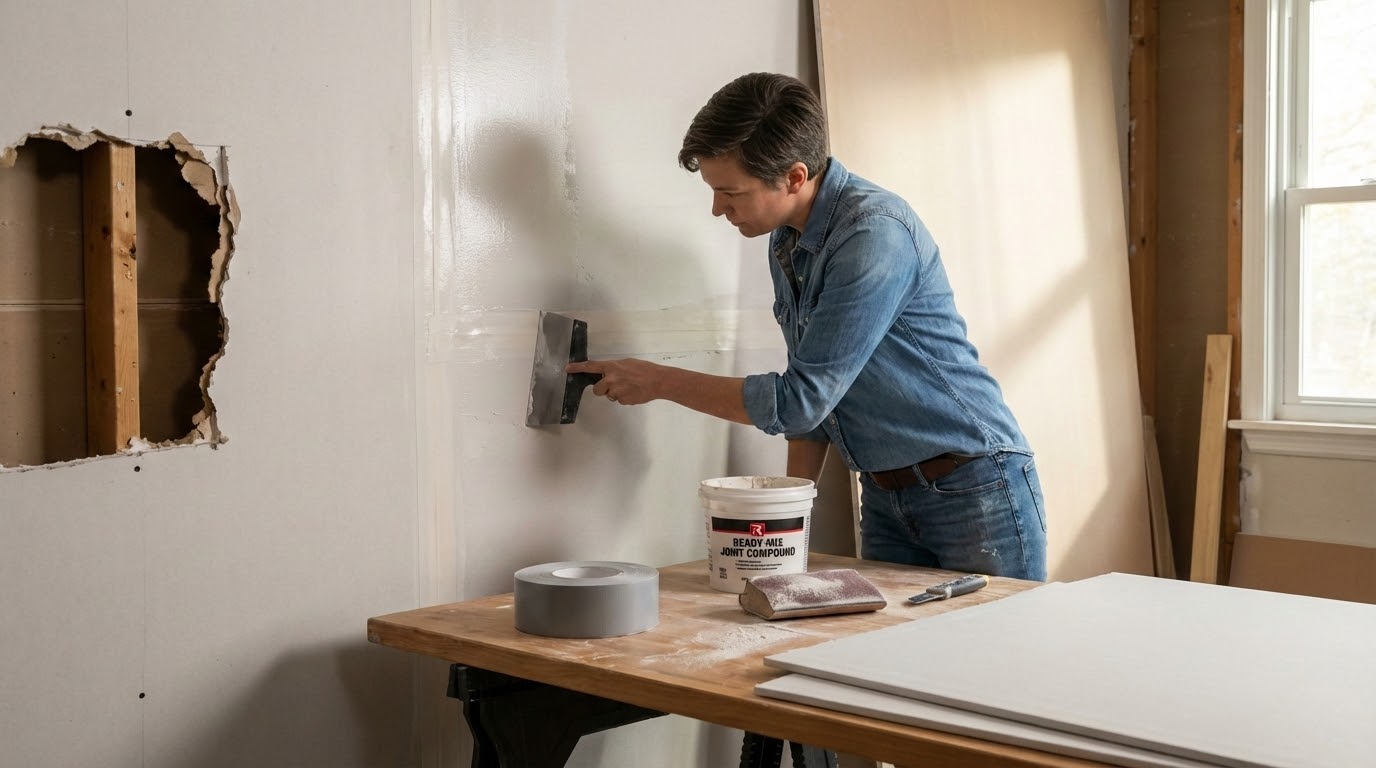
Apply your chosen tape to all seams around the patch. Fiber mesh tape offers strong reinforcement for beginners. For paper tape, spread mud about 6 inches wide first.
Place the tape on seams and wipe down carefully. Too much pressure creates bubbles, while too little leaves mounds. Use a 10-inch or 12-inch metal knife for the first coat.
Building Up Additional Mud Coats
For the second coat, set one end of your knife on the tape center. Apply compound evenly on one side, then repeat on the other side. This creates approximately a 20-inch wide strip.
Wipe down one side, then the other side, then the middle. The third coat expands further with three swipes instead of two. Work in thin layers, letting each coat dry completely between applications.
Sanding and Refining the Surface
Once your final coat is dry, begin sanding. Use a sanding sponge or sandpaper, starting with 100 grit for initial smoothing. Finish with 220 grit for the finest surface.
Dampen the sponge slightly to reduce dust. Run your hand over the surface to check for waves or scratches. For more detailed guidance on this process, check out this comprehensive resource on taping and finishing techniques.
Apply another thin layer if needed. Beginners often sand between each coat, which helps learn how the compound behaves. It’s better to overfill slightly since you can sand down excess.
Expert Tips and Tricks to Avoid Common DIY Mistakes
Learning from common mistakes helps beginners achieve better results on their first attempt. Professional contractors share insights that can save hours of frustration.
The right material combination makes all the difference for lasting results. Fiber mesh tape with quick-set compound creates the strongest bond for small projects.
Choosing the Right Tape and Mud Combination
Make sure you never use pre-mixed compound as your first coat with mesh tape. Quick-set powder mixed with water dries much harder, providing essential strength.
This method offers significant advantages. You can apply multiple coats in one day, and the repair withstands household impacts better.
However, beginners should understand the challenges. Mixing requires practice to avoid lumps that complicate taping.
Time Management and Technique Adjustments
Time management is crucial with quick-setting materials. Mix only what you can use in ten minutes, and clean tools thoroughly between batches.
Expert adjustments include thinning the first coat slightly with water for easier tape embedding. Feather edges outward so the repair blends gradually into the surrounding surface.
Sometimes less is more when working with wet compound. If you’re creating more problems than solutions, let everything dry completely. Return for the next coat with fresh perspective.
Conclusion
You’ve now reached the final stage of understanding how to handle common household wall issues. This knowledge empowers you to maintain your living space effectively.
The ability to fix wall damage yourself offers real financial benefits. During challenging economic periods, this skill becomes especially valuable for home maintenance.
Be realistic about your first results. Professional-level perfection takes practice to master. Don’t get discouraged if your initial attempt isn’t flawless.
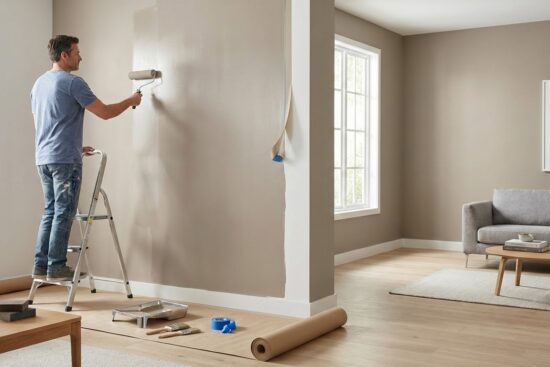
Never skip the priming step before painting. New compound creates a porous surface that absorbs paint differently. This causes visible patches even with perfect color matching.
Use a roller when applying primer. This helps raise the surface texture to match surrounding walls. For color matching, bring a quarter-sized sample to your paint store.
Each project builds your skills. The money saved can be invested in other home improvements or kept in your pocket.