Welcome! More and more American families are choosing to live together under one roof. In fact, recent data shows that one in five people now share their house with multiple generations of relatives. This represents a significant increase over the past fifteen years.
This lifestyle choice offers a practical and affordable solution for many households. It can also be an emotionally rewarding experience that strengthens family bonds. Whether you’re planning for aging parents or adult children, creating a functional space is key.
This guide will walk you through the essentials. We’ll explore current trends and the important design principles that balance togetherness with privacy. For a deep dive into the planning stages, consider this practical guide for a successful project.
Our goal is to provide you with expert insights and real-world solutions. We’ll cover everything from economic benefits to practical floor plan considerations. This information will help your family make a confident and informed decision.
Key Takeaways
- Shared living with extended family is a growing trend across the United States.
- This arrangement can provide financial stability and stronger emotional connections.
- Successful design carefully balances shared common areas with private spaces.
- Proper planning is essential for harmony, covering everything from chores to budgets.
- Understanding local regulations and building codes is a critical first step.
- Consulting with professionals like architects and financial advisors is highly recommended.
Exploring the Rise of Multigenerational Living
The landscape of American family life is undergoing a quiet transformation. Current housing market data reveals this shift is more than a temporary trend.
Trends and Statistics in America
The National Association of Realtors reports that 17% of all homes purchased last year were for extended family arrangements. This represents an all-time high for this living choice.
Generation X leads this movement at 21% of buyers. They are often called the “sandwich generation” because they care for both aging parents and adult children. Younger boomers follow at 15%, with older millennials at 12%.
Economic factors drive much of this growth. Cost savings jumped from 15% to 36% as the primary reason between 2015 and 2024. This reflects broader financial pressures facing families today.
Understanding Family Dynamics and Living Arrangements
Family structures vary widely in these setups. Some households welcome back adult children after college or life changes. Others provide space for aging relatives who need support.
The number of families where adult children never left home tripled from 7% to 20% in recent years. This shows how economic realities reshape traditional expectations.
These living situations represent more than financial practicality. They reflect evolving cultural attitudes about independence and intergenerational connection. Families find value in shared experiences across different life stages.
Designing Functional Multigenerational Homes
The success of a household with multiple family members depends heavily on its architectural blueprint. Thoughtful design separates a harmonious living situation from a stressful one. Privacy is the cornerstone.
Incorporating Private Spaces and Separate Entrances
Builders like K. Hovnanian offer specialized floor plans. The Extra Suite provides a private, spacious area with an ensuite bath. It is often on the first floor for easy access.
The Extra Suite Plus goes further. It acts like a small apartment inside the house. This plan includes a separate living room and options for a kitchenette.
A separate entrance is a key feature for maximum privacy. It allows occupants to come and go without disturbing the main household. This independence is vital for adults living under one roof.
Innovative Layouts for Shared and Independent Living
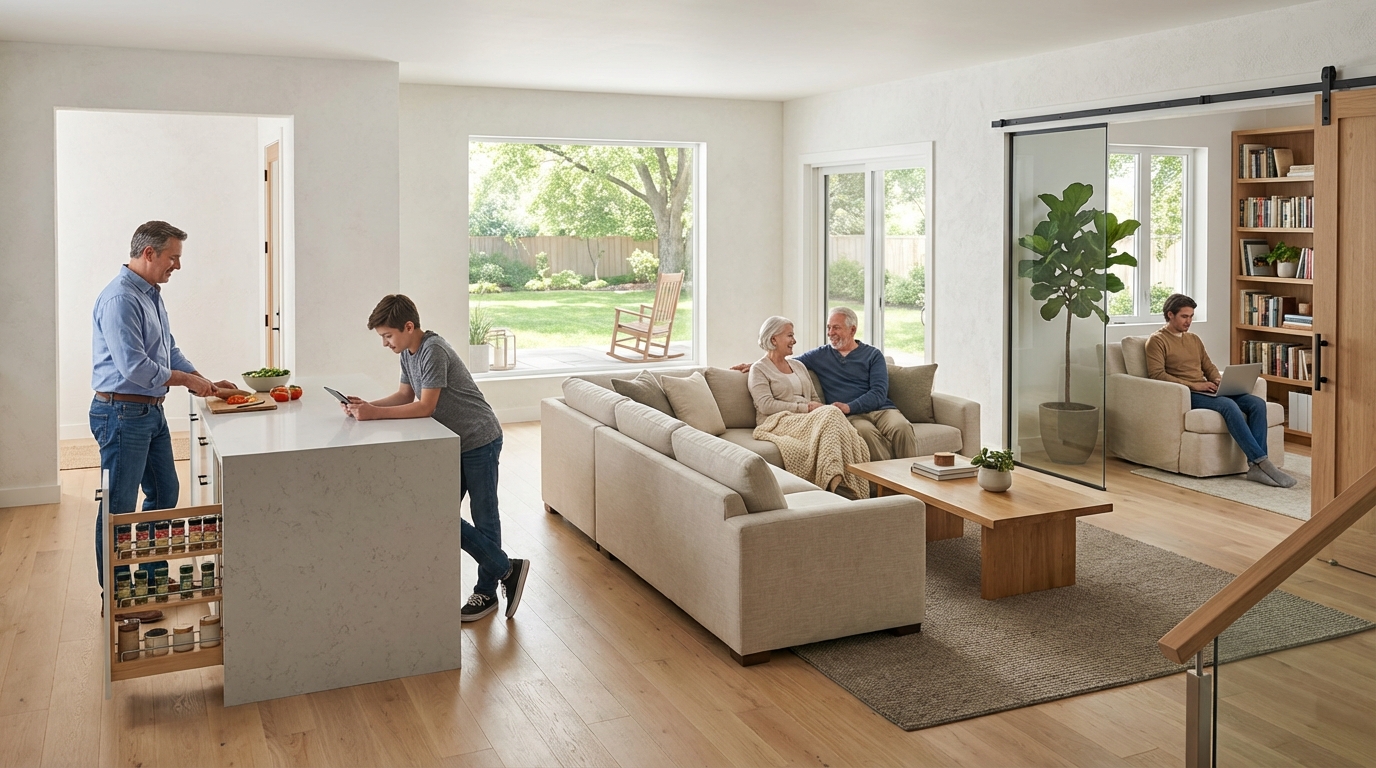
Open floor plans create versatile shared spaces. Grandparents can play with grandchildren in the family room while parents cook nearby. This fosters natural interaction.
Communal areas like great rooms bring everyone together. Meanwhile, private suites offer a quiet retreat. Features like extra-insulated walls reduce noise between spaces.
Connecting doors between suites and the main house provide safety and convenience. They allow for easy check-ins on elderly loved ones. This balances connection with independence perfectly. For more inspiration, explore this guide on multi-generational home design.
| Feature | Extra Suite | Extra Suite Plus |
|---|---|---|
| Core Components | Bedroom, Ensuite Bath, Closet | Bedroom, Bath, Separate Living Room |
| Additional Amenities | Standard Layout | Optional Kitchenette & Laundry |
| Level of Independence | High Privacy | Apartment-Style Living |
| Ideal For | Extended visits, single family member | Adult children, active grandparents |
Economic and Family Benefits of Multigenerational Living
When families choose to share a home across generations, they unlock powerful economic benefits while strengthening their bonds. This arrangement creates a supportive environment where everyone gains.
Shared Expenses and Cost Efficiency
Combining households transforms financial burdens into manageable shared responsibilities. Instead of two mortgages, families have one. Utility bills, insurance costs, and maintenance expenses get divided among working adults.
Childcare costs often disappear when grandparents provide daytime care. Expensive assisted living facilities become unnecessary for aging parents. The collective savings can be substantial, reducing financial stress for all family members.
Household chores become more efficient with multiple hands. Younger adults handle physical tasks like yard work. Older generations contribute with meal preparation and childcare support.
Strengthening Bonds Across Generations
Daily interactions create meaningful connections between grandparents and grandchildren. Research shows children with close grandparent relationships develop better resilience and fewer behavioral issues.
Grandparents who regularly engage with younger family members tend to live longer, happier lives. They feel purposeful when helping with homework or sharing life wisdom.
Adult children and their parents build new adult-to-adult friendships. The home becomes a hub for creating lifelong memories through shared meals and activities.
“The intergenerational exchange of wisdom and energy creates a rich family tapestry that benefits everyone involved.”
Safety improves with multiple generations present. Someone is usually home to assist with emergencies or provide companionship. This living arrangement offers peace of mind alongside financial and emotional rewards.
Adapting Floor Plans for Extended Family Needs
The blueprint of your home can make or break the experience of living with extended family members. Smart design creates harmony while poor layouts lead to friction. Every family has unique needs that evolve over time.
Flexible Design Solutions and Room Configurations
Start by gathering all household members for an honest discussion. Talk about daily routines, privacy needs, and shared responsibilities. This ensures everyone’s voice is heard from the beginning.
First-floor suites work well for elderly parents with mobility issues. Separate wings give adult children independence while keeping them connected. Bonus rooms can serve multiple purposes over time.
Builders like K. Hovnanian and Toll Brothers now offer specialized layouts. These designs go beyond traditional floor plans. They create purpose-built solutions for modern families.
| Family Situation | Ideal Configuration | Key Features |
|---|---|---|
| Aging parents joining | First-floor suite | Ensuite bath, no stairs, separate entrance |
| Adult children at home | Separate wing or upstairs area | Private living space, kitchenette access |
| Mixed generations | Zoned layout with shared common areas | Multiple bathrooms, sound insulation, flexible rooms |
Think about how your needs might change in five to ten years. A home office today could become a bedroom tomorrow. Planning ahead prevents future remodeling expenses.
Conclusion
As more American families embrace shared living arrangements, the benefits become increasingly clear. The recent report showing 17% of homes purchased are for multigenerational households confirms this is a mainstream choice.
Success in this living arrangement depends on three key factors. Thoughtful design balances privacy with connection. Open communication ensures everyone’s needs are met. Mutual respect among all adults and children creates harmony.
When considering this path, evaluate your specific family dynamics carefully. Think about both immediate needs and long-term plans. Working with builders experienced in multigenerational homes ensures your investment serves you well over time.
This lifestyle offers remarkable advantages. You gain economic efficiency, stronger bonds, and enhanced safety. With proper planning, your home can become a place where generations connect and create lasting memories.
Today’s buyers have more options than ever before. Major builders now offer specialized designs for multigenerational households. This support makes creating the perfect space for every age group achievable.