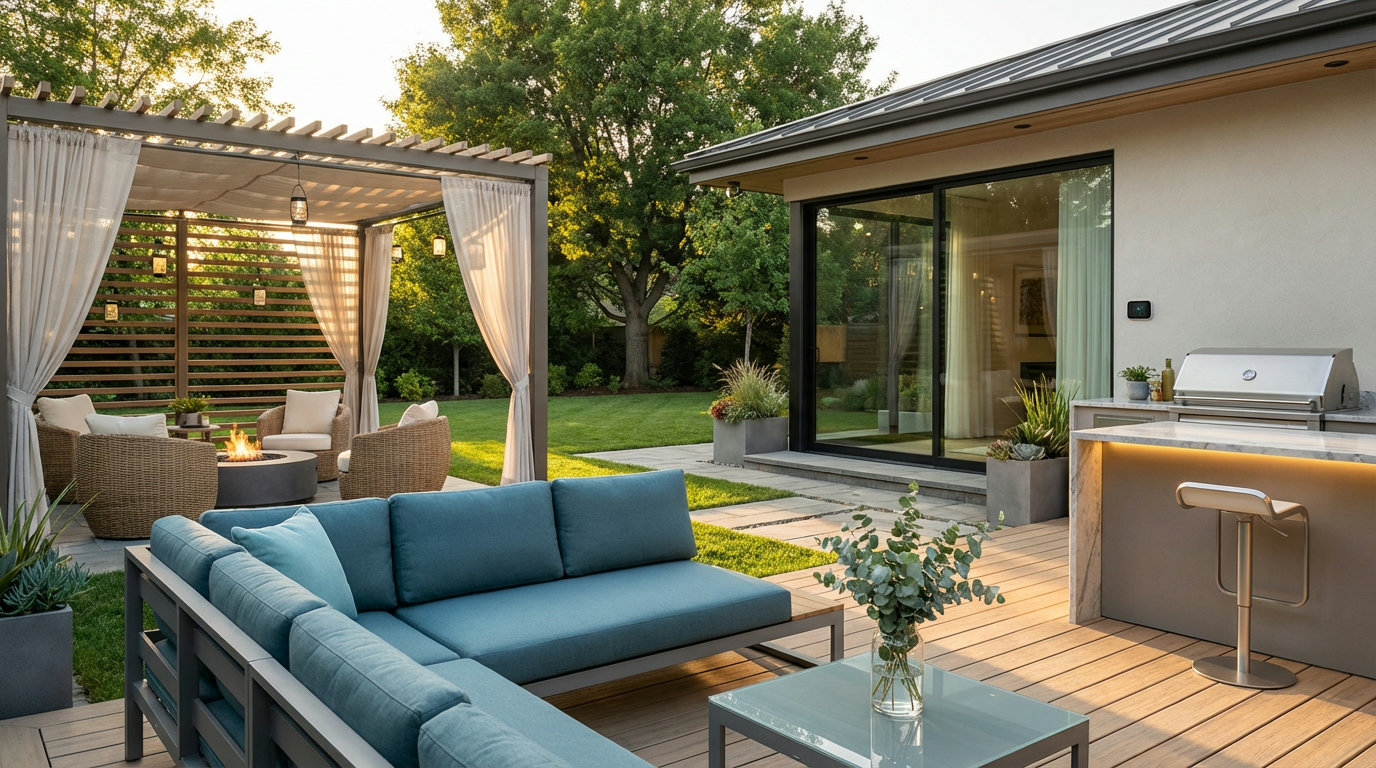
Welcome to the exciting world of transforming backyards and patios. People are creating beautiful extensions of their homes that rival indoor rooms in comfort and style. This movement represents more than a temporary phase—it’s a fundamental shift in how Americans use their properties.
The pandemic accelerated this change dramatically. During lockdowns, families rediscovered their yards and realized the incredible potential these areas held. A recent study shows over 80% of Americans want their exterior areas to be more attractive, comfortable, and functional. This demonstrates a widespread movement affecting properties across the country.
Today’s sophisticated exterior oases feature everything from multi-zone layouts to smart technology. These spaces now offer year-round comfort features. In this article, you’ll discover the latest design innovations and material choices shaping renovations. Whether you have a sprawling yard or compact balcony, these ideas will help create a space that enhances your lifestyle.
Key Takeaways
- Over 80% of Americans want more functional and attractive exterior areas
- This represents a lasting lifestyle shift, not just a temporary phase
- The pandemic accelerated interest in yard and patio transformations
- Modern designs include smart technology and year-round comfort features
- These renovations add significant value to properties of all sizes
- Multi-zone layouts create versatile spaces for different activities
- Sustainable materials are becoming increasingly popular choices
Exploring the Outdoor Living Trend
A remarkable evolution in residential design has elevated backyards from simple lawns to luxurious retreats. This movement represents more than just adding furniture—it’s about creating cohesive environments that blend comfort with nature.
Defining the Outdoor Living Concept
Modern exterior design transforms yards into functional extensions of interior rooms. People intentionally create spaces where style meets purpose for cooking, dining, and relaxation.
This approach goes beyond basic patio setups. Homeowners now design complete environments with the same comfort level as indoor areas. These spaces serve multiple purposes throughout the year.
Stephane Thomas, Director of MAD Design, confirms this shift.
Exterior areas are undeniable extensions of indoor living areas. People create backyard oases that serve multiple purposes throughout the year.
Why This Trend is a Renovation Must-Have
The pandemic accelerated this transformation dramatically. With fewer places to visit, families rediscovered their properties’ potential. Yards became essential sanctuaries for work, meals, and mental well-being.
Today’s homeowners recognize these spaces as valuable square footage. They invest in features that make areas usable year-round. This adds functional space without traditional addition costs.
The experience offers unique benefits that indoor rooms cannot match. Fresh air, natural light, and connection to nature provide psychological advantages. This makes exterior spaces essential for modern life.
| Traditional Backyard Use | Modern Outdoor Living Approach |
|---|---|
| Seasonal usage (spring/summer only) | Year-round functionality with weather protection |
| Basic furniture and grill setup | Complete room-like environments with multiple zones |
| Occasional weekend barbecues | Daily use for work, dining, and relaxation |
| Separate from indoor living areas | Seamless extension of interior design style |
| Minimal investment in features | Significant renovation with smart technology |
Transforming Outdoor Spaces into Luxurious Oases
Transforming a basic yard into a resort-style escape hinges on integrating living elements into the overall design. This approach creates environments that feel both refined and naturally inviting.
Integrating Natural Elements and Landscape Design
Expert garden designer Michele Chambliss advises against overly minimalist, hardscape-focused landscape plans. “Without greenery, these areas can feel uninviting,” she notes. Excessive paving and walls often generate reflected heat, making spaces less comfortable.
Incorporating plants and trees doesn’t mean sacrificing a modern aesthetic. Multi-trunk trees and sculptural elements like cacti complement contemporary architecture beautifully. They make outdoor spaces more enjoyable and livable.
Themed garden areas are a growing trend. Consider an immunity garden with health-supporting herbs or a cocktail patch with mint and basil. These purposeful designs add character and function.
Enhancing Curb Appeal with Inviting Ambiences
Strategic landscape design does more than beautify. The right plants provide shade, reduce heat, and create natural privacy screens. This improves the microclimate of your entire outdoor space.
This philosophy applies to all exterior areas, not just the front yard. Thoughtful elements throughout create ambiences that make homeowners want to spend more time outside. It turns any area into a stylish summer retreat.
Even patios without traditional beds can benefit. Planters and vertical gardens offer flexible ways for homeowners to incorporate lush plants into their outdoor living areas.
| Aspect | Hardscape-Focused Design | Natural-Integrated Design |
|---|---|---|
| Visual Appeal | Can feel stark and uninviting | Feels lush, soft, and connected to nature |
| Comfort & Temperature | Often hotter due to heat reflection | Cooler with natural shade and transpiration |
| Functionality | Primarily aesthetic | Multi-functional (food, privacy, habitat) |
Design Innovations and Sustainable Materials
The next frontier in residential upgrades focuses on smart material selections that balance beauty with responsibility. Today’s most innovative materials revolutionize how we create beautiful exterior areas.
Eco-Friendly Materials and Composite Decking
Composite decking leads this movement as a top choice for homeowners. These decks combine the warmth of natural wood with superior durability from recycled materials.
They resist stains and warping while lasting decades with minimal care. This practical choice saves time and money while delivering high-end appearance.
Modern Hardscape and Patios with Natural Finishes
Modern hardscape innovations like Belgard’s Durafusion pavers feature refined finishes. Their rich, saturated colors create luxurious designs for any patio.
The fine concrete coating gives a smooth, elegant look. Natural tones help create seamless flow between interior and exterior spaces.
Personalizing Outdoor Furniture and Textures
Furniture designs now favor clean lines over heavy wrought iron pieces. Quality materials like polymer and aluminum offer contemporary luxury.
Homeowners personalize their outdoor furniture by mixing textures like wicker with aluminum. This approach replaces generic matching sets with unique arrangements.
These innovations address multiple priorities: reducing environmental impact, minimizing maintenance, and achieving sophisticated design.
Functional Outdoor Kitchens and Fire Feature Trends
A significant transformation is underway in how homeowners conceptualize and utilize their exterior cooking and gathering spaces. The focus has shifted from impressive scale to intelligent, practical design that encourages regular enjoyment.
Smart Outdoor Kitchen Setups and Streamlined Designs
Oversized outdoor kitchens built for show are losing popularity. Expensive appliances often sit unused and deteriorate from weather exposure. What works better are slightly smaller, smarter kitchen designs centered on essential cooking equipment.
When the space receives proper coverage, heating, and lighting, it becomes usable year-round. Today’s outdoor cooking areas feature diverse appliances like Kamado grills and flattop grills. These create fully functional cooking environments beyond basic barbecuing.
The best outdoor kitchens serve as social hubs where cooks remain part of gatherings. Designs now facilitate conversation and interaction during meal preparation.
| Aspect | Traditional Showpiece Kitchen | Modern Functional Kitchen |
|---|---|---|
| Size & Scale | Oversized, dominated by unused appliances | Streamlined, focused on essential equipment |
| Appliance Usage | Rarely used, deteriorates from neglect | Regularly used, properly maintained |
| Social Function | Isolates the cook from gatherings | Integrates cooking into social experience |
| Year-Round Use | Seasonal usage only | Extended usability with proper features |
Elegant Fire Pit Alternatives and Intimate Heat Sources
There’s movement away from over-built fire pits that dominate valuable space. These large features often get used less than simpler alternatives. The trend leans toward relaxed designs using natural materials like wood and stone.
Many clients prefer smaller fire bowls or chimineas that leave room for seating and planting. These elegant fire features create intimate atmospheres that naturally draw people together. They provide warmth, focal points, and cozy ambiance.
Thoughtful placement considers traffic flow and integration with the overall design. Both kitchens and fire features benefit from being planned as integral elements rather than afterthoughts.
Creating Versatile Multi-Zone Outdoor Areas
A fundamental shift in how we utilize exterior areas involves dividing them into purposeful zones for different activities. According to Yardzen, properties have evolved from single-purpose spaces into multi-functional extensions with distinct “rooms.”
Zoning Techniques for Dining, Relaxing, and Entertaining
Instead of one large undefined patio, designers create separate zones for specific functions. Furniture arrangements and planters serve as natural boundaries between areas.
This approach maintains visual flow while defining distinct activity spaces. Each zone serves a clear purpose while feeling connected to the whole area.
Designing Spaces with Flexible Flow and Privacy
Strategic placement ensures smooth movement between cooking, dining, and relaxation areas. Clear pathways prevent disruption between zones.
Privacy elements like screening plantings create intimate atmospheres where needed. This thoughtful multifunctional living spaces approach works for properties of all sizes.
| Aspect | Single-Zone Approach | Multi-Zone Design |
|---|---|---|
| Functionality | Limited to one primary use | Supports multiple activities simultaneously |
| Traffic Flow | Often congested and disruptive | Smooth movement between defined areas |
| Visual Appeal | Can feel cluttered and undefined | Organized, purposeful, and aesthetically pleasing |
| Flexibility | Rigid single-purpose layout | Adaptable to changing needs over time |
Integrating Technology and Adaptable Outdoor Solutions
Advanced visualization technology helps homeowners create their dream spaces with confidence. Motion-based measuring systems and real-time 3D renderings transform the planning process dramatically.
These tools provide professional-grade previews of proposed areas before construction begins. Clients see exactly how materials, colors, and arrangements will work together.
Leveraging 3D Renderings and Smart Design Tools
This technological approach saves significant time and reduces costly mistakes. Homeowners make informed decisions early, ensuring every element aligns with their vision.
The integration of smart tools creates a smoother, more engaging design experience. What could feel overwhelming becomes an exciting collaborative journey.
Robert Frost emphasizes the value of forward-thinking material selection.
Choosing versatile materials helps maintain cohesive long-term design that evolves with homeowners’ needs.
This philosophy reflects a broader shift toward viewing exterior spaces as long-term investments. Thoughtful decisions today serve families well for decades.
The approach avoids trendy options that may become discontinued. Classic materials and neutral palettes ensure future expansions remain seamless. This strategic thinking creates spaces that age gracefully, much like well-planned indoor and outdoor living areas.
Conclusion
Today’s most cherished residential upgrades focus on extending comfortable living beyond four walls. This movement transforms how people experience their home environments, turning every yard and patio into valuable living space.
Creating beautiful outdoor living spaces isn’t about chasing every trend. It’s about making thoughtful choices that align with your lifestyle. Sustainable materials reduce maintenance while protecting the environment. Balanced landscape designs incorporate natural elements like plants and garden features.
Multi-zone layouts maximize functionality, creating distinct areas for different activities. Streamlined kitchens and intimate fire features build warm gathering atmospheres. Smart planning tools help homeowners visualize their perfect spaces.
The best outdoor living areas reflect personal style while standing the test of time. They become cherished extensions where memories are made and connections grow stronger every day.