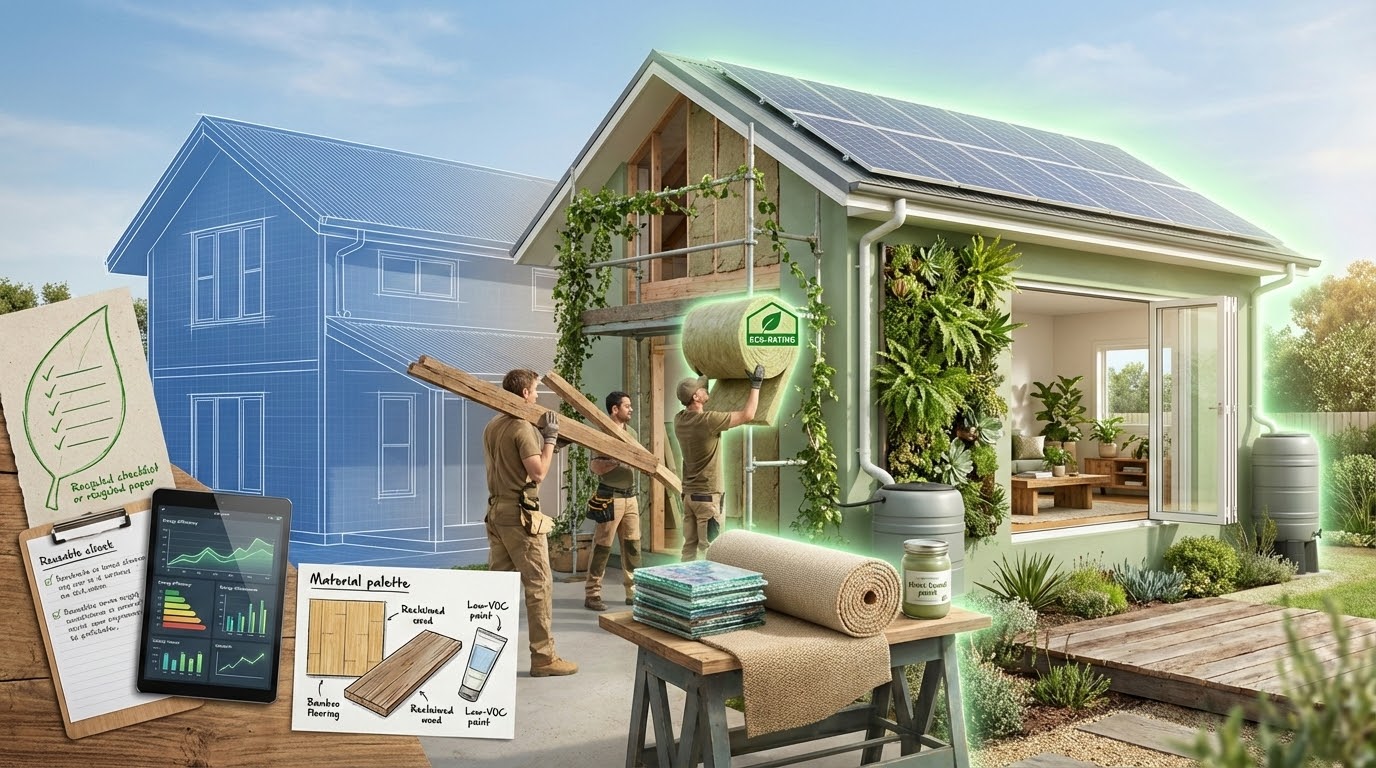
Welcome to your friendly guide to creating a greener living space! Many people think eco-friendly home improvements are complicated or expensive, but that’s simply not true. You can make meaningful changes at any budget level.
Choosing to improve your existing home instead of building new is already a powerful environmental choice. This approach reduces construction waste and honors the energy already invested in your structure. Every small step counts toward a healthier planet.
This guide walks you through the entire process of transforming your living space. We’ll cover everything from initial assessments to material choices and energy systems. You’ll discover practical ways to create an environmentally responsible home that saves money and improves your comfort.
Whether you’re considering minor updates or a complete transformation, this approach blends environmental care with real-life benefits. You’ll enjoy lower utility bills, better indoor air quality, and increased property value. It’s about building a home that works for you today while protecting our world for tomorrow.
Key Takeaways
- Eco-friendly improvements are accessible at any budget level
- Upgrading your current home is environmentally responsible
- Small changes can create significant positive impacts
- Green building approaches save money on utility bills
- Environmentally conscious choices improve home comfort and health
- Thoughtful planning increases your property’s long-term value
- Every step toward sustainability benefits both your family and the planet
Sustainable Renovation Planning: Principles and Benefits
Making environmentally smart improvements to your home creates a ripple effect of positive outcomes for your wallet and world. This approach goes beyond simple upgrades to deliver meaningful changes that benefit your daily life.
Why Choose Sustainable Renovation?
Eco-friendly home enhancements offer immediate rewards. John Shipman from Build It Green explains the simplicity: “You don’t have to do a lot to make a big difference.”
Even basic upgrades can transform your living experience. Better insulation and efficient windows create more comfortable spaces while reducing energy demands.
Environmental and Economic Impacts
The financial benefits are compelling. Energy-efficient improvements can lower utility bills by up to 30%, making your investment pay for itself over time.
Your choices also protect our planet’s future. Buildings account for nearly half of electricity use in developed countries. Green-certified homes often sell faster and command premium prices.
These improvements create healthier environments for your family. Using non-toxic materials and proper ventilation supports better indoor air quality and overall well-being.
Setting Your Renovation Goals and Assessing Your Home’s Energy Efficiency
The most effective home upgrades begin with a clear understanding of your goals and your property’s current condition. This upfront work ensures every improvement delivers maximum value.
Conducting a Home Energy Audit
Hiring a certified energy auditor provides invaluable insights for your project. These professionals use advanced tools like thermal imaging cameras to spot heat loss areas. Blower door tests identify air leaks around windows, doors, and roofing.
The assessment typically costs a few hundred dollars but delivers a strategic roadmap. You’ll discover exactly where your home loses energy and money. This helps prioritize improvements that offer the best return.
Armed with audit results, you can set specific targets for your home renovation. Whether reducing energy consumption by a certain percentage or fixing drafty rooms, you’ll make informed decisions. Understanding your baseline efficiency lets you track progress through lower bills and improved comfort.
This assessment phase balances environmental aspirations with practical considerations like budget and timeline. It transforms guesswork into a strategic approach for creating a more efficient living space.
Creating an Eco-Friendly Design Blueprint
Your home’s architectural layout holds the key to effortless eco-conscious living and significant energy savings. A smart design can eliminate up to 30% of household energy bills while creating a healthier environment.
Passive Solar Design Strategies
Passive solar principles harness natural energy flows without mechanical systems. In northern hemisphere homes, position major windows within 30 degrees of due south. This maximizes winter sun exposure while summer overhangs provide shade.
Place living spaces and kitchens on the south side for daytime warmth. Utility areas work better on the north side. Materials like concrete floors absorb heat during daylight hours. They release warmth gradually at night.
| Design Element | Optimal Placement | Energy Benefit |
|---|---|---|
| Main Windows | Within 30° of due south | Maximizes winter heating |
| Roof Overhangs | South elevation | Blocks summer heat |
| Thermal Mass Materials | Sun-exposed areas | Natural temperature regulation |
| Living Spaces | South side of home | Daylight warmth & comfort |
Enhancing Natural Lighting and Indoor Air Quality
Strategic window placement and skylights flood your home with natural light. This reduces electricity use while boosting mood and productivity. Los Angeles designer Timothy Corrigan suggests adding LED lights in skylight shafts with opaque filters for soft nighttime illumination.
Indoor air pollution ranks among the top environmental health risks globally. Proper ventilation prevents moisture buildup and mold growth. Position windows to create cross-breezes that refresh air naturally. This approach eliminates need for energy-intensive systems while protecting your family’s health.
Selecting Sustainable Building Materials and Innovative Technologies
Smart material choices represent one of the most significant opportunities to reduce your home’s environmental impact. These decisions affect everything from energy efficiency to indoor air quality for years to come.
Eco-Friendly Material Options
Natural and reclaimed building materials offer excellent environmental benefits. Bamboo grows rapidly and sequesters carbon, while reclaimed timber gives old wood new life.
For insulation, consider cellulose made from recycled newspapers or recycled cotton denim. These materials divert waste from landfills while providing excellent thermal performance.
When selecting cabinets and fixtures, consult resources like the Kitchen Cabinet Manufacturers Association’s program. You’ll find detailed guidance on sustainable building materials for every part of your home.
Integrating Renewable Energy and Smart Home Devices
Solar panel prices have dropped 80% since 2008, making them increasingly affordable. A typical installation costs $10,000-$30,000 but can eliminate electricity bills entirely.
Consider adding battery storage systems from the start. This provides energy independence during power outages.
Smart thermostats ($100-$300) and ENERGY STAR-rated appliances work with efficient building materials to minimize your footprint. These systems reduce consumption while improving comfort.
Higher upfront costs for quality materials typically pay for themselves through energy savings and increased durability.
Implementing Water Conservation and Waste Management Strategies
Thoughtful water conservation and waste reduction strategies transform how your household interacts with natural resources. These approaches create meaningful environmental benefits while saving money on utility bills.
Rainwater Harvesting and Greywater Systems
Rainwater collection offers a simple way to reduce water consumption. Gutters can direct rainfall to storage tanks for toilet flushing and laundry use. This addresses the significant outdoor water usage many homes experience.
Greywater systems take conservation further by reusing water from sinks and showers. Natural filtration methods using plants and bacteria make this water safe for irrigation. Choosing high-efficiency fixtures with good WELS ratings also cuts consumption dramatically.
Recycling, Reusing, and Deconstruction Techniques
Careful deconstruction replaces aggressive demolition during home improvements. This method allows you to identify materials worth saving or repurposing. It significantly reduces construction waste heading to landfills.
Organizations like Renovation Angel help by removing usable items for resale. Simple strategies like refinishing cabinets instead of replacing them save money and reduce environmental impact. Discussing waste management plans with your contractor ensures everyone works toward the same goals.
Integrating Home Automation and Energy Management Systems
Modern technology gives homeowners unprecedented control over their energy usage and home comfort. These smart systems work behind the scenes to optimize your living space while reducing costs.
Automation features create a responsive environment that adapts to your lifestyle. They provide real-time data about your home’s performance.
Smart Thermostats and LED Lighting Solutions
Smart thermostats costing $100-$300 learn your schedule automatically. They adjust heating and cooling for maximum efficiency, often cutting HVAC energy use by 10-15%.
These devices pay for themselves within years through lower utility bills. You maintain perfect comfort while saving money.
LED lighting represents another smart upgrade for any home. These bulbs use 75% less energy than traditional options while lasting 25 times longer.
Today’s LED lighting provides warm, natural light quality essential for comfort. Combine them with strategic window placement for optimal natural lighting.
Energy monitoring systems reveal which appliances consume the most power. Smart plugs and meters identify peak usage times, helping you make informed changes.
For water heating, consider heat pump models that are three times more efficient. Look for units with COP ratings of 4.0+ and low-GWP refrigerants.
These automation features manage indoor air quality and temperature seamlessly. They transform your home into an efficient, comfortable environment that protects both your budget and indoor air quality.
Overcoming Renovation Challenges and Budgeting for Success
Smart financial planning transforms eco-friendly home improvements from aspirations into achievable realities. Understanding the investment landscape helps you make confident decisions about your property’s future.
Cost Considerations for Sustainable Upgrades
The costs for creating a sustainable home vary significantly based on your specific projects. Budget-friendly options like LED lighting and weatherstripping range from $100-$500. Mid-range improvements including insulation and smart thermostats typically cost $1,000-$3,000.
Major investments like solar panel systems can reach $10,000-$30,000. However, numerous incentive programs can offset 25-50% of these costs. Many financial institutions now offer specialized green loans with favorable terms.
Long-Term Savings and Increased Home Value
Comprehensive eco-friendly upgrades can reduce utility bills by 30-50%. Your investment often pays for itself within 5-15 years. After that, you enjoy decades of savings that enhance your quality of life.
Green-certified homes typically sell faster and command premium prices. Buyers increasingly prioritize energy efficiency and reduced environmental impact. This approach future-proofs your property’s value while benefiting the planet.
Consider phasing your projects strategically. Start with high-impact, low-cost improvements. Progress to mid-range projects as budget allows. This method spreads costs while delivering continuous benefits to your home and daily life.
Conclusion
Your eco-friendly home transformation ultimately creates a sanctuary that benefits your family’s health while reducing your ecological footprint. This journey brings together smart design choices, efficient energy systems, and healthier living spaces.
The rewards extend beyond lower utility bills. You’ll enjoy better air quality, increased comfort, and the satisfaction of making positive environmental choices. Even small changes create meaningful impacts on your daily life and our planet’s wellbeing.
Remember that every step toward a greener home matters. Your project demonstrates how thoughtful materials and systems can transform ordinary spaces into exceptional environments. This approach creates lasting value for your family and future generations.