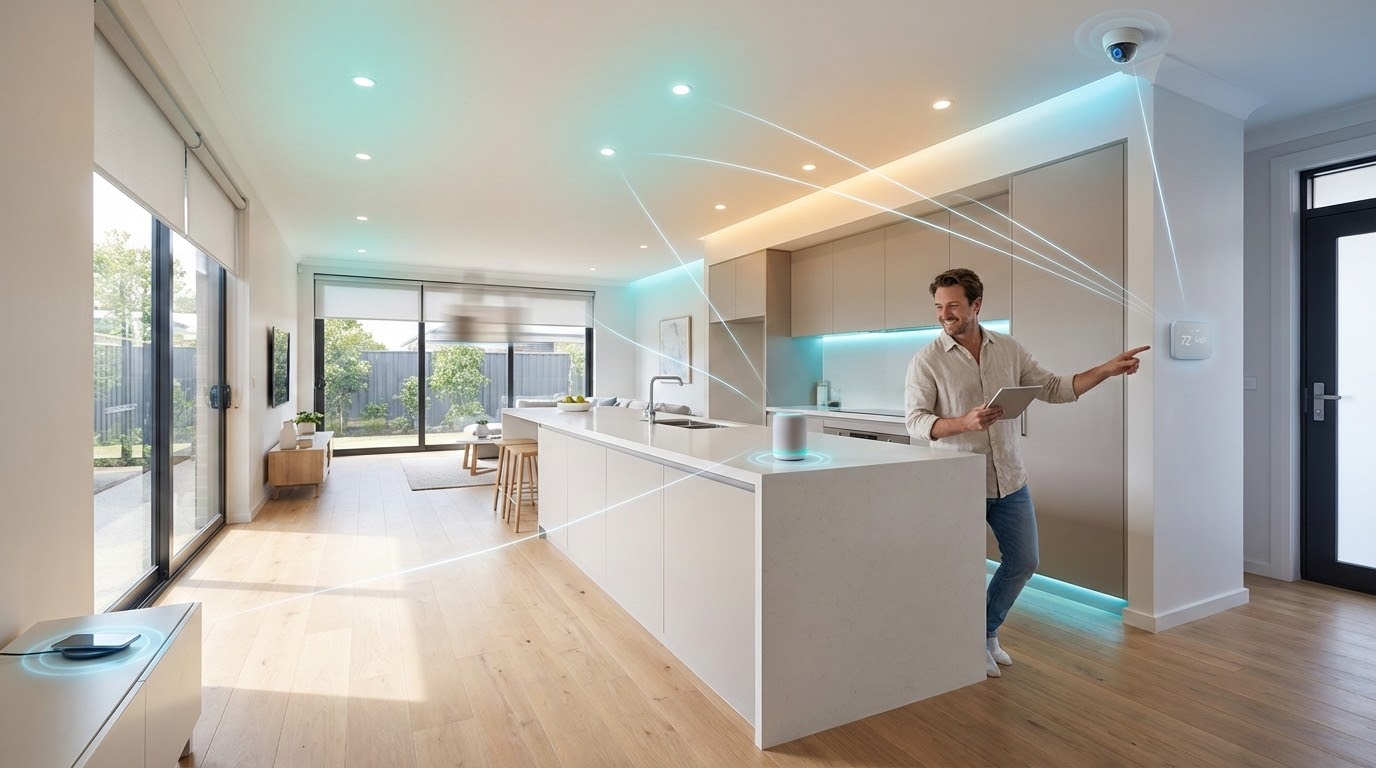
Welcome to your complete guide on transforming living spaces with modern technology. Today’s residential upgrades go far beyond simple cosmetic changes. They create intelligent environments that work seamlessly together.
This approach represents a major shift in how we think about property improvements. Instead of adding isolated gadgets, you can build a cohesive system that anticipates your needs. The result is a living space that adapts to your lifestyle.
Now is the perfect time to consider these upgrades. More compatible devices are available than ever before. Improved standards and competitive pricing make this technology accessible to most homeowners.
These improvements offer significant benefits beyond convenience. They can increase property value while reducing energy costs. Enhanced security and greater comfort are additional advantages for your family.
This guide will walk you through every step of the process. We’ll help you choose the right ecosystem and specific devices for your needs. Whether planning a full renovation or targeted updates, you’ll make informed decisions that deliver lasting value.
Key Takeaways
- Modern renovations create connected living environments that work together seamlessly
- This approach goes beyond adding gadgets to build systems that anticipate your needs
- Current technology offers more compatibility and better value than ever before
- These upgrades can increase property value while reducing energy consumption
- Enhanced security and comfort are significant benefits for your household
- Careful planning ensures your improvements provide both immediate and long-term value
- Understanding available options helps you make choices that fit your budget and lifestyle
Introduction to Smart Home Integration for Residential Renovations
Imagine walking into a house that knows your preferences and adjusts to your daily rhythm automatically. This vision is now achievable through thoughtful planning during your property upgrades. The right combination of devices can transform ordinary spaces into responsive environments.
Modern smart home technology represents a fundamental shift in how we interact with our living spaces. Instead of adding isolated gadgets, you create interconnected systems that communicate with each other. This approach enables sophisticated automation that truly enhances daily life.
During renovations, incorporating technology from the ground up allows for seamless wiring and placement. You can address infrastructure needs like robust Wi-Fi coverage before walls are closed up. This planning prevents expensive retrofitting later.
The technology landscape has matured significantly with established ecosystems and reliable devices. Standardized protocols make the process less intimidating for homeowners. Understanding the scope before starting helps allocate budget appropriately.
This foundation ensures you make informed decisions about which technologies align with your lifestyle and renovations goals. You’ll invest in solutions that deliver lasting value for your home and family.
Understanding Smart Home Integration
Navigating the world of connected living requires grasping fundamental concepts that power today’s automated homes. This knowledge helps you choose the right solutions for your renovation project.
Definition and Core Concepts
At its core, this approach connects various automated home devices into a unified system. These devices communicate through different protocols like Wi-Fi, Zigbee, and Z-Wave.
Central controllers, known as hubs, manage the entire network. Major ecosystems from companies like Google, Amazon, and Apple provide the software framework. Understanding these components ensures your chosen technology works together seamlessly.
Market Trends and Future Outlook
The industry has grown dramatically with over 1,000 brands available. New interoperability standards like Matter promise to simplify compatibility between different devices.
Future innovations will focus on artificial intelligence and predictive automation. These advancements will make connected living spaces even more intuitive. Choosing systems with forward-looking technology ensures your investment remains valuable for years.
Benefits and Value of Smart Home Devices
The true value of connected living systems becomes apparent when you examine their practical impact on household operations. These technologies deliver measurable improvements that enhance daily life while providing financial returns.
Enhanced Convenience and Energy Efficiency
Smart home devices significantly reduce utility costs through intelligent energy management. Automated thermostats and lighting systems can cut energy bills by 10-30% by optimizing usage patterns.
Home energy management features provide detailed insights into consumption. They help identify waste and optimize solar production if available. This level of control transforms how families manage their home energy needs.
Convenience benefits extend beyond simple automation. Voice-activated controls and remote access allow seamless management of your living space. Automated routines handle repetitive tasks, freeing up time for more important activities.
Security integration creates comprehensive protection systems. Smart home security devices work together to monitor properties in real-time. They provide peace of mind through coordinated alerts and responses.
Property value increases represent another significant advantage. Studies show homes with integrated technology sell faster and command premium prices. The cumulative benefits grow as you expand your system over time.
These home devices create environments that adapt to your lifestyle. The right combination of devices delivers both immediate comfort and long-term value for your home investment.
Exploring Compatible Ecosystems and Voice Assistants
Three dominant platforms compete for control of your connected devices, each with distinct advantages. Your choice will determine how smoothly your automated living space operates.
Google Home, Amazon Alexa, and Apple HomeKit
The Google Home ecosystem shines with its advanced voice assistant. Google Assistant understands complex commands and conversational speech patterns.
Amazon Alexa offers the widest range of compatible products. Its early market entry created extensive third-party support.
Apple HomeKit prioritizes security and privacy above all else. It maintains strict certification requirements for connected devices.
| Feature | Google Home | Amazon Alexa | Apple HomeKit |
|---|---|---|---|
| Voice Assistant | Conversational understanding | Extensive skills library | Siri integration |
| Device Compatibility | Growing rapidly | Largest selection | Certified products only |
| Security Focus | Standard protection | Basic safeguards | Highest privacy standards |
| Ecosystem Integration | Android/Google services | Amazon services | Apple device ecosystem |
Third-Party Device Compatibility and Integration
Most modern gadgets support multiple ecosystems. This flexibility allows mixing brands while maintaining control through your preferred platform.
Understanding ecosystem compatibility ensures smooth operation. Consider your existing technology and long-term preferences when choosing.
In-Depth Look at Top Smart Home Security Systems
Today’s security systems have evolved far beyond simple alarms to become comprehensive protection networks. These advanced solutions integrate monitoring with automation for superior safety.
Comparing ADT, Vivint, and SimpliSafe
Leading providers offer distinct advantages for different homeowner needs. ADT excels with robust app functionality and Google Nest compatibility.
Vivint stands out for cutting-edge automation and AI-powered threat detection. SimpliSafe provides excellent value with flexible installation choices.
| Provider | Security Score | Starting Package | Monthly Monitoring | Key Features |
|---|---|---|---|---|
| ADT | 9.8/10 | $269 | $24.99 | Google Nest integration, professional service |
| Vivint | 9.4/10 | $599 | $30 | AI cameras, Amazon Alexa/Google Home |
| SimpliSafe | 9.8/10 | $250 | $22.99 | DIY flexibility, single-app control |
DIY Versus Professional Installation Options
Installation choices significantly impact your security experience. DIY options from providers like SimpliSafe save costs and offer relocation flexibility.
Professional installation ensures optimal device placement and immediate functionality. Technicians handle technical setup while providing hands-on training.
Your decision depends on technical comfort and preference for convenience versus cost savings. Both approaches deliver reliable protection when properly configured.
Smart Home Integration in Residential Renovations
When remodeling your property, incorporating automated systems from the start creates truly responsive environments. This approach ensures every component works in harmony rather than as isolated gadgets.
Planning during construction allows for proper wiring placement and infrastructure development. You can address Wi-Fi coverage and power needs before walls are finished.
Transforming Living Spaces with Automation
Kitchen upgrades benefit greatly from connected appliances. Ovens can preheat remotely while you’re still commuting home. Lighting systems provide both task illumination and ambiance control.
Bathroom improvements incorporate intelligent features like leak detectors and personalized shower settings. These additions prevent water damage while enhancing daily comfort.
Bedroom and living area transformations use lighting that supports natural sleep cycles. Motorized window treatments optimize sunlight exposure throughout the day.
Security devices integrate seamlessly with other automated systems. Motion sensors can trigger lights, while smart locks provide keyless entry. This coordination creates comprehensive protection.
Thoughtful integration during renovation projects ensures your technology investments deliver lasting value. The result is a living space that adapts to your family’s rhythm.
Installation, Setup, and Automation Essentials
Getting your automated systems running properly begins with straightforward installation steps. Most modern devices follow a consistent setup pattern that homeowners can complete independently.
DIY Setup and Scheduling Features
The initial setup typically involves downloading the manufacturer’s app and scanning a QR code. You’ll connect each device to your Wi-Fi network before linking it to your preferred ecosystem.
One common challenge involves ensuring your phone connects to the 2.4 GHz Wi-Fi band. Many routers automatically select bands, which may require manual configuration.
Scheduling features let you program devices to operate at specific times. Your robot vacuum can clean weekdays at 2 PM, while exterior lights turn on at sunset automatically.
Advanced Routines and Automation Strategies
Advanced routines create powerful sequences triggered by single commands. Saying “Good morning” can deliver weather updates while adjusting your thermostat and starting coffee.
Grouping devices by room proves essential for efficient control. This organization lets you command “turn off living room lights” to control multiple fixtures simultaneously.
| Automation Platform | Voice Command Support | Scheduling Flexibility | Cross-Device Compatibility |
|---|---|---|---|
| Google Assistant | Natural language understanding | Time-based and location triggers | Works with 30,000+ devices |
| Amazon Alexa | Extensive skill library | Sunrise/sunset scheduling | Largest compatible device ecosystem |
| Apple HomeKit | Siri integration | Geofencing capabilities | Certified device security |
| IFTTT | Limited voice support | Complex conditional logic | Connects disparate services |
IFTTT (If This Then That) extends automation possibilities beyond single ecosystems. It can activate garden lights when your video doorbell detects approach.
Start with simple routines and gradually expand as you discover opportunities to eliminate repetitive tasks. This approach ensures reliable automation that truly enhances daily living.
Security and Monitoring Considerations
Modern security solutions blend advanced technology with comprehensive monitoring for complete peace of mind. These systems work together to protect your property and family.
Video Surveillance, Security Cameras, and Smart Locks
Today’s security cameras offer impressive AI features. They can distinguish between people, packages, and vehicles. This reduces false alarms dramatically.
Smart locks provide keyless entry with temporary access codes. You can grant entry to guests or service providers remotely. Activity logs show exactly who entered and when.
Strategic camera placement focuses on entry points and high-value areas. Proper positioning ensures comprehensive coverage while respecting privacy.
Professional Monitoring Services and Support
Professional monitoring adds an essential layer of protection. Trained agents respond to alarms within seconds. They verify threats and dispatch emergency services when needed.
Monthly costs vary by provider. ADT charges $29.99-$39.99. Vivint starts around $30. SimpliSafe offers plans from $32.99 to $79.99.
These services work with your existing smart home devices for seamless operation. The integration creates a powerful security system that adapts to your lifestyle.
Cost Analysis and Investment Considerations
The price spectrum for modern residential technology ranges from budget-friendly to premium systems. Understanding these cost structures helps you make informed financial decisions for your property upgrades.
Equipment and Subscription Fees
Equipment costs vary dramatically based on your chosen system complexity. Budget DIY options like abode start at $65, while premium systems from Vivint can exceed $1,000.
Subscription fees represent ongoing expenses for monitoring services. Ring Alarm offers basic self-monitoring at $4.99 monthly. Professional monitoring from ADT runs $24.99-$39.99.
Contract commitments differ significantly between providers. SimpliSafe and Ring offer month-to-month flexibility. ADT requires 36-month agreements, while Vivint locks in customers for 42 months.
Individual device costs accumulate quickly. Security cameras range from $60-$400. Smart thermostats average $200-$250. Lighting starts at $15 per bulb.
Return on investment manifests through multiple channels. Energy savings can reduce bills by 10-30%. Insurance discounts and increased property value provide additional financial benefits.
Budget planning should prioritize core security components first. Expand gradually to convenience devices. Choose systems that allow adding products over time without platform replacement.
Voice Control and Command Features
The ability to control your automated systems through simple speech commands transforms daily routines. Voice interaction eliminates the need for manual adjustments, making it perfect when your hands are occupied.
Google Assistant excels with natural conversational understanding. It handles complex multi-part commands and follow-up questions seamlessly. This makes interactions feel more intuitive and less frustrating.
Amazon Alexa offers thousands of third-party Skills for expanded functionality. You can use creative phrases like “what’s shakin'” to check security status. The platform supports personalized voice commands that add character to your interactions.
Basic control includes turning devices on/off or adjusting settings. You can also query status information or trigger multi-step routines. Security considerations prevent voice disarming, but arming and status checks work well.
Effective voice control requires clear device naming conventions. Use distinct names organized by room to avoid confusion. This ensures all household members can operate the system effortlessly.
Advanced features include custom routines, entertainment integration, and intercom functionality. These capabilities continue evolving with sophisticated conversational AI. The Google Home ecosystem particularly shines for natural language processing.
Integrating Third-Party Devices and Smart Hubs
Third-party accessories transform basic setups into comprehensive, personalized environments. These additions let you choose best-in-class products across categories while maintaining unified control.
Smart Hubs and Ecosystem Expansion
Central coordinators use specialized protocols like Zigbee and Z-Wave. These technologies reduce network congestion while extending device range.
Many modern speakers and routers now include built-in hub functionality. This eliminates the need for separate hardware while maintaining compatibility.
Real-World Integration Case Studies
ADT systems work with Kwikset locks and LiftMaster garage openers. Vivint connects with Philips Hue lighting and Nest thermostats.
SimpliSafe integrates August locks for complete access control. Ring partners with First Alert for enhanced safety monitoring.
Abode demonstrates extensive compatibility across multiple brands. This flexibility allows homeowners to build systems that perfectly match their needs.
Technological Advancements and Ecosystem Developments
A new era of interoperability is dawning in the world of connected living spaces, driven by industry-wide collaboration. Major technology companies are working together to create unified standards that simplify setup and enhance compatibility.
Emerging Standards: Matter, ZigBee, and Thread
The Matter standard represents a significant breakthrough with over 200 companies participating. This universal protocol ensures devices work seamlessly across different platforms and ecosystems.
Google, Amazon, and Apple all provide support for Matter-certified products. This means a Ring doorbell can display video on Google Nest Hub displays. Philips Hue and other brands are updating their devices with Matter support.
Thread protocol offers mesh networking capabilities that extend range and improve reliability. These new standards work alongside existing technologies like ZigBee to create robust networks.
Innovative Automation Trends
Artificial intelligence is transforming how systems learn household patterns. Predictive routines adjust lighting and temperature automatically based on your habits.
Energy optimization algorithms reduce consumption without sacrificing comfort. Enhanced security features use behavioral analysis to detect anomalies.
Future developments include increased local processing for faster responses. Voice assistants will gain genuine conversational abilities. Electric vehicle integration will create comprehensive energy management for the modern home.
Real-World Examples and User Experiences
From security enhancements to energy savings, actual user experiences reveal what really works. These real-life stories show how families benefit from modern technology in their daily lives.
Case Studies from Homeowners
One family integrated their security system with Android TV. This allowed them to view camera footage while cooking dinner. The setup provided peace of mind without disrupting meal preparation.
Another homeowner programmed outdoor cameras with specific triggers. When motion was detected for over 45 seconds, LED lights and sirens activated automatically. This approach successfully deterred unwanted visitors.
Many people report significant energy savings. Automated thermostats and lighting schedules cut utility bills by 20-30%. The systems often pay for themselves within the first year.
“The welcome routine where porch lights illuminate when guests approach has been a game-changer. It combines security with hospitality perfectly.”
Elderly residents find voice-controlled systems particularly helpful. They can operate lights and locks without physical strain. This technology dramatically improves independence and safety.
| User Scenario | System Used | Key Benefit | Setup Time |
|---|---|---|---|
| Security Integration | ADT with Android TV | Multi-tasking convenience | 30 minutes |
| Outdoor Protection | Vivint camera system | Theft deterrence | 45 minutes |
| Energy Management | Smart thermostat & lighting | Cost savings | 60 minutes |
| Accessibility Support | Voice-controlled devices | Independence | 20 minutes |
Most users note that initial setup requires some patience. However, the long-term benefits make the investment worthwhile. People discover new automation possibilities over time.
Conclusion
Your renovation journey now leads to an exciting destination: a truly connected living space. Modern technology offers a powerful way to unify your improvements.
Today’s mature smart home ecosystems provide reliable solutions. Standardized protocols ensure your devices work together seamlessly. This creates a cohesive system that adapts to your family’s needs.
The wide range of available options means there’s something for every budget. You can choose professional installation or DIY setups. Start with security and lighting, then expand as you learn.
Looking ahead, the future promises even more intuitive technology. Your investment today will continue delivering value for years. This thoughtful integration transforms your property into a responsive environment.
You now have the knowledge to make confident decisions. Your renovated home will become more secure, efficient, and comfortable. Enjoy the benefits of a space that truly works for you.