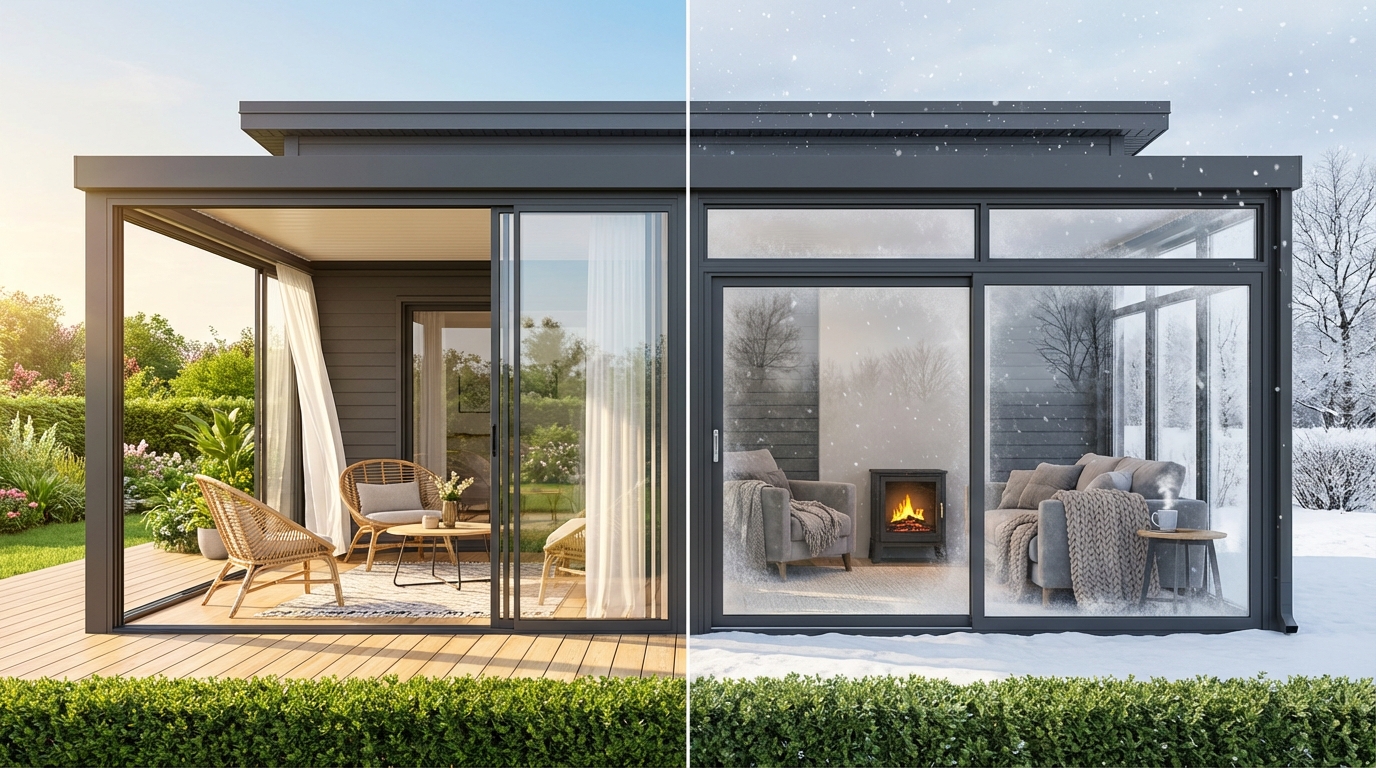
Imagine expanding your living area with a bright, airy space that brings the outdoors inside. Many homeowners are discovering the benefits of adding a light-filled room to their property. This type of construction offers a unique way to enjoy nature while staying comfortable indoors.
Unlike traditional extensions, these specialized rooms feature extensive windows and are designed to maximize sunlight. They create a beautiful transition between your indoor and outdoor environments. You get to enjoy panoramic views while adding valuable square footage to your property.
This guide will help you understand the key differences between three-season and four-season options. The right choice depends on your climate, budget, and how you plan to use the space. We’ll explore cost comparisons, design considerations, and practical planning advice.
Whether you want a cozy reading nook or an entertainment area, these versatile spaces can serve many purposes. With proper construction, they become functional extensions of your living environment. You’ll learn how to maximize your investment and create the perfect retreat.
Key Takeaways
- Sunroom additions provide extra living space with abundant natural light
- They offer a more affordable alternative to traditional room extensions
- The choice between three-season and four-season depends on climate and usage
- Proper construction and insulation determine year-round usability
- These spaces can serve multiple functions except as bedrooms
- Consider your budget and how many months you’ll use the space
- Energy efficiency and materials impact long-term comfort and costs
Introduction to Sunroom and Room Additions
When your family grows or your lifestyle changes, adding functional space becomes a practical solution. Both sunrooms and traditional room additions offer excellent ways to expand your living area. They provide the extra square footage you need without the stress of moving.
Purpose and Benefits of Adding Extra Space
Creating more room in your home serves multiple purposes. It can accommodate growing families or provide dedicated areas for hobbies and relaxation. This approach saves you from the high costs and disruption of relocating to a larger property.
Extra space makes daily life more comfortable for everyone in the household. Whether you need a play area, home office, or quiet retreat, these expansions deliver practical benefits. They represent a smart investment in your current home’s functionality.
Comparing Sunrooms to Traditional Room Additions
Traditional room additions feature solid construction with four walls, standard roofing, and drywall interiors. They blend seamlessly with your existing home’s architecture through matching siding. These structures offer maximum privacy and feel like natural extensions of your living space.
Sunrooms prioritize natural light with extensive window coverage and often feature glass walls. They create bright, cheerful environments that connect you with outdoor views. While some have full glass designs, others incorporate siding to match your home’s exterior.
Both options increase your home’s value when properly constructed. The room addition provides more conventional living space, while the sunroom offers a unique light-filled environment. Your choice depends on your specific needs, budget, and desired atmosphere.
Understanding the Differences: Three-Season vs. Four-Season Options
The decision between seasonal living spaces hinges on how you plan to use the area throughout the year. Each type offers distinct advantages based on construction methods and intended functionality.
Key Features of Three-Season Sunrooms
Three-season spaces are designed for comfortable use during spring, summer, and fall. They typically feature lightweight framing with single- or double-pane glass.
These rooms lack full insulation, making them less suitable for winter months without supplemental heating. This construction approach keeps costs lower but limits year-round functionality.
Advantages of Four-Season Rooms
Four-season rooms provide true year-round usability with proper climate control. They feature complete insulation in walls, roof, and windows.
These spaces connect to your home’s electrical system for consistent heating and cooling. The insulated windows protect against solar heat gain while maintaining energy efficiency.
While costing more initially, four-season rooms deliver extended usability that functions like any other room in your home. Various types include screen rooms, solariums, and prefabricated kits to suit different needs and budgets.
Key Considerations for Your sunroom addition
Budget planning forms the foundation of any successful home expansion project. Understanding the financial aspects helps you make smart choices that align with your needs.
Affordability and Cost Comparisons
Most people consider the initial investment when planning their space. Three-season options typically cost less upfront due to simpler construction.
Four-season rooms require more money for insulation and climate control systems. Prefabricated kits can save on costs compared to custom designs.
The final price depends on size, materials, and required electrical work. Consider long-term value when evaluating your options.
Privacy, Versatility, and Usage Concerns
Glass walls create beautiful views but limit privacy in certain areas. Bedrooms need more seclusion than these bright spaces provide.
Your family can use the area in many creative ways. It works well as a playroom, study space, or gathering area.
Think about how you’ll use the room throughout the year. Daily living spaces benefit from four-season construction.
This type of addition offers excellent versatility for various activities. Choose features that match your intended way of using the space.
Design and Materials: Creating a Bright, Functional Space
Careful planning of construction elements ensures your bright room delivers optimal performance throughout the seasons. The right materials selection impacts comfort, energy efficiency, and maintenance requirements.
Early decisions about your design prevent costly changes later. Proper component choices create a space that balances abundant natural light with climate control.
Window, Glass, and Insulation Options
Strategic windows placement maximizes views while controlling temperature. Combining fixed glass panels with operable units creates ideal ventilation.
Double-pane Low-E glass offers excellent energy performance at an affordable price. Avoid single-pane options that provide minimal insulation.
Proper insulation in walls and around windows is essential for year-round comfort. This investment pays dividends in reduced heating and cooling costs.
Roofing and Structural Material Choices
Your roof selection dramatically affects the room’s atmosphere. Structural insulated panels provide superior climate control with easy installation.
Framing materials like thermally broken aluminum offer excellent cost-to-performance ratios. Traditional wood framing works well for custom-built spaces.
| Material Type | Best For | Cost Range | Insulation Value |
|---|---|---|---|
| Double-pane Low-E Glass | Energy Efficiency | Medium | Excellent |
| Structural Insulated Panels | Climate Control | Medium-High | Superior |
| Thermally Broken Aluminum | Durability | Medium | Good |
| Polycarbonate Roofing | Light Diffusion | Low-Medium | Moderate |
The right combination of framing, glazing, and insulation transforms a simple enclosure into a truly integrated living environment.
Awning windows positioned higher on walls provide passive ventilation without compromising weather protection. This design approach maintains views while enhancing airflow.
Solid insulated roof panels reduce labor costs while improving thermal performance. Your material choices directly impact both initial investment and long-term satisfaction.
Maximizing Indoor-Outdoor Flow
Thoughtful architectural integration can make your new space feel like it was always part of your home’s original design. The right approach creates seamless transitions that enhance daily living experiences.
Integrating with Existing Home Architecture
Matching materials and finishes creates visual harmony between your main home and the new area. Choose siding, roofing, and colors that complement your existing structure.
Wide doorways with glass panels maintain connection between living areas even when closed. They allow natural light to flow freely throughout your home.
Matching floor heights prevents awkward transitions and creates barrier-free access. This simple detail makes the space feel like a natural extension rather than a separate addition.
Consider retractable glass walls that open completely to patio areas. This innovative feature provides ultimate flexibility for enjoying the outdoors.
Building on existing structures like patios or decks can reduce foundation costs. It also creates logical connections to outdoor living spaces.
Even contrasting materials can work beautifully when chosen intentionally. The key is ensuring all design elements complement your home’s overall style.
Cost Drivers and Budgeting Tips
Navigating the cost considerations for your light-filled space requires careful analysis of multiple variables that impact the final investment. Understanding these factors helps you establish realistic financial expectations.
Major Factors Influencing Overall Costs
Project price varies significantly based on room type and specifications. Screen rooms typically range from $5,000 to $20,000, while three-season options fall between $15,000 and $50,000.
Four-season constructions command $30,000 to $120,000+. The square footage price spans $50 to $500, averaging $100-$350 per square foot.
Key cost drivers include foundation complexity, glazing type, and roofing materials. HVAC integration and permit requirements also affect your budget.
Labor hours represent another significant expense. Building on existing structures can reduce foundation costs substantially.
Strategies to Optimize Your Budget
Choose double-pane Low-E glass instead of premium triple-pane options. This balances energy performance with affordability.
Rectangular designs prove more cost-effective than complex shapes. Solid insulated roof panels reduce installation labor compared to all-glass constructions.
Consider ductless mini-split systems in mild climates instead of full HVAC integration. This approach saves money while maintaining comfort.
While four-season rooms cost more initially, they typically cost less per square foot than traditional room additions. This sunroom addition delivers excellent year-round functionality for your investment.
Innovative Design Ideas for Year-Round Comfort
Beyond basic functionality, these versatile spaces can become the heart of your home with thoughtful design planning. Creative approaches transform ordinary areas into dynamic environments that serve multiple purposes throughout the seasons.
Multi-Purpose Layouts and Family-Friendly Spaces
Imagine a backyard garden escape with built-in planters and moisture-resistant flooring. This concept creates an ideal setting for year-round plant growing while connecting your family with nature.
The all-season dining pavilion design features vaulted ceilings and panoramic kitchen access. Large windows transform family meals into special occasions surrounded by natural beauty.
Many homeowners now create productive home offices within these bright rooms. The abundant natural light boosts mood and productivity in quiet, distraction-free environments.
For families with children, these spaces make excellent toy rooms and play areas. Parents maintain visual connection while kids enjoy safe, cheerful environments.
Thoughtful design allows these versatile areas to adapt as your family’s needs evolve. This flexibility maximizes long-term value and enjoyment of your living space.
Expert Advice for Planning Your Sunroom Project
Before breaking ground on your project, advanced visualization tools can provide crucial insights that save both time and money. Proper planning ensures your investment delivers the maximum enjoyment and functionality.
Leveraging 3D Visualizations and Floor Planning Tools
Modern software like Cedreo transforms the planning process for homeowners. These tools create accurate 3D views and professional floor plans in hours rather than days.
Advanced rendering simulates daylight and sunset conditions throughout your space. This helps identify glare issues and dark spots before construction begins.
Seasonal visualization shows how your room functions year-round. Seeing it in snowy winter or bright spring helps justify investing in four-season options.
Most projects take 2 to 6 weeks depending on complexity and materials. Working with experienced pros ensures proper compliance with local building codes.
These tools let you experiment with different layouts and window configurations. Finding the perfect balance maximizes natural light while maintaining comfort.
Conclusion
Choosing the perfect light-filled expansion for your property requires balancing seasonal needs with long-term value. The distinction between three-season and year-round options ultimately depends on your climate, budget, and intended usage patterns.
Compared to conventional construction, these specialized spaces offer significant advantages including faster completion times and beautiful natural illumination. A well-executed sunroom addition enhances your property’s appeal while adding functional square footage.
For maximum return on investment, the four-season room addition provides true year-round functionality that rivals traditional extensions. Consider how you’ll use the space—whether as a peaceful retreat, family gathering area, or productive workspace.
Working with experienced professionals ensures your new space integrates seamlessly with your existing home architecture. With thoughtful planning and quality materials, this enhancement can transform how homeowners enjoy their living environment for years to come.