Welcome to your complete guide to smart home improvements that save you money while making your living space more comfortable. Many American houses waste significant power, with the average homeowner losing $200 to $400 each year due to preventable issues.
Buildings account for 40% of all power used across the United States. This creates a huge opportunity for individual homeowners to make meaningful changes. Modern home enhancements not only reduce monthly bills but also boost property value and improve indoor air quality.
According to the National Association of Homebuilders, 9 out of 10 buyers prefer houses with lower operating costs over cheaper alternatives without these features. Whether you plan to stay or sell, these investments make financial sense.
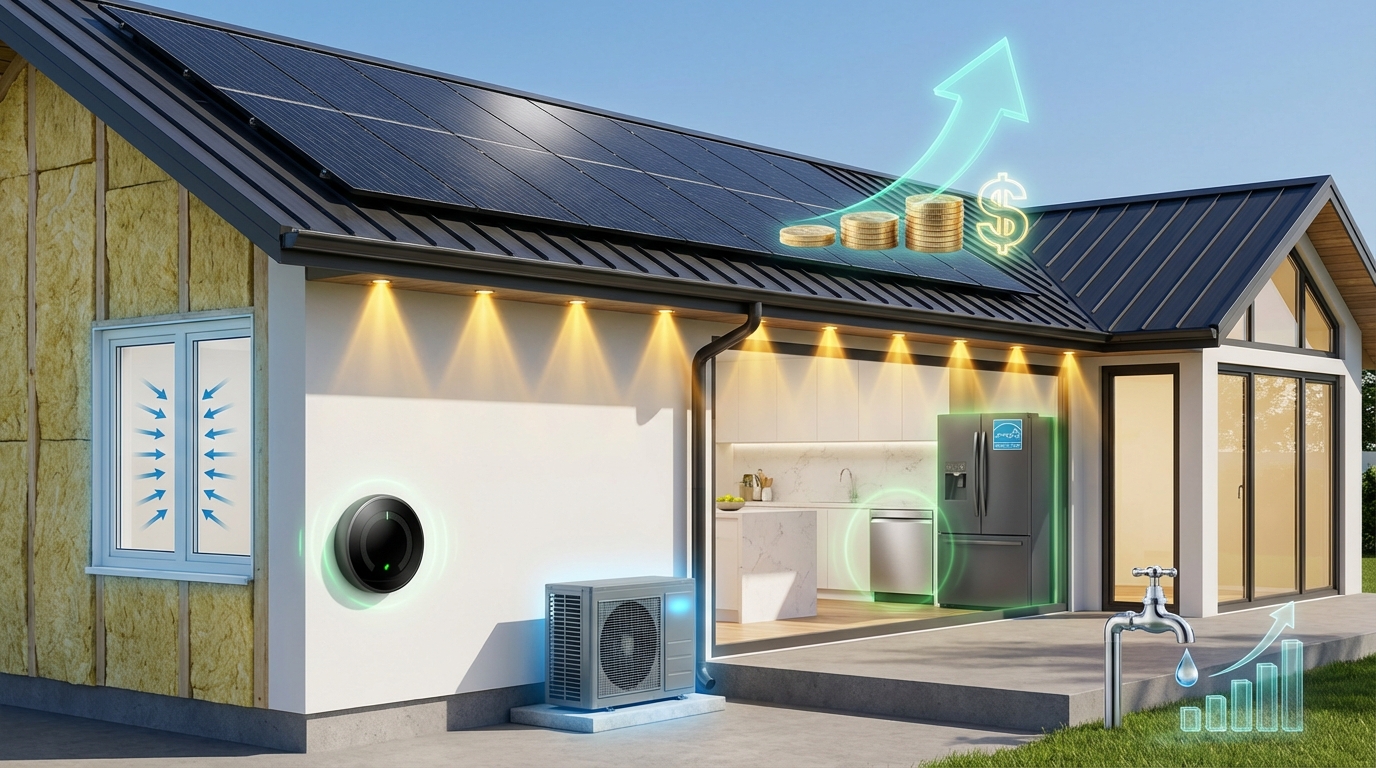
This guide will walk you through proven enhancements across heating, cooling, insulation, lighting, appliances, and water systems. You’ll find actionable recommendations for various budgets and time commitments.
Key Takeaways
- American homes waste significant power, costing owners hundreds annually
- Building enhancements can dramatically reduce monthly expenses
- Modern improvements increase comfort and property value simultaneously
- Most homebuyers prefer houses with lower operating costs
- Investments pay off whether you’re staying long-term or planning to sell
- Options exist for every budget and timeline
- Simple changes can yield substantial financial returns over time
Understanding Home Energy Usage
Knowing where your home’s power goes each month is the first step toward smarter spending and better comfort. This understanding helps you target improvements where they matter most.
Overview of U.S. Home Energy Consumption
More than half of all household power consumption goes toward heating and air conditioning systems. This makes your HVAC the biggest opportunity for meaningful savings.
Water heating represents the second-largest expense at 18% of total usage. Lighting accounts for about 6% of electricity consumption but offers quick wins with minimal investment.
Impact on Your Energy Bills and Comfort
Your monthly costs fluctuate with seasonal temperature changes. Inefficient systems force you to overpay during peak heating and cooling months.
Power waste directly affects your comfort levels. Drafts, temperature inconsistencies, and humidity problems often stem from consumption issues. Modern homes achieve superior comfort while using significantly less power than older properties.
Understanding these patterns is essential before considering any home improvements. It ensures you invest in changes that deliver the greatest returns.
Energy Efficient Upgrades
Modernizing your living environment with thoughtful enhancements creates a triple advantage: reduced expenses, increased comfort, and higher resale value. Home improvements span from simple weekend projects to comprehensive system replacements, each offering different levels of financial return.
How Upgrades Can Lower Energy Bills
Even minor modifications deliver noticeable results. Switching to LED lighting or sealing air leaks can cut your monthly bills immediately. These small changes accumulate into substantial annual savings.
A professional assessment identifies the most cost-effective opportunities for your specific property. Certified auditors pinpoint where your home loses power and recommend targeted solutions.
Strategic enhancements work together for maximum impact. Better insulation reduces strain on heating and cooling equipment, extending its lifespan while lowering operating costs.
| Improvement Type | Average Cost | Annual Savings | Payback Period |
|---|---|---|---|
| LED Lighting | $100-$300 | $75-$150 | 1-2 years |
| Weather Stripping | $200-$500 | $100-$250 | 2-3 years |
| Smart Thermostat | $150-$300 | $50-$150 | 2-4 years |
| Attic Insulation | $1,000-$2,500 | $200-$500 | 4-7 years |
Federal tax credits and utility rebates can significantly reduce installation expenses. Prioritize enhancements based on your budget and home’s specific needs to maximize value.
Optimizing Heating and Cooling Systems
Modern heating and cooling technologies have revolutionized how we maintain comfortable indoor environments. Your HVAC system represents the single largest opportunity for meaningful home improvement savings.
Modern Heat Pump and HVAC Solutions
Today’s heat pump technology stands as a significant advancement in home temperature control. Unlike traditional systems that generate heat through combustion, heat pumps transfer existing heat from one place to another.
This transfer process makes them far more effective than conventional heating and cooling equipment. A modern heat pump can reduce your electricity use for heating by up to 75% compared to older electric resistance systems.
Many homeowners mistakenly believe heat pumps don’t work in cold climates. Today’s cold-climate models effectively heat homes even in freezing temperatures while providing cooling in summer.
| System Type | Heating Efficiency | Cooling Efficiency | Annual Savings Potential |
|---|---|---|---|
| Modern Heat Pump | Up to 75% better | Superior performance | $1,500+ |
| Traditional HVAC | Standard efficiency | Standard performance | Baseline |
| Older Electric Systems | Least efficient | N/A | Potential for maximum savings |
Benefits of Smart Thermostats and Zoning
Smart thermostats learn your household patterns to optimize comfort while achieving significant savings. Nest users report 10-12% heating savings and 15% cooling savings through automated adjustments.
Zoning systems allow temperature control in individual areas, preventing waste in unused spaces. Combined with proper duct sealing, these improvements dramatically improve system performance.
For larger home improvement projects, consider integrating these technologies together. The optimal settings for balance between comfort and savings are 68°F in winter and 78°F in summer.
Upgrading Your Home’s Insulation and Sealing
Many homeowners discover that their biggest comfort and cost issues stem from inadequate insulation and unnoticed air leaks throughout their property. 90% of American homes are under-insulated, creating a massive opportunity for improvement.
Air Sealing Techniques for Reduced Energy Loss
Air leaks account for 25-40% of heating and cooling loss in the average home. Professional air sealing targets gaps in attics, basements, and around plumbing penetrations where conditioned air escapes.
Weatherstripping creates tight seals around windows and doors. This affordable DIY project reduces drafts and prevents air from escaping. Combined with proper insulation, these techniques can cut waste by up to 45%.
Enhancing Attic and Wall Insulation
Insulating your attic and basement saves 15% on heating and cooling costs according to the EPA. Crawl space encapsulation seals the area from surrounding earth, preventing heat loss in winter and blocking moisture.
These improvements deliver impressive returns. Studies show 83-107% ROI for insulation projects, making them among the most financially sound home upgrades. While not visible to buyers, documented savings significantly boost property value.
Improving Lighting and Appliance Efficiency
Simple changes to everyday household items can create significant financial benefits over time. Lighting represents about 6% of all electricity consumption in American homes.
Transitioning to LED and Smart Lighting
LED bulbs use up to 90% less power than traditional incandescent options. They also last for many years, reducing replacement costs.
Smart lighting features like motion sensors and timers ensure lights operate only when needed. This eliminates unnecessary electricity use throughout your home.
| Lighting Type | Annual Cost | Lifespan | Savings Potential |
|---|---|---|---|
| Incandescent | $7-10 per bulb | 1-2 years | Baseline |
| LED | $1-2 per bulb | 10-15 years | 85-90% |
| Smart LED | $2-4 per bulb | 10-15 years | 90%+ with automation |
Choosing ENERGY STAR® Appliances for Savings
ENERGY STAR certification represents the gold standard for appliance performance. These models meet strict specifications set by the Environmental Protection Agency.
ENERGY STAR certified products deliver the same performance while using significantly less resources.
Modern dishwashers and washers optimize water and power consumption during cycles. Heat pump clothes dryers use 70% less electricity than traditional models.
Utilizing Smart Power Strips and Controls
Many devices draw power even when turned off, creating phantom loads. These “energy vampires” add unnecessary costs to your bills.
Smart power strips provide an easy solution by cutting electricity to multiple devices simultaneously. This simple upgrade typically yields 60-80% return on investment while providing immediate savings.
Investing in Water Heating and Smart Technology
Many homeowners overlook their water heating system when considering home improvements, despite its significant impact on monthly bills. Water heating accounts for 18% of household power usage, making it the second-largest expense after heating and cooling.
Advantages of Heat Pump Water Heaters
Heat pump water heaters represent a revolutionary approach to water heating. These systems work by moving heat from the surrounding air into your water, rather than generating heat directly.
This technology makes heat pump water heaters 2-3 times more effective than conventional models. A family of four can save $350-$550 per year by switching from traditional electric resistance water heaters.
The installation process for these pump water heaters may qualify for federal tax credits. This significantly reduces upfront costs while delivering long-term financial benefits.
Integrating Smart Kitchen and Laundry Appliances
Complementary measures enhance your home’s water heating efficiency. Low-flow showerheads and faucet aerators reduce water consumption, which means less water needs heating.
Insulating hot water pipes prevents heat loss during distribution. Washing clothes in cold water saves power while protecting fabrics from damage.
Modern smart appliances often include monitoring features that help optimize usage patterns. Running dishwashers and washing machines only with full loads maximizes efficiency throughout your home.
These practical changes work together with your water heating system to create substantial savings over time. They represent smart investments that pay for themselves while improving daily comfort.
Exploring Renewable Energy Options
Beyond traditional improvements, renewable systems represent the cutting edge of home performance and self-sufficiency. These technologies allow you to generate clean power while reducing your environmental impact.
Solar Panels and Battery Storage Benefits
Solar panels transform sunlight into electricity right on your roof. This clean power source significantly cuts your electric bills while reducing grid dependence.
Home value typically increases by over 4% with solar panel installation. For a $300,000 property, that’s approximately $12,000 in added value.
Battery storage systems capture excess solar power generated during daylight hours. You can use this stored electricity at night, maximizing your investment.
Before installing solar panels, ensure your home has proper insulation and professional air sealing. This prevents wasted power through air leaks.
Geothermal Systems and Net Zero Potential
Geothermal HVAC systems leverage stable underground temperatures for heating and cooling. They circulate fluid through underground loops that absorb or release heat.
While installation costs are higher, geothermal represents the most effective option for home temperature control. The system works year-round by tapping into consistent below-ground conditions.
Supplementary solar applications like solar-powered attic fans vent hot air during summer months. This reduces cooling loads without adding to electricity costs.
Combining solar panels with heat pump systems creates a comprehensive approach to clean home power. Homes moving toward net-zero consumption represent the future of sustainable living.
Boosting Home Value with Energy Upgrades
Smart home investments do more than just lower your monthly bills—they significantly boost your property’s market value. Today’s buyers actively seek homes that offer modern comfort with lower operating costs.
Understanding ROI and Market Appeal
Recent studies show impressive returns on various improvements. Insulation projects yield 83-107% ROI, while transitioning to electric HVAC systems averages 103% return.
Homes with heat pumps enjoy a 4.3-7.1% price premium. That’s $10,400-17,000 added value for many properties. Solar panels can increase home value by 4%.
How Improvements Influence Home Resale Value
Nine out of ten buyers prefer homes with lower utility costs. Over half of real estate agents report growing client interest in sustainability features.
Green certifications make your property stand out. Existing homes with sustainability certifications sold for 30% more than non-certified homes.
Consider exploring the certification process to validate your home’s performance. Keep records of energy audits, utility bills, and installation receipts.
These documents prove your home’s superior performance to potential buyers. Strategic improvements made years before selling still provide value through accumulated savings.
Conclusion
The journey toward a smarter, more sustainable home doesn’t require tackling every improvement at once. Even small changes create measurable differences in your daily comfort and monthly expenses.
Start with high-impact projects like LED lighting or air sealing before considering larger system replacements. These initial steps build momentum while delivering immediate benefits.
Professional assessments identify the most cost-effective opportunities for your specific property. Financial incentives and certified contractors make these enhancements more accessible than ever.
Every step you take contributes to a more comfortable, affordable living environment while increasing your property’s long-term value. Begin your transformation today.