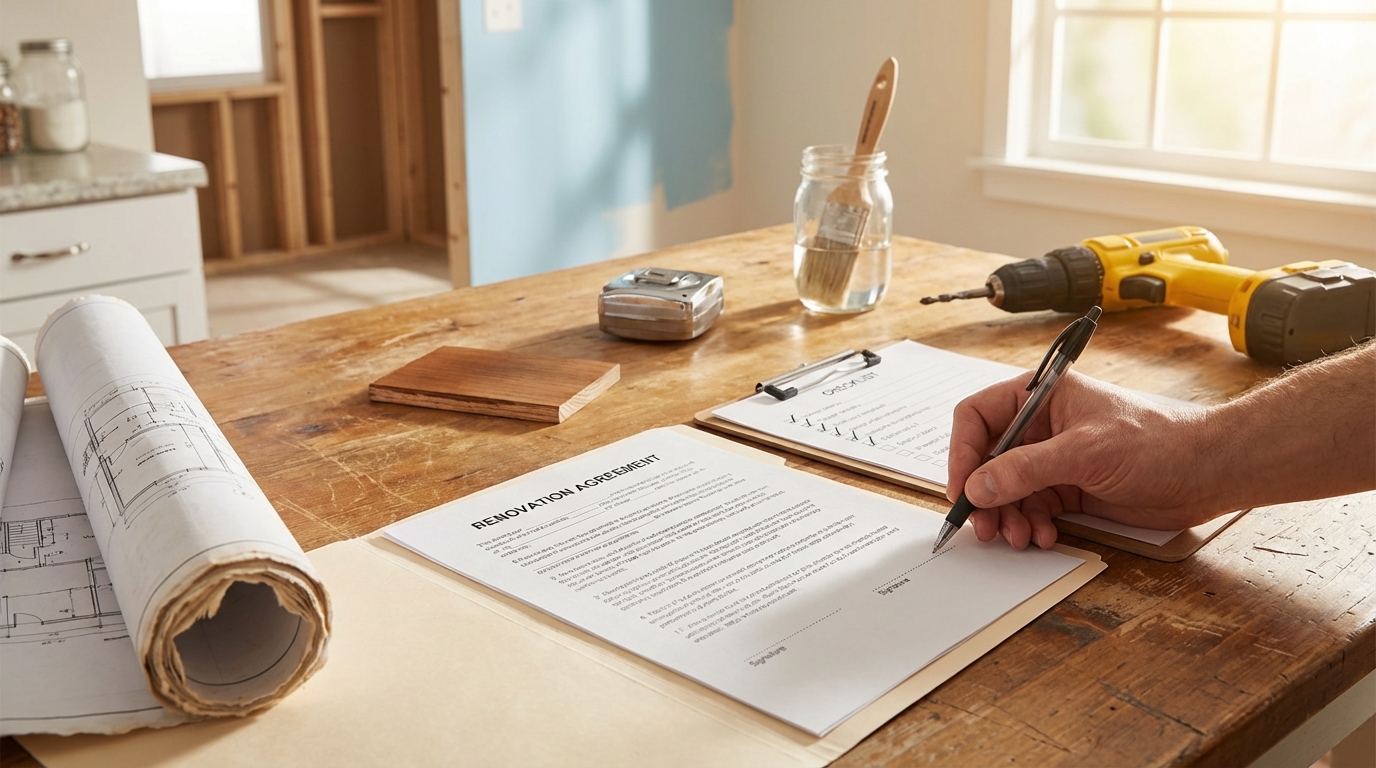
Starting a home improvement project is exciting! You’re about to transform your living space into something special. But before the work begins, there’s one crucial document you need: your project agreement.
This paperwork serves as the shared starting point between you and your general contractor. Think of it as more than just a legal formality—it’s a detailed roadmap that outlines every aspect of your project.
A well-written agreement helps prevent misunderstandings and budget overruns. It establishes clear communication and defines what success looks like for your home transformation. Whether you’re planning a kitchen remodel or whole-house update, knowing what to include gives you confidence.
This guide walks you through all the important elements you need to understand before signing. We cover everything from project scope and payment schedules to insurance requirements. By the end, you’ll know exactly what details should appear in your paperwork and why each element matters.
Key Takeaways
- Your project agreement protects both you and your contractor throughout the entire process
- Clear documentation sets expectations from day one and prevents disputes
- A detailed roadmap outlines materials, payment terms, timelines, and responsibilities
- Understanding your paperwork helps keep budgets and relationships on track
- Proper documentation is useful for any follow-up service or future issues
- Knowing what to include gives you peace of mind during your home transformation
- We’ll cover scope, payments, insurance, and dispute resolution to protect your investment
Understanding the Project Scope
The project scope section is where your vision becomes a concrete plan that everyone can follow. This detailed outline serves as your project’s roadmap, ensuring all parties understand exactly what will happen from start to finish.
Defining Work and Materials
Your scope of work should clearly specify every task involved. Don’t just say “kitchen update”—detail whether it involves demolition, installation, finishing work, or disposal. Be equally precise about materials.
Instead of writing “flooring,” include the manufacturer, brand name, model number, and color. This prevents confusion and ensures you get exactly what you expect. Specify who purchases each item and where materials will be stored during construction.
Clarifying Design and Layouts
Visual plans are crucial for alignment. Include blueprints, 3D mockups, and property layouts so everyone envisions the same final result. These design details help prevent costly misunderstandings.
Pay attention to terminology differences. What you call a “half bath” might differ from your contractor’s definition. Clarifying these terms upfront saves time and frustration later in the project.
The scope should outline all subcontractors involved and their specific responsibilities. Being overly detailed here protects both you and your professional throughout the process.
Clear Payment Terms and Project Timeline
Your agreement’s financial and timing details deserve careful attention to prevent future headaches. This section ensures everyone understands when payments happen and how long the work will take.
A solid payment schedule protects your budget while keeping the project moving forward. Never pay the full amount before work begins.
Payment Schedule Considerations
Structure payments around completed milestones rather than calendar dates. This approach maintains your leverage throughout the process.
Common payment methods include percentage-based schedules or fixed amounts at specific achievements. The table below shows typical structures:
| Milestone | Percentage Payment | Fixed Amount | Best For |
|---|---|---|---|
| Project Start | 10-15% | Material deposit | All project sizes |
| Framing Complete | 25-30% | Fixed labor cost | Large-scale renovations |
| Final Inspection | 10-15% holdback | Completion bonus | Quality assurance |
Always use traceable payment methods like checks or credit cards. Avoid cash payments to individuals.
Establishing Milestones and Deadlines
Your project timeline needs specific start and completion dates. Break the work into phases with clear deadlines for each.
Build buffer time into your schedule for unexpected delays. Weather, material shortages, or hidden issues can affect timing.
Coordinate payment deadlines with your milestone schedule. This creates a cohesive agreement that keeps everyone accountable.
For complex projects, consider cost-effective strategies for large-scale renovations that align payments with measurable progress.
Your final payment should only occur after you’ve inspected all work and signed off on completion. This ensures quality results.
Renovation Contract Essentials
Protecting your investment means understanding the legal safeguards built into your project agreement. This section covers the critical protections that keep everyone secure when unexpected situations occur.
Insurance, Licenses, and Warranties
Your contractor must carry proper insurance coverage. Request current certificates for general liability and workers’ compensation before work begins.
Verify all license numbers are listed in your agreement. State laws often require this documentation for remodeling projects.
Warranty terms should be clearly defined. Workmanship coverage typically lasts 1-5 years. Material warranties from manufacturers must transfer to you.
Document the claim process and timeframes. Some agreements allow for extensions if needed.
Change Order Procedures
Construction projects often encounter changes. Your agreement needs a formal process for handling these adjustments.
All changes affecting costs require written approval from both parties. This prevents surprise charges and keeps budgets intact.
The change order process should outline how requests are submitted, reviewed, and approved. This maintains clear communication throughout the job.
Written approval protects everyone involved and ensures all expectations remain aligned.
Specifying Exclusions and Limitations
While your agreement clearly outlines what will be done, it’s equally important to define what won’t be part of your home improvement work. This section creates clear boundaries that protect both you and your contractor.
Detailing What’s Not Included
Many people focus only on the scope of work. But the limitations section prevents costly misunderstandings. It specifies areas, structures, or tasks that fall outside the project.
Imagine you’re updating your home’s exterior with a detached garage on the property. Your paperwork should state that no work will touch the garage. Otherwise, painters might assume both buildings need attention.
This part of your document clarifies items that seem like they’d be included but actually aren’t covered. Common exclusions often involve landscaping repair, disposal of personal belongings, or work on adjacent structures.
By detailing exactly what’s excluded, you create transparency from day one. This approach ensures everyone understands the precise boundaries of the work. Anything outside these limits requires separate discussion and potentially additional paperwork.
Think of this section as drawing a clear line around your renovation. It protects against unexpected costs and keeps your project focused on what matters most.
Managing Dispute Resolution and Liability
Even the best-planned home improvement projects can encounter disagreements. When expectations differ during construction, having a clear path forward protects everyone involved.
Your agreement should outline specific steps for handling disputes. This prevents small issues from becoming major problems.
Resolution Strategies for Disputes
Mediation serves as an excellent first step for resolving conflicts. A neutral third party helps both sides find common ground.
If mediation doesn’t work, arbitration typically follows. This process is faster and less expensive than going to court.
The table below compares common dispute resolution methods:
| Method | Cost Level | Time Required | Best For |
|---|---|---|---|
| Mediation | Low | 1-2 weeks | Communication breakdowns |
| Arbitration | Medium | 2-4 weeks | Technical disagreements |
| Litigation | High | Months | Major contract breaches |
Understanding Contractor Liabilities
Your document should clearly state the contractor’s responsibilities. This includes site cleanup and debris disposal.
Liability sections protect against unfair blame. They specify who handles various types of issues that might arise.
Proper documentation gives you peace of mind throughout your home transformation. Knowing how to handle disputes keeps your project moving forward smoothly.
Digital Signatures and Communication Protocols
In today’s connected world, how you communicate during your home project matters just as much as what you communicate. Modern technology offers convenient options, but clarity about their legal standing is essential.
Setting Digital Communication Parameters
Your agreement should specify whether digital signatures hold the same weight as traditional pen-and-paper ones. Many states recognize electronic signatures as legally binding, but confirming this in your paperwork prevents future disputes.
Establish clear rules for different communication methods. Email might work for formal change requests, while texts could serve for quick updates. Define response time expectations to keep the process moving smoothly.
The table below shows common communication channels and their best uses:
| Method | Best For | Response Time | Legal Status |
|---|---|---|---|
| Change orders, formal notices | 24-48 hours | Usually binding | |
| Text Message | Quick updates, scheduling | 2-4 hours | Case by case |
| Phone Call | Urgent issues, clarifications | Immediate | Follow up in writing |
| Portal/Messaging | Project tracking, documentation | Specified in platform | Typically binding |
Before work begins, exchange signed copies of the complete agreement. Include full contact information for both parties. This ensures everyone knows how to reach each other throughout the project timeline.
Clear communication protocols prevent misunderstandings that could delay your home improvement. They keep contractors and homeowners aligned from start to finish.
Verifying Contractor Credentials and Legal Compliance
Validating your contractor’s qualifications and legal standing provides crucial protection for your home investment. This due diligence step ensures you’re working with reputable professionals who follow proper procedures.
Confirming Insurance, Permits, and Lien Waivers
Always verify that your contractor holds valid state licenses and adequate insurance coverage. Request current certificates for both general liability and workers’ compensation insurance. This protects you from potential liability during the construction process.
Check references from previous clients and review completed projects similar to yours. Reputable contractors will gladly provide this documentation without hesitation.
Your agreement should clearly outline the permitting process, including responsibility for obtaining approvals. While contractors typically handle permit applications, homeowners usually cover the costs.
Understand lien waivers—these confirm that suppliers and subcontractors receive proper payment. Request these documents at each payment milestone to protect your property from potential liens.
Final inspections by local building officials must occur before your last payment. This ensures your remodeling project meets all code requirements and maintains quality standards throughout completion.
Conclusion
Your journey toward a beautiful home space culminates with one critical document that protects your entire investment. This paperwork serves as your project’s foundation, guiding every step from start to completion.
Every detail matters when planning your home transformation. Clear expectations about scope, payments, and timelines prevent misunderstandings. They keep your remodeling work on track and within budget.
Take time to review all terms before signing. A comprehensive agreement gives you peace of mind throughout the construction process. It ensures both parties understand their responsibilities.
Keep your signed documents safe for future reference. For complete guidance on protecting your interests legally, these resources provide valuable support. Your dream home deserves this careful preparation.