Welcome to your go-to resource for making smart choices about your home’s essential machines. Knowing the right moment for a change can be tricky. This guide helps you navigate that decision with confidence.
You’ll learn to balance current performance, repair expenses, and energy use. We focus on the long-term value for your household. Making a strategic choice is about more than just fixing a problem today.
This resource provides a clear framework for your decision. We cover financial factors, performance red flags, and the best seasons to buy. You’ll also discover the benefits of modern, efficient technology.
A well-planned replacement saves you significant money over the years. You can enjoy lower utility bills and avoid costly emergency fixes. Our guide will show you how to spot the signs that a change is needed.
We’ll explore practical steps for evaluating each item in your house. This includes using cost-effective strategies for large-scale renovations to make your investment go further. While there is an upfront cost, choosing wisely turns it into a smart home improvement.
Key Takeaways
- Balance performance, repair costs, and energy efficiency for the best decision.
- Strategic replacements lead to long-term savings on bills and repairs.
- Use a decision-making framework that includes financial and performance factors.
- Recognize warning signs that indicate a replacement is necessary.
- Time your purchase to take advantage of seasonal sales and discounts.
- Modern, energy-efficient models offer greater convenience and savings.
- A planned approach transforms a major expense into a valuable investment.
Understanding Appliance Upgrade Timing
Homeowners face a complex decision process when evaluating whether to continue using aging household equipment. Several key factors come into play that can guide this important choice.
Factors Influencing the Decision
The age of your equipment is often the starting point. Most household machines have a typical service life of around 15 years. After reaching 10 years old, efficiency begins dropping noticeably.
Frequent breakdowns and rising operating costs also signal it might be time for a change. Consider whether your current units still meet your family’s daily needs effectively.
“The decade mark serves as a critical evaluation point for most household equipment. Performance and efficiency changes become more apparent around this time.”
Recognizing Age and Efficiency Declines
Older equipment shows efficiency declines through increased energy use and longer cycle times. You might notice inconsistent performance or components starting to fail.
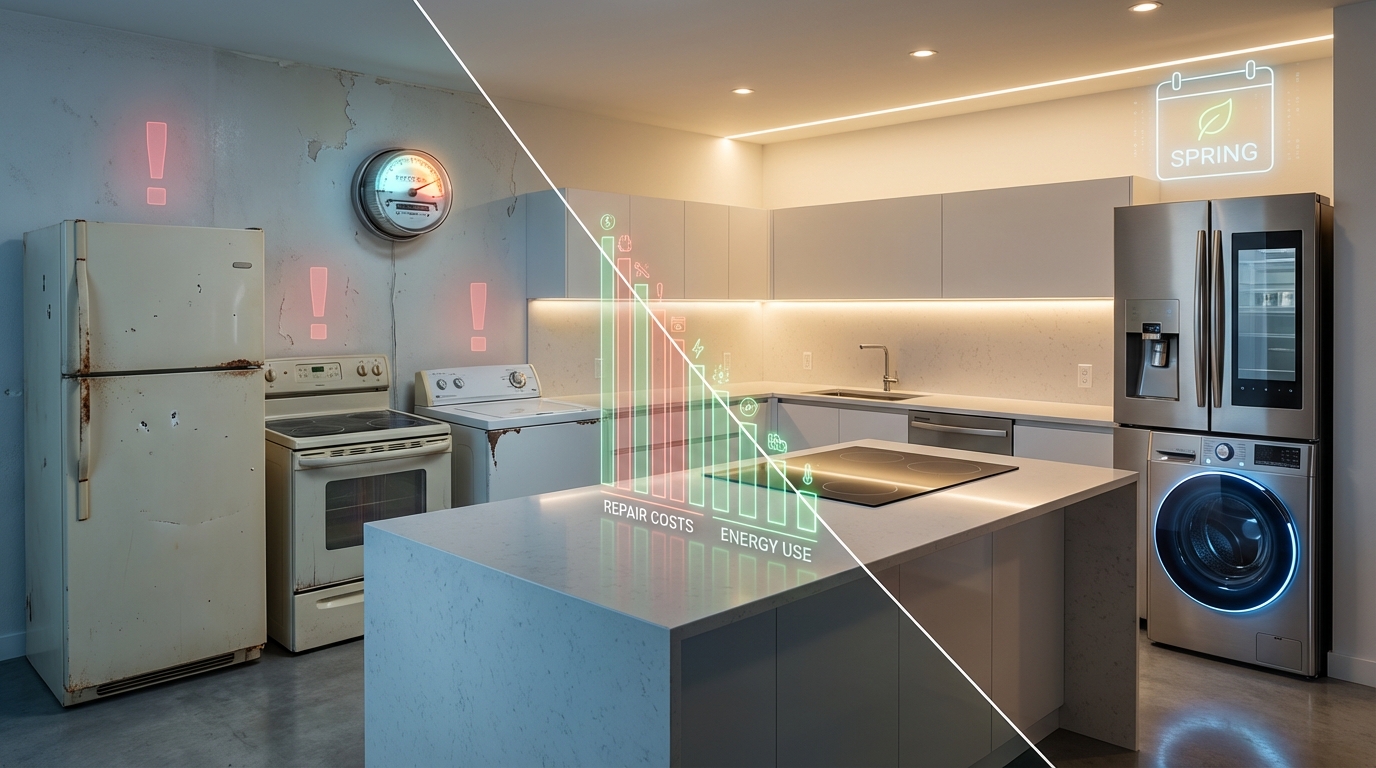
These changes affect how well your machines function. The cumulative cost of operating aging units often exceeds the investment in newer, more efficient models.
| Equipment Age | Performance Indicators | Recommended Action |
|---|---|---|
| Under 5 years | Peak efficiency, minimal repairs | Continue regular maintenance |
| 5-10 years | Moderate efficiency, occasional repairs | Annual performance checks |
| 10+ years | Declining efficiency, frequent repairs | Consider replacement options |
Creating an evaluation timeline helps you make proactive decisions. Assess equipment that’s 10 years old annually to monitor changes and plan accordingly.
Assessing Costs: Repair vs. Replace
When household equipment fails, the question of whether to fix it or buy a replacement hinges on a thorough cost-benefit evaluation. This financial decision requires looking beyond the immediate price tag.
Evaluating Repair Expenses and Warranty Benefits
Many experts follow the “50% rule” for this choice. If a repair would cost half the price of a new unit or more, replacement typically offers better long-term value.
Consider warranty coverage carefully. Repairs on newer items under warranty may cost you nothing. This makes the repair versus replacement decision much simpler.
Older machines present additional challenges. Parts can be hard to find, driving up both the cost and time needed for fixes.
Long-Term Savings and Utility Bill Impacts
Modern energy-efficient models can significantly reduce your monthly bills. These savings often offset the initial investment in just a few years.
Repeated repairs on aging appliances create ongoing expenses. Buying new one eliminates this uncertainty while providing improved reliability.
| Factor | Repair Option | Replacement Option |
|---|---|---|
| Immediate Cost | Lower upfront expense | Higher initial investment |
| Long-term Value | Limited lifespan remaining | 10+ years of service |
| Energy Efficiency | Older, less efficient | Modern, energy-saving |
| Warranty Coverage | May be expired | Full new warranty |
Consumer Reports offers helpful visual guides for this important decision. Their data supports what can feel like a difficult judgment call.
Spotting Performance Issues and Efficiency Declines
Recognizing the warning signs of declining performance can prevent costly repairs and safety hazards. Your household equipment communicates its condition through various signals that demand attention.
Identifying Operational and Safety Concerns
Specific performance problems indicate serious issues across different equipment types. A refrigerator that fails to maintain consistent temperatures can lead to food spoilage and health risks.
Washing machines leaving water puddles or dishwashers failing to clean properly show declining functionality. These operational concerns affect daily convenience and household efficiency.
| Equipment Type | Performance Issue | Potential Risk | Recommended Action |
|---|---|---|---|
| Refrigerator | Inconsistent cooling | Food spoilage, health hazards | Immediate evaluation |
| Washing Machine | Water leakage | Floor damage, mold growth | Professional inspection |
| Oven/Range | Uneven heating | Undercooked food, safety issues | Consider replacement |
| Dishwasher | Poor cleaning | Water waste, time consumption | Performance testing |
When Performance Shortfalls Signal an Upgrade
Rising utility bills often connect directly to efficiency declines. When your energy costs increase despite unchanged usage patterns, your equipment likely consumes excessive power.
Frequent service calls every few months represent a clear warning sign. The equipment enters a failure cycle where breakdowns create ongoing cost drains. Modern efficient models can significantly reduce monthly expenses.
Timing Your Purchase: Seasonal Sales and New Model Releases
Your wallet will thank you when you align major purchases with seasonal market rhythms. Knowing the best periods to shop is a powerful financial strategy.
This approach can save you hundreds, making the decision of when to buy as crucial as what to buy. This is especially true for projects like a kitchen remodeling.
Seasonal Sales Insights and Holiday Discounts
The final quarter of the year is a golden window. From October through December, retailers clear inventory for incoming new models.
This creates a buyer’s market with exceptional discounts. Major holidays are also prime times for deals.
“Shopping during holiday weekends can result in savings of 20% or more on major brands.”
Presidents’ Day, Memorial Day, and Labor Day are key events. Black Friday often features the deepest price cuts of the year.
For a detailed breakdown of the annual sales cycle, check out our 2025 buying guide for the best purchase.
Capitalizing on Clearance Offers and Model Updates
Spring is the ideal season for specific items. March and April sales spotlight ranges and dishwashers.
This is a perfect time for a kitchen remodeling project. August is best for compact units like laundry sets.
Manufacturers release new appliances from September to December. This triggers price reductions on current models.
Last year’s high-end new appliance often has the same features at a much lower cost. This is a smart strategy for value.
Purchasing multiple items together unlocks package deals. These can include rebates and extended warranties, maximizing your investment.
Leveraging Smart Appliance Features for Enhanced Efficiency
Connected household systems offer real-time insights that empower homeowners to make smarter energy and maintenance decisions. These intelligent features transform daily routines while delivering substantial long-term benefits.
Integrating IoT and Appliance Management Software
Modern units connect seamlessly to your home network through simple setup steps. Management software provides a centralized dashboard for monitoring all connected equipment.
You receive instant alerts about performance issues and maintenance needs. This proactive approach extends the life of your household essentials while enhancing daily convenience.
Maximizing Energy Efficiency with New Technology
Today’s ENERGY STAR certified models consume significantly less energy than older versions. Advanced sensors optimize cycles based on actual usage patterns.
Dishwashers adjust water usage according to soil levels. Washing machines auto-dose detergent to prevent waste. These smart features reduce utility costs while maintaining excellent performance.
The initial investment in efficient technology pays dividends through lower monthly bills. You’ll enjoy enhanced convenience and reduced environmental impact throughout your home.
Conclusion
Your journey toward smarter household management culminates in understanding when change becomes necessary. This guide provides a comprehensive framework for making the right choice about your home’s essential equipment.
Remember the critical benchmarks: most appliances last about 15 years, but efficiency drops after 10. When repairs cost half the price of new models, replacement often makes better financial sense.
Monitor your utility bills closely. Unexplained increases can signal aging equipment consuming excess power. Strategic purchasing during seasonal sales maximizes your investment’s value.
Modern refrigerators and dishwashers offer significant efficiency gains. They reduce operating costs while enhancing daily convenience. This transforms a major expense into long-term savings.
You now have the knowledge to make confident decisions that align with your household needs and budget. Take a proactive approach to ensure your home runs efficiently for years to come.