Imagine a home that feels as refreshing as a walk in the park. This idea is more than a trend; it’s a movement gaining serious momentum. For instance, searches for this concept on platforms like Pinterest have doubled recently.
The core principle comes from biologist E.O. Wilson. He described our innate love for the living world. This deep-rooted connection is called biophilia. It explains why we feel so good when surrounded by natural elements.
This approach to creating living areas goes far beyond a few potted plants. It’s a holistic philosophy for your interior. The goal is to weave the essence of the outdoors into our daily spaces.
The benefits are backed by real data. Studies show people linger longer in lobbies with natural features. Schools using these principles even saw test scores rise and absenteeism drop.
This guide will show you how to transform your home. You will learn to create an environment that breathes with positive energy. We will explore practical ways to make this connection to the natural world a reality in your own space.
Key Takeaways
- The concept is based on our inherent human need to connect with nature.
- It’s a growing trend, with online searches increasing significantly.
- This philosophy involves more than just adding greenery to a room.
- Spaces designed with nature in mind can improve well-being and productivity.
- You can apply these ideas to any home, from a small update to a major renovation.
- The approach is supported by scientific research and real-world success stories.
Understanding biophilic design homes
Long before modern architecture, humans instinctively created dwellings that honored the natural world. This ancient wisdom forms the foundation of today’s approach to living spaces.
Defining Biophilic Design and Its Evolution
Biophilic design represents more than just adding plants to a room. It’s a comprehensive philosophy that bridges our built environment with living systems. The approach has evolved from ancient practices to address modern urban challenges.
The principles organize into three main categories. Each creates a different type of connection to nature. Understanding these categories helps create spaces that feel genuinely restorative.
| Category | Focus | Examples | Impact |
|---|---|---|---|
| Nature in the Space | Direct physical presence | Living plants, water features, natural light | Immediate sensory engagement |
| Nature of the Space | Spatial configurations | Open layouts, prospect-refuge areas | Psychological comfort and safety |
| Natural Analogues | Representations of nature | Wood grain patterns, earth tones, organic shapes | Subliminal natural connections |
Connecting Architecture with the Natural World
This approach creates a coherent relationship between buildings and biology. It addresses our hard-wired responses to natural elements. The crackling sound of fire or smell of rain trigger positive reactions.
Thoughtful design decisions support our evolutionary needs. They also help counter the effects of urban living. The result is an environment that feels both innovative and instinctively right.
Key Benefits of Incorporating Nature in Interior Design
Scientific evidence now confirms what we’ve always felt intuitively: environments rich with natural elements significantly enhance our daily lives. The advantages extend across physical health, mental clarity, and social behavior.
Physical, Mental, and Behavioral Advantages
Your body responds positively to nature-connected spaces. Studies show lower blood pressure and improved fitness levels. People experience fewer illness symptoms and faster recovery times.
Mental wellness gets a substantial boost. Stress and anxiety decrease noticeably. Meanwhile, motivation, creativity, and focus all increase. This creates a more productive living environment.
Behavioral changes are equally impressive. Attention spans improve and decision-making becomes sharper. Social interactions become more positive and frequent.
Boosting Well-Being Through Natural Elements
Real-world projects demonstrate these benefits clearly. Interface research found people spent 11% more time in lobbies with natural inspiration. This shows the powerful pull of well-designed spaces.
Educational settings reveal similar advantages. Paladino & Company documented a 5% increase in test scores. Absenteeism dropped by 15% when schools embraced this approach.
These results provide compelling inspiration for your own projects. Understanding these advantages helps you choose the right elements. You can create spaces that truly enhance well-being in measurable ways.
Natural Elements That Transform Interiors
Transforming your interior spaces begins with embracing the fundamental elements that nature provides. These components work together to create environments that feel both refreshing and restorative.
Harnessing the Power of Natural Light and Ventilation
Natural light serves as your most powerful ally in creating vibrant spaces. It directly influences your body’s daily rhythms, boosting energy and mood throughout the day.
Thoughtful placement of windows maximizes daylight while creating beautiful shadow patterns. Fresh air circulation complements this by connecting you to outdoor conditions.
| Element | Primary Benefit | Implementation Tip | Impact Level |
|---|---|---|---|
| Natural Light | Regulates circadian rhythm | Position windows for morning light | High impact |
| Fresh Air Flow | Improves oxygen levels | Cross-ventilation strategies | Medium impact |
| Temperature Variation | Enhances sensory awareness | Seasonal adjustment awareness | Medium impact |
Integrating Greenery, Water Features, and Organic Forms
Plants bring living energy into any room. Choose species that thrive in your local climate for authentic connections to regional nature.
Water elements like tabletop fountains create calming auditory experiences. Organic shapes in furniture and decor make spaces feel more intuitive and comfortable.
These natural components work together synergistically. When sunlight highlights your greenery while fresh air circulates, you create a multi-sensory experience that truly brings the outdoors inside.
Sustainable Material Selection and Eco-Friendly Practices
Choosing materials for your home is more than a practical decision—it’s a conversation with the land itself. The best selections connect your living space directly to its surroundings through natural materials that carry regional character.
Using Locally-Sourced and Minimal-Processing Materials
Materials like wood, stone, and clay create positive responses in our bodies. They trigger feelings of comfort that processed alternatives cannot match. This approach forms the foundation of authentic living spaces.
Sourcing from your local terrain reduces environmental impact. It also reflects your region’s unique geology. This establishes a genuine sense of place in your building project.
Stone offers exceptional versatility in these projects. It brings timeless beauty and thermal properties indoors. Using it in floors or walls creates lasting design trends that stand the test of.
Thoughtful material selection benefits both the environment and your well-being. Understanding how different materials interact with light and temperature helps you make informed choices. This way, your space harmonizes with its specific nature.
Innovative Spatial Organization for an Indoor-Outdoor Connection
The way we arrange our living areas speaks directly to our primal instincts for safety and exploration. This approach to spatial organization creates environments that feel both protective and inviting.
Designing with Organic Patterns and Curved Lines
Our brains naturally prefer curved lines over sharp angles. This preference dates back to our evolutionary past when rounded shapes signaled safety. Incorporating flowing patterns into your room layout creates instant comfort.
Thoughtful spatial organization addresses our need for both refuge and prospect. It creates zones where you can retreat while maintaining visual connections. This balance reduces stress and encourages exploration throughout your home.
| Spatial Approach | Key Feature | Psychological Benefit | Implementation |
|---|---|---|---|
| Refuge Zones | Protected, intimate areas | Safety and security | Reading nooks, window seats |
| Prospect Areas | Open sight lines | Exploration and awareness | Open floor plans, large windows |
| Transitional Spaces | Gradual movement between areas | Reduced stress, creativity | Archways, level changes |
“The most successful interiors flow like natural landscapes, offering both protection and possibility in equal measure.”
Organic forms in furniture and architectural elements create subliminal connections to nature. These flowing designs work particularly well in multifunctional living spaces where flexibility matters most.
Strategic use of color and textures enhances these spatial patterns. They help blur boundaries between indoor and outdoor spaces. This creates a cohesive living environment that feels expansive yet intimate.
Conclusion
Your journey toward a more natural living space begins with a simple realization: your home can be your greatest sanctuary. As California designer Jessica Preteroti notes, it shouldn’t feel like just a protective box but a living environment that breathes with you.
Remember that biophilic design extends beyond adding a few plants to your furniture arrangement. It’s a holistic approach involving natural materials, organic textures, and thoughtful spatial organization. Even small projects can create profound connection with nature.
The health benefits provide compelling inspiration. Research shows that exposure to natural elements significantly improves, reducing stress while boosting mood and recovery. This makes every effort worthwhile.
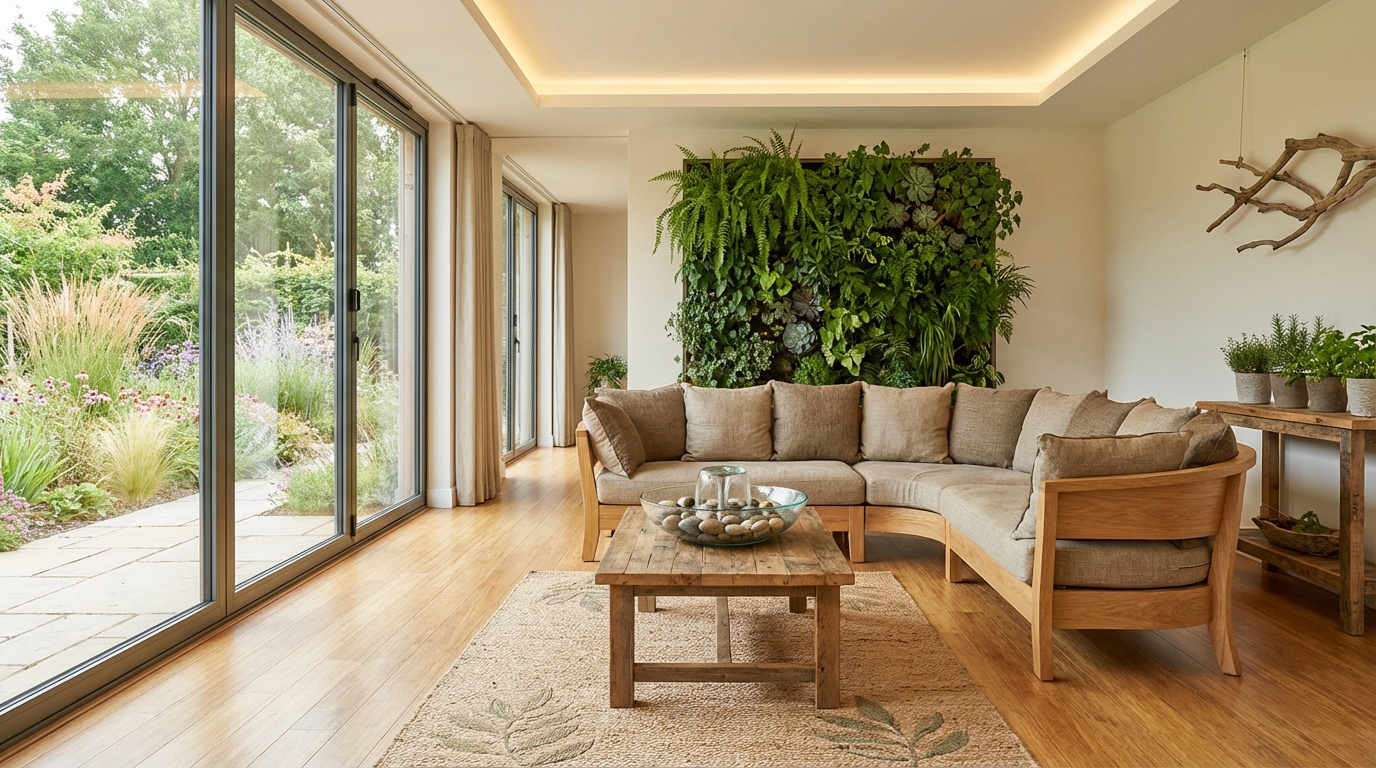
Start with simple steps like propagating plants for a living wall or introducing more natural light. Each choice brings you closer to creating interiors that honor the outdoors. Your home becomes a space where every room offers both refuge and inspiration.
By embracing these principles, you join a movement recognizing that our deepest connection to the natural world isn’t just beneficial—it’s essential to our humanity and future happiness.
FAQ
What is biophilic design in simple terms?
It’s a way of creating spaces that connect people with the natural world. This approach uses elements like plants, natural light, and materials such as wood and stone to make a room feel more alive and calming.
How can I add more natural light to my home?
You can increase natural light by using larger windows, skylights, or glass doors. Placing mirrors opposite windows also helps bounce light around a room, making the space feel brighter and more open.
What are some easy ways to include natural materials?
Start with furniture or decor made from wood, bamboo, or stone. Even small touches like a jute rug or linen curtains can bring organic textures into your interior and strengthen your bond with nature.
Can this approach work in a small apartment?
Absolutely! Using hanging plants, a small water feature, or choosing a color palette inspired by the outdoors can make a big difference. The key is to focus on quality connections to the environment, not just the amount of space.
Why is indoor-outdoor flow important in these projects?
Creating a smooth transition between inside and outside blurs the lines between your living area and the natural world. This can be done with patios, large sliding doors, or by using similar materials indoors and out for a cohesive look.
Are there health benefits to living in a space like this?
Yes, studies show that being around natural elements can reduce stress, improve air quality, and boost overall well-being. Features like better ventilation and access to greenery support both physical and mental health.