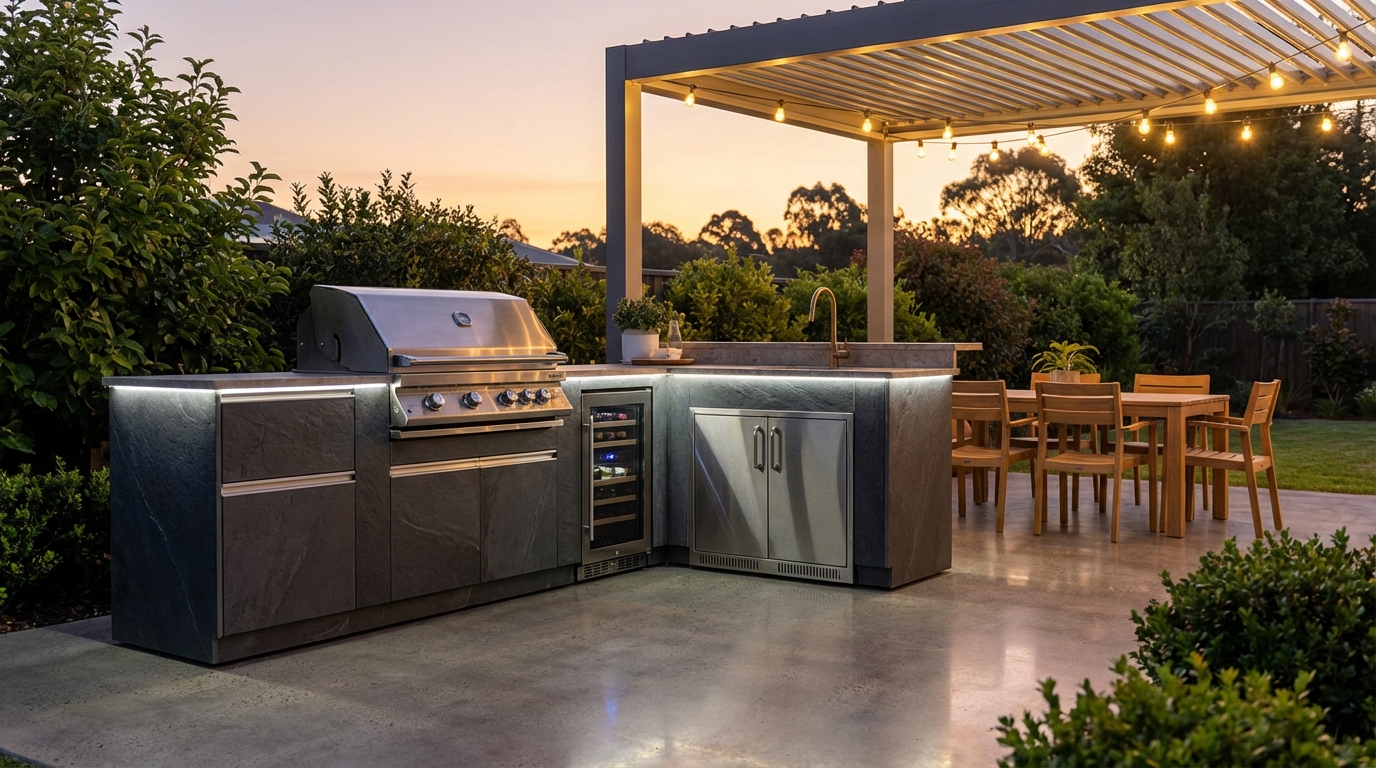
Imagine transforming your backyard into the ultimate entertainment zone. What started as simple grilling stations has evolved into fully functional cooking areas that rival indoor setups. These spaces now feature professional-grade appliances and comfortable seating for memorable gatherings.
This comprehensive guide helps you create a seamless extension of your indoor living area. You’ll learn to assess your available space and determine your specific cooking needs. Thoughtful planning ensures your new area provides both beauty and durability for years of enjoyment.
We cover everything from appliance selection to material choices that withstand various weather conditions. You’ll discover layout configurations that optimize workflow while creating inviting spots for family and friends. Whether you want a basic setup or an elaborate culinary retreat, this guide provides practical advice.
Key Takeaways
- Outdoor cooking areas have evolved from basic grills to complete entertainment zones
- Proper planning creates a seamless extension of your indoor living space
- Assessing your available area and cooking needs is the first crucial step
- Material selection impacts durability against weather conditions
- Layout configurations should optimize workflow and social interaction
- Professional-grade appliances elevate your outdoor cooking experience
- Thoughtful design balances aesthetics with practical functionality
Introduction to Outdoor Kitchen Trends and Inspirations
The backyard has become the new heart of the home, with cooking areas leading this exciting shift. These spaces are now among the most sought-after home improvements. They transform simple yards into sophisticated entertaining zones.
Current trends focus on creating peaceful retreats. A modern outdoor kitchen rivals the comfort of its indoor counterpart. It lets homeowners enjoy nature while having all the cooking and dining amenities.
Leading experts highlight this balance. Margaret Donaldson, CEO and principal designer at MDI Luxury Design, emphasizes a seamless connection.
“A well-planned space should feel like an extension of your home. The outdoor living, dining, and cooking area becomes a peaceful spot to connect with nature,”
says Donaldson. Mary Patton of Mary Patton Design notes clients want a mix of serenity and sophistication with a touch of fun.
Today’s outdoor kitchen layouts incorporate features like fireplaces and pizza ovens. They create the perfect setting for parties or quiet family time. The goal is for the space to complement its surroundings, not dominate them.
From coastal homes to mountain getaways, the style varies. But the shared goal is creating an inviting gathering spot. Every element must withstand the weather while supporting a cohesive style.
Understanding Your Outdoor Space and Requirements
A successful backyard cooking space begins with careful assessment of your property’s unique characteristics. Consider your patio size and how the area currently serves your family. This evaluation helps create a harmonious addition to your landscape.
Think about practical elements like sun exposure and wind patterns. These factors affect cooking comfort and appliance placement. Preserve beautiful views while working with natural slopes or trees.
Designer Judy Pickett emphasizes the importance of nature’s role.
“Nature is the backdrop here when creating spaces that embrace the surrounding landscape,”
she notes. This perspective ensures your cooking area complements rather than competes with your environment.
Envision how you’ll use this space. Will it host large gatherings or serve as a family grilling spot? Your cooking style determines whether you need extensive prep surfaces or simpler arrangements.
| Space Consideration | Family BBQ Focus | Entertainment Focus | Daily Use Focus |
|---|---|---|---|
| Counter Space Needed | Moderate (2-3 feet) | Extensive (4-6 feet) | Minimal (1-2 feet) |
| Seating Integration | Adjacent dining area | Multiple conversation zones | Compact seating nook |
| Storage Requirements | Basic utensil storage | Multiple appliance storage | Weather-protected storage |
| Shade Considerations | Partial coverage | Multiple shade options | Full weather protection |
Lindy Lowney recommends bringing interior comfort outside with rugs and pillows. This approach makes your patio feel like a true extension of your home. The goal is creating a space you’ll genuinely enjoy using regularly.
Key Appliances for an Exceptional Outdoor Kitchen
Your appliance selection determines how enjoyable your backyard cooking experience will be. The right equipment transforms a simple grilling spot into a complete culinary workspace. Start with a reliable heat source that matches your cooking style.
A quality grill remains the traditional centerpiece, but modern setups offer more versatility. Consider adding a pizza oven for authentic Italian-style meals or a smoker for low-and-slow barbecue. Some homeowners even install full outdoor ranges with multiple burners and a conventional oven.
Refrigeration keeps ingredients fresh and drinks cold without constant trips inside. Options range from compact beverage centers to full-size refrigerators. Proper cooling ensures food safety during extended entertaining sessions.
A well-equipped bar area elevates your hosting capabilities. Include features like an ice maker, wine cooler, or even a kegerator. These amenities let you serve guests without leaving your patio space.
Stainless steel appliances withstand weather conditions while maintaining a professional look. They resist rust and corrosion with proper care. Regular cleaning prevents damage from moisture and salt air.
Designer Kate Anne Gross emphasizes balancing function with aesthetics.
“The key was incorporating everything without it looking cluttered or taking away from the aesthetics of the island itself,”
she notes about a recent project. Thoughtful planning creates a cohesive space where each appliance serves a purpose.
For more detailed guidance on essential equipment, explore our comprehensive list of must-have appliances for your outdoor kitchen. This resource helps you prioritize investments based on your specific needs.
Outdoor Kitchen Design: Layout and Functionality
Smart spatial planning transforms a basic grilling spot into a fully functional culinary workspace. The arrangement of your cooking zone impacts everything from meal preparation efficiency to guest interaction. Applying the classic work triangle principle creates a smooth workflow.
Position your grill, prep surface, and refrigeration in an efficient configuration. This foundation prevents unnecessary movement during cooking tasks. Peninsula and island setups offer ample counter space while creating natural gathering spots.
Guests can sit and chat with the cook, keeping the social aspect alive. Proximity to your indoor cooking space significantly enhances functionality. Carrie Moore Interior Design created a space where “You can easily pass your guests’ plates, as the dining area is directly adjacent to the working kitchen peninsula.”
Jennifer Risko Smith emphasizes seamless connections between spaces. Her designs allow easy transfer of food and supplies without awkward transitions. This thoughtful approach makes entertaining effortless and enjoyable.
Consider traffic flow when planning your layout. Ensure adequate space for multiple people to move comfortably. Clear paths should avoid forcing guests through the cooking zone.
Counter height variations create distinct zones for work and socializing. Standard heights suit prep work, while raised sections accommodate guest seating. This separation maintains functionality during gatherings.
Explore different configurations from simple L-shapes to elaborate U-shaped designs. Each option impacts workflow, entertaining capacity, and overall functionality. The right layout makes your space both practical and inviting.
Choosing Durable Materials for Your Outdoor Kitchen
Material selection forms the backbone of any outdoor culinary space built for longevity. Every surface must withstand extreme weather conditions. Margaret Donaldson emphasizes that countertops, appliances, and furnishings need exceptional durability.
Natural stone offers excellent performance for high-use areas. Granite, quartzite, and bluestone provide heat resistance and maintain beauty despite constant exposure. Proper sealing protects these materials from moisture and staining.
Wood elements bring warmth to your setup. Choose weather-resistant species like teak or cedar. High-quality composites replicate wood’s look with superior weather resistance.
Concrete has gained popularity for its versatility. It works for countertops creating a modern industrial aesthetic. Decorative concrete flooring mimics natural stone at a more accessible price.
Bridgette Caporaso of Sketch Design Studio notes specific challenges.
“Salt, water, and sun exposure is very abrasive on many finishes,”
she explains about waterfront installations.
Stainless steel components provide unmatched durability in exterior environments. They resist rust and corrosion with proper care. Coastal installations may require marine-grade specifications.
Joe Raboine recommends cool-toned color palettes with elegant pavers. These create smooth, clean lines that complement other elements, like stainless-steel appliances.
Consider long-term maintenance when selecting materials. Some develop attractive weathered characteristics over time. Others may require intensive upkeep to maintain their appearance.
Creative Backsplash and Countertop Ideas
Beyond mere functionality, creative surfaces add personality and artistry to your exterior culinary space. These elements protect walls from cooking splashes while making a strong style statement.
Artistic Tile Backsplashes and Unique Patterns
Glass mosaics offer exceptional versatility for exterior applications. They come in unlimited colors and patterns that withstand weather conditions.
Nancy Epstein, founder of Artistic Tile, created a custom glass mosaic in a languid lily pad pattern.
“My own yard feels as lush and indulgent as the finest outdoor spaces I have experienced anywhere in the world,”
she shares. Textured tiles add dimensional interest throughout the day.
Continuous Countertops That Blur Indoor-Outdoor Lines
Kern & Co. pioneered extending interior islands outside through large windows. This creates bar seating and seamless serving areas.
Design West recommends materials with texture to add visual appeal. The right surface balances beauty with performance in various climates.
| Material | Best For | Maintenance | Climate Suitability |
|---|---|---|---|
| Granite | Heat resistance | Annual sealing | All regions |
| Quartzite | Natural patterns | Low maintenance | Mild to moderate climates |
| Polished Concrete | Contemporary look | Occasional resealing | Dry climates |
| Glass Tile | Color versatility | Easy cleaning | All regions |
These surface choices transform your cooking area from purely functional to truly exceptional. They create spaces you’ll enjoy using daily throughout the warmer months.
The Allure of Pizza Ovens and Specialty Cooking Stations
The ritual of wood-fired cooking creates memorable gatherings where the preparation becomes part of the entertainment. These specialty features transform basic grilling into culinary experiences that captivate guests.
Bob White’s Stanly Ranch home in Napa Valley demonstrates perfect placement. A pizza oven sits adjacent to the grilling station with ample prep space.
“When a home is designed right, they are about celebrating, creating, and honoring a sense of place, capturing moments and memories in people’s lives—all with a spectacular view,”
At Ojai Valley Inn’s Casa Elar, the Tuscan-style outdoor kitchen features a pizza oven as an integrated focal point. Carrie Moore Interior Design created spaces where “the connection to dining and living areas also allows for hosting a crowd, even while whipping up a pie.”
| Oven Type | Heat Source | Installation | Best For |
|---|---|---|---|
| Traditional Masonry | Wood-fired | Permanent | Authentic experience |
| Countertop Model | Gas or Wood | Portable | Space-limited areas |
| Hybrid System | Dual Fuel | Built-in | Convenience & tradition |
Modern options range from traditional dome-shaped ovens to compact countertop models. Each offers unique advantages for different spaces and cooking styles.
Proper integration ensures these features enhance rather than dominate your cooking area. Thoughtful placement creates efficient workflow while maintaining aesthetic harmony.
Seamless Integration of Indoor and Outdoor Living Spaces
The most fluid living environments dissolve the barrier between inside and outside. Your cooking area should feel like a natural extension of your home’s interior, not a separate structure.
Architectural openings create this physical connection. Large sliding glass walls or folding door systems unite the spaces visually. Pass-through windows allow for easy serving and conversation.
| Opening Type | Key Features | Visual Impact | Functional Benefit |
|---|---|---|---|
| Sliding Glass Walls | Panels glide on a track | Creates a massive opening | Completely connects the rooms |
| Folding Glass Doors | Panels stack to the side | Modern, clean look | Flexible opening size |
| Pass-Through Windows | Counter-height opening | Maintains a visual link | Perfect for serving food |
| Large Openings | Wide, unobstructed view | Makes both areas feel bigger | Enhances natural light flow |
Miami-based designer Brittany Farinas highlights the power of custom features.
“We incorporate millwork into our projects, so the space was perfect to create a custom-built feature, and the stone was carefully sourced by Opustone,”
she says of a Bali-inspiredhome. This approach blurs the boundaries beautifully.
Continuity is key. Repeating materials and colors from your indoor kitchen makes the transition feel intentional. Matching counter heights and aligning sightlines are practical touches.
Amanda Barnes of Amanda Barnes Interiors built her outdoor kitchen to mirror the adjacent interior space. “You can read the barbecue thermometer from the kitchen window,” she notes. This smart planning encourages regular use.
The open floor plan concept shines here. Spacious, uncluttered spaces flow naturally, creating a resort-like feel right at home. Your outdoor kitchen becomes a true part of your daily life.
Enhancing Comfort with Outdoor Dining and Lounge Seating
The right dining and lounge setup encourages family and guests to linger long after the meal ends. Comfortable arrangements make your patio feel like a natural extension of indoor living spaces.
Courtnay Tartt Elias of Creative Tonic Design offers smart advice for compact areas.
“Consider a banquette built into the patio wall. Providing both a soft seating area and reducing the footprint of a dining table and chairs, banquettes are a delightful small-space solution,”
she recommends.
Built-In Seating and Banquette Ideas
Built-in options maximize space while adding storage functionality. Lift-up seats can hide cushions and entertaining supplies when not in use.
These permanent solutions create cozy nooks that define your dining zone. They work particularly well in corners or along perimeter walls.
| Seating Type | Space Efficiency | Comfort Level | Best For |
|---|---|---|---|
| Built-in Banquette | High (saves space) | Excellent (cushioned) | Small patios, family meals |
| Dining Table Set | Medium (requires clearance) | Good (adjustable chairs) | Formal entertaining |
| Bar Height Stools | High (vertical space) | Moderate (casual) | Quick meals, social cooking |
| Modular Lounge | Flexible (reconfigurable) | Excellent (relaxed) | Conversation areas, firepit zones |
Incorporating Firepits and Outdoor Fireplaces
Fire features create instant ambiance and extend seasonal use. Jennifer Risko Smith demonstrates their power in creating complete entertainment zones.
Her projects often feature “an adjacent fireplace lounge area and full dining area with heaters, interesting lighting, and views.” This approach creates distinct but connected spaces.
Rhode Island designer Lindy Lowney emphasizes comfort details. Ground soft seating with outdoor rugs and weather-resistant pillows for true interior comfort outside.
Your fireplace or firepit becomes the heart of evening gatherings. Position it to complement your cooking area while creating a natural conversation spot.
Outdoor Kitchen Lighting and Ambiance for Memorable Evenings
Evening gatherings gain magical quality when thoughtful illumination transforms your cooking space. Proper lighting extends your entertaining hours well beyond sunset. It creates both functionality and atmosphere for memorable nights.
Lauren Lerner of Living With Lolo emphasizes practical considerations. “Adding lighting around the grill so you can cook after sunset” ensures safety and convenience. Task lighting becomes essential for food preparation areas.
Under-cabinet options illuminate countertops while overhead spots focus on cooking zones. This layered approach addresses different needs throughout your evening.
String lights bring playful charm to any patio setup. They create soft, romantic glow reminiscent of cozy bistros. Their flexibility makes them perfect for pergolas or overhead structures.
Accent lighting highlights architectural features and pathways. It adds depth while ensuring guest safety after dark. Beautiful stonework or landscaping elements deserve this special attention.
Dimmer controls and smart systems offer incredible flexibility. You can adjust brightness from food prep levels to dinner conversation ambiance. This progression enhances the entire evening experience.
Jennifer Risko Smith focuses on “interesting lighting” as part of comprehensive planning. Fixtures should complement your overall design rather than appearing as afterthoughts.
From modern LED strips to rustic lanterns, choices abound. Each option contributes to the aesthetic while serving practical purposes. Your lighting plan should balance beauty with functionality.
Becky Shea’s Scandinavian-inspired space demonstrates how natural elements blend with artificial illumination. The result feels both organic and intentionally crafted.
Your patio becomes an enchanting extension of indoor comfort. Strategic lighting ensures every gathering under the stars feels special and safe.
Planning for Year-Round Use of Your Outdoor Kitchen
Extending your patio’s usability beyond summer months requires smart weather planning. Thoughtful climate control transforms a seasonal amenity into year-round enjoyment.
Incorporating Heaters and Roll-Down Screens
Cathy Purple Cherry designed a Virginia pool house with innovative features. Translucent roll-down screens hide in the ceiling and provide weather protection when needed.
Infrared ceiling-mounted heaters offer targeted warmth without floor space. These solutions create comfortable spaces even in cooler seasons.
Jennifer Risko Smith emphasizes comprehensive planning. Her projects include heaters, interesting lighting, and views for extended usability.
Designing for Unpredictable Weather and Seasonal Use
Adaptable features handle changing conditions effectively. Retractable awnings and adjustable pergola louvers provide flexible protection.
Regional considerations impact your approach significantly. What works in California differs from harsh winter climates.
Nancy Epstein enjoys her space daily from spring to fall. Proper planning maximizes your return on investment throughout the year.
| Protection Type | Seasonal Coverage | Installation Complexity | Cost Range |
|---|---|---|---|
| Roll-down Screens | 3-4 seasons | Moderate | $$$ |
| Infrared Heaters | Fall/Winter | Easy | $$ |
| Retractable Awnings | Spring/Summer | Complex | $$$$ |
| Pool House Integration | Year-round | High | $$$$$ |
For larger projects, consider cost-effective strategies for large-scale renovations. Smart planning ensures your investment delivers maximum value across all seasons.
Balancing DIY Projects with Professional Design Help
Building your own exterior culinary zone can be rewarding. But knowing when to call in experts ensures safety and quality. Your choice depends on skill level, time, and project complexity.
Simple setups work well for DIY enthusiasts. A freestanding grill with basic prep tables offers function without complexity. Compact pizza ovens also make great starter projects.
| Project Aspect | DIY Approach | Professional Help |
|---|---|---|
| Cost Considerations | Significant savings | Higher investment |
| Time Commitment | Flexible timeline | Faster completion |
| Technical Complexity | Basic skills needed | Expert knowledge required |
| Final Results | Personal satisfaction | Polished finish |
Complex projects demand professional expertise. Gas lines, electrical systems, and custom cabinetry need permits and specialized skills. An experienced designer brings valuable planning knowledge.
“Major installations require proper permitting and code compliance. This ensures your outdoor kitchen operates safely for years,”
A hybrid approach offers the best balance. Hire professionals for critical installations like utilities. Then handle finishing work yourself to control costs.
Companies like Danver guide homeowners through the entire process. They help navigate material choices and appliance integration. This creates cohesive spaces that blend with your home’s architecture.
Assess your project realistically. Understand which elements suit DIY execution. Determine what truly needs professional expertise for optimal results.
Budgeting, Costs, and Local Material Considerations
Establishing a realistic budget is the crucial first step in creating your ideal backyard cooking area. According to Angi, costs range dramatically from $1,000 for a simple setup to $50,000 for an elaborate installation. The average investment falls around $15,717 for a well-equipped space.
Your final price depends heavily on several factors. The size and layout complexity are major drivers. Material selections for countertops and cabinetry also significantly impact the bottom line.
The number and quality of appliances you choose play a huge role. A basic grilling station costs far less than a fully equipped culinary center.
| Budget Level | Typical Features | Estimated Cost Range |
|---|---|---|
| Essential | Quality grill, basic counter, minimal storage | $1,000 – $5,000 |
| Mid-Range | Built-in grill, refrigeration, standard counters | $5,000 – $20,000 |
| High-End | Premium appliances, pizza oven, outdoor bar, high-end materials | $20,000 – $50,000+ |
Local material and labor costs always influence your total investment. Regional variations in contractor rates and permitting requirements mean identical designs can cost different amounts depending on your location.
The positive news for homeowners is the potential return. A well-maintained outdoor kitchen can increase your property’s value by 60% to 100% of the construction cost. This makes it a sound financial decision, especially in warmer climates.
Inspiring Trends from Across the United States and Beyond
Urban rooftops and desert retreats demonstrate how cooking areas adapt to their unique settings. Matthew Snyder of The Archer in Boston’s Beacon Hill explains their approach. “Our goal was to make it easy for residents to have that backyard experience” even in elevated urban spaces.
New York-based designer Nina Gotlieb brings international inspiration to her projects. At El Cultivo in Costa Rica, she used neutral colors with rich textures. Wood, stone, and organic fibers create harmony with the natural surroundings.
Regional characteristics shape these spaces dramatically. Coastal setups prioritize weather resistance and open layouts. Desert environments like Palm Springs focus on shade and heat-resistant materials.
| Region | Key Features | Material Focus | Design Influence |
|---|---|---|---|
| Urban Rooftop | Space efficiency, skyline views | Lightweight, durable | Modern minimalism |
| Coastal Beach | Weather resistance, open air | Salt-resistant, easy maintenance | Relaxed, vacation style |
| Desert Climate | Shade structures, heat management | Heat-reflective, durable | Modern architecture blend |
| Wine Country | Entertainment focus, scenic integration | Natural stone, wood | Tuscan villa inspiration |
| Pool House | Social hub, summer gatherings | Water-resistant, casual | Resort-style living |
Beau Laughlin’s Palm Springs creation shows how smart planning bridges architecture and landscape. The space provides not only shade and comfort but also acts as a visual bridge between the home and the stark beauty of the Palm Springs landscape.
These diverse approaches share common success principles. They balance functionality with environmental harmony. Each creates memorable experiences tailored to their specific location and climate.
Common Outdoor Kitchen Design Challenges and Smart Solutions
Many exciting patio projects face common roadblocks that smart planning can effectively address. Homeowners often struggle with space limitations, weather exposure, and privacy concerns.
Bridgette Caporaso of Sketch Design Studio understands material challenges. She notes,
“Salt, water, and sun exposure is very abrasive on many finishes.”
This insight led her to choose durable organic materials.
Weather protection is crucial for year-round enjoyment. Kishani Perera emphasized this for Hollywood Hills clients.
“Shade was a vital component when designing this outdoor kitchen, so our clients opted to build a sturdy structure.”
Functional placement enhances safety and convenience. Eddie Maestri created a smart layout where
“The placement of the structure allows adults to prepare food or drinks while maintaining an eye on children in the pool.”
| Common Challenge | Smart Solution | Key Benefit |
|---|---|---|
| Limited space in urban areas | Compact appliance configurations | Maximizes functionality |
| Intense weather exposure | Sturdy shade structures | Extended seasonal use |
| Privacy concerns from neighbors | Strategic screening walls | Creates intimate atmosphere |
| Material durability issues | Weather-resistant finishes | Long-term performance |
Space constraints require creative thinking. Vertical storage and multi-functional furniture help small areas work efficiently. Prioritize must-have features over nice-to-have additions.
Privacy screens and tall plantings create comfortable spaces. They offer enclosure without feeling confined. Proper sight line management ensures both safety and social connection.
Conclusion
The transformation of your patio into a culinary haven represents more than just construction—it’s an investment in lifestyle. This journey creates spaces where meals become celebrations and ordinary evenings turn into memorable gatherings.
As Margaret Donaldson wisely notes, “The outdoor living, dining, and cooking space become a peaceful spot to connect with nature.” Your new area will serve as this sanctuary for years to come.
Throughout this guide, we’ve explored how careful planning balances functionality with beauty. The result extends your living space and enhances daily life. Your outdoor kitchen becomes the heart of your home’s exterior environment.
Bob White captures the essence perfectly: “When a home is designed right, they are about celebrating, creating, and honoring a sense of place, capturing moments and memories.” This philosophy should guide every decision.
Your project journey continues with inspiration and practical knowledge. Create a space that reflects your personal style while welcoming family and friends. The memories you’ll build make this investment truly priceless.
FAQ
What are the most important appliances to include in a patio kitchen?
A high-quality grill is often the centerpiece. Many homeowners also love adding a pizza oven for versatility. Don’t forget a small refrigerator and durable storage cabinets to keep everything you need close at hand.
How do I choose the right materials for my backyard cooking area?
Focus on durability against weather. Stainless steel for appliances and concrete or stone for countertops are excellent choices. These materials stand up well to sun, rain, and temperature changes, ensuring your space lasts for years.
Can I integrate a pool house with my outdoor living space?
A> Absolutely! A pool house can beautifully complement your setup. It provides extra storage, a place to change, and can even include a small bar or seating area, creating a seamless flow between swimming, dining, and relaxing.
What are some creative ideas for a rooftop kitchen?
For a rooftop, consider a compact layout with built-in seating to save space. Using lightweight materials and incorporating a pergola or retractable awning can provide shade and privacy while maximizing your amazing city views.
How can I make my exterior kitchen usable in colder months?
To extend the season, think about adding an outdoor fireplace or patio heaters. Roll-down screens or glass walls can also offer protection from wind and light rain, making your family’s favorite spot comfortable almost year-round.
What’s the best way to plan the layout for functionality?
A> Think of creating distinct zones for prepping, cooking, and serving. This “work triangle” concept helps everything flow smoothly. Ensure there’s enough counter space near the grill and easy access to your interior kitchen if possible.
Are pizza ovens difficult to maintain?
Modern pizza ovens are surprisingly low-maintenance. Many are built with materials that withstand the elements. Regular cleaning after use is the key to keeping your oven in great shape for many pizza nights to come.