Welcome! This guide is all about making your house a secure and cozy sanctuary for the future. Many individuals dream of staying in their cherished residence for many years to come. A recent U.S. News and World Report study found that a whopping 94% of older Americans share this goal.
Planning ahead is a smart move for any property owner. By considering upgrades now, you can make thoughtful choices. This approach is often more budget-friendly than reacting to sudden needs later on. It’s about preparing your environment for whatever life brings.
These modifications can be big projects or simple, affordable adjustments. The key is to create a living space that supports your independence. This growing preference to stay put is backed by data, with only 3% of seniors living in dedicated facilities.
Strong emotional ties and financial benefits make this a popular path. To get started, consider exploring home design trends that stand the test of. This guide will walk you through room-by-room ideas, safety must-haves, and smart budgeting.
Key Takeaways
- The vast majority of older Americans prefer to remain in their current homes.
- Proactive planning allows for more cost-effective and deliberate home modifications.
- Updates range from major remodels to simple, low-cost improvements.
- Starting renovations early helps you adapt to future needs gracefully.
- Staying in a familiar environment offers significant emotional and financial advantages.
Understanding Aging in Place and Home Safety
Creating a home that supports you for decades is a powerful goal. This concept, often called aging in place, is about more than just staying put. It’s about living safely and comfortably in your own house throughout your lifetime.
Defining the Concept of Aging in Place
Aging in place means having the ability to stay in your cherished home safely, no matter your age or ability level. It’s a plan for lifelong comfort and independence.
This approach isn’t only for current retirees. It’s a smart strategy for anyone designing their forever home. Thinking ahead about future needs makes your space adaptable for the years to come.
Why Safety Upgrades Matter for Long-Term Comfort
Safety modifications are crucial for well-being. Falls are the top cause of injury for older adults. Bathrooms are especially high-risk areas.
According to the National Center for Injury Prevention & Control, 35.7% of fall injuries among older adults happen in the bathroom.
Proactive planning helps prevent costly emergency changes. It can also avoid potential stays in rehabilitation facilities after an accident. Starting upgrades early lets you spread costs over time.
These improvements provide immense peace of mind. They allow people to maintain their independence and quality of life. Remaining in familiar surroundings with community ties offers significant emotional and practical benefits.
aging in place renovations: Core Features for Accessible Living
Building a home that accommodates changing needs starts with essential safety upgrades. These modifications create spaces that support independence while maintaining style.
Curbless Showers and Grab Bars for Safety
Curbless or zero-threshold showers eliminate dangerous barriers. Kyla MacGinnis, RN explains: “Getting legs up and over high tub walls while balancing on wet surfaces is where most falls happen.”
These modern showers look sleek rather than institutional. They require sloped flooring for proper drainage. This is easier in new construction but achievable with proper planning.
Grab bars remain the gold standard for bathroom safety. Today’s options include stylish brass finishes and oil-rubbed bronze. Arced and wave-style designs blend seamlessly with decor.
Non-slip Flooring and Lever-Style Fixtures
Smart flooring choices prevent slips. Luxury vinyl tile (LVT) performs well wet or dry. Engineered wood, cork, rubber, and linoleum offer excellent non-slip surfaces.
Lever handles outperform traditional knobs. They require less grip strength and simple push motions. This makes remodeling for accessibility more user-friendly.
Anti-scald locks for shower faucets prevent burns. They automatically regulate water temperature for added protection.
Designing with Comfort in Mind
The right combination of visual elements and functional features makes any space more enjoyable to inhabit. Good design considers both aesthetics and practical needs. This approach creates environments that feel inviting while supporting daily activities effortlessly.
Effective Lighting and Contrast Enhancements
Proper illumination becomes increasingly important for clear vision. Natalia Pierce, CMKBD explains:
“Believe it or not, once we’re over age 50, we require 50% more lighting.”
Many popular recessed lights don’t deliver sufficient illumination. They can lose up to 70% of their output before reaching surfaces. Energy-efficient LED or CFL bulbs provide superior brightness.
Visual contrast helps people distinguish different surfaces easily. Pierce recommends using Light Reflectance Value (LRV) found on paint chips. Door trim should be 30 to 40 LRV points different from wall colors.
Choosing Fixtures That Blend Style and Function
Universal design principles ensure spaces work for everyone. Mike Foti emphasizes this approach:
“Think of universal design, remodeling so that it works for anyone – elderly, disabled or otherwise.”
Safety features should blend seamlessly with beautiful interiors. The best design never looks institutional or medical. Motion-sensor lights in hallways provide automatic illumination where needed.
Toe-kick lighting in kitchens illuminates potential tripping hazards discreetly. These smart changes enhance safety while maintaining stylish appeal throughout the home.
Bathroom Upgrades for Seniors
The bathroom represents a critical area where thoughtful design can dramatically improve daily comfort and safety. Smart modifications create spaces that support independence while maintaining aesthetic appeal.
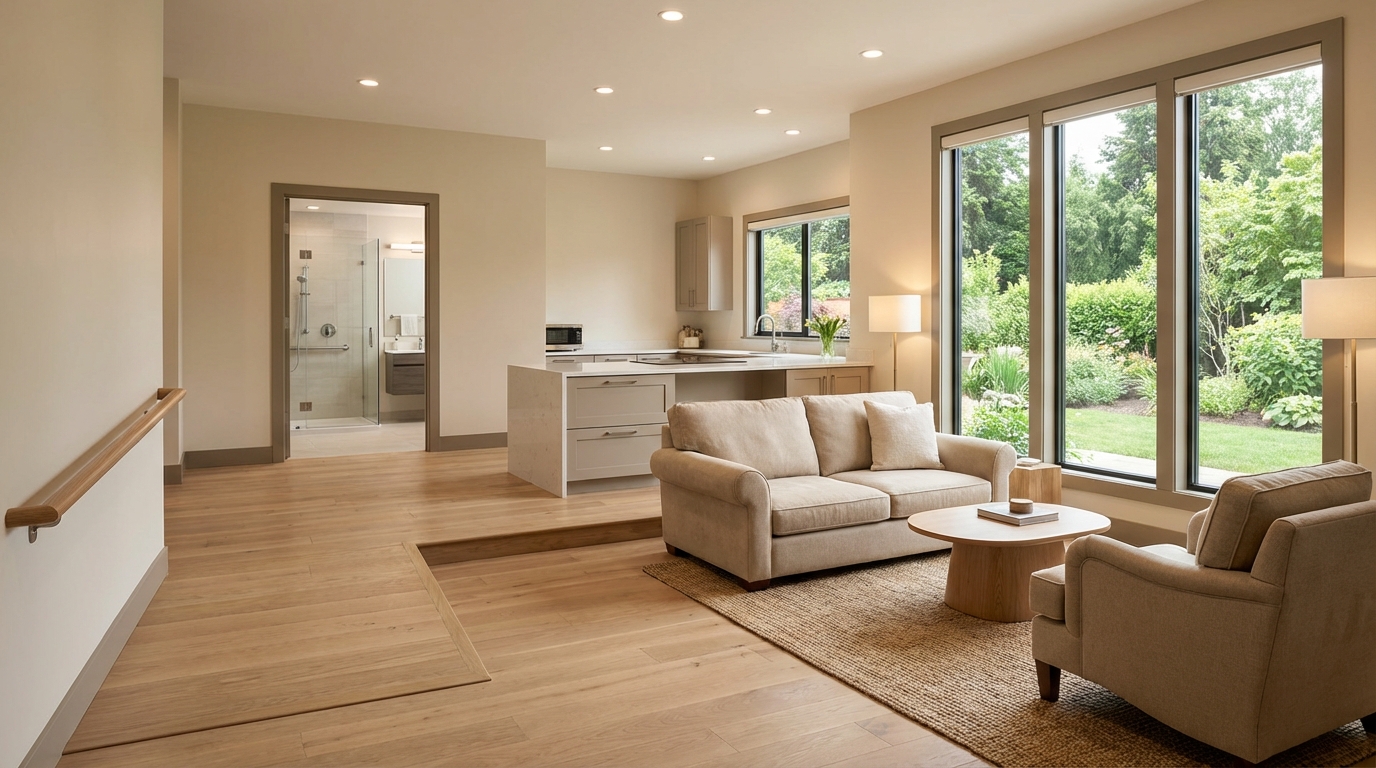
Zero-Entry Showers and Raised Toilet Designs
Curbless showers eliminate dangerous stepping barriers. These modern installations feature adjustable showerheads and fold-out seating for enhanced safety.
Comfort-height toilets with elongated bowls make sitting and standing easier. Mike Foti suggests considering shower screens instead of full enclosures:
“The advantage of a shower screen is you can reach around to turn on the shower or you can move the screen and roll inside.”
Optimizing Bathroom Layouts for Independence
Wheelchair accessibility requires 36-inch-wide doorways and adequate turning space. Roll-under vanities allow users to approach sinks comfortably.
Strategic storage placement keeps essentials within easy reach. According to Zonda’s 2024 report, comprehensive bathroom remodeling can cost up to $40,750 but returns 49% at resale.
| Upgrade Type | Key Features | Estimated Cost | Safety Benefit |
|---|---|---|---|
| Zero-Entry Shower | Adjustable showerhead, fold-out seat | $5,000-$15,000 | Eliminates tripping hazards |
| Comfort-Height Toilet | Elongated bowl, bidet seat | $800-$2,500 | Easier sitting/standing |
| Accessible Vanity | Roll-under design, adjustable mirror | $1,500-$4,000 | Wheelchair accessibility |
| Non-Slip Flooring | LVT with radiant heat | $3,000-$7,000 | Fall prevention |
Kitchen and Living Space Modifications
Your kitchen serves as the heart of daily life, where independence thrives through thoughtful preparation. Mike Foti emphasizes this importance:
“The kitchen is the hub of most families, so it’s important to focus some attention on this room. Being able to cook for yourself as you get older is important.”
Accessible Countertops and Storage Solutions
Adjusting counter heights to 28-30 inches creates a versatile workspace. This range accommodates wheelchair users while remaining functional for standing individuals.
Roll-under sinks and cooktops eliminate cabinet barriers. Pull-out drawers replace deep lower cabinets, bringing contents within easy reach.
Smart storage solutions include pull-down shelving and Lazy Susans. These features reduce stretching and bending during daily tasks.
Enhanced Appliance Safety and Functional Design
Modern appliances offer excellent safety features. Automatic shut-off functions and remote controls provide peace of mind for homeowners.
Relocating microwaves to counter-level positions improves accessibility. Wall ovens with adjacent landing space simplify hot dish transfers.
Lever-style handles throughout the kitchen require minimal grip strength. This small change makes a significant difference in daily usability.
| Modification Type | Key Feature | Benefit | Estimated Cost |
|---|---|---|---|
| Adjustable Countertops | 28-30 inch height range | Wheelchair accessibility | $1,500-$4,000 |
| Roll-Under Sink | Open knee space | Frontal approach | $800-$2,200 |
| Smart Appliances | Auto shut-off | Accident prevention | $300-$1,500 |
| Pull-Out Storage | Full extension drawers | Reduced bending | $200-$600 per cabinet |
| Non-Slip Flooring | Textured surface | Fall prevention | $3-$8 per square foot |
Mobility and Entryway Considerations
Easy movement throughout your home is essential for long-term independence. Thoughtful modifications to entry points and pathways create seamless transitions between spaces. These changes support comfortable navigation for everyone.
Widened Doorways and Hallway Modifications
Proper doorway width is crucial for wheelchair and walker access. The minimum requirement is 36 inches, though 48 inches provides ideal clearance. This extra space makes moving through your house much easier.
Hallways need adequate turning radius for mobility devices. Removing sharp corners improves maneuverability throughout the home. Level floor surfaces prevent tripping hazards between rooms.
Electrical adjustments enhance daily convenience. The Americans with Disabilities Act recommends placing light switches 15 to 48 inches from the floor. Moving outlets higher reduces bending and stretching.
Installing Ramps and Stair Lifts for Improved Access
Ramps offer safe alternatives to stairs at entry points. A covered ramp protects against weather elements year-round. Exterior pathways should match interior accessibility standards.
Multi-story homes benefit from stair lift installations. These devices provide access when relocating bedrooms isn’t practical. They maintain connection between all levels of your living space.
Planning for future mobility needs ensures your home adapts as requirements change. Even if current needs are minimal, considering these modifications during your renovation creates a supportive environment. This forward-thinking approach preserves independence and comfort.
Cost, Planning, and ROI Considerations
Smart financial planning turns home safety upgrades into valuable long-term investments. Understanding costs helps homeowners make informed decisions about their living space improvements.
Budget-Friendly Renovation Strategies
Home modification costs range dramatically based on project scope. Simple upgrades like lever handles or shower benches cost around $300. More comprehensive bathroom remodels can reach $40,000.
Prioritize high-risk areas first for maximum safety impact. Bathrooms and stairways deserve immediate attention. This targeted approach spreads costs over time.
Incremental Upgrades for Enhanced Home Value
Some improvements offer excellent financial returns. Accessible bathrooms provide nearly 50% ROI at resale. Universal design features like wide doorways appeal to future buyers.
Mike Foti recommends specialized contractors:
“Sometimes you have to sell the contractor on using a product or remodeling a certain way and explain why you need it.”
| Option | Average Cost | Key Benefit |
|---|---|---|
| Home Modifications | $3,000-$50,000 | Stay in familiar environment |
| Relocating | $15,000+ (moving fees) | New accessible property |
Research tax deductions and assistance programs. Certified Aging in Place Specialists understand both safety needs and budget constraints. They help avoid unnecessary full remodels when targeted changes suffice.
Conclusion
Preparing your house for the future is a wise investment in your well-being. Thoughtful updates enhance daily living and provide lasting value. Starting these projects early allows for careful planning and budget management.
Focus first on high-priority areas like bathrooms and entryways. Small, strategic changes can prevent the need for rushed, expensive emergency modifications later. Effective design beautifully blends safety features with your home’s aesthetic.
Working with certified professionals ensures solutions tailored to your specific needs. As research from a recent study confirms, such modifications significantly support independence and fall prevention.
The goal is to create an environment where you can thrive for years to come. With proper preparation, your house can remain a source of comfort, safety, and happiness throughout your life.