Best Bathroom Upgrades in 2026 for a Fresh, Functional Space
Remodeling a bathroom in 2026 is about creating a space that’s more practical, efficient, and soothing than ever before. Whether you’re updating a powder room or completely renovating a primary bathroom, the best upgrades combine modern technology, sustainable materials, and classic design choices. Bathrooms remain one of the most popular remodeling projects, with homeowners focusing on upgrades that improve comfort and add lasting value. This guide covers the most effective bathroom upgrades for 2026, supported by real-world examples and industry research.
At a Glance
- Smart Showers and Faucets: Touchless and voice-activated systems are becoming standard in modern bathrooms.
- Heated Floors: Radiant floor heating adds comfort and energy efficiency, especially in colder climates.
- Water-Saving Fixtures: Low-flow toilets and showerheads cut water usage without reducing performance.
- Natural Materials: Stone, wood, and matte porcelain are popular for their durability and appearance.
- Storage Solutions: Built-in niches, floating vanities, and custom cabinetry help maximize space in small bathrooms.
Why Upgrade Your Bathroom in 2026?
Bathrooms have evolved from purely functional spaces into areas for relaxation and self-care. In 2026, homeowners invest in upgrades that improve comfort, reduce environmental impact, and integrate technology. The U.S. Environmental Protection Agency (EPA) reports that water-saving fixtures can cut household water bills by up to 30% each year, making eco-friendly upgrades both practical and cost-effective. A well-designed bathroom can also increase a home’s resale value by up to 5%, according to Zillow’s 2025 Remodeling Impact Report.
For DIYers, 2026 offers more options than ever. Advances in easy-to-install materials like peel-and-stick tiles and pre-assembled vanities let homeowners achieve a high-end look without professional help. Even small changes—such as replacing a mirror or updating lighting—can make a big difference in how a bathroom feels.
Smart Technology: The Core of Modern Bathrooms
Technology has transformed the way we use bathrooms. In 2026, smart features are standard in many homes. Here’s what’s popular:
Smart Showers and Faucets
Smart showers from brands like Moen U by Moen and Kohler Moxie let you control water temperature, flow, and even music with voice commands or a smartphone app. These systems often include:
- Preset temperature settings: Skip the wait for water to warm up—smart showers store your preferred temperature.
- Voice activation: Works with Alexa, Google Assistant, or Apple HomeKit for hands-free control.
- Water tracking: Many smart showers monitor usage and suggest ways to improve efficiency.
Touchless faucets from Delta and Pfister reduce germ spread and water waste. According to the EPA, these faucets can cut water use by up to 30% compared to traditional models.
Smart Mirrors and Lighting
Smart mirrors with LED lighting, Bluetooth speakers, and anti-fog features are now common. The HiMirror Mini, for example, uses sensors to analyze skin and suggest skincare routines. Smart bulbs like Philips Hue let you adjust color temperature—cool white for mornings and warm tones for evenings.
If a full smart mirror isn’t in your budget, a smart plug on your existing mirror’s lighting lets you control brightness and color from your phone.
Heated Floors: A Comfort Upgrade Worth Considering
Heated floors are no longer just for luxury homes. In 2026, DIY-friendly electric radiant floor systems from WarmlyYours or SunTouch make installation straightforward. Here’s why they’re worth the investment:
- Year-round comfort: Warm floors keep feet cozy in winter and prevent cold tiles in summer.
- Energy savings: Radiant heating heats objects directly rather than the air, making it more efficient than forced-air systems.
- Health benefits: Keeps surfaces dry, reducing mold and mildew.
Installing heated floors in a 50-square-foot bathroom typically costs between $600 and $1,500. While the upfront cost is higher than traditional flooring, long-term energy savings and comfort often outweigh the initial expense. The U.S. Department of Energy found that radiant floor heating can cut heating bills by up to 15% in well-insulated homes.
Water-Saving Fixtures: Good for the Planet and Your Wallet
Water conservation is a major focus for 2026 bathrooms. The EPA estimates Americans use about 300 gallons of water daily, with nearly 30% used in the bathroom. Upgrading to efficient fixtures is one of the simplest ways to reduce environmental impact and lower utility bills. Here’s what to look for:
Low-Flow Toilets
Toilets account for nearly 30% of indoor water use. Modern low-flow models like the Toto Drake II use as little as 1.1 gallons per flush (GPF), compared to older toilets that use 3.5 GPF or more. The EPA’s WaterSense program certifies efficient models. Switching to a WaterSense-labeled toilet can save a family of four up to 13,000 gallons of water annually.
Efficient Showerheads
High-efficiency showerheads from brands like Niagara Earth or High Sierra’s 1.5 GPM model deliver a satisfying shower while using less water. These often include:
- Flow restrictors: Limit water to 1.5 to 2.0 GPM without reducing pressure.
- Air infusion: Mixes air into the water for a fuller feel.
- Adjustable settings: Lets you switch between spray patterns.
Replacing old showerheads with WaterSense-labeled models can save the average household 2,700 gallons of water per year, according to the EPA.
Materials That Last and Look Great
The materials you choose affect your bathroom’s durability and style. In 2026, homeowners prefer natural, durable, and low-maintenance options that balance looks with practicality.
Stone and Quartz Surfaces
Stone countertops like marble or granite add timeless elegance. They’re heat- and scratch-resistant but require regular sealing. Quartz is a budget-friendly alternative that doesn’t need sealing and resists stains. A 2025 Houzz report found that 42% of bathroom remodels in the U.S. included stone or quartz countertops.
Moisture-Resistant Wood
Wood adds warmth but can warp in humid bathrooms. Engineered wood, bamboo, or teak resist moisture better. Cork flooring is another sustainable option that’s naturally water-resistant and comfortable underfoot. Reclaimed wood offers a rustic, eco-friendly look.
Porcelain tile with a wood-grain finish provides the look of wood without the moisture risk.
Matte and Textured Finishes
Glossy surfaces show water spots and fingerprints. Matte and textured tiles hide these better. Brands like Floor & Decor and TileBar offer matte porcelain tiles that mimic stone, concrete, or wood.
Making Small Bathrooms Feel Bigger
Smart storage and layout choices can make compact bathrooms feel open and organized. In 2026, homeowners focus on built-in storage, floating vanities, and space-saving fixtures.
Built-In Niches and Shelving
Recessed niches in showers or above bathtubs provide storage without taking up space. Use the same tile as the surrounding walls for a seamless look, or add a mosaic tile border for contrast.
Floating Vanities and Wall-Mounted Toilets
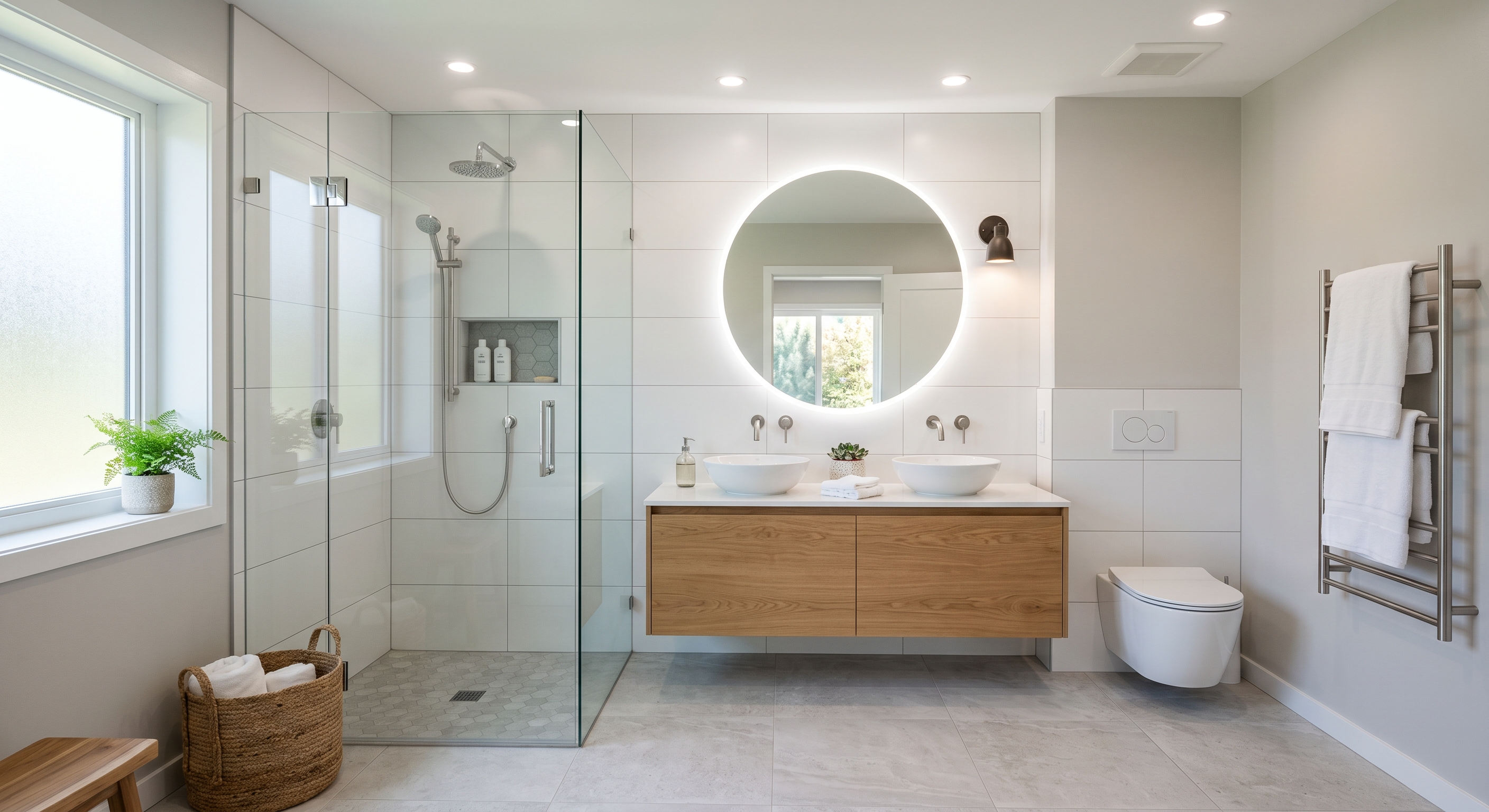
Floating vanities create the illusion of more floor space. Wall-mounted toilets take this further by eliminating the base, making cleaning easier and opening up the room.
If a wall-mounted toilet isn’t an option, a floating vanity with open shelving combines storage and space-saving design.
Custom Storage and Organizers
Custom cabinetry lets you tailor storage to your needs. Pull-out drawers in vanities hold hair tools or cleaning supplies, while tall cabinets store towels and linens. Semi-custom options from IKEA or Home Depot offer pre-assembled vanities with adjustable shelving.
A 2025 NKBA survey found that 68% of bathroom remodels included custom storage solutions.
Lighting: The Key to a Spa-Like Bathroom
Layered lighting is essential for creating a relaxing atmosphere. In 2026, homeowners combine ambient, task, and accent lighting for the best effect.
Layered Lighting Design
Ambient lighting provides overall illumination. Task lighting focuses on specific areas like the vanity or shower. Accent lighting highlights features like mirrors or artwork.
- Ambient lighting: Recessed ceiling lights or a central fixture like a semi-flush mount.
- Task lighting: LED strips under the vanity or sconces on either side of the mirror.
- Accent lighting: Backlit mirrors, wall sconces, or a small chandelier for a touch of luxury.
Avoid harsh overhead lighting in the shower. Waterproof LED fixtures from Broan or Nutone provide a soft glow.
Color Temperature Matters
Bulb color temperature affects the bathroom’s mood:
- 2700K–3000K (Warm White): Cozy and relaxing, ideal for evenings.
- 3500K–4100K (Cool White): Bright and energizing, great for mornings.
- 5000K+ (Daylight): Mimics natural light, perfect for vanity areas.
Dimmer switches let you adjust brightness and color temperature based on the time of day.
Color Trends for 2026
Color sets the tone for your bathroom. In 2026, warm, earthy tones and bold contrasts dominate.
Earthy Tones and Natural Palettes
Shades like terracotta, sage green, and warm beige create a calming, organic feel. These pair well with natural materials like wood and stone. Brands like Sherwin-Williams and Benjamin Moore offer curated bathroom palettes.
Bold Accent Walls
An accent wall in deep navy, emerald green, or bold wallpaper adds personality without overwhelming the space. Peel-and-stick wallpaper from Tempaper or Chasing Paper offers an easy, temporary option.
Use accent colors sparingly—a single wall or small area like behind the toilet is enough to make a statement.
Monochromatic and Minimalist Designs
Monochromatic schemes—like white walls with black fixtures—create a timeless, modern look. Minimalist designs focus on clean lines and uncluttered surfaces, promoting calm and order.
Upgrades for Small Bathrooms
Small bathrooms need smart design choices to stay functional and stylish. In 2026, the focus is on multi-functional fixtures, space-saving storage, and elements that enhance light.
Corner Sinks and Wall-Mounted Toilets
Corner sinks tuck into tight spaces, freeing up floor area. Wall-mounted toilets save space by eliminating the base, making them ideal for powder rooms.
Glass Shower Enclosures
Glass enclosures create the illusion of more space by allowing light to flow freely. Frameless doors look sleek and modern. Semi-framed or framed enclosures are more affordable but still spacious.
Mirrored Medicine Cabinets
Mirrored medicine cabinets provide storage and function as a mirror. Recessed models save space; surface-mounted versions don’t require cutting into walls. Brands like Robern and Kohler offer designs with built-in lighting and outlets.
Light Colors and Large Tiles
Light colors like soft whites, pale grays, or pastels make small bathrooms feel larger. Large-format tiles (12×24 inches or bigger) reduce grout lines, creating a more open feel. A 24×24-inch white tile with minimal grout will make your bathroom feel more spacious than a small mosaic pattern.
Budget-Friendly Bathroom Upgrades
You don’t need a large budget to refresh your bathroom. In 2026, affordable upgrades focus on paint, lighting, and simple fixture swaps.
Paint and Wallpaper
A fresh coat of paint can transform your bathroom. Use moisture-resistant paint from Behr or Sherwin-Williams, designed for humid spaces. Peel-and-stick wallpaper from Walls Republic or Anewall offers a bold look on a single wall or inside a niche.
Repainting a bathroom typically costs between $300 and $750, making it one of the most affordable upgrades.
Lighting Upgrades
Swapping old fixtures for new ones makes a big impact. Replace builder-grade vanity lights with modern sconces or a backlit mirror. LED bulbs last longer and use less energy than incandescent bulbs.
Plug-in LED strips under the vanity or behind the mirror add a subtle glow without replacing fixtures.
Fixture Swaps
Updating cabinet hardware, faucets, or towel bars refreshes your bathroom’s style. Brands like Delta, Moen, and Pfister offer affordable, stylish options that install in under an hour. Switching from brass to matte black fixtures, for example, modernizes the space without a full remodel.
Replacing a bathroom faucet typically costs between $150 and $300 and has a high visual impact.
Organizational Accessories
Adding shelves, hooks, or baskets declutters the bathroom and makes it feel more spacious. Floating shelves above the toilet provide extra storage for towels and toiletries. Magnetic strips inside cabinet doors hold bobby pins or tweezers, freeing up drawer space.
A UCLA study found that cluttered spaces increase stress. Organizing your bathroom improves both its look and your well-being.
High-End Bathroom Upgrades for a Luxury Retreat
If budget isn’t an issue, 2026’s high-end trends focus on luxury materials, cutting-edge technology, and spa-like features. These upgrades create a personal oasis for relaxation.
Freestanding Soaking Tubs
A freestanding soaking tub from Kallista or Kohler becomes the centerpiece of a high-end bathroom. These tubs come in acrylic, cast iron, or stone resin. For extra comfort, consider models with built-in pillows or armrests.
Freestanding tubs range from $2,000 to $10,000, depending on size and material.
Steam Showers
Steam showers combine a steam generator with a glass enclosure for a luxurious, detoxifying experience. Brands like MrSteam and Steamist offer customizable options, including aromatherapy, chromotherapy lighting, and built-in sound systems.
A 2025 Wellness Institute report found that steam showers improve circulation, reduce stress, and ease muscle pain. Installation typically costs between $3,000 and $15,000, depending on features.
Heated Towel Racks
Heated towel racks from Amba or Warmrails add simple luxury. These racks can be hardwired or plugged in and come in various finishes. Stepping out of the shower into a warm towel is a small indulgence with big appeal.
Heated towel racks cost between $200 and $600.
Custom Tile Work
Custom tile work—such as mosaic floors, decorative backsplashes, or tile murals—creates a unique bathroom. Brands like Daltile and Marazzi offer styles from hand-painted tiles to 3D designs. While expensive (ranging from $15 to $100 per square foot), custom tile ensures a one-of-a-kind look.
Common Mistakes to Avoid During a Bathroom Remodel
Even the best plans can go wrong without careful preparation. Avoid these mistakes to keep your project on track and within budget:
Skipping the Planning Phase
Impulse purchases and rushed decisions often lead to regrets. Before starting, create a detailed plan with:
- A layout with bathroom measurements.
- A list of materials, fixtures, and finishes.
- A realistic budget and timeline.
- Permits, if required by local codes.
Use a 3D design tool like SketchUp or RoomSketcher to visualize the bathroom before demo. Many tools are free and easy to use.
Ignoring Ventilation
Poor ventilation leads to mold, mildew, and peeling paint. In 2026, homeowners prioritize upgrades that improve airflow:
- Exhaust fans: Choose a model with a high CFM rating—at least 1 CFM per square foot of bathroom space.
- Windows: Adding a window or skylight improves natural ventilation.
- Dehumidifiers: Help control moisture in bathrooms without windows.
The EPA recommends running your exhaust fan for at least 20 minutes after showering to remove moisture.
Neglecting Lighting
Relying solely on overhead lighting creates harsh shadows and unflattering illumination. Combine:
- Ambient lighting: For overall illumination.
- Task lighting: Around the vanity and mirror.
- Accent lighting: To highlight features or artwork.
Dimmer switches let you adjust lighting based on the time of day or mood.
Choosing the Wrong Materials
Not all materials suit bathroom environments. Avoid:
- Solid wood: Unless treated for moisture resistance, it can warp or rot.
- Wallpaper: Unless designed for bathrooms, it can peel or bubble.
- Cheap caulk: Can crack and let water seep into walls or floors, causing mold and damage.
Instead, choose moisture-resistant materials like porcelain tile, quartz countertops, and mold-resistant drywall.
Overlooking Accessibility
Universal design ensures your bathroom works for everyone. In 2026, accessible upgrades are increasingly popular:
- Grab bars: Install near the toilet and shower for safety.
- Curbless showers: Walk-in showers with a slight slope to the drain prevent tripping.
- Adjustable showerheads: Let users customize the experience.
The Americans with Disabilities Act (ADA) provides guidelines, but even small changes improve usability.
How to Choose the Best Upgrades for Your Bathroom
With so many options, it’s important to focus on what matters most for your space, budget, and lifestyle. Here’s how to prioritize:
Step 1: Evaluate Your Layout
Measure your bathroom and sketch a rough layout. Note any structural limits like plumbing or electrical constraints. For small spaces, focus on space-saving upgrades like floating vanities, glass shower enclosures, or recessed storage.
Step 2: Set a Realistic Budget
Bathroom remodels in 2026 average between $10,000 and $30,000, depending on scope. Break down your budget:
- Fixtures and finishes: 40–50% of the budget.
- Labor: 20–30% (unless DIYing).
- Plumbing and electrical: 10–15% (if needed).
- Contingency: 10% for unexpected costs.
Prioritize upgrades with the best return on investment. A mid-range bathroom remodel typically recoups about 60% of its cost at resale, according to Remodeling Magazine’s 2025 Cost vs. Value Report.
Step 3: Focus on Functionality First
Ask yourself:
- Is the layout efficient for daily use?
- Are storage solutions adequate?
- Is lighting sufficient for grooming?
- Is ventilation enough to prevent mold?
Address any shortcomings before cosmetic upgrades.
Step 4: Match Upgrades to Your Lifestyle
Your bathroom should suit how you use it:
- Busy households: Choose durable materials, easy-to-clean surfaces, and ample storage.
- Luxury seekers: Invest in high-end fixtures, heated floors, and smart tech.
- Eco-conscious homeowners: Focus on water-saving fixtures, sustainable materials, and energy-efficient lighting.
Step 5: Plan for the Future
Choose timeless materials and flexible designs that adapt over time. Neutral colors, durable finishes, and accessible features like curbless showers make your bathroom future-proof.
DIY vs. Hiring a Pro: What’s Right for You?
Deciding between DIY and professional help depends on your skills, budget, and project complexity.
DIY-Friendly Upgrades
If you’re comfortable with basic tools, these projects are manageable:
- Painting and wallpaper: Simple with proper prep and materials.
- Fixture swaps: Replacing faucets, showerheads, or cabinet hardware is straightforward.
- Lighting upgrades: Installing new fixtures or LED strips is a good DIY project.
- Peel-and-stick tiles: Update floors or backsplashes without messy adhesives.
- Organization: Add shelves, hooks, or baskets to refresh the space.
Always turn off the water supply before replacing fixtures to prevent leaks.
Upgrades Best Left to Professionals
Some projects require specialized skills or permits:
- Plumbing and electrical work: Moving pipes or wiring needs a licensed pro for safety and code compliance.
- Tile installation: Properly tiling wet areas like showers requires precision to avoid water damage.
- Structural changes: Removing walls or relocating plumbing may need permits.
- Heated floors: DIY kits exist, but professional installation ensures best results.
If unsure, get a professional quote. Sometimes, hiring an expert upfront saves money by avoiding mistakes.
Top Bathroom Upgrades for Resale Value in 2026
If you’re remodeling to sell, focus on upgrades that appeal to a broad audience. Bathrooms are a top priority for buyers, especially in competitive markets. Here are the upgrades with the best ROI in 2026:
Neutral Color Palettes
Bold colors reflect personal style but limit appeal. Neutral tones like soft gray, warm beige, or crisp white let buyers envision their own decor. Zillow found that homes with neutral bathroom tones sold 7% faster and for 2% more than those with bold or personalized schemes.
Updated Fixtures and Finishes
Modern fixtures and finishes improve a bathroom’s appeal:
- Faucets and showerheads: Brushed nickel, matte black, or polished chrome finishes are timeless.
- Cabinet hardware: Replace dated knobs or pulls with sleek options.
- Vanity countertops: Quartz or granite adds luxury without a high cost.
Updating fixtures in a mid-range bathroom typically costs $1,500 to $3,000, with a potential ROI of 80–100% at resale.
Water-Saving Fixtures
Eco-friendly upgrades appeal to modern buyers. WaterSense-labeled toilets and showerheads save water and reduce bills. The EPA reports homes with these fixtures sell for 4% more on average.
Good Lighting
Proper lighting is essential for grooming and sets the bathroom’s mood:
- Layered lighting: Combine ambient, task, and accent lighting.
- LED bulbs: Last longer and use less energy.
- Natural light: Maximize with larger windows or skylights.
Dimmer switches let buyers adjust lighting to their preferences.
Ample Storage
Buyers prioritize storage:
- Floating vanities: Create the illusion of more space.
- Built-in niches: Add shelves in the shower or above the toilet.
- Custom cabinetry: Use pull-out drawers and organizers.
The NKBA found that 72% of homebuyers prioritize storage in bathroom layouts.
Final Thoughts: Design a Bathroom That Works for You
Remodeling your bathroom in 2026 is about creating a space that fits your daily life and reflects your style. Whether you’re upgrading for comfort, sustainability, or resale value, focus on functionality and choose materials that last.
Start by assessing your bathroom’s layout and setting a realistic budget. Prioritize upgrades that improve efficiency, like water-saving fixtures or heated floors. Don’t overlook lighting and storage—they make a big difference in how a bathroom feels.
If you’re unsure about a project, consult a professional to ensure it’s done safely and correctly.
Your bathroom should be a place to relax, refresh, and recharge. By combining smart technology, sustainable materials, and timeless design, you can create a bathroom that’s both beautiful and functional for years to come.
For more inspiration, see kitchen remodeling trends or learn about energy-efficient home improvements to maximize your remodel’s impact.