Does your morning routine feel like a battle against chaos? Many people struggle with storage areas that don’t work well. Hanging rods overflow with clothes. Shelves become black holes for forgotten items. Finding what you need can be frustrating.
The good news is that creating a functional storage area doesn’t require a huge investment. You can achieve amazing results with smart planning and the right products. This approach works for any budget level.
Whether you have a small reach-in area or a spacious walk-in room, there are accessible solutions. You can transform any space into an efficient storage system. The benefits go beyond just neatness.
A well-planned area saves precious time during busy mornings. It reduces daily stress and can even help your clothes last longer. Proper storage protects your favorite items from damage.
This guide will show you practical steps for any project. We cover everything from simple do-it-yourself approaches to more complete installations. You’ll discover how to make the most of your available room.
Key Takeaways
- Effective storage solutions are achievable at any price point.
- Smart planning can transform even small areas into highly functional spaces.
- A well-designed system saves time and reduces daily stress.
- Proper storage methods can extend the life of your clothing and accessories.
- Solutions range from simple DIY projects to comprehensive installations.
- Maximizing vertical space is key to creating efficient storage.
- The transformation process involves assessment, planning, and implementation.
Understanding Your Closet’s Potential
The foundation of any successful storage makeover begins with a clear-eyed assessment of your current situation. Before spending money on new components, take time to understand what you’re really working with.
Assess What Works and What Doesn’t
Start by creating a simple list of what functions well versus what causes daily frustration. Maybe your hanging space works perfectly, but you lack proper shelving for folded items. Perhaps your current setup doesn’t accommodate your actual wardrobe composition.
Consider this real scenario: homeowners inherited a shoe shelving system in their walk-in closet. Since they stored shoes elsewhere, these shelves became junk collectors. The shelves weren’t deep enough for clothing, and a dresser blocked access to hanging rods. This mismatch caused three years of daily annoyance.
Look for signs of dysfunction like clothing piles on the floor or accessories that disappear. The key is personalization—what worked for previous owners might not serve your needs.
Visualizing a Functional Design
Think about your daily routine and how you want your space to function. Do you need quick access to work clothes? Should jewelry be visible rather than hidden? This visualization process helps create a system that genuinely supports your lifestyle.
A great idea is to sketch a basic layout or take photos of your current setup. Consider how different arrangements could improve flow and accessibility. The goal isn’t magazine-perfection but creating a space that makes getting dressed easier and more enjoyable.
This thoughtful approach ensures your final design serves you well for years to come.
Establishing a Budget-Friendly Plan
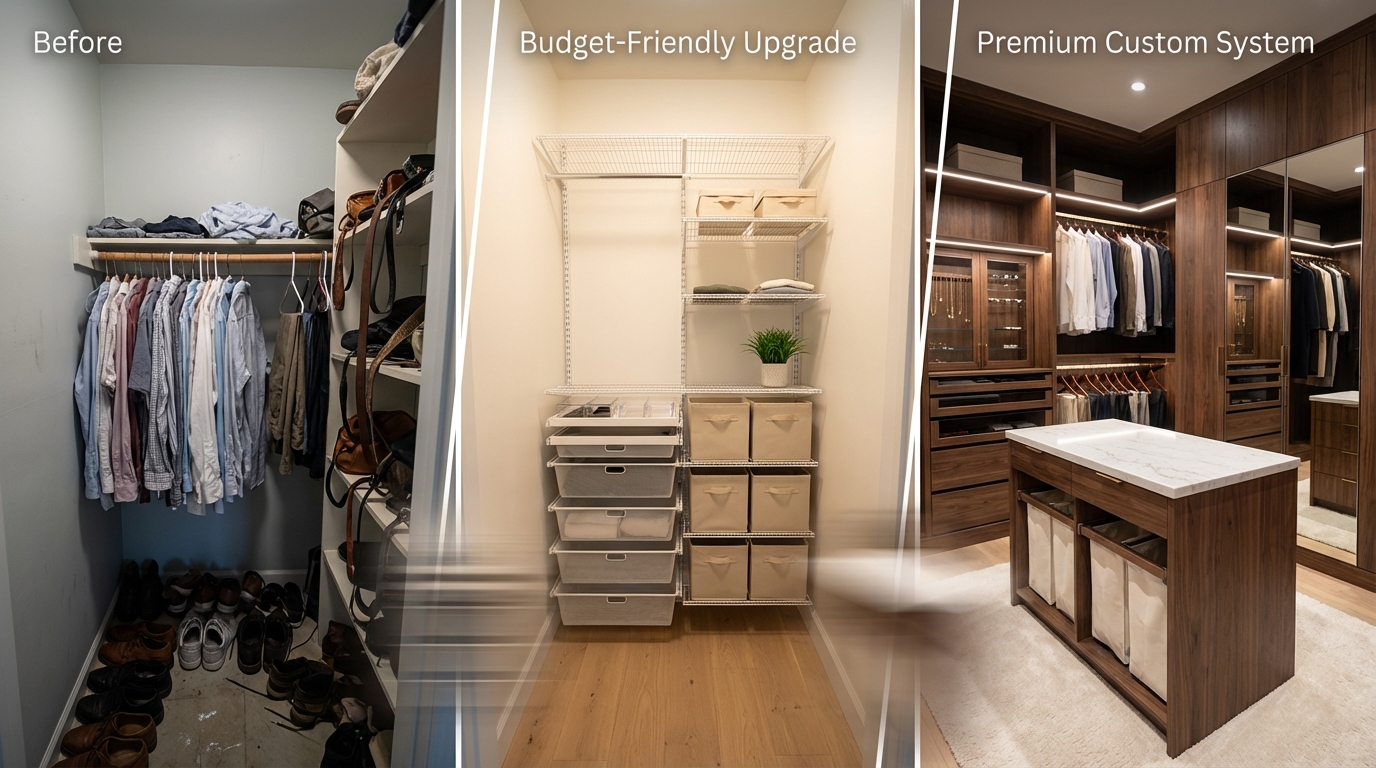
You can achieve remarkable results without spending a fortune on complete renovations. Many homeowners worry that improving their storage area requires thousands of dollars. However, strategic thinking can deliver impressive changes at any price point.
The featured homeowner provides a perfect example. They knew a full renovation would be too costly. Instead, they found smart ways to update their walk-in area while keeping costs manageable.
Prioritizing Essential Upgrades
Start by identifying what truly needs improvement versus what already functions well. This approach can reduce expenses by 50-70% while still creating a transformed space. Focus your budget on areas that impact daily functionality the most.
Create a tiered plan with “must-have” improvements first. Essential additions like proper drawer space should come before decorative enhancements. The homeowner kept their double hanging rod system since it worked perfectly.
They redirected funds to replace non-functional shoe shelves and find alternatives to space-blocking furniture. Sometimes the most budget-friendly way involves relocating items rather than replacing them entirely. This thoughtful step of updating ensures every dollar makes a meaningful difference.
Repurposing existing components in new configurations can also save significant money. This makes storage transformation accessible regardless of financial constraints.
Measuring and Mapping Your Space
The tape measure becomes your most valuable tool when redesigning any storage area. Accurate measurements prevent expensive mistakes like buying shelving that doesn’t fit your walls. They also help you calculate exactly how many components you’ll need.
Accurate Measurements for Efficiency
Start by measuring from floor to ceiling, not just to existing shelves. Account for baseboards and trim when measuring wall width. Don’t forget to consider door swing clearance for depth measurements.
One homeowner discovered their walk-in closet had five walls, creating a hexagonal shape. This unusual room required creative planning beyond standard rectangular designs. They focused on measuring specific problem areas identified earlier.
Mapping your space on graph paper or using free online design tools helps visualize the final layout. This step shows how new components will fit before making purchases. It’s especially helpful for complex spaces.
When planning bracket systems, measure from ceiling to baseboard. Components need to sit flat against the wall surface. Also identify stud locations for safely mounting heavy shelving.
Note existing features like electrical outlets and light fixtures on your measurement map. These details affect where you can place storage components. A thorough plan accounts for all space realities before shopping.
Selecting the Right Closet System Components
Your storage area’s transformation hinges on selecting components that match your specific needs and lifestyle. The right choices create a functional space that grows with you.
Evaluating Shelving, Drawers, and Hanging Options
Different materials offer unique advantages for your storage solution. Wire systems provide excellent air circulation and affordability. Solid shelving delivers a polished appearance but costs more.
Consider how you use your space daily. Do you need deep drawers for sweaters? Would adjustable shelving work better than fixed options?
| Material Type | Best For | Cost Range | Durability |
|---|---|---|---|
| Wire Shelving | Budget projects, air circulation | $ | Good |
| Laminate | Mid-range, clean appearance | $$ | Very Good |
| Solid Wood | High-end, custom looks | $$$ | Excellent |
Considering Modular Systems and DIY Alternatives
Modular systems like ClosetMaid’s ShelfTrack offer incredible flexibility. These bracket-based solutions let you rearrange components without new wall holes.
“Working with a modular designer helped me visualize the perfect layout before purchasing anything.”
Many companies provide design services based on your measurements. You receive professional plans for DIY installation. This approach combines expert guidance with hands-on control.
Sticking with one brand ensures component compatibility. It also creates a unified aesthetic throughout your space. Your investment works together seamlessly.
Action Steps for a Successful Closet Organization Upgrade
Before making any purchases, take a systematic approach to evaluate your current storage situation with a straightforward assessment tool. This simple exercise transforms vague frustrations into a clear roadmap for improvement.
Creating a “Working vs. Not Working” List
Grab a piece of paper and fold it in half vertically. On the left side, list everything that functions well in your space. The right side should document all the problematic aspects.
This action step helps you see your storage area objectively. One homeowner discovered their double hanging rods worked perfectly in their walk-in closet. However, inherited shoe shelving served no purpose for their lifestyle.
Evaluate each “not working” item carefully. Ask yourself if it needs replacement or can be removed entirely. This prevents impulse purchases that don’t solve your specific challenges.
| Working Well | Not Working | Recommended Action |
|---|---|---|
| Double hanging rods | Shoe storage unit | Remove entirely |
| Adequate dress space | Dresser blocking access | Relocate or replace |
| Good lighting | No sweater storage | Add drawer solution |
| Easy reach items | Inaccessible accessories | Install visible racks |
Your completed list becomes the foundation for all subsequent decisions. Refer back to it when shopping to ensure your upgrade addresses real needs. This systematic evaluation keeps things organized throughout the planning process.
The step updating your space begins with this honest inventory. It saves money and ensures your transformation improves daily functionality significantly.
Implementing Custom Closet Design Ideas
Professional designers reveal how creative thinking can transform basic storage into personalized spaces that truly work for you. Design expert Galeana Younger created a brilliant “cloffice” concept for her mother. This hybrid space combines clothing storage with office functionality.
The design included dedicated cabinets for specific items. One held sweaters, another accommodated long dresses and coats. Additional space stored pens, notepads, and even concealed laundry machines.
Ethan Greenfeld brings boutique elegance to storage areas. He installed motion sensor lights that create a luxurious shopping experience. His approach maximizes vertical space with linen-textured cabinetry reaching near the ceiling.
Christine Vroom recommends practical yet stylish solutions. Tiered shelving organizes shoes efficiently. Matching storage boxes provide a clean, unified appearance throughout the space.
These organization ideas prove that custom design doesn’t mean sterile efficiency. Designers often incorporate statement shelves or artistic displays. This adds personality while maintaining functionality.
| Designer | Signature Approach | Key Benefits |
|---|---|---|
| Galeana Younger | Multi-functional hybrid spaces | Maximizes utility in limited areas |
| Ethan Greenfeld | Boutique-style lighting & texture | Creates enjoyable daily experience |
| Christine Vroom | Tiered systems & unified storage | Combines efficiency with aesthetics |
You don’t need to hire a professional designer to apply these principles. Many custom closet organization concepts work well in DIY projects. The key is thoughtful planning that reflects your specific needs.
“Working with height and lighting transforms ordinary storage into something special.”
This design system approach ensures every element serves a purpose. Your space becomes both highly functional and personally meaningful.
Strategic Use of Wall Space and Shelving
Looking upward reveals the most overlooked opportunity in most storage spaces. The area near the ceiling often sits empty, offering significant potential. Using this vertical space effectively can double your usable area.
Utilizing Vertical Storage
Designer Arianne Bellizaire champions this approach. She uses tall, shallow racks to maximize space in smaller areas. This keeps the arrangement efficient without feeling cramped.
The key is to avoid stuffing the area too full. If things start to feel cluttered, it’s a sign to edit your belongings. Store seasonal items or luggage on higher shelves. Keep everyday items within easy reach.
Installing Adjustable Wire Shelving
Traditional fixed shelving can be a hassle. Removing it often leaves many screw holes needing repair. Modern bracket systems offer a better solution.
Products like the ShelfTrack system use adjustable brackets. You can rearrange them without creating new wall holes every time. This provides fantastic flexibility for future changes.
For a secure installation, always locate wall studs first. Use appropriate anchors for drywall sections. A level installation ensures everything functions properly.
| System Type | Installation | Flexibility |
|---|---|---|
| Traditional Fixed Shelving | Many screws/nails, wall damage | Low – difficult to change |
| Modern Bracket System | Few holes, easy to adjust | High – simple rearranging |
Integrating Designer Tips and Inspiration
Designer expertise can take your home storage project from functional to exceptional. Many modular companies offer complimentary design consultations that provide professional insights without the full cost of hiring a designer.
Working with Professional Designers
These services typically involve submitting photos and measurements. You receive customized layout plans tailored to your specific needs. This approach combines professional guidance with hands-on installation control.
Designers think differently about storage challenges. They consider workflow, frequency of use, and visual aesthetics simultaneously. This holistic approach creates spaces that work better long-term.
Designer Becky Shea created organized flow by separating spouses’ clothing areas. She also designed a dedicated changing space away from storage zones. This prevents morning traffic jams in shared spaces.
Elizabeth Georgantas chose open shelving instead of closed cabinets. This decision makes everything easily accessible while maintaining a put-together appearance. Visible storage encourages maintenance accountability.
Even if you don’t hire a professional, studying designer principles can inform your planning. Understanding why designers make certain choices helps you create more sophisticated results. Their organization ideas can transform how you approach your space.
“Working with a modular designer helped me visualize the perfect layout before purchasing anything.”
These professional insights ensure your final design serves both practical and aesthetic needs beautifully.
Creative Storage Solutions for Every Need
Specialized storage solutions can transform how you interact with your wardrobe daily. Moving beyond basic rods and shelves opens up exciting possibilities for your space.
Innovative Ideas for Shoes, Clothes, and Accessories
Slanted shoe shelves create a boutique-style display for your footwear collection. As one homeowner noted, “who doesn’t want to display all of their pretty shoes?” These angled shelves make every pair visible and accessible.
Tiered shelving maximizes vertical space efficiently. You can store more shoes while keeping each pair easy to grab. This approach works wonderfully for frequently worn items.
For accessories like belts, hats, and bags, consider vertical racks or accordion peg systems. Designer Grace Mitchell uses similar solutions for ribbons, but they work perfectly for neckties and scarves too. Keeping these items visible prevents tangling and loss.
Wire basket systems that slide out like drawers offer contained yet accessible storage. They’re ideal for undergarments, socks, or seasonal clothes. Matching storage boxes create a clean, unified appearance throughout your area.
The key principle is category-based grouping. Store all shoes together, all bags in another zone, and folded clothes by type. This system dramatically reduces search time and helps keep things orderly.
Tailor your solutions to your actual wardrobe composition. Extensive shoe collections benefit from specialized shelves, while accessory lovers should prioritize different organizational tools.
Enhancing Functionality with Built-In Accessories
Beyond the main components, built-in accessories bring smart functionality that transforms how you use your space daily. These finishing touches turn basic storage into a truly efficient dressing area.
Adding Mirrors, Baskets, and Unique Racks
A full-length mirror inside your closet creates a one-stop dressing station. One homeowner moved their tall mirror along the wall where long hanging items previously hung. This simple change made the mirror part of the functional space.
Quality drawer systems with metal glides make accessing your items effortless. The smooth operation represents the difference between budget pieces and quality investments worth making. Wall-mounted components keep the floor clear for easy cleaning.
Designer Laura K. Sullivan installed a hanging rod directly over laundry machines. This allows clothes to come out immediately before wrinkles set in. There’s enough room between the rod and machine tops for baskets to transport clothes.
For growing families needing innovative storage solutions, consider glass-top islands for jewelry display. LG Studio Stylers with mirrored fronts refresh clothes between wears while saving space. Motion-sensor lights add convenience to your daily routine.
Wire or woven baskets that pull out like drawers provide flexible storage for various pieces. They maintain visibility and air circulation for everything from hanging clothes to accessories. Each thoughtfully selected accessory serves a specific purpose beyond mere decor.
Tips for a Smooth DIY Installation Process
The weekend installation proved that proper planning makes all the difference when putting together a new storage solution. Homeowners completed their entire project from start to finish over a single weekend, finishing by Sunday night.
Tools and Techniques for Quick Setup
You only need basic tools for most installations. A screwdriver, drill, level, stud finder, and measuring tape cover the essentials. These modest tools help you save time and effort.
Start by emptying everything from the space, including clothes and your dresser. Remove old shelving and patch holes with drywall filler. While the filler dries, take down components you’re keeping to paint the walls.
| Essential Tool | Primary Purpose | Time-Saving Tip |
|---|---|---|
| Power Drill | Fast screw installation | Pre-drill holes to prevent cracking |
| Level | Ensure straight installation | Check each piece before final tightening |
| Stud Finder | Locate secure mounting points | Mark stud locations before starting |
| Measuring Tape | Accurate component placement | Measure twice, install once |
Once paint dries, reinstall your closet system components. Work with a partner where one person builds while another assists. This teamwork approach significantly speeds up the process.
Modern systems include detailed instructions and video tutorials. These resources make the put together process accessible for DIYers. Following the proper sequence prevents backtracking and saves valuable time.
For larger projects, consider cost-effective strategies for large-scale renovations to maximize your investment. Keep your dresser functional until new drawer systems are ready to avoid disruption.
Incorporating Decorative and Practical Elements
Beyond pure functionality, decorative elements can transform your storage area into a personal sanctuary. The right touches make the space feel like an intentional part of your home rather than just a utility zone.
Paint offers the most dramatic transformation. One homeowner extended their bedroom’s lilac hue into their storage space. This created visual continuity throughout the room. Fresh paint on the walls provides a clean backdrop that makes your clothing look even better.
Consider removing doors when your interior system becomes attractive enough to display. This open concept encourages maintenance since everything remains visible. It turns your storage area into a showcase.
Designer touches elevate the experience dramatically. Matching hangers create visual harmony throughout the space. Organizing clothing by color within categories produces a beautiful rainbow effect.
Practical decor serves dual purposes. Lining wire drawers protects delicate items while adding a finished look. Small decorative pieces on shelves inject personality without compromising function.
Every choice should enhance rather than hinder your system. The goal is creating a space that feels both beautiful and efficient. For more inspiration, explore master closet designs that balance aesthetics with smart storage solutions.
Your dresser and other furniture should complement the new aesthetic. The final result should feel like a natural extension of your home’s style. This approach transforms daily routines into enjoyable experiences.
Conclusion
Your journey to a more functional home space begins with understanding that transformation happens in stages. Whether you start with simple drawer dividers or plan a complete system installation, every step brings you closer to a space that works for you.
Remember the key steps: assess what functions well, measure carefully, and choose components that match your actual needs. The goal isn’t magazine-perfection but creating an area that reduces daily stress.
Your walk-in closet improvement doesn’t need to happen all at once. Tackling one wall or category at a time makes the process manageable and budget-friendly. Modular systems allow for future adjustments as your needs evolve.
The most successful projects are those tailored to your specific wardrobe and routine. You now have the knowledge to create an efficient area that makes getting dressed genuinely enjoyable.
Your personalized approach will transform frustration into daily satisfaction, creating a home space that truly serves you for years to come.