Front Door Replacement: Cost, Security and Style
Author: Ryan Review by Home Remodel Guidance Editorial Team Review date First published Last updated Category: Home Upgrade Tips
A front door replacement is one of the better-returning exterior projects: in the 2025 Cost vs. Value report, a steel entry door averaged $2,435 and recouped 216.4% at resale. It improves energy performance if you buy a door rated for your climate, and security if the frame, lock and installation are as strong as the slab. Size, glass and garage-door rules come from local code.
Part of the series: Upgrading Your Home for Energy Efficiency: Where to Start
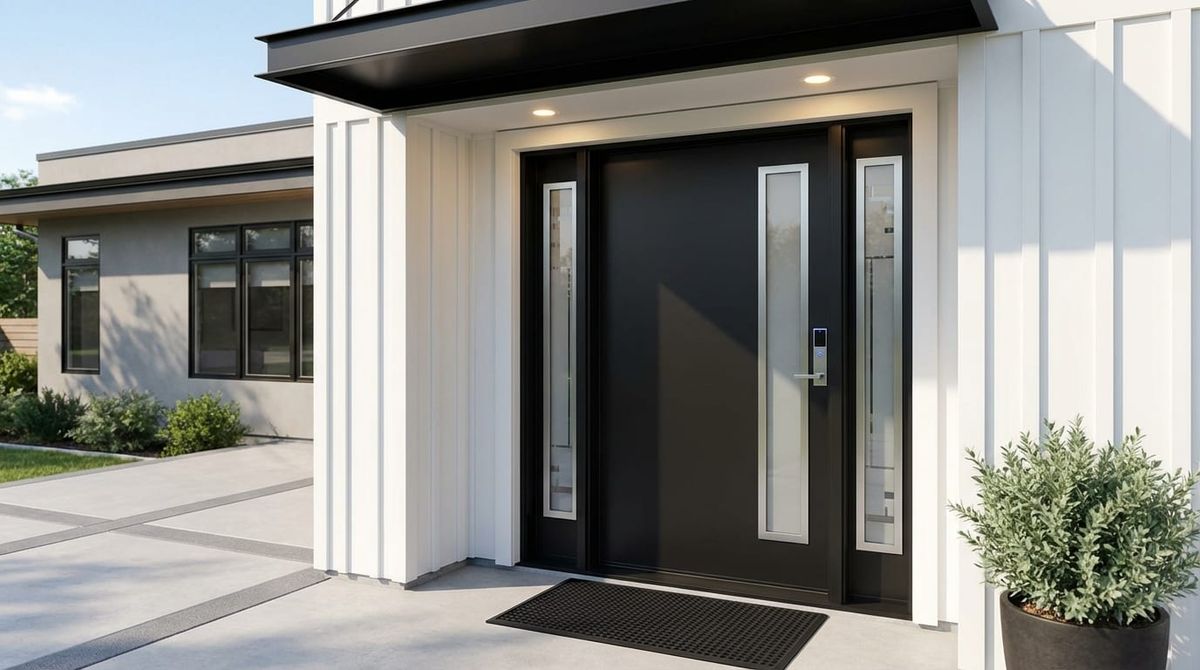
A front door replacement pays off when you pick a door rated for your climate, make the frame and lock as strong as the slab, and install it so water cannot get behind it. It is also an exterior upgrade that appears in our guide to upgrading your home for energy efficiency, because an old door can be drafty.
Rules about doors, permits and lead paint vary by location and house age. Confirm them with your building department, and hire a licensed pro for any structural change.
Does a new front door pay off at resale?
In national data, a simple replacement does. The 2025 Cost vs. Value report from Zonda lists a steel entry door replacement at a national average job cost of $2,435 and a resale value of $5,270, which is 216.4% of cost recouped. Its Grand Entrance fiberglass project, a larger entry package, averaged $11,754 in cost and $9,959 in resale value, or 84.7%.
The report’s steel project is specific: it removes the existing 3-0 by 6-8 entry door and jambs and installs a 20-gauge steel unit with a clear, dual-pane half-glass panel, an aluminum threshold with composite stop, exterior brick-mold, interior casings and a new lockset. Cost vs. Value estimates what appraisers and agents say a project adds, not what a given buyer will pay, so use it for budget context. If you also have a garage door that needs replacing, the same report shows a national job cost of $4,672 and a resale value of $12,507; see upgrading your garage door.
Which door material and style should you choose?
Choose by climate rating, glass, maintenance and look, in that order. The Cost vs. Value report tracks steel and fiberglass, but no national source ranks materials for every home. Compare these points across any door you consider:
- Energy ratings. ENERGY STAR says door criteria depend on how much glass the door has and on ratings certified by the National Fenestration Rating Council (NFRC). Check the label for your climate zone.
- Glass. More glass means more light and usually more heat transfer, and sidelights near the lock raise security questions (see below).
- Finish and maintenance. Ask the maker what finish the door needs, how often, and which paints or stains keep the warranty.
- Warranty and installation requirements. Many warranties require installation as specified; ask for it in writing.
- Fit with the house. Match the door to the style of the home, and see our guides to low-cost curb appeal improvements and exterior paint colors that boost curb appeal for the surrounding palette.
Will a new front door save energy?
A little, and mostly through less air leakage. ENERGY STAR notes that many doors have no glass, and even glass-heavy doors have lower glass-to-frame ratios than windows, so doors can provide more insulation than a window can. A tight, well-insulated door still represents a small share of the whole-house load, so do air sealing and attic insulation first. See home insulation upgrades that pay for themselves.
Weatherstripping is a cheaper first step if the door itself is sound. The Department of Energy lists weatherstripping doors and windows among the standard fixes after you find air leaks. If you do replace the door, an ENERGY STAR certified model for your climate zone is a reasonable choice. For the ENERGY STAR approach to windows, see when to replace your windows.
The federal credit that once paid for exterior doors is gone. The IRS page for the Energy Efficient Home Improvement Credit limited doors to $250 each and $500 total and covered improvements made through December 31, 2025. The IRS says the credit is not allowed for property placed in service after that date.
Does a new door make your home more secure?
It can, when the frame, hinges, strike plate and lock are as strong as the slab. In the FBI’s 2019 data, 55.7 percent of burglaries involved forcible entry, 37.8 percent were unlawful entries with no force and 6.5 percent were attempted forcible entries. Those are national burglary figures, not door-specific ones, but they show why a strong entry matters and why habits like locking up matter too.
Practical steps:
- Choose certified hardware. The Builders Hardware Manufacturers Association (BHMA) certifies residential deadbolts under ANSI/BHMA A156.40 and locksets under A156.39. Products get A, B or C ratings for security, durability and finish, with A the best.
- Anchor the hardware. Ask the installer to fasten the strike plate and hinges into the framing, using the screw lengths the hardware maker specifies.
- Watch the glass. If a sidelight or glass panel sits within reach of the lock, ask the manufacturer about laminated or reinforced glazing and lock placement.
- Light and visibility. Outdoor lighting and a doorbell camera are common additions; see modern home security upgrades, smart doorbells and outdoor lighting for safety.
If you add a smart lock, follow CISA’s advice for connected devices: change default passwords, secure your Wi-Fi router, update software and enable multi-factor authentication on the account.
What do codes say about size, egress and garage doors?
Codes cover door size, the exit path and the door between a garage and the house. These come from the International Residential Code (IRC), which states and cities adopt with changes, so confirm with your building department.
- Egress size. The IRC requires at least one exterior egress door per dwelling unit, with a clear width of at least 32 inches and a height of at least 78 inches. A North Carolina State Fire Marshal interpretation of R311.2 adds that other exterior egress doors must meet the 78-inch height but not the width minimum.
- Garage-to-house door. Section R302.5.1 says openings from a private garage directly into a room used for sleeping are not permitted, and other openings must have solid wood doors at least 1-3/8 inches thick, solid or honeycomb-core steel doors at least 1-3/8 inches thick, or 20-minute fire-rated doors. This text is quoted from an Indiana state interpretation of its adopted 2020 code.
- Glass in doors. Ask whether the door’s glass must be safety glazing where you live.
- Changing the opening. A wider door or new sidelights may require a new header and a permit; hire a licensed contractor, and an engineer if the wall is load-bearing.
Can you replace a front door yourself?
Sometimes. A prehung door of the same size in a sound opening is within reach of a confident DIYer with a helper, but doors are heavy and mistakes let water into the wall. Hire a professional when the frame or sill is rotted, the opening changes, you are adding sidelights, or the house is older and the trim is painted.
On lead: EPA says approximately three-quarters of U.S. homes built before 1978 still contain some lead-based paint, and that old paint on surfaces like doors and window sills can produce dangerous chips and dust. EPA’s RRP rule generally does not apply to homeowners working in their own pre-1978 home, but it does apply to landlords, childcare operators and house flippers; EPA says DIYers should still use lead-safe work practices.
What does a typical installation involve?
Follow the door manufacturer’s instructions, which govern the warranty. In outline:
- Measure the rough opening and order the right size, swing and jamb depth.
- Remove the old door, trim and frame, and check the sill and framing for rot or water damage. Repair it first.
- Set the new unit so it is level, plumb and square, shimming at the hinges and lock points.
- Fasten it as specified, then fill the gaps with insulation approved by the door maker.
- Flash and seal the exterior so water drains out, not in.
- Install the lockset and strike plate, adjust the weatherstripping and finish as directed.
How do you prepare for installation day?
Plan for an open doorway for several hours, and watch the weather. A few steps make the day go smoothly:
- Confirm delivery of the correct door, swing, hardware and trim before the installer arrives.
- Clear the entry, and move vehicles and valuables away from the work area.
- Choose a dry day if you can, because the opening is exposed while the old door is out.
- Ask how the house will be secured overnight if the job is not finished in one visit.
- Ask who removes the old door and packaging.
- Keep the manufacturer’s care sheet, warranty card and spare keys together afterward.
How do you keep a new front door in good shape?
Follow the maker’s care instructions, and check the door twice a year. Look at the weatherstripping for gaps or compression, the threshold and sealant for cracks, the finish for chips or fading, and the hinges and lock for smooth operation. Touch up finishes promptly, since exposed edges and the bottom of the door are common places for moisture to enter. If the door sticks or the lock misaligns after a season, ask the installer to adjust it under warranty instead of forcing it.
What should you ask a door installer?
Ask for a written scope that lists the door model, glass, hardware, trim, finish and disposal. Confirm who handles permits, what the installer’s warranty covers and how water protection (flashing and sill) is done. Compare at least three bids with our contractor vetting guide and 10 questions to ask a contractor. If you are also planning other exterior work, our guide to planning renovations for maximum return on investment can help you set priorities.
| Project | What the report assumes | Job cost | Resale value | Cost recouped |
|---|---|---|---|---|
| Entry Door Replacement | Steel | 20-gauge steel door with half-glass panel, jambs, threshold, casings, new lockset | $2,435 | $5,270 | 216.4% |
| Grand Entrance | Fiberglass | Larger fiberglass entry package | $11,754 | $9,959 | 84.7% |
| Garage Door Replacement | Replacement garage door | $4,672 | $12,507 | 267.7% |
A simple, well-installed steel entry door is the lowest-cost, highest-percentage project in the report, while a larger custom entrance costs far more than buyers value. Choose by climate rating, security and fit with the house, then use the report only as a budget check.
FAQ
How much does a front door replacement cost?
The only national figures with a published scope come from the 2025 Cost vs. Value report. Its steel entry door project, a 20-gauge steel unit with a half-glass panel, jambs, casings and new lockset, averaged $2,435 nationally. Its larger Grand Entrance fiberglass project averaged $11,754. Your cost depends on the door, glass, size, finish and whether the opening changes, so get written quotes from at least three installers.
Does a new front door add resale value?
Yes, in the Cost vs. Value data. The 2025 national average for steel entry door replacement recouped 216.4% of its cost at resale, and the fiberglass Grand Entrance project recouped 84.7%. The report estimates what appraisers and agents say a project adds, not guaranteed sale prices, and results differ by city. Choose a style that suits the house and neighborhood instead of chasing a percentage.
What is the best front door material?
It depends on your climate, budget and the look you want, and no source ranks them for every home. Compare the NFRC energy ratings, the ENERGY STAR label for your climate zone, the amount of glass, the warranty and the finish requirements for each door. Steel and fiberglass are the two types the Cost vs. Value report tracks. Ask the maker about maintenance and what voids the warranty.
Will a new front door make my home more secure?
It helps only if the whole entry is strong. The FBI reports that 55.7 percent of 2019 burglaries involved forcible entry, so the frame, strike plate, hinges and lock matter as much as the slab. Look for a deadbolt certified to ANSI/BHMA A156.40, ask the installer to anchor hardware into the framing, and consider how close glass sits to the lock.
Do I need a permit to replace a front door?
Often not for a same-size replacement in the existing opening, but rules vary by city and county. You are more likely to need a permit if you widen the opening, change the header or add sidelights, because that touches the structure. Call your local building department before ordering, and ask whether energy or egress rules apply. A licensed contractor normally pulls the permit.
What size must an exterior door be?
The International Residential Code requires at least one exterior egress door per dwelling, at least 32 inches wide and 78 inches high, and other exterior egress doors must meet the 78-inch height, according to a North Carolina Office of State Fire Marshal interpretation of section R311.2. Your jurisdiction may amend the code, so confirm with the local building department.
Can I replace a front door myself?
A confident DIYer can swap a prehung door into a sound, same-size opening, but you need to handle weight, flashing, shimming and weatherproofing correctly. Hire a pro if the frame is rotted, the opening changes, or the home predates 1978 and has painted trim. EPA says homeowners working in their own pre-1978 home are generally exempt from the RRP rule but should still use lead-safe practices.
Sources
- Zonda / JLC: 2025 Cost vs. Value Report (jlconline.com)
- JLC Cost vs. Value 2025: Entry Door Replacement | Steel (jlconline.com)
- ENERGY STAR: Residential Windows, Doors, and Skylights key product criteria (energystar.gov)
- FBI UCR: Crime in the United States 2019, Burglary (ucr.fbi.gov)
- BHMA: Certified Secure Home label FAQ (ANSI/BHMA A156.39 and A156.40) (buildershardware.com)
- NC Office of State Fire Marshal: Exterior Egress Door Dimensions (IRC R311.2) (ncosfm.gov)
- Indiana Dept. of Homeland Security: Interpretation of IRC R302.5 (garage opening protection) (in.gov)
- EPA: Lead Renovation, Repair and Painting Program (epa.gov)
- IRS: Energy Efficient Home Improvement Credit (irs.gov)
- CISA: Protecting Your Digital Home tip sheet (cisa.gov)
Related articles
- Upgrading Your Home for Energy Efficiency: Where to Start
Start with an energy audit, then air sealing, insulation, HVAC, water heating and windows. Includes the status of the federal tax credits.
- Planning an Eco-Friendly Renovation from Start to Finish
Plan an eco-friendly renovation: energy assessment, air sealing, efficient systems, water savings, low-VOC materials, waste and tax credit status.
- Whole-Home Automation: Control Systems, Hubs and Protocols Compared
Compare whole-home automation systems: ecosystem hubs, Home Assistant and pro-installed Control4 or Lutron, plus Matter, Thread, Zigbee and Z-Wave.
- Smart Home Integration During a Renovation: What to Pre-Wire and Plan
Plan smart home integration in a renovation: what to pre-wire while walls are open, how to pick an ecosystem and Matter devices, and how to stay secure.
- Indoor Air Quality Upgrades for Healthier Living
Improve indoor air quality with upgrades ranked by what works: source control, ventilation, MERV 13 filters, air cleaners, humidity and radon testing.
- Eco-Friendly Building Materials: What to Choose and How to Verify
Compare eco-friendly building materials by category and learn which labels are real: ENERGY STAR, WaterSense, GREENGUARD and the TSCA formaldehyde rule.