Welcome to your comprehensive resource for selecting the perfect materials for every space in your house. Your surfaces are one of the first things people notice when they enter, and they play a huge role in comfort, noise levels, and overall property value.
Choosing the right materials isn’t just about picking something that looks good. It’s about understanding how different products perform in various spaces. You need to match those choices to your lifestyle, budget, and design vision.
Whether you’re planning to refresh a single area or renovate your entire living space, this resource gives you the insights to make smart decisions. We’ll explore everything from the latest trends to practical considerations like moisture resistance and maintenance requirements.
You’ll have all the information you need in one friendly, easy-to-follow place. This ensures you can create a beautiful, functional home that meets your family’s needs for years to come.
Key Takeaways
- Different rooms have unique requirements for durability and maintenance
- Your lifestyle should influence material selection throughout the house
- Proper installation affects both appearance and longevity
- Budget considerations include both initial cost and long-term upkeep
- Material choices impact home value and daily comfort
- Climate and room usage determine the best options for each space
- Professional advice can help navigate the many available choices
Understanding the Flooring Landscape
Gone are the days when selecting materials for your home meant choosing between just a few basic options. The landscape has transformed dramatically, offering a stunning array of products that combine beautiful appearance with impressive performance.
Modern technology has beautifully blurred the line between synthetic and natural materials. For instance, today’s porcelain tile can replicate the exact look and texture of wood but offers far greater durability. Similarly, high-end vinyl planks expertly imitate exotic woods like koa or teak.
This expansion means there’s a perfect type of surface for every room and lifestyle. The variety is truly exciting.
Sustainable choices are also gaining well-deserved popularity. Homeowners now have excellent options like linoleum, bamboo, cork, and even innovative cement tiles made with recycled carbon.
Understanding this full range helps you balance aesthetics with practical needs. You can select products that ensure your floors look great and perform beautifully for years, making any home improvement project a success.
Flooring Upgrade Guide: How to Choose the Perfect Material
Modern interior design begins with understanding how material innovations can enhance both style and functionality throughout your home. The right choices create spaces that are both beautiful and practical.
Key Trends and Innovations in Flooring
Today’s market showcases exciting developments in surface materials. Wider planks measuring 7 to 7½ inches create a spacious, contemporary look that homeowners love.
Domestic wood species like white oak and walnut offer sustainable beauty. Their natural grain patterns bring warmth to any room. Luxury vinyl products deliver authentic wood or stone appearances with impressive performance.
Health-conscious shoppers should look for the FloorScore certification. This identifies materials with low VOC levels for better indoor air quality.
Benefits of Modern Materials and Technologies
Advanced technologies provide significant advantages. Waterproof cores and enhanced scratch resistance make vinyl and tile options more durable than ever.
Sound-dampening layers create quieter, more comfortable spaces. These innovations mean easier maintenance and longer-lasting surfaces.
The benefits extend beyond appearance to practical everyday living. Whether you prefer natural wood or high-tech alternatives, today’s products combine cutting-edge performance with timeless style.
Evaluating Room-Specific Flooring Needs
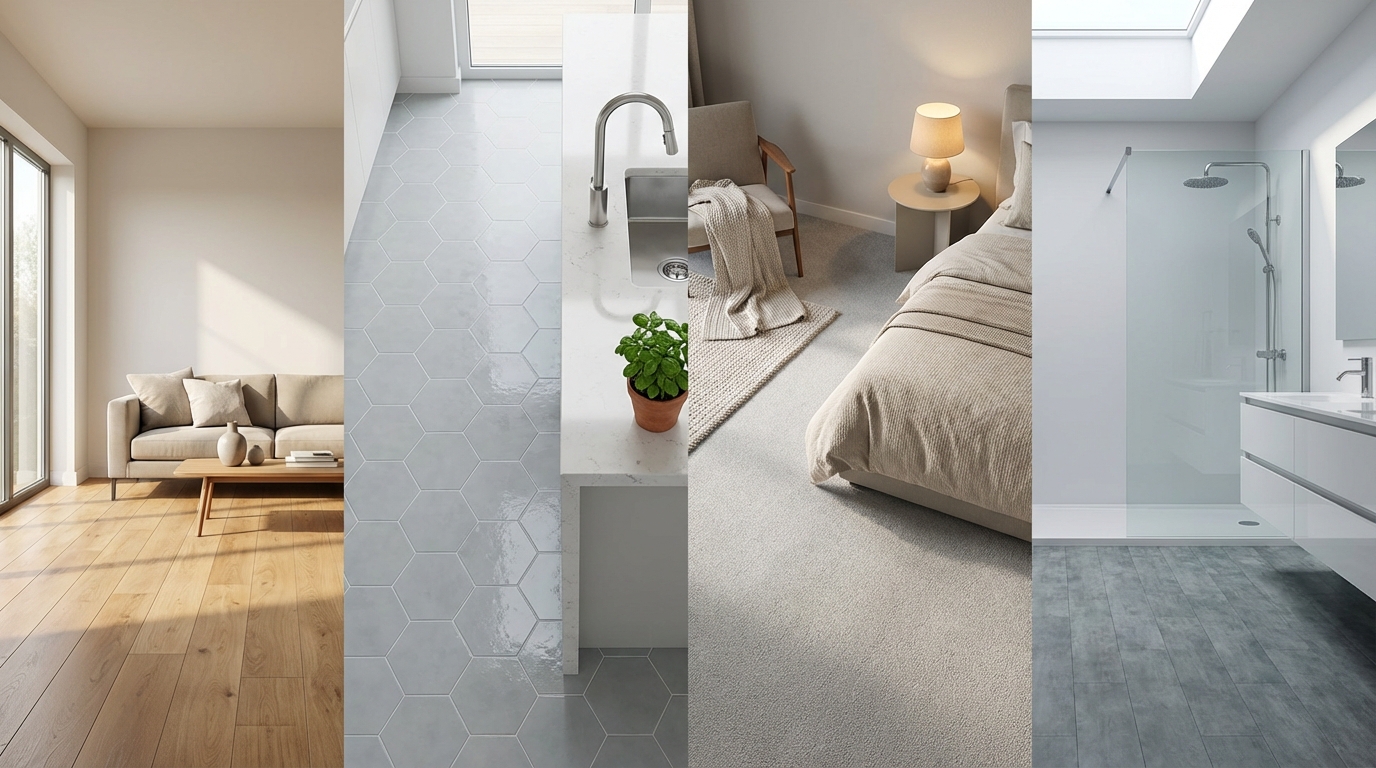
The secret to successful home design lies in matching each space’s function with the right material characteristics. Different rooms experience varying levels of foot traffic, moisture exposure, and daily activities.
Understanding these differences helps you choose surfaces that perform well in each specific environment. This approach ensures both beauty and practicality throughout your home.
Focus on Living Rooms and Common Areas
Living rooms and gathering spaces benefit from materials that create warmth and comfort. These areas typically see moderate traffic but prioritize aesthetic appeal.
Solid hardwood and engineered wood offer excellent choices for these rooms. They provide a comfortable surface for relaxation while adding timeless visual appeal.
High-Traffic and Moisture-Prone Spaces
High-traffic areas like entryways and hallways need durable, easy-to-clean options. These spaces withstand constant use and exposure to dirt.
Moisture-prone rooms including kitchens, bathrooms, and laundry areas require water-resistant materials. Porcelain tile and luxury vinyl prevent warping and mold growth in these challenging environments.
| Room Type | Traffic Level | Moisture Exposure | Recommended Materials |
|---|---|---|---|
| Living Rooms | Moderate | Low | Hardwood, Engineered Wood |
| Kitchens | High | Medium-High | Porcelain Tile, Luxury Vinyl |
| Bathrooms | Medium | High | Porcelain Tile, Waterproof Vinyl |
| Entryways | High | Medium | Tile, Durable Laminate |
| Bedrooms | Low | Low | Carpet, Soft Wood Options |
Comparing Popular Flooring Materials
When selecting materials for your home, understanding the core differences between popular choices is essential. This comparison helps you balance beauty, performance, and cost effectively.
Hardwood and Engineered Wood: Style and Durability
Solid hardwood is a classic choice that brings natural warmth and significant value. Its exceptional durability allows for multiple refinishes, ensuring it lasts for decades.
Engineered wood offers the same authentic look with improved moisture resistance. Its layered construction provides stability, making it less prone to warping than solid planks. Both wood options are perfect for creating elegant, long-lasting spaces.
Luxury Vinyl, Laminate, and Tile: Options for Every Budget
Luxury vinyl planks and vinyl tile mimic wood or stone beautifully. They provide excellent water resistance and comfort underfoot, making them a versatile and popular options.
Laminate is a durable and affordable alternative. It stands up well to scratches and dents, ideal for busy households. These materials offer fantastic value and align with many timeless home design trends.
| Material | Best For | Key Advantage | Consideration |
|---|---|---|---|
| Solid Hardwood | Living Rooms, Bedrooms | Can be Refinished | Avoid High Moisture |
| Engineered Wood | Most Rooms, Basements | Moisture Resistant | Limited Refinishes |
| Luxury Vinyl | Kitchens, Bathrooms | 100% Waterproof | Softer Surface |
| Laminate | High-Traffic Areas | Scratch Resistant | Not Waterproof |
| Tile | Bathrooms, Entryways | Extreme Durability | Hard, Cold Feel |
Considering Durability, Moisture Resistance, and Maintenance
Your new floors need to stand up to daily life while staying beautiful for years. Three key factors will guide you to the best choice: long-term durability, excellent moisture resistance, and realistic maintenance that fits your schedule.
Durability varies greatly by material. Porcelain tile and luxury vinyl handle heavy foot traffic and resist scratches exceptionally well. Softer woods may show wear more quickly in busy areas.
Protection from water is critical in kitchens and bathrooms. Luxury vinyl, tile, and engineered wood offer superior moisture resistance compared to solid hardwood or carpet.
Understanding upkeep helps you choose materials you’ll love over time. Preventing damage is easier than fixing it. Simple habits make a big difference.
- Sweep wood surfaces regularly to remove grit that causes scratches.
- Use cleaning solutions made for your specific materials.
- Avoid excessive water and steam cleaners on wood to prevent damage.
- Place mats at entrances and use felt pads under furniture legs.
Balancing these three factors ensures your floors remain beautiful and functional without demanding excessive effort. The right choice saves you time and money in the long run.
Budgeting and Cost Factors for New Flooring
Smart financial planning is the cornerstone of any successful home renovation project. Your overall budget is shaped by two main parts: the price of the materials you choose and the cost of professional installation.
Material Costs Versus Labor and Installation Fees
The type of surface you select has the biggest impact on your project’s total cost. Natural hardwood and porcelain tile are premium choices, while laminate and luxury vinyl offer beautiful, budget-friendly performance.
Engineered wood provides a popular mid-range option. It balances the look of real wood with a more manageable price tag.
Labor expenses depend heavily on the complexity of the job. Simple click-lock systems are faster to install than nail-down hardwood. Intricate patterns like herringbone require more skill and time, increasing the installation cost.
Remember to account for essential preparation work. This includes underlayment, moisture barriers, and potential subfloor repairs. These steps ensure your new flooring has a stable foundation. For more insights, explore our guide on cost-effective strategies for large-scale renovations.
A realistic budget that covers all these factors lets you invest wisely. You can prioritize quality where it matters most for your home.
Tips for Preparing Your Home for a Flooring Overhaul
A successful installation project begins long before the first plank or tile arrives at your doorstep. Thoughtful preparation makes the entire process smoother and ensures professional results that last for years.
Clearing Spaces and Organizing Installations
Start by completely clearing all work areas of furniture, décor, and personal items. For extensive projects, consider temporarily relocating essential living items to unaffected rooms. This maintains some normalcy during the installation process.
Ensure your installation team has easy access by moving vehicles from driveways and securing pets in safe spaces. Identify available power outlets for tools and equipment. Discuss trim and door threshold adjustments with your contractor beforehand.
Subfloor Preparation and Adjustments
The subfloor is the critical foundation for any installation. It must be thoroughly cleaned, carefully leveled, and properly repaired. This prevents future problems like squeaking or uneven surfaces.
Removing existing materials involves different processes depending on what’s currently there. Allow adequate time for lifting old boards, pulling up carpet, or breaking apart tile. Rushing this step can lead to complications later.
| Room Type | Clearing Time | Subfloor Check | Special Considerations |
|---|---|---|---|
| Living Room | 2-3 hours | Levelness critical | Large furniture moving |
| Kitchen | 3-4 hours | Moisture test needed | Appliance disconnection |
| Bedroom | 1-2 hours | Standard inspection | Closet organization |
| Bathroom | 2-3 hours | Water damage check | Fixture protection |
| Hallways | 1 hour | Transition planning | Access maintenance |
Taking the time to properly prepare your home before installation begins pays dividends. You’ll enjoy better-looking results, faster completion, and surfaces that perform beautifully for many years.
Expert Insights and Brand Recommendations
Trusted brand names often signal quality and reliability in home improvement materials. Investing in reputable manufacturers ensures you get tested products backed by solid warranties.
Top Flooring Brands and Their Unique Offerings
Several companies stand out for their exceptional products and innovation. Each brings unique strengths to different material types.
Armstrong specializes in luxury vinyl plank and rigid core options with contemporary style. Mannington offers comprehensive choices across all categories, ranking among top vinyl brands.
For tile enthusiasts, Marazzi brings over a century of Italian craftsmanship. Mohawk provides excellent wood, laminate, and vinyl options through various retailers.
Pergo pioneered laminate in the 1970s and now offers luxury vinyl and hardwood products. Shaw delivers quality wood, laminate, and ceramic tile through multiple channels.
Additional brands worth considering include:
- Tarkett for laminate and vinyl products
- LifeProof and SmartCore for value-oriented choices
- Congoleum and TrafficMaster for budget-friendly options
Professional Installation Advice and Best Practices
Proper installation is crucial for long-term performance. Follow manufacturer guidelines to maintain warranty coverage.
Key steps include proper material acclimation and precise measurements. Selecting appropriate underlayment affects both comfort and durability.
For wood products, understanding engineered timber pricing factors helps budget accurately. Professional installers ensure optimal results for any material type.
These practices guarantee your surfaces perform as expected for years to come.
Room-by-Room Flooring Upgrade Ideas
Different rooms in your home serve unique purposes, requiring specific material choices that match their function. Taking a strategic approach lets you prioritize spaces that deliver the biggest impact.
Kitchen and Bathroom Flooring Considerations
Kitchens demand surfaces that handle spills, dropped items, and constant foot traffic. Porcelain tile and luxury vinyl offer excellent moisture resistance for these hardworking rooms.
Bathrooms need completely waterproof options to protect against constant water exposure. These materials prevent warping and mold while providing slip-resistant surface safety.
Laundry areas face similar challenges. Engineered wood and waterproof vinyl withstand wet conditions beautifully.
Creating Cohesion in Living Areas and Bedrooms
Living spaces and bedrooms shine with the warmth of hardwood or wood alternatives. These materials create inviting room environments where people naturally gather.
Replacing worn carpet with new flooring instantly modernizes your space. Strategic choices in high-impact areas deliver impressive results without redoing the entire house.
Creating visual flow across connected rooms produces a polished, intentional look. Consistent materials make spaces feel larger and more harmonious throughout your home.
Conclusion
The journey to creating a home you love involves making smart decisions about the surfaces underfoot. This comprehensive guide has walked you through the incredible variety of materials available, from timeless hardwood to innovative luxury vinyl.
Each type brings unique strengths to different spaces. Hardwood offers elegance that lasts for years, while vinyl provides excellent water resistance for kitchens and bathrooms. Understanding room-specific needs helps you balance aesthetics with practical performance.
Your budget, installation requirements, and maintenance preferences all play important roles. But with good information, these decisions become empowering rather than overwhelming.
Whether you tackle one room or several, strategic choices transform how your home looks and feels. Investing in quality flooring pays dividends in comfort and value for many years to come.
Remember that professional help ensures proper installation, protecting your investment. Your perfect floors await—creating spaces you’ll genuinely enjoy every day.