Welcome to your complete guide for creating the perfect workout space right where you live. More people than ever are discovering the amazing benefits of having their own exercise area. No more commuting or waiting for equipment!
The World Health Organization reminds us that true health means “a state of complete physical, mental and social well-being.” During the COVID-19 pandemic, many Americans adapted their living spaces to support this holistic wellness approach while staying indoors.
This guide will show you how to transform any room into a motivating environment that supports your fitness journey. Whether you’re just starting out or you’re an experienced athlete, a well-planned personal workout space can boost your commitment to regular exercise.
You’ll discover smart ideas for choosing the right area, selecting equipment, creating appealing aesthetics, and organizing storage. We’ll share tips for building an atmosphere that keeps you excited to work out every day.
Remember, your personal fitness area isn’t just about function. It’s about creating a space that reflects your style and inspires you to reach your goals. Our advice comes from expert designers, professional equipment providers, and real-world success stories.
Key Takeaways
- Personal workout spaces offer convenience and save time compared to commercial facilities
- A well-designed area supports both physical and mental wellness
- Proper planning can transform any room into an effective exercise environment
- Smart storage solutions and appealing aesthetics boost motivation
- Customization allows your space to reflect your personal fitness goals
- Expert advice helps you make informed decisions for your project
- The right setup encourages consistent exercise habits
Understanding Your Fitness Goals and Home Gym Design Needs
Before selecting any equipment or choosing a location, the most critical step in creating your personal workout space is defining your fitness objectives. Whether you aim to build strength, improve cardiovascular health, or increase flexibility, your goals shape every aspect of your setup.
Your specific targets directly influence the equipment you’ll need and the amount of space required. Someone focused on heavy strength training has different requirements than a yoga enthusiast. Each activity demands particular flooring, equipment, and atmospheric elements.
Honestly assess your current fitness level and preferred training styles. Consider how often you’ll realistically use the space and what times work best for your schedule. If multiple household members will share the area, account for their different exercise needs too.
| Fitness Focus | Space Requirements | Essential Equipment | Atmospheric Needs |
|---|---|---|---|
| Strength Training | Moderate to large area | Weights, bench, rack | Durable flooring, good ventilation |
| Cardio Workouts | Moderate space | Treadmill, bike, rower | Mirrors, TV placement |
| Yoga & Flexibility | Small to moderate area | Mats, blocks, straps | Peaceful ambiance, soft lighting |
| General Wellness | Flexible space | Multi-functional gear | Motivating decor, music system |
Understanding these foundational elements prevents costly mistakes. It ensures your personal fitness area becomes a space you actually use rather than an expensive room that collects dust. Create a written plan outlining your objectives before moving forward with your project.
Choosing the Perfect Space for Your Home Gym
Transforming an underutilized area into an effective exercise space starts with evaluating your home’s layout. The right location can significantly impact your workout motivation and consistency.
Evaluating Basements, Guest Rooms, and Garages
Common choices include basements, spare bedrooms, and garages. Each offers unique benefits and considerations for your fitness setup.
Basements provide excellent privacy and sound isolation. Guest rooms offer climate control and convenience. Garages accommodate larger equipment but may need temperature regulation.
| Space Type | Advantages | Challenges | Best For |
|---|---|---|---|
| Basement | Privacy, sound control | Limited natural light | Heavy equipment workouts |
| Guest Room | Climate control, convenience | Limited square footage | Yoga and bodyweight exercises |
| Garage | Ample room, high ceilings | Temperature extremes | Large machines and racks |
| Multi-purpose Area | Flexibility, dual use | Equipment storage needs | Portable workout gear |
Maximizing Small and Limited Spaces
The American Council on Exercise recommends specific dimensions for different activities. Free weights need 20-50 square feet. Treadmills require about 30 square feet.
Multi-station setups need 50-200 square feet. Even compact areas can work with smart planning. Focus on foldable equipment and vertical storage solutions.
Choose durable flooring like rubber tiles or vinyl. These materials protect your surfaces while providing comfort. Portable setups offer ultimate flexibility for limited spaces.
Creating an Efficient Layout and Flow
An intelligent floor plan transforms your available area into a highly functional exercise environment. The right arrangement makes your workouts safer, more enjoyable, and more effective.
Think about how you move between activities during a typical session. Your space should support smooth transitions without obstacles.
Zoning Workout Areas for Cardio, Strength, and Flexibility
Create dedicated zones for different training types. This organization helps both your body and mind prepare for each activity.
Consider these zones for your setup:
- Cardio corner for treadmills or stationary bikes
- Strength section for weights and resistance training
- Flexibility area for yoga and stretching routines
- Open floor space for bodyweight exercises
Even in smaller rooms, visual separation works wonders. Use different colored mats or strategic equipment placement to define areas.
Optimizing Equipment Placement and Pathways
Position larger items like weight benches with ample room around them. This prevents accidents and allows full movement.
Electronic machines need convenient access to power outlets. Place them where cords won’t create tripping hazards.
Leave clear pathways between stations. This is especially important for circuit training or high-intensity workouts.
Adding proper floor cushioning protects your surfaces and reduces noise. It also provides comfort during strength exercises.
Your final layout should feel intuitive. Test it by moving through a mock workout before locking everything in place.
Incorporating Modern Design Trends and Aesthetic Tips
Modern fitness spaces have evolved beyond sterile white rooms into sophisticated personal sanctuaries. The right aesthetic choices can transform your workout area from merely functional to truly inspiring.
According to Joa Studholme, color curator at Farrow & Ball, smarter exercise areas now embrace dark naturals instead of defaulting to white. This creates more intimate and luxurious environments that feel less clinical.
Selecting Color Schemes and Decorative Accents
When choosing rich paint colors, mix finishes for added depth. Use high gloss on the lower third of your wall to bounce light around. Apply flat finishes on upper walls for a decorative twist that feels very luxurious.
This technique maximizes both illumination and visual interest. It creates a dynamic atmosphere that changes with your movement throughout the space.
Utilizing Art, Accent Walls, and Textures
Accent walls make powerful statements in personal fitness areas. The Patchwork mural by Chasing Paper offers a bespoke motif that echoes an art gallery. This whimsical approach can significantly boost workout motivation.
Felt Right customized felt tiles provide another innovative option. They add color while helping soundproof your space. You can choose patterns that match your personal aesthetic.
Negative space creates breathing room that enhances focus. This design principle reduces feelings of clutter, making your area feel inviting rather than overcrowded. Thoughtfully placed artwork sparks creativity and supports mental well-being.
Approach your fitness space as you would any other room. Select decorative elements that reflect your unique style. This emotional connection increases your commitment to regular exercise.
Choosing Essential Equipment and Accessories
The right tools transform your personal workout area from a simple room into a powerful fitness hub. Your selection should directly support your primary training style and available space.
Focus on versatile, high-quality equipment you will use consistently. This ensures your investment pays off in long-term health benefits.
Understanding Must-Have Machines and Tools
For cardio workouts, consider a treadmill with immersive features or a compact exercise bike. Rowing machines offer excellent full-body engagement.
Strength training requires a solid foundation. An adjustable bench, a set of dumbbells or weights, and a sturdy rack are essential products.
Brands like Technogym offer all-in-one machines that combine multiple training modes. This is ideal for maximizing a limited area.
For smaller spaces, sometimes one key piece of gym equipment is best. Pair it with a yoga mat and resistance bands for a complete range of exercises.
| Equipment Type | Key Features | Space Needed | Best For |
|---|---|---|---|
| Cardio Machines | Immersive displays, space-saving | Moderate | Endurance, heart health |
| Strength Tools | Adjustable weights, compact racks | Flexible | Muscle building, toning |
| All-in-One Stations | Multiple modalities in one unit | Compact | Full-body workouts, efficiency |
Balancing Functionality with Style
Your equipment should also be visually appealing. Companies like PENT Fitness create luxury home gym equipment from crafted wood and leather.
These products function as both effective fitness tools and beautiful furniture pieces. Choosing gym equipment you love looking at increases motivation.
This makes the aesthetic a practical part of your success.
Innovative Storage and Organization Solutions
An organized workout area significantly boosts both safety and motivation during exercise sessions. Many people overlook this crucial aspect when planning their personal fitness space.
Effective storage keeps your area tidy and maximizes usable floor space. This creates a more professional environment that encourages regular use.
Smart Storage Ideas for Weights and Accessories
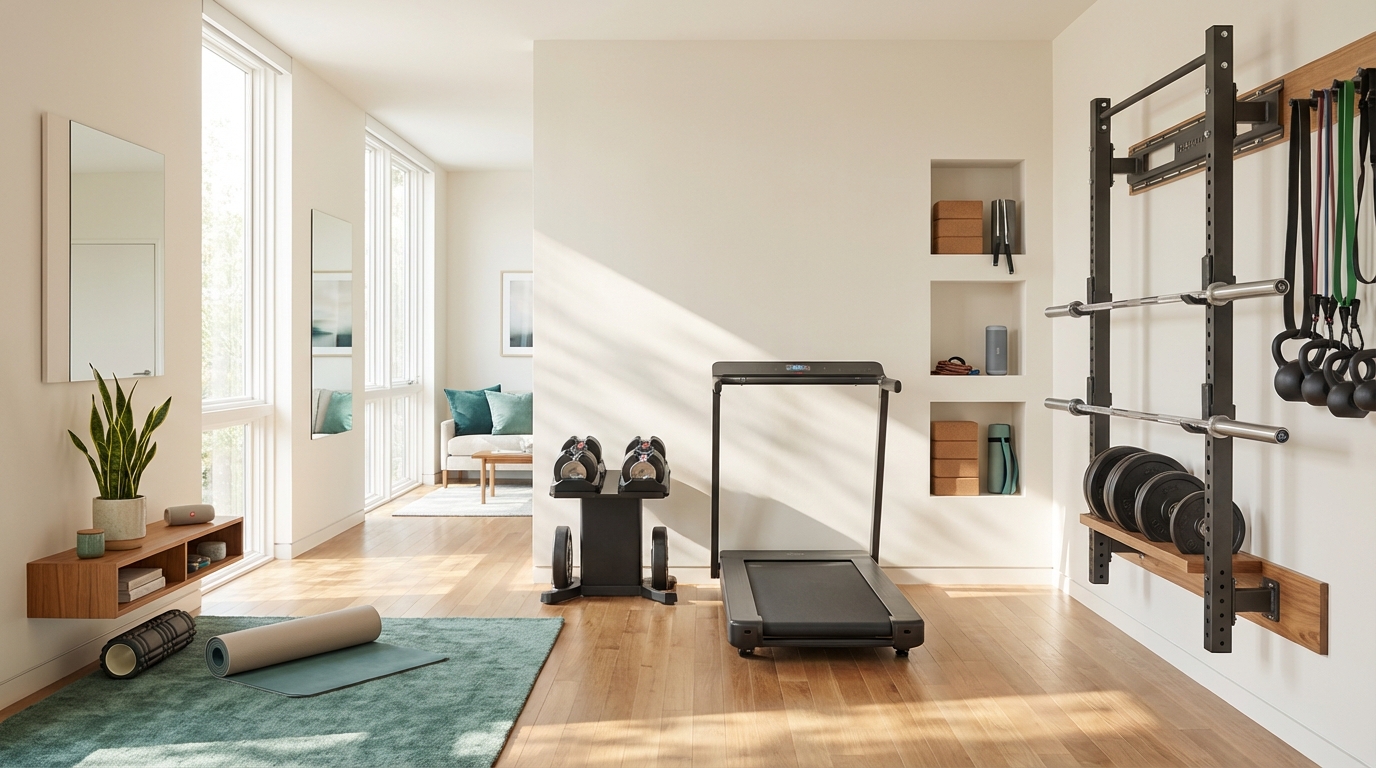
Wall-mounted racks offer excellent solutions for dumbbells and kettlebells. Vertical storage systems save valuable floor area while keeping equipment accessible.
Shelving units specifically designed for fitness accessories organize everything neatly. Weighted balls, resistance bands, and yoga props each get their own designated spot.
| Storage Type | Best For | Space Saved | Installation |
|---|---|---|---|
| Wall-mounted Racks | Dumbbells, kettlebells | High | Moderate |
| Vertical Systems | Barbells, medicine balls | Very High | Easy |
| Shelving Units | Accessories, small gear | Medium | Simple |
| Multi-functional Benches | Weights, combined use | Maximum | Professional |
Proper organization prevents tripping hazards and protects your investment. Equipment lasts longer when stored correctly after each workout.
Multi-functional furniture serves dual purposes beautifully. Storage benches hold weights inside while providing exercise surfaces.
Planning your storage solutions from the beginning saves frustration later. It maintains the motivating atmosphere that keeps you committed to fitness goals.
Effective Home Gym Design for a Motivating Workout Environment
Your personal exercise environment should energize your spirit, not just your muscles. The right gym design creates a space you genuinely enjoy using every day. It transforms exercise from a chore into something you look forward to.
Great home gym design removes barriers that keep people from working out. No more packing bags or commuting to crowded facilities. You save precious time while getting the same benefits. This convenience makes consistency much easier.
Personalization is key to creating your ideal workout space. Add elements that reflect your personality and fitness goals. Consider timeless design principles that will keep your space feeling fresh for years.
Your home gym should be a controlled environment where you set all the rules. Choose the temperature, music, and atmosphere that work best for you. This personal control makes each session more effective and enjoyable.
The most successful fitness spaces spark creativity and support mental well-being. They become a sanctuary from daily stress. When your workout area meets your emotional needs, you’ll naturally want to spend more time there.
Enhancing Your Gym with Lighting, Ventilation, and Ambiance
Lighting and airflow are critical components that transform a simple room into an energizing fitness environment. The right lighting setup and fresh air circulation significantly impact your motivation and performance.
According to Lantz, founder of Lantz Full Circle, “good dimmable lighting, enough power outlets for equipment, and speakers are vital to a successful home gym design.” This thoughtful approach creates an inviting interior atmosphere.
Creating the Ideal Lighting Setup
You don’t need the harsh light of a commercial facility. Instead, aim for a layered approach. Use a mix of diffused and direct LED lighting.
Position fixtures relative to your workout zones. Bright light is best for cardio. Softer, dimmable options work well for yoga or cool-downs.
A room with windows is ideal. Natural sunlight boosts mood and energy levels. It also provides excellent illumination for daytime sessions.
Improving Airflow and Natural Ventilation
Good ventilation keeps your gym space comfortable. Open windows allow fresh air to enter naturally. This is the simplest way to improve airflow.
For interior rooms or climate control, consider other options. Ceiling fans keep air moving. Air-conditioning units manage temperature. A dehumidifier prevents condensation and stuffiness.
These elements work together to create a superior home gym experience. A well-ventilated, properly lit space makes workouts more enjoyable and effective.
| Element | Primary Benefit | Recommended Solution | Ideal For |
|---|---|---|---|
| Dimmable Lighting | Adjustable ambiance | LED fixtures with dimmer switches | Yoga, stretching, high-intensity intervals |
| Natural Light | Mood and energy boost | Window placement | Daytime workouts, vitamin D exposure |
| Mechanical Ventilation | Consistent air quality | Ceiling fan or AC unit | Basements, windowless rooms, hot climates |
| Natural Ventilation | Fresh air, cost-effective | Operable windows | Spare rooms, garages, mild weather |
Conclusion
Your journey to creating the ultimate workout environment culminates in a space that truly reflects your fitness aspirations. From defining your training needs to selecting the perfect equipment, each step builds toward a personalized sanctuary for your health and well-being.
Thoughtful planning ensures your investment pays dividends over time. A well-designed area eliminates commute time while providing 24/7 access to your preferred machines and tools. This convenience supports consistent exercise habits that fit your living situation.
Whether you’re focused on cardio, strength training, or yoga, the principles of good gym design remain the same. For more creative home gym ideas that can transform any area, explore our comprehensive guides. Your dedication to fitness deserves a space that inspires you every day.