Welcome to your guide for creating a healthier home environment. Many people don’t realize how much time they spend inside. Americans typically spend about 90% of their lives indoors.
This fact makes your indoor environment incredibly important for family wellness. Surprisingly, the space inside your home can contain pollutants at levels two to five times higher than outdoor concentrations. Some chemicals called VOCs reach much higher levels indoors.
This comprehensive guide will help you understand what makes a healthy indoor space. You’ll learn to identify common pollutants that may be affecting your household. Most importantly, we’ll show you practical solutions that fit different budgets.
Whether you manage asthma, allergies, or simply want a better living space, this article provides actionable steps. Our recommendations come from scientific research and expert advice. You’ll discover real solutions that can help your family breathe easier.
Key Takeaways
- Americans spend nearly 90% of their time indoors, making indoor environments crucial for health
- Pollutant levels inside homes can be 2-5 times higher than outdoor concentrations
- Volatile organic compounds (VOCs) often reach significantly higher levels indoors
- Practical solutions exist for various budgets and lifestyles
- This guide covers both problem identification and actionable improvements
- Recommendations are backed by scientific research and expert knowledge
- Both simple changes and comprehensive upgrades will be discussed
Understanding Indoor Air Quality
Have you ever wondered what you’re actually breathing inside your home? The invisible environment within our living spaces contains a complex mixture that affects our health daily.
What Is Indoor Air Quality?
Indoor air quality measures how clean and healthy the atmosphere is inside buildings. It’s determined by the types and amounts of substances floating around us.
This mixture includes three main components. Gases like carbon dioxide and volatile organic compounds make up one category. Solid particles such as dust and pollen form another group. Liquid droplets like water vapor complete the picture.
Common Indoor Pollutants and Their Sources
Five major categories of pollutants commonly affect homes. Radon is an invisible radioactive gas that seeps from the ground. It’s the second leading cause of lung cancer.
Particulate matter includes tiny particles from smoke and dust. These can bypass our body’s defenses and enter deep into the lungs.
Volatile organic compounds (VOCs) come from everyday items. Furniture, carpets, and paints release gases like formaldehyde. These can irritate eyes, nose, and throat.
Combustion byproducts come from gas stoves and heating systems. Two-thirds of American homes burn fuel for daily needs. This process releases harmful emissions directly into living spaces.
Allergens include pet dander, mold spores, and dust mites. These biological pollutants trigger allergic reactions and asthma symptoms in sensitive people.
The Impact of Indoor Air Pollution on Health
The atmosphere inside our homes directly shapes our family’s well-being every single day. Unseen pollutants can trigger immediate discomfort and contribute to serious long-term health issues.
Short-Term and Long-Term Health Effects
Poor indoor conditions often cause quick reactions. People may experience headaches, coughing, and irritation of the eyes, nose, and throat.
These symptoms can appear shortly after exposure. Skin irritation and difficulty breathing are also common short-term effects.
Chronic exposure to indoor pollution carries graver risks. Long-term effects can damage the central nervous system and worsen respiratory diseases like asthma.
Cardiovascular problems and increased cancer risk are potential outcomes. This is supported by recent scientific research linking prolonged contact with harmful substances to major health declines.
Risks for Vulnerable Populations
Some groups face greater danger from unclean indoor environments. Young children have developing lung systems that are more easily harmed.
Older adults and individuals with pre-existing lung diseases are also at high risk. Their symptoms can become much harder to manage.
For children at school, triggers like dust and mold can lead to uncontrolled asthma. This affects attendance and academic success.
The Economic and Social Implications
The consequences of indoor air pollution extend beyond personal health. There are significant costs for public health systems and workplace productivity.
Treating pollution-related illnesses creates a heavy financial burden. Sick days and reduced mental focus at work impact the economy.
Addressing these issues is crucial for community wellness and stability. Protecting vulnerable people is a key part of this effort.
Effective Air Quality Improvements
Practical solutions for a cleaner living environment don’t require expensive equipment or complex installations. Many effective strategies combine simple habits with smart upgrades.
Step-by-Step How-To Guide
Begin with essential safety measures. Install working smoke and carbon monoxide detectors throughout your home. Test them monthly and change batteries annually.
Daily ventilation makes a significant difference. Open windows for 10 minutes, even during colder months. This simple habit dilutes indoor pollutants with fresher outdoor atmosphere.
Test for radon using affordable kits from reputable organizations. This invisible gas represents a serious health risk that requires professional detection methods.
DIY Options for Enhancing Indoor Air
Upgrade your furnace filters to MERV-13 rated options. Change them according to manufacturer recommendations for optimal particle capture.
Establish a smoke-free environment in your home and vehicle. Eliminate combustion sources like candles and wood stoves that release harmful emissions.
Replace chemical-based products with healthier alternatives. Regular cleaning routines with microfiber cloths effectively remove accumulated particles.
| Improvement Method | Cost Level | Effort Required | Effectiveness |
|---|---|---|---|
| Daily Ventilation | Free | Low | High |
| Filter Upgrades | Low | Medium | High |
| Radon Testing | Low | Low | Critical |
| HEPA Cleaners | Medium | Low | Very High |
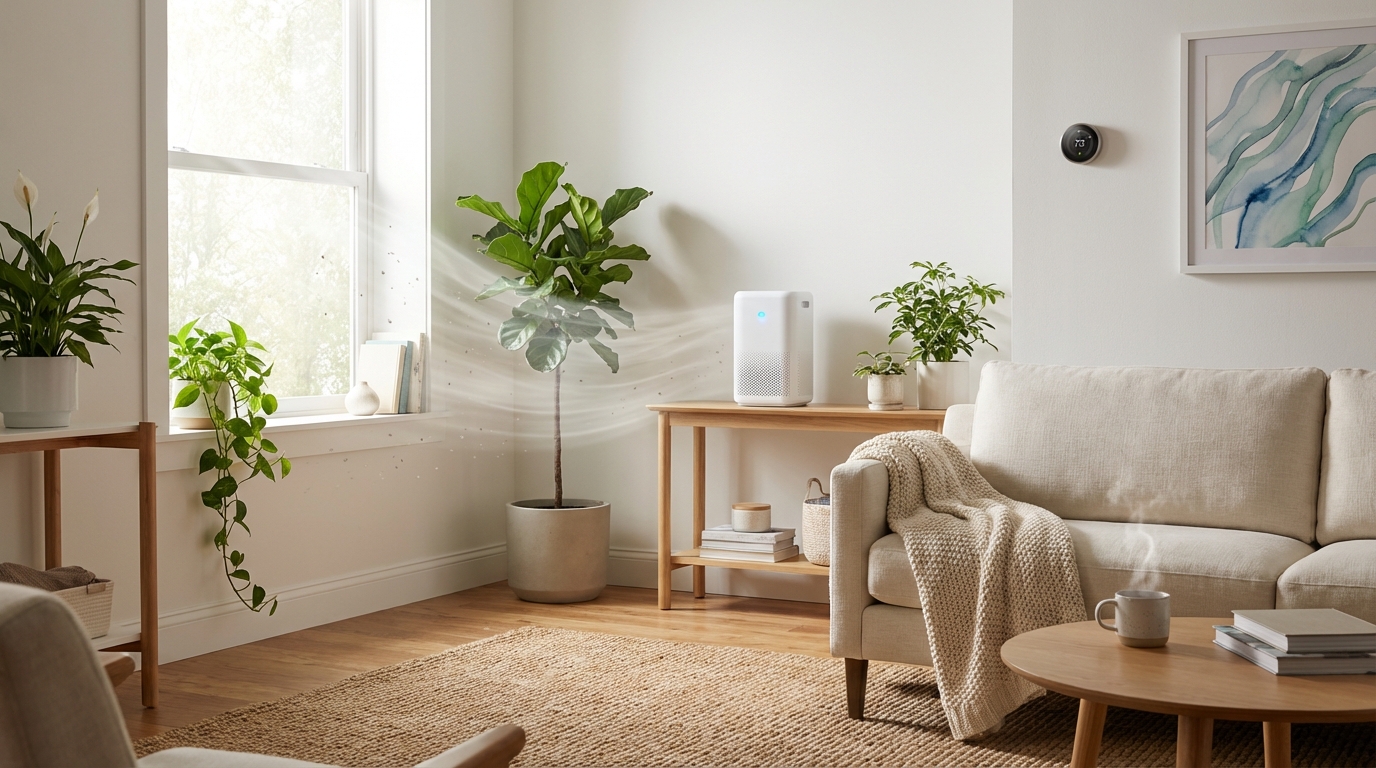
Portable HEPA cleaners offer excellent results for rooms with poor circulation. Properly sized units can remove both particles and chemical odors effectively.
Managing Indoor Sources and Allergens
Your home should be a sanctuary, not a source of sneezes and sniffles. Many everyday items can trigger reactions in sensitive individuals. Understanding where these irritants come from is the first step toward control.
Identifying and Removing Common Allergens
Common household allergens include pet dander, dust mites, and mold spores. These microscopic particles float through your indoor air, causing problems for people with asthma and allergies. They can trigger coughing, wheezing, and skin irritations.
Regular cleaning forms your defense foundation. Vacuum weekly with HEPA-filter machines. Wash bedding in hot water to eliminate dust mites. Consider replacing carpets with hard flooring when possible.
Eliminate scented products like candles and air fresheners. They release chemicals that worsen respiratory issues. Choose unscented alternatives instead.
Fix water leaks promptly to prevent mold growth. Maintain humidity between 30-50% using dehumidifiers. This creates an environment where allergens cannot thrive.
For pet owners, keep animals out of bedrooms. Wipe pets after outdoor activities. Some smart home devices can help monitor indoor conditions automatically.
Implement a shoes-off policy at entrances. This prevents tracking outdoor pollutants inside. These simple habits significantly reduce exposure to harmful sources.
Ventilation, Filtration and Humidity Considerations
The foundation of a healthy living space rests on three interconnected systems: ventilation for fresh atmosphere, filtration for clean conditions, and humidity control for comfortable environments.
Optimizing Ventilation for Fresh Air
Proper airflow exchange is crucial for maintaining healthy indoor conditions. When buildings lack adequate ventilation, stale atmosphere becomes trapped inside. This leads to higher concentrations of pollutants.
Open windows daily for at least 10 minutes when outdoor conditions are favorable. Use exhaust fans during cooking and bathing activities. These simple habits significantly improve circulation.
Choosing and Maintaining the Right Filters
Effective particle capture depends on selecting appropriate filtration systems. MERV-13 rated furnace filters offer superior performance for central heating systems. They trap smaller contaminants more efficiently.
Regular maintenance prevents clogged filters from restricting airflow. Replace them according to manufacturer guidelines. This ensures optimal performance and system longevity.
| System Type | Primary Function | Maintenance Frequency | Key Benefit |
|---|---|---|---|
| Ventilation | Fresh air exchange | Daily habits | Reduces pollutant buildup |
| Filtration | Particle removal | Monthly checks | Captures allergens |
| Humidity Control | Moisture regulation | Seasonal adjustment | Prevents mold growth |
These systems work together to create balanced indoor environments. For comprehensive home upgrades, explore cost-effective strategies for large-scale renovations that integrate all three components seamlessly.
Policy, Technology and Community Roles in Clean Air
Cleaner living spaces depend on a three-part approach involving governance, innovation, and neighborhood action. Individual home upgrades work best when supported by broader environmental strategies.
Influence of Government Policies and Standards
Effective policies establish clear emissions standards for vehicles and industries. These regulations help reduce outdoor pollution levels that enter our homes.
Government initiatives promote renewable energy adoption. They also support electric vehicles and energy-efficient appliances. This comprehensive approach addresses pollution at its source.
Innovative Air Quality Monitoring Technologies
Affordable sensors now provide real-time data on pollution levels. This technology helps identify problematic areas in neighborhoods.
Real-time monitoring enables rapid responses to pollution events. It also supports evidence-based management decisions for public health protection.
Community Involvement and Urban Planning Solutions
Local initiatives create parks and green spaces that absorb pollutants. Urban planning separates industrial areas from residential zones.
Community monitoring projects build environmental awareness. They empower residents to advocate for cleaner neighborhoods.
These broader efforts create an ecosystem that supports your home upgrades. Together, they work toward reducing air pollution for everyone’s benefit.
Conclusion
Taking control of your home’s atmosphere begins with understanding the simple steps that make a real difference. Throughout this guide, you’ve discovered how everyday choices impact your family’s health and comfort.
Remember that creating a healthier space doesn’t require major investments. Simple habits like opening windows and regular cleaning deliver significant benefits. These small changes build momentum toward lasting improvements.
Your individual actions contribute to broader community wellness. When families work together, they create cleaner environments for everyone. This collective effort supports vulnerable populations and future generations.
Start today with one simple change—whether testing for radon or upgrading your furnace filter. Each step brings you closer to the sanctuary your home should be. Share what you’ve learned and breathe easier knowing you’re making a difference.