Welcome! Let’s dive into the most exciting palettes transforming American houses. The era of bland, safe choices is fading. We are now embracing spaces filled with personality and expressive hues.
This guide walks you through the specific shades and tones that designers and homeowners love. We will explore everything from calming living areas to vibrant kitchens. Whether you’re planning a full renovation or a simple refresh, understanding these popular schemes is key.
You will discover how to implement these ideas effectively. We provide practical tips and expert recommendations. Our goal is to make sophisticated design concepts friendly and accessible for everyone, no matter your experience level.
The shift is toward balanced, livable spaces. For a detailed look at specific shades for common areas, explore these 2026 living room color trends. It’s also wise to consider home design trends that stand the test of to ensure your choices remain stylish for years.
Key Takeaways
- The shift in home aesthetics is toward more expressive and personal palettes.
- This guide covers popular shades for various rooms in the house.
- Practical advice will help you implement these ideas successfully.
- The approach is friendly and designed for all skill levels.
- Balancing current trends with timeless appeal creates a space you’ll love long-term.
Introduction to Modern Color Trends in Home Design
The landscape of home aesthetics is undergoing a remarkable transformation. We are moving boldly away from the restrained palettes that dominated for years.
This shift marks a new chapter for how we live.
The Evolution of Interior Colors
For a long time, safe neutrals like beige and gray were the default. These choices offered a sense of security but often lacked character.
Now, a wave of bravery is sweeping through our living spaces. Homeowners are selecting hues that resonate emotionally. This creates rooms that feel truly personal and unique.
The goal is to build an environment that reflects individual personality. It’s about moving beyond the bland to embrace what feels authentic.
Why 2026 is a Breakthrough Year for Home Aesthetics
This year is pivotal. The so-called “sad beige” era is officially over. People are actively choosing multicolor looks and expressive schemes.
There is a cultural desire for homes that feel both grounding and sophisticated. We want our spaces to be comfortable yet distinctive.
Modern design isn’t about strict rules. It’s understanding how different hues work together. This approach allows for harmonious, layered interiors that feel both current and enduring.
The evolution doesn’t mean abandoning neutrals. It means using them more strategically alongside bolder accent colors to achieve a beautiful, inviting balance.
Deep Dive into Bold and Muted Living Room Tones
Creating a welcoming living environment starts with understanding how different tones interact and complement each other. The current approach favors sophisticated palettes that feel both expressive and livable.
Expert recommendations help guide these choices. Designers suggest specific paint options that create beautiful, harmonious spaces.
Teal, Dusky Pinks, and Muddy Greens
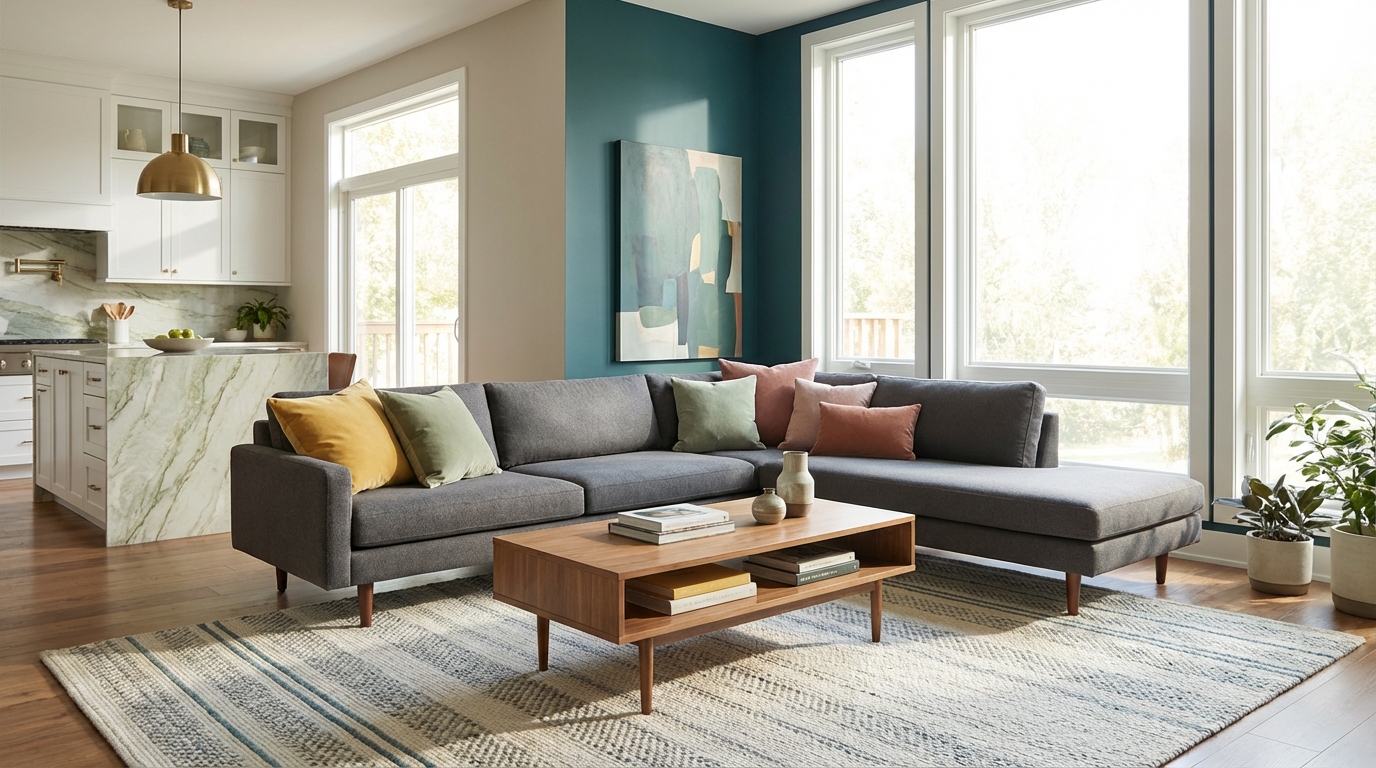
Muted teal offers a perfect balance between calming and bold. This blue-green hybrid feels more current than traditional dark green walls.
Interior designer Michelle Gage recommends Benjamin Moore’s Atmospheric for teal living rooms. She describes it as an excellent backdrop for layering pattern and color.
Dusky plaster pinks add warmth without overwhelming a space. Farrow & Ball’s Dead Salmon blends pink, brown, and earth elements beautifully.
Rich olive greens provide grounding alternatives to basic neutrals. These muddy tones work well with plum, pink, or pale blue accents.
Jessica Hobson favors Benjamin Moore’s Gloucester Sage. She notes these greens serve as excellent backdrops for artwork.
The Role of Soft Blues in Creating a Calm Ambiance
Soft blues bring calm and ease to any living room. They work seamlessly with warm woods and antique pieces.
Designers recommend shades like Benjamin Moore’s Quiet Moments. These light, airy options shift beautifully throughout the day.
They give the room dimension and life. Soft blues serve as sophisticated alternatives to stark white walls.
The right paint choice can transform your entire living space. It creates an atmosphere that feels both current and timeless.
Exploring Warm Neutrals and Subtle Shade Variations
While vibrant hues make dramatic statements, the true foundation of any sophisticated space lies in its neutral palette. Warm whites and subtle variations create rooms that feel both timeless and inviting.
These foundational choices allow your furniture and decor to shine. They provide a calm backdrop that enhances rather than competes with your personal style.
Embracing Warm Whites as a Timeless Choice
Designer Kate Hartman champions Sherwin-Williams’ Alabaster for 2026 living rooms.
This soft, warm off-white adapts beautifully to different lighting conditions and creates a calm, inviting foundation without reading stark or cold.
Andrea Goldman recommends Benjamin Moore’s Seapearl as a tried-and-true option. She also favors Silver Satin, describing it as a sophisticated “white” that isn’t actually white.
These warm whites offer subtle depth that makes spaces feel more layered. They create coziness that pure white simply cannot achieve.
David Flack explores even more personality with undertones. He loves light yellow shades with lemon-vanilla qualities, calling them “neutrals with slight weird undertones.”
These pink whites, lemon whites, and muddy brown whites add surprising character. They maintain versatility while offering unique warmth.
The right warm neutral provides the perfect canvas for bolder accents. It allows textured fabrics and statement pieces to stand out without visual chaos.
Choosing these tones over cool whites creates spaces that feel welcoming rather than clinical. The subtle warmth makes any room more comfortable and lived-in.
Mastering Color Trends Interior in Your Space
The true artistry in home styling emerges when you master the interplay between your foundational choices and complementary accents. Successful implementation goes beyond simply painting walls.
It requires thoughtful selection of items that enhance visual interest. This approach creates a cohesive, sophisticated look throughout your space.
Leveraging Complementary Decor for Enhanced Depth
Designers emphasize layering through strategic furniture and accessory choices. Textural elements prevent schemes from feeling flat.
Linen throws, wool pillows, and wood furniture add tactile dimension. These components work harmoniously with your chosen palette.
Understanding proportions is key to mastering these design concepts. Use your main choice as the foundation.
Then layer complementary accents in smaller doses. This creates visual harmony rather than treating each element separately.
| Wall Choice | Complementary Decor Items | Textural Elements |
|---|---|---|
| Teal Walls | Caramel pillows, emerald trays, dusty pink vases | Marble surfaces, woven textiles |
| Plaster Pink Walls | Wood side tables, ivory pillows, stone coasters | Natural materials, linen textures |
| Muddy Green Walls | Brass holders, russet pillows, biscuit throws | Metallic accents, linen fabrics |
| Soft Blue Walls | Pine tables, burl lamps, metal candlesticks | Wood grains, metallic finishes |
| Warm White Walls | Patterned pillows, olive throws, pink vases | Wool throws, glazed ceramics |
Think of your room as a complete palette where everything works together. This approach ensures your space feels both current and personally meaningful.
The right combinations create an environment that reflects your unique personality. They transform basic rooms into inviting, layered spaces you’ll love.
Layering Hues: Accent Walls, Furniture, & Textural Decor
The secret to creating rooms with character lies in the strategic combination of various surfaces and materials. According to Benjamin Moore’s 2026 guidance, a dark accent wall like Silhouette creates a commanding focal point. This bold choice anchors your space while lighter surrounding walls provide balance.
Furniture selection plays a crucial role in successful layering. Wood tones, upholstered pieces, and painted furniture all contribute to the overall story. They add depth through varied surfaces and textures that interact beautifully.
Contrast creates visual interest that makes spaces feel dynamic. Pair dark accent walls with crisp white trim and natural wood millwork. In kitchens, combine bold cabinetry with lighter countertops for timeless drama.
Textural decor elements add another layer of complexity. Woven textiles, ceramic vases, and metal accents make schemes feel rich rather than flat. These details transform basic rooms into curated environments.
Think three-dimensionally about how hues appear throughout your space. Consider vertical walls, horizontal furniture surfaces, and decorative objects. This approach creates cohesive, multi-layered rooms you’ll love living in.
Emerging Trends: Embracing Multicolor and Maximalist Looks
Homeowners are discovering the power of layered palettes that combine several distinctive hues for truly personalized environments. This approach moves beyond safe, single-color schemes toward expressive combinations that reflect individual personality.
The key is thoughtful coordination rather than random mixing. Designers recommend selecting shades with shared undertones or complementary qualities for harmonious results.
Earthy Umber, Pistachio-Chartreuse, and Ochre Accents
Designer David Flack anticipates more brown and umber-based colors gaining popularity. He describes these warm, muddy neutrals as feeling like “a warm hug” that can anchor larger spaces effectively.
Marie Trohman and Ashley Drost of Proem Studio champion pistachio-chartreuse greens. These natural shades draw attention without being overwhelming. They suggest incorporating them through vibrant throw pillows or rugs with playful borders.
Annie Downing loves yellowish-orange ochre for its sunbaked, lived-in quality. This versatile tone pairs beautifully with both antique furniture and modern pieces. It brings warmth and character to any room.
Multiple designers also highlight bold reds and burgundies as favorites for 2026. This represents a broader shift toward bravery in paint choices and rejection of overly safe palettes.
Desaturated sky blue offers a calming option within maximalist trends. It integrates seamlessly with existing beige neutrals and wood tones. This creates soft contrast that enhances rather than overwhelms.
These multicolor approaches work particularly well in multifunctional living spaces where different zones can feature complementary hues. The result is a rich, layered environment that feels both current and personally meaningful.
Expert Insights and Designer Recommendations on Current Color Trends
Professional insights can dramatically improve your paint selection process and final results. Industry leaders provide valuable guidance for achieving beautiful, lasting outcomes.
Popular Paint Choices and Finishes from Industry Leaders
Benjamin Moore’s Color of the Year for 2026 is Silhouette AF-655. This deep, anchoring shade works with a curated palette of enchanting pales and grounded deep tones.
The complete 2026 trend palette includes Raindance, First Crush, Swiss Coffee, and Narragansett Green. These selections encourage sophisticated layering of bold tones with delicate pastels.
| Brand | Designer Favorites | Best For |
|---|---|---|
| Benjamin Moore | Atmospheric, Gloucester Sage, Quiet Moments | Living rooms, bedrooms |
| Farrow & Ball | Dix Blue, Dead Salmon, Bancha | Accent walls, feature spaces |
| Sherwin-Williams | Alabaster, Sea Salt | Kitchens, high-traffic areas |
Paint finishes significantly affect appearance and durability. Matte works well for low-traffic spaces, while satin and semi-gloss suit kitchens and busy areas.
Tips for Sampling and Testing Colors in Different Lights
Proper sampling prevents costly mistakes. Paint large swatches on multiple walls and observe them throughout the day.
Morning light, afternoon sun, and evening artificial lighting all transform how paint appears in your space.
Live with samples for several days. Notice how they interact with your furniture and natural light exposure. Understanding undertones helps avoid surprises.
This investment ensures your final choice delivers the desired warmth and personality. It creates spaces you’ll love for years to come.
Conclusion
The journey through current home design reveals a clear direction. We’re embracing spaces with genuine character and warmth. This shift moves decisively away from bland, safe choices.
Whether you choose soft blues, earthy greens, or warm neutrals, each hue offers timeless appeal. The key lies in thoughtful layering of bold tones with delicate pastels. This creates beautiful contrast and depth throughout your living spaces.
Remember to test your paint selections in different lighting conditions. Observe how they transform from morning to evening. This ensures your final choice delivers the desired personality.
2026 presents the perfect opportunity to transform your home. Embrace this moment of design bravery to create rooms that truly reflect you. Your space should feel both current and personally meaningful for years to come.