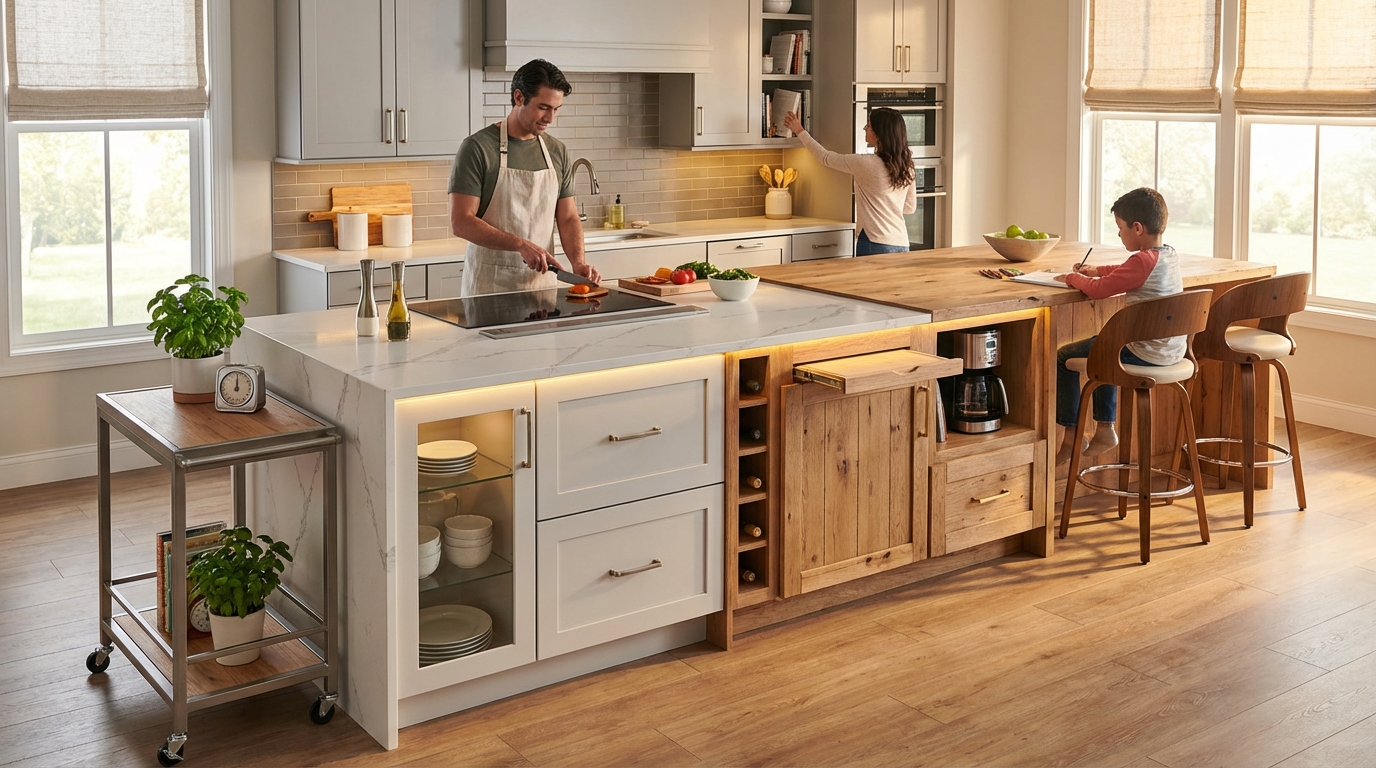
The heart of a modern home often beats strongest in the cooking area. At the center of this activity, you’ll frequently find a versatile piece of furniture. This central feature has evolved far beyond its original purpose.
Today, it serves as a multifunctional hub for families. It’s a place for preparing meals, doing homework, and sharing conversations. The latest design movements reflect how we truly live.
Size is a critical consideration. Options range from compact, movable carts to large, permanent installations. The right choice depends on your available room and needs.
Function is just as vital as aesthetics. Homeowners want pieces that are both beautiful and practical. Popular additions include built-in storage, seating, and even small appliances.
Stylistic choices are incredibly diverse. You can find everything from cozy, rustic looks to sleek, contemporary designs. The beauty lies in finding the perfect match for your personal taste and space.
Key Takeaways
- The central feature is now a multifunctional hub for daily life.
- Available sizes range from small carts to large, permanent installations.
- Practical function is as important as visual appeal.
- Stylistic options cover a wide spectrum from rustic to modern.
- Versatility ensures there is an option for every home and budget.
- Integrating technology and smart storage is a growing movement.
Introduction to Modern Kitchen Island Trends
Modern households demand flexible areas that adapt to various activities while fostering social interaction. The central feature in many homes serves as a gathering spot for multiple daily functions. This evolution reflects how families truly live and interact today.
Setting the Stage for Innovative Designs
Contemporary designs challenge traditional expectations with bold material choices and multifunctional capabilities. These pieces work hard to meet diverse household needs throughout the day. They transition effortlessly from meal preparation zones to social hubs.
Homeowners now treat these central elements as statement pieces worthy of attention. Contrasting colors and textures create visual interest while maintaining practicality. The focus remains on creating spaces that facilitate connection and togetherness.
How Trends Reflect Today’s Home Lifestyle
Open-concept living has increased visibility of these central features, making design more important than ever. Families seek solutions that accommodate informal dining, work, and relaxation in one place. This shift mirrors the move toward more casual living arrangements.
Understanding current movements helps homeowners make choices that improve daily life. Selecting home design trends that stand the test of ensures long-term satisfaction. The right choices balance aesthetics with real-world functionality.
| Design Approach | Primary Materials | Key Functions | Lifestyle Benefits |
|---|---|---|---|
| Multifunctional Hub | Mixed surfaces, durable finishes | Prep space, seating, storage | Family connection, efficiency |
| Statement Piece | Bold colors, textured surfaces | Visual focal point, social center | Aesthetic appeal, conversation starter |
| Adaptable Solution | Mobile elements, modular components | Flexible use, easy reconfiguration | Space optimization, future-proofing |
Farmhouse-Style Islands for a Cozy Ambience
The farmhouse aesthetic continues to capture hearts with its timeless appeal and comfortable vibe. This approach creates spaces that feel both lived-in and lovingly curated.
Many homeowners seek this welcoming atmosphere in their main cooking area. A well-chosen central feature can transform the entire room’s character.
Rustic Charm with Open Shelving and Moveable Options
Farmhouse-style islands bring organic warmth through natural wood finishes like oak and birch. These materials contrast beautifully with modern appliances while maintaining traditional character.
Open shelving at the base serves practical and visual purposes. It provides easy access to frequently used items while creating an airy, approachable look.
The Victorian-inspired moveable concept offers excellent flexibility. Products like IKEA’s FÖRHÖJA Kitchen Trolley allow you to reconfigure your layout for different needs.
For larger kitchens, fixed installations like the Toledo Oak Kitchen Island create permanent gathering spots. Their open design feels less imposing than full cabinetry.
Pairing rustic bases with marble or butcher block tops enhances the refined-yet-comfortable aesthetic. The August Grove Beamond model demonstrates this elegant combination perfectly.
Whether you choose mobile or permanent solutions, these designs prioritize both function and feeling. They create the casual, welcoming atmosphere so many families desire.
Fluted and Textured Kitchen Islands
A quiet revolution is underway in kitchen design, where texture rather than color creates distinction. Fluted and reeded finishes are transforming functional pieces into captivating focal points that engage the senses.
Embracing Reeded Finishes for Visual Interest
These subtle grooves and channels catch light beautifully throughout the day. They create dynamic shadows and depth that flat surfaces cannot achieve.
Richard Davonport explains this approach:
“The island is increasingly being used as the point where texture and visual interest are introduced into the kitchen. Fluted panels, reeded timber and other tactile finishes allow the island to stand apart from the surrounding units without relying on colour alone, creating a quieter but far more layered form of distinction.”
Reeded timber brings a tactile quality that invites touch. It creates a more sensory, engaging experience in the cooking space.
Subtle Details that Set the Island Apart
This island design works particularly well in minimalist settings. The textured piece anchors the room without competing with busy surroundings.
Charlie Smallbone notes the evolution:
“Reeding, which was previously used as an accent feature in smaller areas, has now moved onto larger, more central pieces. In our latest project, the island features a reeded surround and a stunning Diamond Quartzite top.”
The versatility of fluted panels means they work across various styles. From modern farmhouse to contemporary minimalist, this approach offers lasting appeal.
These subtle details elevate standard cabinetry into crafted furniture. They create a distinctive place that balances rustic craftsmanship with refined elegance.
Earthy Hues and Dramatic Stone Countertops
Warm, nature-inspired colors combined with striking natural stones are redefining what makes a kitchen island truly captivating. This approach creates spaces that feel both luxurious and welcoming.
The movement toward earthy tones reflects a desire for comfort and connection to nature. These colors bring organic warmth into the heart of the home.
Inviting Color Palettes for a Warm Kitchen
Earthy greens, terracotta, and ochre shades dominate current design preferences. These hues create an inviting atmosphere that feels grounded and natural.
Using your island as a testing ground for bolder colors is a smart strategy. It allows you to introduce personality without committing to painting all cabinetry. Pairing earthy island colors with neutral wall units creates a beautiful contrast.
This combination makes the island a true focal point that anchors the entire room’s design.
Using Italian Marbles to Create a Statement
Dramatic stone surfaces are making major statements in contemporary kitchens. Italian marbles like Calacatta Viola bring heritage and timeless elegance.
Urvashi Agarwal, creative director of Stone World London, explains the appeal: “This year we’ve seen a resurgence of classic Italian marbles that bring an element of heritage and timeless beauty to modern spaces. Calacatta Viola has really captured people’s attention because it brings warmth and character back into stone.”
The veining in these stones adds organic movement that contrasts beautifully with clean cabinetry lines. For more dramatic kitchen island countertop ideas, consider how statement stones can transform your space.
When showcasing a magnificent marble countertop, keeping surrounding elements understated allows the natural beauty to shine. This approach creates sophistication while maintaining warmth.
Integrated Seating: Banquette, Casual, and More
Integrated seating solutions are revolutionizing how families interact in their kitchens, turning functional islands into comfortable gathering spots. This approach moves beyond traditional bar stools to create truly inviting spaces.
Creating Informal Dining Areas within the Island
Banquette seating built directly into the island structure creates that coveted bistro atmosphere. Richard Davonport explains this shift:
“We are seeing a clear move towards integrated, lower seating built into the island itself, often in the form of a banquette or bench that sits beneath the main worktop level. This subtle shift in height makes a significant difference to comfort, encouraging people to settle in for longer rather than perching briefly on a bar stool.”
This design approach supports multiple activities throughout the day. From breakfast and homework sessions to casual dinners, the integrated dining area becomes a natural family spot.
Designing for Comfort and Conversation
Emily Pickett, designer at Kitchens by Holloways, notes the evolution:
“The trend for incorporating more casual, cozy seating spaces in kitchen islands has become a key part of kitchen design. We have noticed a shift in the desire for more casual, intimate spaces being incorporated—think banquette seats, upholstered seats, and even sofa areas becoming integrated into the overall design.”
Built-in benches and upholstered seating make the space accessible for all ages. The lower seating height breaks down barriers between cook and guests, allowing everyone to remain part of the conversation.
Comfort considerations like cushion depth and back support ensure people actually want to spend time in these areas. This thoughtful design transforms the kitchen island from a mere prep zone into the heart of family life.
Kitchen Island Trends: Maximizing Storage and Functionality
The next evolution in kitchen island design focuses squarely on maximizing every inch of available space. Storage efficiency becomes the driving force behind these innovative solutions.
Innovative Solutions for Deep Cabinets and Drawers
Deep cabinets and specialized drawers transform islands into organizational powerhouses. Jessica Inglis from Second Nature explains this priority: “It’s all about maximizing storage efficiency in 2025. One of the best qualities of a kitchen island is the additional storage it provides.”
Installing deep cabinets allows plenty of space for pots, pans, and cooking gadgets. These solutions prevent items from getting lost while keeping essentials accessible.
Built-In Features for Appliances and Everyday Items
Built-in features create seamless functionality within the island structure. Wine racks, trash bins, and open shelving add personal touches while maintaining clean lines.
Helen Parker of deVOL Kitchens notes the comprehensive approach: “The island is the perfect place to have large statement pieces. It will have a sink, dishwasher, bins, seating, and storage all wrapped up in beautifully designed furniture.”
Smart organization systems make these spaces truly work for your lifestyle. Pull-out organizers and divided drawers ensure everything has its place.
| Storage Type | Best For | Space Efficiency | Accessibility |
|---|---|---|---|
| Deep Drawers | Pots, pans, large utensils | High – utilizes full depth | Excellent – full extension |
| Built-In Organizers | Spices, cutlery, small items | Medium – customized spaces | Good – categorized access |
| Appliance Garages | Mixers, blenders, small appliances | High – concealed storage | Fair – requires opening |
| Open Shelving | Cookbooks, display items | Medium – visual space | Excellent – immediate access |
Today’s clients seek islands that house multiple work zones efficiently. The result is a central feature that truly earns its place as the kitchen’s command center.
Mixed-Material Countertops and Detailed Edges
Material mixing has become a defining characteristic of sophisticated island design. Homeowners now combine different surfaces to create distinct functional zones within a single piece.
Jayne Everett, creative designer at Naked Kitchens, explains this evolution:
“The island is becoming more considered in 2025 and making it far more of a workhorse, including seating, cooking, and prep areas. The different zones are being defined by using different materials such as mixing in timber for the seating area.”
Combining Wood, Stone, and Marble for Impact
This approach makes practical sense. Wood provides warmth where people gather, while durable stone handles heavy-duty tasks.
Many clients love introducing timber end grain prep spaces. These sections are naturally antimicrobial and gentle on knives. They offer both beauty and functionality for serious cooks.
Mixing materials can also be cost-effective. It reduces the amount of expensive stone needed while adding visual interest.
The Allure of Waterfall and Fluted Counter Edges
Edge details are getting more attention than ever. Waterfall countertops create dramatic, seamless looks that feel modern and luxurious.
Everett notes the shift:
“Clients are using waterfall countertops to wrap the island. The edge detail is being considered more, where a simple bevel edge was the go-to profile.”
Fluted and chiseled edges add texture and character. These details turn the countertop into a design feature rather than just a functional surface.
Thicker countertops paired with detailed edging create substantial, furniture-like islands. They command attention and convey quality craftsmanship throughout the space.
Rustic and Country Kitchen Islands
Timber surfaces are experiencing renewed popularity as homeowners seek organic connections. This movement celebrates natural materials and traditional craftsmanship.
These designs create warm, inviting focal points that feel timeless. They bring authenticity that synthetic materials cannot replicate.
Embracing Natural Woods and Traditional Finishes
Alex Main, director of The Main Company, observes this shift:
“Natural and rustic materials are growing in popularity for use on kitchen island tops, bringing warmth and connection to nature. These options pair beautifully in more traditional and country style homes, making the kitchen feel inviting and grounded.”
Designer Jayne Everett notes the timber comeback:
“Timber is really making a comeback and we are loving seeing more clients embrace the choice of timber for their islands. Either for the whole island surface or to break the large island up into different zones such as prep or bar.”
Dark wood islands create stunning contrast with lighter painted cabinetry. This approach adds depth while maintaining cohesive design.
Traditional finishes like distressed paint and hand-rubbed stains celebrate imperfection. They give new pieces a lived-in, heirloom quality that many clients appreciate.
Wood works beautifully in country-style kitchens but anchors transitional spaces too. The versatility of natural materials makes them a smart choice for various design approaches.
Modern Island Designs Inspired by Technology
Today’s most innovative home centers blend cutting-edge technology with timeless design principles to create truly adaptive environments. These spaces now serve as command centers that support our connected lifestyles while maintaining their warm, inviting nature.
Integrating Smart Appliances for Efficiency
Kriste Michelini, owner and founder at Kriste Michelini Interiors, explains the shift:
“The integration of technology in kitchen islands, including charging stations and smart appliances, is making these spaces more user-friendly and convenient.”
Built-in charging stations with USB ports keep devices powered throughout the day. Wireless charging pads offer seamless power access for smartphones and tablets.
Smart appliances transform how we use these central features. WiFi-enabled refrigerator drawers and induction cooktops with app control bring new levels of convenience.
Helen Parker notes the comprehensive approach: islands increasingly house sinks, dishwashers, and storage in beautifully designed furniture. This centralization creates efficient work zones that reduce steps between tasks.
Touchless faucets and motion-sensor lighting add hands-free convenience. The key is making technology invisible when not in use through pop-up outlets and hidden controls.
These smart features help the space transition smoothly between roles throughout the day. From morning coffee station to evening cooking hub, technology enhances functionality without dominating the design.
Creative Kitchen Island Ideas and Accent Features
Creative design approaches are transforming the central hub into a true expression of personal style. Designers are moving beyond matching cabinetry to create distinctive focal points that capture attention.
These innovative concepts prove that functionality and beauty can coexist beautifully. The most successful projects balance bold choices with practical considerations.
Exploring Bold Color Choices and Textural Elements
Color is making a major statement in contemporary spaces. Designers are embracing everything from sky blue to celery green to create visual drama.
Textural elements add depth and dimension that flat surfaces cannot achieve. Fluted edges, Venetian plaster, and waterfall countertops turn functional pieces into sculptural art.
For inspiration, explore these creative kitchen island ideas that showcase diverse approaches. They demonstrate how contrasting materials can create stunning visual impact.
From Airy Marble to Wood Grain Wonders
Material selection plays a crucial role in defining the character of your space. Airy marble designs feel light and ethereal, while rich wood grain wonders ground the room with natural warmth.
White oak remains a designer favorite for its versatility and warm tone. It appears in everything from flooring to bases, creating cohesive, layered designs.
The beauty of unique stone selections lies in their ability to make each project truly one-of-a-kind. From translucent quartzite to Calacatta Viola marble, these materials add personality and elegance.
Conclusion
Looking ahead, the central hub of the home continues to redefine itself. The latest kitchen island trends for 2025-2026 masterfully blend timeless function with fresh, personal style.
Whether your preference leans toward cozy farmhouse charm or sleek modernism, there is a design movement to match. The beauty of these evolving spaces lies in their enhanced practicality. Smart storage solutions and integrated technology make the modern kitchen island a true command center.
As you plan your project, focus on creating a focal point that serves your unique life. The right design will add value and warmth to your home, making the room a place where everyone feels welcome to connect.