Pet-Friendly Home Renovations: Practical Solutions
Author: Ryan Review by Home Remodel Guidance Editorial Team Review date First published Last updated Category: Renovation Planning
Pet-friendly renovations focus on tough, washable surfaces and safe storage. Choose scratch-resistant, water-resistant flooring, wipeable paint, and built-in spots for feeding and bedding, and keep chemicals, paint and medications locked away. In 2025 the ASPCA's poison control center saw household products in 6.4% and plants in 7.5% of its exposure calls, so renovation materials and houseplants deserve a safety check.
Part of the series: Home Additions and Extra Rooms: Cost, Planning and Ideas
Pet-friendly renovations make a home easier to clean and safer for animals, and they often make it easier for people too. This guide covers floors, walls, built-ins, doors, outdoor space and the materials and plants that can harm pets, so you can decide what to change and what to skip. For a closer look at feeding and grooming nooks, see dedicated pet spaces. Pet planning also belongs in the wider set of ideas in the home additions and extra rooms guide.
What are the best pet-friendly floors?
The best pet-friendly floor resists scratches, handles water and wipes clean. No flooring is scratch-proof or accident-proof, so choose by how your pets behave and how much grip they need.
| Flooring | Good for pets | Watch for |
|---|---|---|
| Luxury vinyl plank | Water-resistant, durable, softer underfoot than tile | Quality varies; sharp claws can dent thin products |
| Porcelain or ceramic tile | Hard and water-proof | Cold, hard on joints, slippery for some pets; grout needs sealing |
| Sealed concrete | Easy to clean | Hard and cold; needs a sealer |
| Engineered wood | Warm, can be refinished in some products | Water and urine damage; scratches show |
| Carpet or carpet tiles | Soft and grippy | Holds odor, hair and stains; tiles can be replaced one at a time |
Smooth, hard floors can be slippery for dogs, especially older ones, so use rugs with a non-slip pad on stairs and play areas. The article on pet-proof flooring choices compares more options, and the flooring options guide covers each room. Stairs need extra care, since slick treads are risky for animals and people; see staircase renovation: safety upgrades with style.
Which walls, paint and finishes hold up to pets?
Use scrubbable paint and tough trim in the places pets touch most. Pets rub, scratch and shake against lower walls, doors and corners.
- Use satin or semi-gloss, or a washable matte, on the lower walls and test a patch for scrubbing.
- Add wainscoting, a chair rail or a painted dado to protect the lower wall.
- Choose solid-core or metal-clad doors in spots where scratching is a problem, or add a clear kick plate.
- Use low-VOC paints, ventilate during and after painting, and keep pets out until it is dry. Store leftover paint and solvents closed and out of reach.
What household items from a renovation are dangerous to pets?
Paints, cleaners, adhesives and small hardware can all harm pets, and the data support caution. In 2025 the ASPCA’s poison control center received calls about more than 376,000 substances. Household products, mostly cleaners and paints, were 6.4% of exposures, and plants and fungi were 7.5%. The center’s list also includes human medications, food and rodent bait, so a renovation is a good time to check the whole house.
During a project:
- Keep pets in a closed room, a crate or outside the work area.
- Store paint, solvent, adhesive and cleaner in closed, labeled containers on high shelves or behind latches.
- Clean up nails, screws, wire, insulation and dust every day.
- Ventilate and follow the product label for drying and cure times.
- Know the ASPCA Animal Poison Control hotline, (888) 426-4435, and your veterinarian’s emergency number.
If you think your pet swallowed something toxic, call a vet or the hotline right away.
Which plants and landscaping are safe for pets?
Check each plant against the ASPCA’s list before you buy it. Common plants such as lilies, sago palm and azaleas can be toxic, and the ASPCA publishes a searchable toxic and non-toxic plant list for dogs, cats and horses. Keep plants out of reach indoors, and choose pet-safe plants for patios and entry areas. For the yard, avoid sharp edging, mulch types your pet eats, and standing water.
How do you create feeding, bedding and cleanup zones?
Give pets a defined place, and the mess stays in one spot. Built-in zones also keep dishes off the walkway.
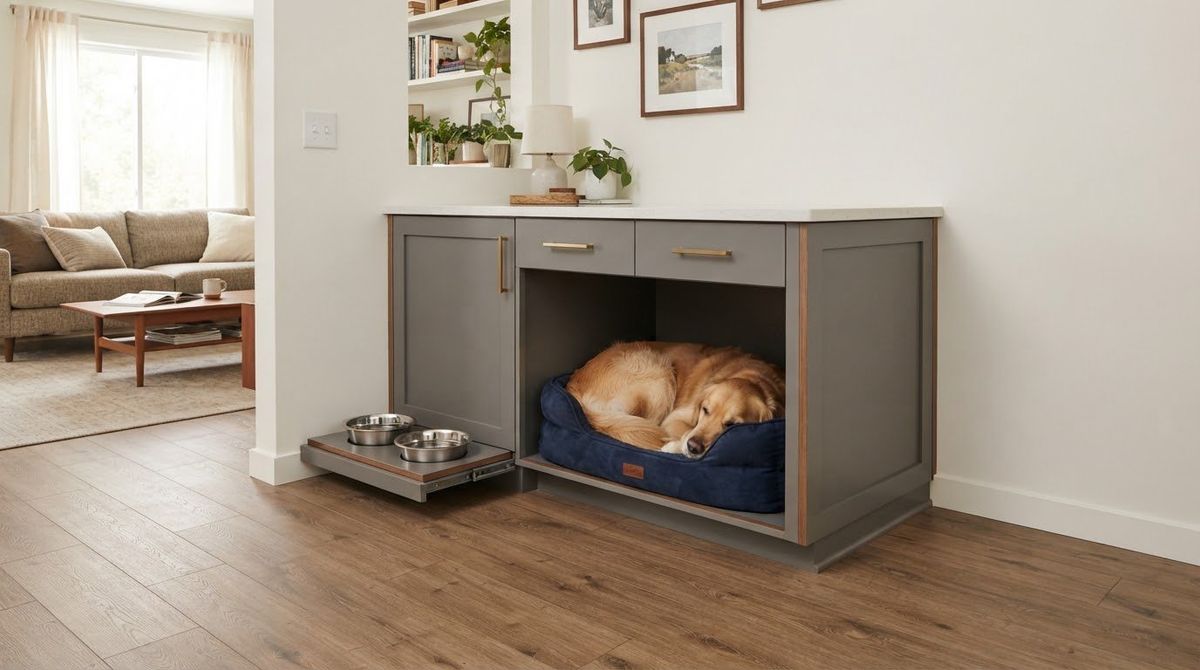
- Feeding station: a built-in or a low cabinet with a tray or a wipeable surface, in a spot where people do not trip on dishes.
- Bed or crate nook: space under stairs, in a built-in or in a closet works well, with a washable bed.
- Cleanup station: a mudroom or entry with a mat, a hook for leashes, and a basin or hose bib for muddy paws. See mudroom design and creating a functional mudroom.
- Storage: closed storage for food, with a tight lid, keeps pests out and food away from pets. Custom cabinetry can combine these.
Are pet doors a good idea?
A pet door gives pets access, but it creates security, energy and code issues. Choose carefully and ask before you cut into a door or wall.
- Use a model with a lockable cover and a good seal so it limits drafts and keeps out other animals.
- Do not cut a pet door into the door between a garage and the house. The 2021 IRC requires that door to be solid wood or steel at least 1 3/8 inches thick, or 20-minute fire-rated, and self-closing and self-latching.
- Do not cut into a load-bearing wall or a wall with wiring and pipes without checking, and ask a pro if you are not sure.
- Think about security: a larger pet door can be an entry point, so some homeowners choose a smaller flap or an electronic door that reads the pet’s collar.
How do you plan a safe yard and fence?
A pet-friendly yard has secure fencing, shade, water and surfaces that do not harm paws. Choose a fence height and design for your pet, and close gaps at the bottom. Check local zoning and any homeowners association rules for height, material and permits before you build. The guide to installing a fence explains the DIY and pro trade-offs. For outdoor living areas that suit pets, see outdoor living space remodels.
Which smart and comfort upgrades help pets?
Some upgrades help when you are away or when pets age. They are optional, and none replaces supervision.
- Climate control: a thermostat you can check remotely helps keep a home from getting too hot or cold, and some smart thermostats send alerts. See smart home devices.
- Ramps and non-slip surfaces: for older pets and stairs.
- Air quality: good ventilation and a regular filter change reduce hair and dust. See indoor air quality upgrades.
What mistakes should you avoid?
Most pet-related problems come from materials that do not match the animal. Avoid these.
- Choosing a soft, finished-wood floor for a house with large dogs and frequent accidents.
- Leaving paints, solvents and small hardware reachable during a project.
- Adding a plant before checking whether it is toxic.
- Cutting a pet door into a fire-rated garage door.
- Skipping rugs or grip on stairs and slick floors.
How much will pet-friendly upgrades cost?
Cost depends on the scope, and no national source publishes a pet-renovation price. The 2025 Cost vs. Value report does not include pet projects. Paint, rugs, bins and a feeding nook cost much less than new flooring or built-ins. Plan the budget with the renovation budget template guide, and get itemized bids for flooring and carpentry.
How do you plan for different pets?
Dogs, cats and small animals need different features, so design for the animals you have. These are practical planning points, not rules.
Dogs
- Wipe-clean floors and a wash-up spot near the door for muddy paws.
- Non-slip surfaces on stairs and slick floors, and ramps or steps for older dogs that cannot jump onto furniture or into a car.
- A secure yard or a gated area, and a spot to store leashes and waste bags by the door.
Cats
- Vertical space such as shelves, window perches or a catio, which gives cats places to climb and watch.
- A litter box in a ventilated, quiet place, or built into a cabinet with an opening and an air path so odors do not build up. Keep the cabinet door easy for the cat to use.
- Scratch-resistant surfaces on the furniture and wall corners your cat likes, plus a sturdy scratching post nearby.
- Window screens in good repair, since cats can push on loose ones.
Small animals and birds
- A stable spot away from drafts, direct sun, kitchen fumes and aerosols.
- Cords and wires routed out of reach, since many small pets chew.
- Easy-clean flooring under cages.
Ask your veterinarian about the needs of your species, because temperature, ventilation and chemical sensitivities differ. The kid-friendly renovation guide overlaps on safe surfaces if you also have young children.
When should you hire a pro?
Hire a licensed pro for anything structural, electrical, plumbing or gas, and for flooring or carpentry where the finish matters. Cutting a pet door into an exterior wall, adding an outlet for a heated bed, or building a bath for dogs that needs plumbing are not casual jobs, and some need a permit. The guide to permits and regulations explains what a permit covers, and remodeling jobs to hire out lists work to leave to professionals. Rules vary by city and county, so check with your building department.
FAQ
What is the best flooring for homes with pets?
Look for flooring that resists scratches and water and is easy to clean. Luxury vinyl plank, porcelain or ceramic tile, sealed concrete and some engineered woods hold up to claws and accidents. Soft wood and plain carpet wear faster. Smooth hard floors can be slippery for paws, so add rugs with grip on stairs and in play areas. Choose a finish with texture and ask the maker about scratch resistance.
Are pet doors safe and allowed?
Pet doors are allowed in many places, but they create security, weather and code issues. The 2021 IRC requires doors between a garage and the home to be solid wood or steel at least 1 3/8 inches thick, or 20-minute fire-rated, and self-closing and self-latching, so do not cut a pet door into that door without checking. Use a model with a lockable cover, and put it where it does not weaken the wall.
How do I make my home safer for pets during a renovation?
Keep pets away from the work area, close doors, and store paints, solvents, adhesives and cleaners in closed containers. Ventilate well, clean up nails, screws and dust each day, and check that your pet cannot reach insulation, wire or cords. ASPCA data show cleaners and paints are a large share of household-product exposures. If your pet may have eaten something toxic, call the ASPCA hotline or your vet.
Which houseplants are toxic to pets?
Many common houseplants and garden plants can harm pets, including lilies (especially for cats), sago palm and azaleas. The ASPCA publishes a searchable list of toxic and non-toxic plants for dogs, cats and horses. Check any plant before bringing it home, and place plants out of reach. Plants and fungi accounted for 7.5% of ASPCA poison control exposure calls in 2025.
What paint is best in a house with pets?
Choose a durable, scrubbable paint in satin or semi-gloss on lower walls, since pets rub, scratch and drool on them. Use low-VOC products, ventilate well, and keep pets away until the paint is fully dry and the smell has gone. Store leftover paint closed and out of reach. Read the label, and ask your vet if you have concerns about a pet with respiratory problems.
How can I reduce pet odors and hair with design?
Use surfaces that clean easily: hard flooring or washable rugs, removable slipcovers, and paint you can wipe. Add a washable pet bed in a defined spot, and a mudroom or entry with a mat and a place to wipe paws. Good ventilation and a vacuum with a sealed filter help. Plan where pets sleep and eat so that mess stays in one cleanable zone.
How do I fence a yard for a dog?
Choose a fence tall enough for your dog's size and jumping ability, with no gaps at the bottom, and a gate with a latch the dog cannot open. Check your local zoning and any homeowners association rules for height and material, since fences often need a permit. Bury a barrier along the base if your dog digs. Our fence guide explains the DIY and pro trade-offs.
Sources
- Top 10 Pet Toxins of 2025 (ASPCApro) (aspcapro.org)
- Toxic and Non-Toxic Plants (ASPCA) (aspca.org)
- APPA Releases 2025 Dog & Cat Report (American Pet Products Association) (americanpetproducts.org)
- 2021 International Residential Code, Chapter 3 Building Planning (ICC) (codes.iccsafe.org)
Related articles
- Home Additions and Extra Rooms: Cost, Planning and Ideas
Compare bump-outs, full additions and attic, basement or garage conversions, with 2025 Cost vs. Value data, permit steps and egress rules.
- Screened Porch Addition: Enjoying the Outdoors Bug-Free
Plan a screened porch addition: build vs. convert an existing porch, screen and floor choices, code rules for guards and permits, and when to hire a pro.
- Outdoor Kitchen Planning: Appliances, Layout and Materials
Plan an outdoor kitchen: placement, gas and electric rules, grill clearances, appliance choices, durable materials, permits and what to budget.
- How to Create a Home Library: Shelving, Light and Reading Nooks
Plan a home library with safe shelving, floor-load checks, book-friendly light and humidity, and a comfortable reading nook, with options for small spaces.
- Dedicated Pet Spaces: Grooming Stations and Feeding Areas
Design a pet room: grooming station, feeding area and storage that are easy to clean and safe, with food-handling and poison-prevention guidance.
- Playroom Renovations: Fun, Safe, and Easy to Clean
Playroom renovation guide: safe layout, flooring, storage, wall finishes, anchored furniture, window cord safety and lead-safe tips for older homes.