Imagine a home that feels welcoming to everyone who walks through the door. This is the heart of an inclusive approach to creating living spaces. It’s about building an environment that supports people at every stage of life.
This concept goes far beyond basic accessibility modifications. It’s about crafting beautiful, functional spaces that work for individuals of all abilities. The goal is to create a home that feels intuitive and comfortable for everyone, every day.
Many people worry that focusing on accessibility means sacrificing style. This is a common misconception. Thoughtful choices can seamlessly blend form and function, resulting in a space that is both gorgeous and genuinely practical for real life.
This philosophy is reshaping how we think about our houses. It benefits families with young children, individuals recovering from injuries, and anyone who values convenience. Creating a home that adapts to your needs is a powerful way to support independence and dignity for all.
These principles share a core goal with home design trends that stand the test of: creating spaces that are both beautiful and deeply functional for the long haul.
Key Takeaways
- Inclusive home planning creates spaces that are welcoming and functional for people of all ages and abilities.
- This approach focuses on beautiful, integrated solutions, not clinical-looking modifications.
- Good planning enhances independence and dignity for everyone in the household.
- Thoughtful choices benefit families with young children, individuals recovering from injuries, and multi-generational living.
- This philosophy is about creating a comfortable environment that adapts to your life’s changing needs.
- Style and accessibility are not mutually exclusive; they can work together harmoniously.
Introduction to Universal Design and Its Growing Importance
Soon, there will be more grandparents than grandchildren in the U.S. By 2034, adults 65 and older will outnumber children. This major shift creates an urgent need for houses that support longer, healthier lives at home.
Current housing stock isn’t ready. Less than one percent of homes can easily accommodate a wheelchair user. This gap shows a clear disconnect between our communities and the real needs of people living in them.
Understanding the Need for Accessible Homes
Accessible features benefit everyone, not just older adults. Think about a parent with a stroller or a friend carrying groceries. Wide doorways and step-free entries make daily life smoother for all.
This inclusive thinking comes from the late architect Ron Mace. He created the universal design approach. His vision was for spaces that work better for everybody, every day.
The Impact of an Aging Population on Home Design
Most people want to stay in their own houses as they get older. AARP research shows 75% of adults over 50 prefer to age in place. Thoughtful home planning makes this wish a safe and comfortable reality.
Good design is a powerful tool for independence. It allows people to complete daily activities with confidence. Simple changes can have a big impact on health and happiness over time.
- By 2034, older adults will be a larger group than children.
- Very few existing homes are accessible for wheelchair users.
- Universal design principles help everyone, every day.
- Most people want to live in their own homes as they age.
Innovative universal design trends Shaping Modern Homes
Today’s most forward-thinking residential spaces incorporate features that serve everyone beautifully. These thoughtful innovations are transforming how we experience daily life at home.
Large Walk-In, Curbless Showers for Safety and Style
Zero-threshold showers eliminate the need to step over tub ledges, removing a common tripping hazard. This simple change creates a safer bathing experience for people of all ages and mobility levels.
Bathroom upgrades following these principles can yield a 68-70% return on investment. With beautiful tile and glass options available today, these showers feel more like a luxury spa than a safety feature.
Many modern hotels targeting young professionals have embraced walk-in showers. This shows how great design can equal high style while serving practical needs.
Smart Lighting and Motion Sensors Enhancing Daily Life
Adequate lighting significantly reduces nighttime fall risk, which is crucial for older adults’ health. Falls send about 3 million seniors to emergency rooms each year.
Motion-activated lights provide convenience for everyone carrying groceries or checking on children. These “future-proof” upgrades can increase home value by 5-10% while improving safety.
Smart lighting systems help people feel more secure while moving through their space after dark. This technology adds both comfort and peace of mind to daily life.
Enhancing Safety, Accessibility, and Aesthetics in Living Spaces
The most successful living environments seamlessly integrate practical safety features with beautiful aesthetics. These thoughtful choices create spaces that work beautifully for people of all ages and abilities.
Non-Slip Flooring and Open Floor Plans as Practical Upgrades
Falls remain the leading cause of injury among older adults. Choosing non-slip flooring options like luxury vinyl plank or matte tile significantly reduces risk while maintaining style.
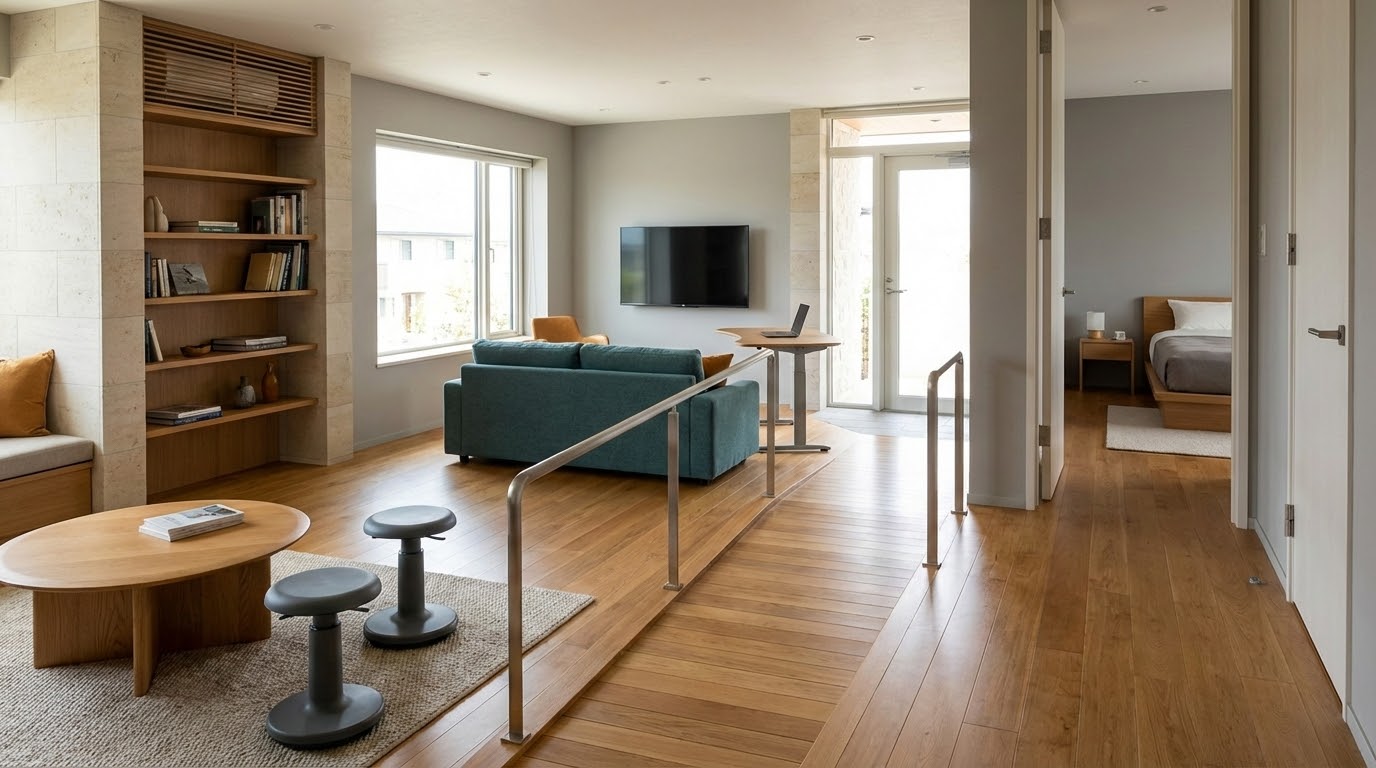
Open layouts with wider passageways benefit everyone. They make movement easier for wheelchair users and parents with strollers alike. These floor plans create brighter, more connected living areas perfect for family gatherings.
| Flooring Type | Safety Rating | Maintenance Level | Style Options |
|---|---|---|---|
| Luxury Vinyl Plank | High | Low | Extensive |
| Matte Tile | High | Medium | Modern |
| Polished Concrete | Medium | Low | Industrial |
| Low-Pile Carpet | Medium-High | Medium | Traditional |
Integrating Grab Bars and Flexible Layouts for Independence
Today’s safety products blend seamlessly into home decor. Designers create grab bars that resemble sleek picture frames and shower stools with spa-like appeal.
Flexible layouts allow rooms to adapt to changing needs over time. This approach supports dignity and independence by enabling people to continue living comfortably in their homes.
The best accessibility features remain invisible until needed. They provide security without compromising the beauty of your living space.
Smart Home Features and Customizable Design Options
Smart home advancements are creating environments that anticipate and respond to your movements and preferences. These intelligent features make daily life smoother for everyone in the household.
Adapting Technology for Better Mobility and Lighting
Motion sensors and voice-activated lights provide incredible convenience for people with limited mobility. They also benefit anyone carrying groceries or checking on children at night.
Integrated smart lighting does more than just illuminate your space. It enhances ambiance, improves energy efficiency, and adds modern convenience that appeals to tech-savvy buyers.
This approach represents proactive adaptation—making thoughtful updates now rather than waiting for life changes to force them. Simple products like lever handles and flexible layouts ensure your home remains comfortable over time.
These options are highly customizable to match your personal style and specific needs. You can choose devices and features that work with your budget while improving your quality of life immediately.
Universal Design for Aging in Place and Multigenerational Living
A quiet revolution in home planning is making multigenerational living both practical and deeply rewarding. This approach creates spaces where everyone feels comfortable and supported.
First-Floor Bedrooms and Flex Spaces for Long-Term Comfort
Having a primary bedroom on the main floor allows people to live on one level if stairs become difficult. This supports both independence and peace of mind for older adults.
Multi-generational households increasingly seek flexible, first-floor spaces. These areas can serve as offices or guest rooms today—then transition into main-floor bedrooms tomorrow. According to AARP research, 75% of adults 50+ want to remain in their homes as they age.
This flexible approach to multifunctional living spaces ensures your home adapts with your family’s changing needs.
Creating Inclusive, Community-Focused Environments
Homes are evolving to support families at every stage of life. Multigenerational designs now include private suites and shared areas that promote connection.
Eleanor Smith’s Visitability concept requires accessible features that allow people with different abilities to visit neighbors. This creates cohesive communities where everyone can participate in family activities.
These thoughtful inclusive living spaces balance togetherness with privacy while supporting dignity across generations.
Bridging Urban Accessibility and Residential Comfort
Our neighborhoods teach us valuable lessons about creating welcoming spaces for all. What works well in public areas often translates beautifully to our private homes.
Learning from City Infrastructure and Public Transit Developments
Wide, clear sidewalks benefit everyone equally. Parents with strollers, delivery workers, and older adults all appreciate obstacle-free paths. These urban features demonstrate how good planning serves diverse needs.
Many cities now raise crosswalks to sidewalk level. This simple change helps people with mobility challenges while calming traffic. It’s a perfect example of inclusive thinking that improves safety for all.
Public transit accessibility remains crucial for community connectivity. Up to one-third of people don’t drive for various reasons. Reliable transportation options support independence across generations.
Some communities are leading by example. In Illinois, the Heartland REALTOR® Organization partnered with Woodstock to create a prototype accessible home. This project shows how collaboration can advance housing solutions that work for everyone.
Small details matter greatly in community planning. Something as simple as keeping benches along walkways enables older adults to maintain active lifestyles. These considerations create environments where all family members can thrive together.
Conclusion
Creating a home that works beautifully for everyone is an investment in your family’s future well-being. The thoughtful features we’ve explored—from curbless showers to smart lighting—demonstrate how accessibility and elegance can coexist.
These inclusive approaches reduce risks while supporting independence for people of all abilities. They create living spaces that adapt gracefully as needs change over time.
Whether planning major renovations or simple updates, consider how these five accessible home trends can enhance your environment. They offer both immediate comfort and long-term value for your household.
Start with small changes that make a big difference in daily life. Your journey toward a more welcoming home begins with assessing what works best for your family’s unique situation.