Welcome to the fascinating intersection where your living space becomes a partner in your health journey. Many people don’t realize how profoundly their surroundings affect daily life. The right environment can boost mood, improve sleep, and reduce stress.
This approach to creating healthy spaces actually began in offices before moving into residential areas. Companies discovered that better interiors led to happier, more productive employees. Now this movement is transforming how we think about our personal spaces.
The International Well Building Standard (WELL) champions the idea that everyone deserves to live their best, healthiest life. This framework evaluates buildings across eleven aspects like air quality, light, and community connection. It’s a comprehensive way to measure how architecture supports well-being.
In this guide, you’ll discover practical strategies that work with any budget or style. Creating a health-supportive environment isn’t about perfection. It’s about making intentional choices that align with your personal goals.
Key Takeaways
- Your living space significantly impacts physical and mental health
- Wellness architecture started in commercial settings before reaching residences
- The WELL Building Standard provides a framework for health-focused spaces
- Small, intentional changes can create big improvements in daily life
- This approach works with any budget, space, or current interior style
- Focus on creating environments that support your personal health goals
Foundations of Effective Wellness Home Design
Effective residential spaces that promote health operate on a system of core principles that evaluate everything from air circulation to psychological comfort. This framework helps create environments where every element works together to support your well-being.
The approach considers how different factors influence each other. Small changes in one area can create positive effects throughout your living environment.
Core Principles and Eco-Inspired Strategies
Eleven interconnected aspects form the backbone of health-focused architecture. Each principle addresses specific needs while contributing to overall balance.
| Principle | Focus Area | Key Benefit |
|---|---|---|
| Air Quality | Ventilation & Filtration | Respiratory Health |
| Water | Purity & Accessibility | Hydration & Safety |
| Nourishment | Food Preparation Areas | Nutrition Support |
| Light | Natural & Artificial Sources | Circadian Rhythm |
| Movement | Space Layout & Flow | Physical Activity |
| Thermal Comfort | Temperature Control | Energy Efficiency |
| Sound | Acoustic Management | Mental Focus |
| Materials | Non-Toxic Selection | Environmental Health |
| Mind | Psychological Elements | Stress Reduction |
| Community | Social Spaces | Connection |
| Innovation | New Solutions | Continuous Improvement |
Integrating Health and Architecture
Strategic architectural decisions significantly impact daily life. Room orientation affects natural light exposure throughout the day.
Ceiling height influences both air circulation and feelings of spaciousness. Color choices work with these architectural elements to enhance mood.
Warm tones in social areas encourage connection. Cooler shades in bedrooms promote relaxation. This combination creates spaces that are both beautiful and functional.
Wellness Home Design
Creating a supportive living environment begins with mastering three fundamental elements: fresh air, abundant light, and safe materials. These components work together to create spaces that actively contribute to your daily vitality.
Creating Spaces That Foster Healthy Living
Your body’s biological needs align directly with your physical surroundings. Proper ventilation removes indoor toxins while bringing in fresh oxygen. Strategic window placement maximizes sunlight exposure throughout the day.
Choosing non-toxic materials prevents harmful chemicals from entering your atmosphere. These choices create an interior that supports rather than challenges your system.
Leveraging Natural Light, Air, and Materials
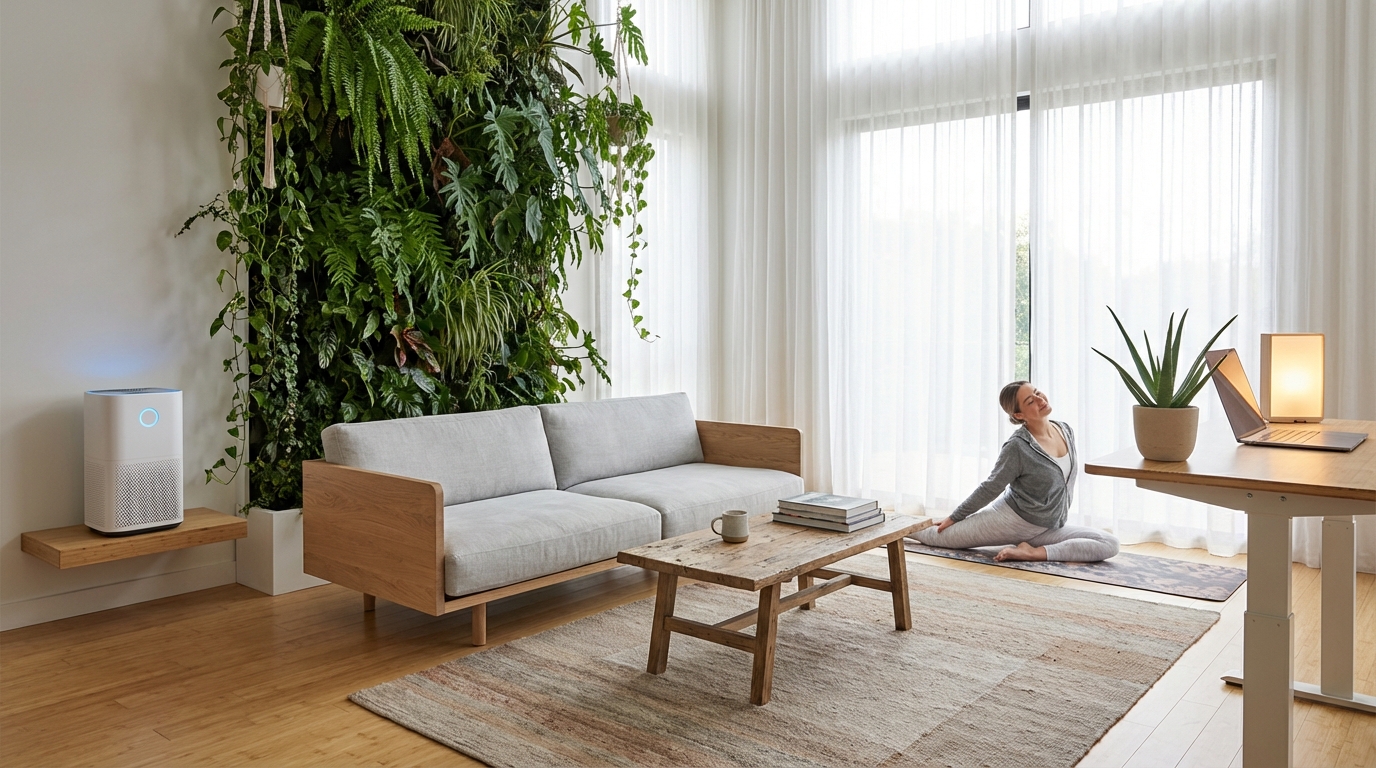
Large windows and high ceilings dramatically improve airflow and light penetration. This combination creates brighter, more oxygen-rich environments. Plants serve as natural air purifiers while adding vitality to your rooms.
Different areas benefit from specific approaches. The table below shows how to optimize various spaces:
| Room Type | Primary Focus | Optimization Strategy |
|---|---|---|
| Bedrooms | Air Quality & Light | Cross-ventilation, blackout curtains for sleep, morning sunlight exposure |
| Living Areas | Natural Light & Materials | Light-colored walls, air-purifying plants, non-toxic furniture |
| Kitchens | Ventilation & Safety | Range hoods, easy-clean surfaces, herb gardens for fresh air |
| Home Offices | Light & Air Circulation | Task lighting, desk plants, periodic air refresh |
Even rooms with limited windows can benefit from simple adjustments. Mirrors opposite light sources amplify available sunlight. Light-colored surfaces help distribute illumination more effectively.
Remember that small, consistent improvements create significant cumulative benefits. Focus on one area at a time to build a healthier living environment gradually.
Enhancing Your Home with Light, Texture, and Natural Elements
Light does more than just illuminate your rooms; it fundamentally shapes your daily energy and sleep patterns. Your body’s internal clock, the circadian rhythm, depends on proper light exposure. This system regulates everything from alertness to hormone production.
Strategic choices can create a space that supports your natural cycles throughout the day.
Maximizing Daylight and Architectural Features
To boost natural light, consider your window placement and room layout. Mirrors opposite windows can amplify sunlight. Light-colored walls and floors help distribute illumination more effectively.
For evenings, opt for warm-colored bulbs to signal relaxation. In darker climates, cool-toned daytime lighting can boost alertness. Tunable LED systems offer the ultimate flexibility, adjusting automatically via smartphone.
You can also borrow from Japanese shakkei, or “borrowed scenery.” This concept frames outdoor views as living art through clever window placement. It creates a serene connection to nature.
Incorporating Organic Elements and Greenery
Adding plants goes beyond aesthetics. They actively purify the air and increase oxygen levels. This connection to nature can reduce stress and enhance your mood.
Even a few small plants in a room can make you feel more uplifted and connected to the outdoors.
Designing with Natural Materials for Balance
The materials you choose are crucial for a healthy interior. Many common products leak harmful chemicals into the air. Avoid items with formaldehyde, VOCs, or chemical treatments.
Instead, select sustainable, non-toxic options. These materials contribute to better air quality and a greater sense of balance.
The table below highlights excellent choices for a health-supportive environment:
| Material | Primary Benefit | Ideal Use |
|---|---|---|
| Bamboo | Rapidly renewable, durable | Flooring, furniture |
| Cork | Natural shock absorber, insulating | Flooring, wall tiles |
| Wool | Hypoallergenic, moisture-wicking | Rugs, textiles |
| Stone | Thermal mass, longevity | Countertops, flooring |
| Thermowood | Stable, improves acoustics | Ceilings, decking |
Layering textures with wool rugs or woven baskets adds sensory richness. This approach creates visual depth without clutter, supporting a calm mood.
Practical Tips for a Harmonious and Energetic Home Environment
Achieving harmony in your environment involves balancing practical needs with aesthetic considerations. This balance creates spaces that feel both functional and uplifting.
Optimizing Indoor Air Quality and Ventilation
Good airflow transforms any room’s atmosphere. Cross-ventilation from multiple windows creates natural air movement. Mechanical systems like HVAC units need regular maintenance.
Consider these ventilation strategies for different areas:
| Room Type | Primary Strategy | Additional Support |
|---|---|---|
| Living Areas | Opposing window placement | Ceiling fans for circulation |
| Bedrooms | Nighttime crack-open method | Air purifiers with HEPA filters |
| Bathroom | Exhaust fan timer systems | Moisture-absorbing materials |
| Kitchen | Range hood ventilation | Seasonal window adjustments |
Thermal comfort matters too. Thick curtains and area rugs help regulate temperature naturally. This reduces energy consumption while maintaining comfort.
Using Color and Texture to Set the Mood
Color psychology directly impacts your mental state. Warm tones like cream and terracotta create cozy atmospheres. Cool blues and greens promote focus and calm.
The right color palette can transform a space from stressful to serene, affecting both mood and daily energy levels.
Texture adds depth to your visual experience. Layering different materials creates sensory richness. A plush rug paired with smooth wood surfaces offers both comfort and style.
Lighting design completes the atmosphere. Dimmable systems allow adjustments throughout the day. This approach supports different activities and times.
Reducing visual clutter maintains psychological calm. Clean surfaces and organized spaces minimize stress. These principles of interior design mental health create lasting comfort that aligns with timeless home design trends.
Conclusion
The journey toward creating an environment that actively supports your health doesn’t require a complete overhaul—it begins with intentional, thoughtful choices. Your living space should become a sanctuary that nurtures your energy rather than depletes it.
This approach offers remarkable flexibility. You can focus on areas that matter most to your personal health goals. Professional interior designers bring valuable expertise in material selection and space planning.
Start small if a full transformation feels overwhelming. Begin with one room or even a specific area. Restoring existing elements saves resources while creating unique character.
Your investment in a health-focused environment pays dividends in better sleep, reduced stress, and enhanced daily vitality. Assess your current space with fresh eyes and commit to one positive change. Every interior has the potential to become a place that makes you feel truly energized and at peace.