Welcome to your complete guide on bringing raw, authentic character into contemporary living spaces. This look celebrates unfinished materials and vintage touches to create a unique aesthetic that feels both edgy and sophisticated.
The origins of this approach trace back to the late 1980s. Creative people began transforming abandoned factories and warehouses into stunning apartments. They embraced the existing architectural features rather than hiding them.
Today, this urban-inspired look works beautifully in homes across America. From city lofts to suburban houses, you can incorporate these rugged features. We’ll show you how to blend raw materials with modern comforts.
Whether you’re planning a full renovation or just adding some accents, this guide has you covered. Get ready to explore practical tips and inspiring ideas for your space.
Key Takeaways
- This aesthetic celebrates raw, unfinished materials and vintage character
- The style originated from converted industrial spaces in the late 1980s
- It works well in various home types, from urban lofts to suburban residences
- You can incorporate these features through full renovations or simple accents
- The look blends rugged authenticity with modern sophistication
- Practical tips will help you successfully implement this approach
- Embrace existing architectural features rather than hiding them
Understanding Industrial Design Elements in Modern Homes
The heart of this look lies in a unique philosophy of celebrating what’s often concealed. It finds beauty in the raw bones of a building.
What Defines Industrial Design?
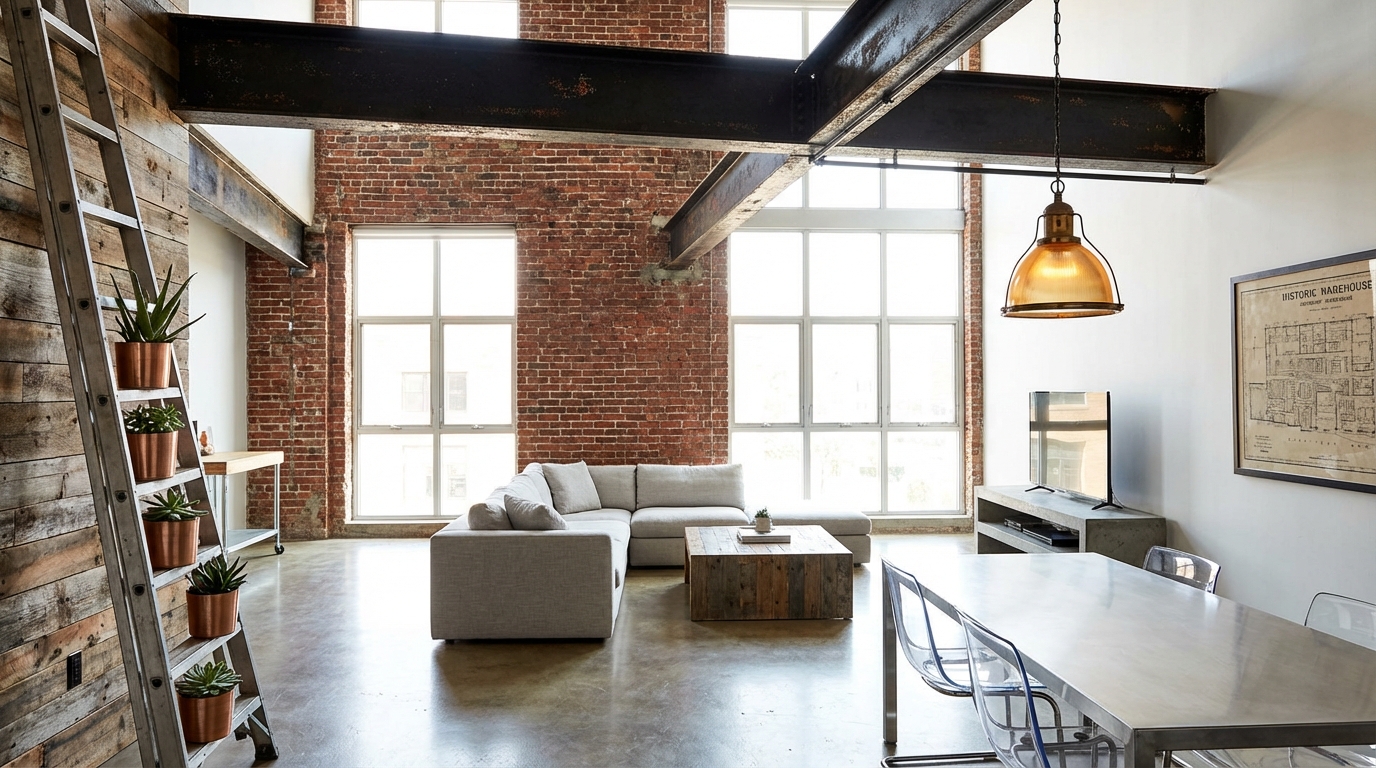
This aesthetic is fundamentally about honesty. It turns structural necessities, like beams and pipes, into stunning focal points. These features tell a story of the building’s past.
The style embraces materials in their natural state. Think exposed brick walls that reveal history and wooden floors that bear the marks of time.
The Evolution of Industrial Style
This movement began in the late 1980s. Creative individuals started converting old factories and warehouses into living spaces. They saw the inherent beauty in these utilitarian buildings.
What began as a practical solution for affordable urban living quickly became a celebrated trend. It was influenced by artistic movements and a desire for authentic spaces.
Key Characteristics and Inspirations
The main inspirations come from a building’s past life. The goal is to create a space that feels both rugged and sophisticated.
- Open Layouts: Spacious floor plans maximize light and movement.
- Raw Materials: Concrete, metal, and reclaimed wood are stars.
- Neutral Palette: Shades of gray, black, and brown dominate.
- Functional Furniture: Every piece has a purpose and a history.
For a deeper dive into applying these concepts, explore our guide on industrial design elements for a modern urban home. Unlike other styles, this one celebrates uniqueness, ensuring no two rooms are ever the same.
Embracing Raw Materials and Industrial Aesthetics
This approach transforms ordinary building components into extraordinary design features. The foundation lies in selecting authentic surfaces that tell a story.
These raw materials create spaces with genuine character. They work beautifully with timeless home design trends that never go out of style.
Exposed Brick, Steel, and Concrete Floors
Exposed brick walls instantly add warmth and history to any room. The natural texture of brick creates visual interest that feels both rustic and refined.
Concrete floors provide a durable, low-maintenance foundation. Their sleek appearance complements the industrial vibe perfectly.
Steel elements bring strength and versatility to your space. Whether in beams or decorative accents, metal adds an urban edge.
Reclaimed Wood and Vintage Finishes
Reclaimed wood introduces warmth that balances harder materials. Each piece carries unique character from its previous life.
Weathered beams and barn wood walls add natural texture. These finishes promote sustainability while enhancing authenticity.
The combination creates layered environments where each material shines. This honest approach results in spaces with genuine charm.
Designing Functional Spaces with Industrial Flair
Creating rooms that work beautifully while maintaining that authentic urban character is easier than you might think. The key lies in thoughtful arrangement and material selection.
Optimizing Layouts for Living and Dining Areas
Open floor plans are perfect for this aesthetic. Use area rugs to define seating zones without walls.
Large dining tables create natural gathering spots. They work well with concrete walls and wood furniture.
Industrial Bathroom and Kitchen Design Tips
Bathrooms benefit from metal vanities and exposed brick accents. These features add storage and character.
Kitchens shine with stainless steel surfaces. They’re durable and help bounce light around the space.
Furniture, Fixtures, and Lighting Ideas
Look for pieces with mechanical details like gears and pipes. Vintage light fixtures add atmospheric ambiance.
Metal shelving and mirrors introduce raw texture. This approach makes small spaces feel intentional and curated.
Mixing Vintage Charm with Contemporary Luxury
The true artistry of this aesthetic emerges when vintage character meets contemporary luxury in harmonious contrast. This approach creates spaces that feel both authentic and refined.
Incorporating Statement Art and Unique Accents
Bold artwork becomes the focal point against neutral backgrounds. Colorful pieces inject personality and create dramatic visual impact.
Unique accents like vintage finds add personal touch to your space. They prevent the look from feeling cold or impersonal.
Balancing Industrial Roughness with Modern Sophistication
Plush textiles soften harder surfaces beautifully. Velvet sofas provide comfort while maintaining the urban feel.
Modern metal finishes like brushed nickel add sophistication. They maintain the essential edge while elevating the overall style.
| Vintage Element | Contemporary Pairing | Resulting Effect |
|---|---|---|
| Exposed brick walls | Sleek modern furniture | Warm contrast |
| Reclaimed wood beams | Minimalist lighting | Textural balance |
| Weathered metal accents | Plush area rugs | Softened edges |
Warm-toned rugs define seating areas and add acoustic comfort. They make concrete floors feel more inviting. The goal is creating spaces that honor authentic roots while incorporating modern luxury.
Integrating Sustainability and Smart Technology
Today’s forward-thinking homeowners are discovering how sustainable practices and smart technology enhance industrial-inspired spaces. This approach creates environments that respect both history and innovation.
Eco-Friendly Materials and Sustainable Solutions
Reclaimed wood remains the star of sustainable interiors. Each piece tells a story while reducing demand for new lumber.
Architectural salvage companies help source quality materials like vintage beams and weathered planks. These materials arrive properly treated for modern use.
Beyond reclaimed wood, consider recycled glass countertops or bamboo flooring. These options maintain the authentic look with less environmental impact.
Concrete made with recycled aggregates offers another eco-friendly choice. It provides the familiar texture while being kinder to the planet.
Smart Lighting and Integrated Tech Features
Voice-controlled systems blend seamlessly with raw interiors. You can adjust ambient light with simple commands while preserving the space’s character.
Hidden touch panels disguise within metal surfaces. Invisible speakers embed in ceilings for clean audio without visual clutter.
When planning your bathroom transformation, consider integrating smart features discreetly. Strategic placement ensures functionality without compromising style.
Working with a skilled designer helps balance technology with authenticity. They ensure smart features enhance rather than dominate your space.
The combination of sustainable materials and intelligent technology represents the future of raw, authentic interiors. This approach creates spaces that honor the past while embracing modern convenience.
Conclusion
Your journey into creating a home with authentic urban character is a rewarding adventure. This guide has provided the essential tools to blend raw beauty with modern living.
We’ve explored the core components that define this aesthetic. From exposed brick and metal accents to smart, sustainable choices, the possibilities are vast. These ideas help you build a space that feels both unique and personal.
The true success of this approach lies in celebrating authenticity. Your walls and floors become part of your home’s story. This creates an interior that is warm, welcoming, and full of life.
Whether you’re a seasoned designer or a DIY enthusiast, use this inspiration with confidence. You now have the tips to craft spaces you will love for years to come.